
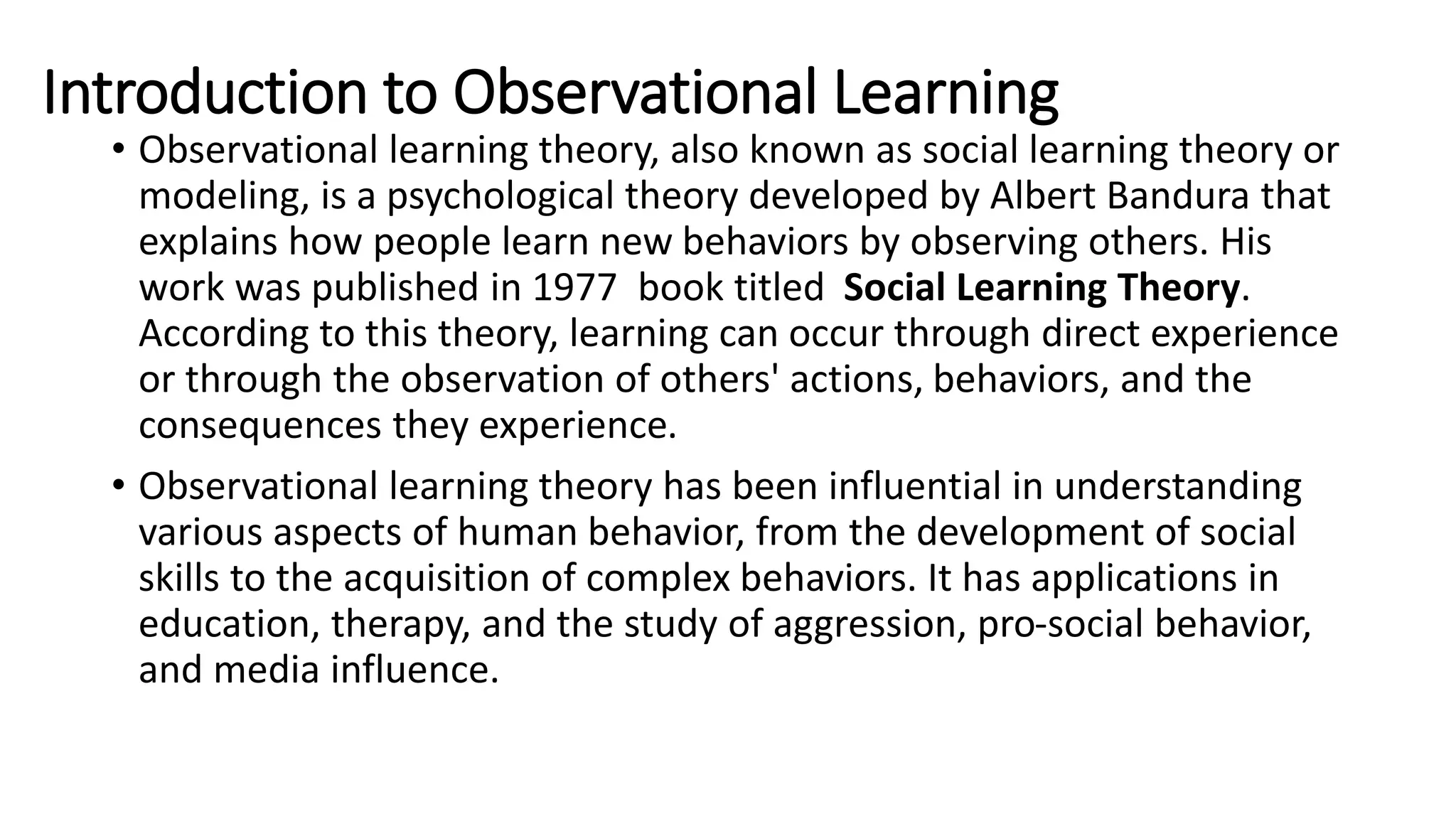
In the field of psychology, observational learning—often referred to as social learning theory—describes the process of acquiring new behaviors, values, and preferences by watching others. While originally formulated by Albert Bandura to explain human development, this psychological phenomenon has become the cornerstone of high-level brand strategy. In a world saturated with advertisements, consumers no longer rely solely on what a company says about itself; instead, they learn what a brand represents by observing how others interact with it.
For brand strategists, understanding the mechanics of observational learning is essential. It is the difference between a brand that people merely recognize and a brand that people actively emulate. By leveraging the way the human brain processes social cues, companies can move beyond traditional marketing and create a self-sustaining ecosystem of brand loyalty.

Understanding the Psychological Foundation: From Bandura to Branding
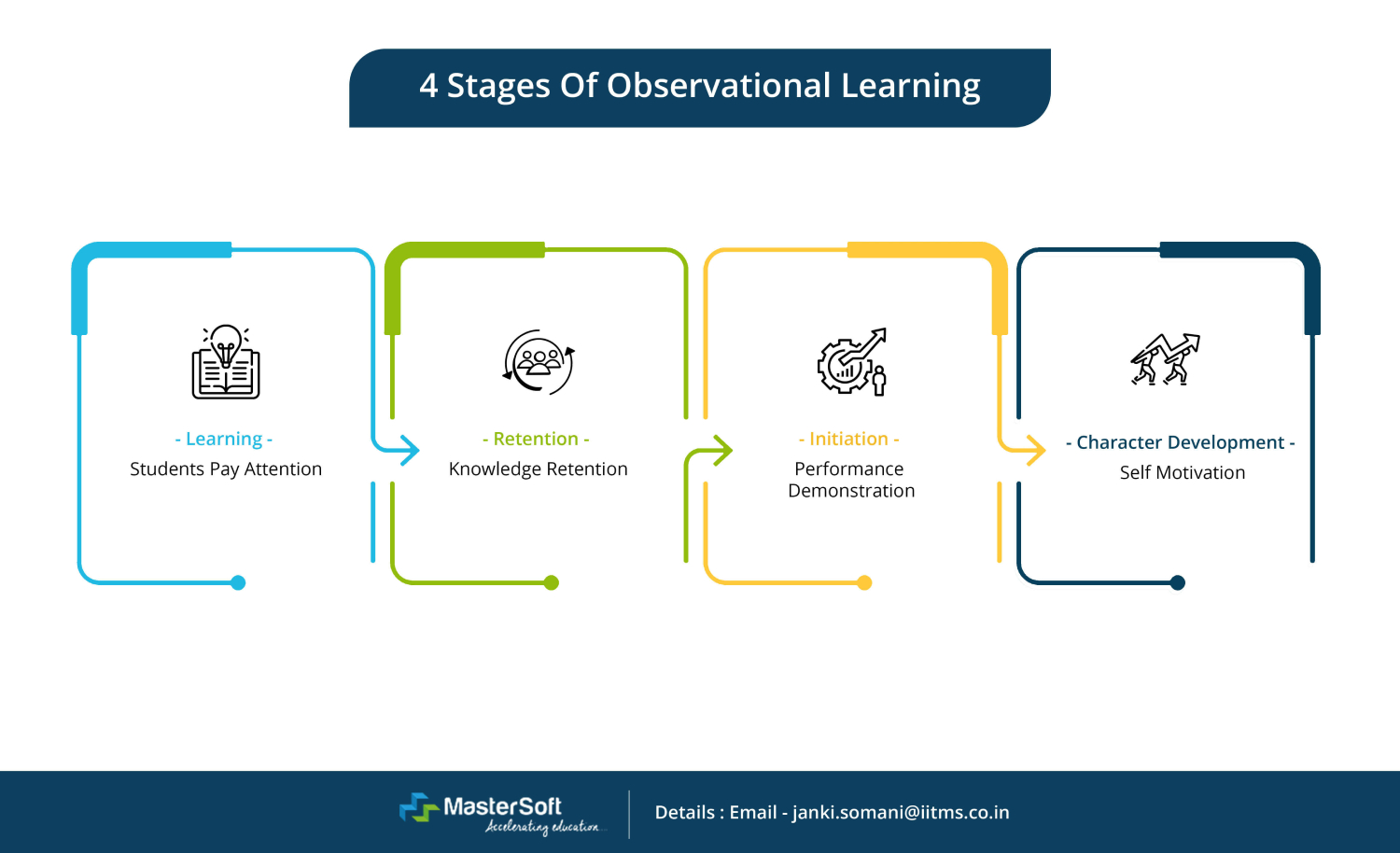
At its core, observational learning suggests that individuals do not need to experience something firsthand to learn a lesson or form an opinion. They simply need to observe a model. In a branding context, the “model” can be a celebrity, a peer, or even a corporate entity itself. To effectively use this in brand strategy, one must understand the four cognitive processes that govern this type of learning.
The Four Pillars: Attention, Retention, Reproduction, and Motivation
For a brand to be “learned” by a target audience, it must first clear the hurdle of Attention. In an economy of distraction, a brand must possess a distinct visual identity or a compelling narrative that commands focus. Without attention, the observational process never begins.
Once a consumer notices a brand, Retention comes into play. How well does the brand’s message stick? This is where corporate identity and consistent design systems are vital. If the visual cues are inconsistent, the observer cannot form a coherent mental model of the brand.
Reproduction refers to the consumer’s ability to act on what they have observed. If a brand portrays a lifestyle that is entirely unattainable or a product that is impossible to find, the learning loop is broken. Finally, Motivation is the “why.” Why should the consumer mimic the behavior they see? Usually, this is driven by the perceived rewards—status, comfort, or belonging—that the model receives from using the brand.
Why Modern Consumers “Watch” Before They “Buy”
The digital age has shifted the consumer journey from a linear funnel to a complex web of observations. Before making a purchase, a modern consumer might watch five YouTube reviews, scroll through dozens of Instagram comments, and observe which brands their professional mentors use on LinkedIn.
This “pre-purchase observation” is a survival mechanism. It reduces the risk of social or financial loss. Brands that understand this do not just sell products; they curate “observable moments.” They ensure that every touchpoint—from the packaging to the customer service interaction—is worthy of being watched and emulated.
Social Proof and Influencer Marketing: The Digital Laboratory of Observational Learning
Social proof is perhaps the most direct application of observational learning in marketing. It operates on the principle that when people are uncertain, they look to others to determine the correct way to behave. In the branding world, this has given rise to the influencer economy, which is essentially a massive, global experiment in vicarious reinforcement.
The Role of Vicarious Reinforcement in Brand Adoption
Vicarious reinforcement occurs when an observer sees a model being rewarded for a particular behavior, which then increases the likelihood that the observer will perform that same behavior. When a consumer sees an influencer they admire receiving praise, looking stylish, or appearing more productive because of a specific brand, they are experiencing vicarious reinforcement.
The brand itself becomes the “tool” that facilitates the reward. A successful brand strategy focuses on showing the result of using the product rather than just the features of the product. By highlighting the positive social outcomes of brand alignment, companies trigger the observational learning mechanism that compels a prospect to become a customer.
Case Study: How Lifestyle Branding Triggers Mimicry
Consider the success of brands like Peloton or Apple. These companies do not just sell hardware; they sell a lifestyle that is highly observable. Peloton’s interface allows users to see others “winning” or “achieving,” which encourages a cycle of mimicry and competition.
Apple’s strategy has long relied on the “cool factor” of its users. By placing their products in the hands of creative professionals and innovators, they set a psychological benchmark. Observers learn that “people like me use products like this to achieve results like that.” This is not just marketing; it is the strategic deployment of social learning to create a tribal brand identity.
Corporate Identity: Training Your Internal Brand Through Observation
While much of brand strategy focuses on the external consumer, observational learning is equally powerful within the walls of an organization. A brand is only as strong as the people who represent it, and those people learn how to behave by observing the “internal brand”—the corporate culture.
Culture as a Learned Behavior
New employees do not learn a company’s true brand values by reading an employee handbook; they learn them by observing the behavior of their veterans and leaders. This is “informal branding.” If a company claims its brand stands for “innovation” but rewards “playing it safe,” the employees will observe the reward system and ignore the slogan.
To build a powerful corporate brand, leadership must ensure that the observable actions within the company align with the external promises made to the market. When internal behavior matches external branding, it creates a sense of authenticity that is palpable to the consumer.
Leading by Example: The Executive’s Role in Brand Values
The executives of a company are the primary “models” in the observational learning chain. Their public presence, their decision-making style, and even their social media activity contribute to the brand’s identity. When a CEO acts with transparency, they are teaching both their employees and their customers that the brand is trustworthy.
In personal branding, this is even more critical. A founder’s personal brand often serves as the blueprint for the company’s identity. By observing the founder’s work ethic and values, the market learns what to expect from the brand as a whole.
Competitive Intelligence: Learning from the Market Leaders
Observational learning is not just for consumers and employees; it is a vital tool for brand strategists themselves. By observing the successes and failures of competitors, a brand can refine its own strategy without having to endure the same “trial and error” costs.
Ethical Imitation vs. Brand Dilution
There is a fine line between learning from a competitor and merely copying them. Effective brand strategy involves observing the psychological triggers that make a competitor successful and then adapting those triggers to fit one’s own unique brand voice.
For instance, if a competitor’s “behind-the-scenes” content is driving high engagement, a brand strategist learns that the market is currently valuing transparency. They shouldn’t copy the specific content, but they should adopt the principle of transparency. This allows the brand to remain relevant while maintaining its distinct corporate identity.
Spotting Market Gaps Through Observed Failures
Sometimes, the most valuable lessons come from observing where other brands fail. When a major brand suffers a PR crisis or a failed product launch, it provides an observational map of what the market will not tolerate.
By analyzing these failures, a brand can position itself as the “correct” alternative. If a market leader is observed to be out of touch with environmental concerns, a smaller, more agile brand can observe this negative reinforcement and pivot its strategy to emphasize sustainability. In this way, observational learning becomes a tool for strategic differentiation.
Conclusion: The Future of Observational Branding
As we move further into an era defined by social media, user-generated content, and decentralized influence, observational learning will only become more central to brand strategy. The brands that thrive will be those that understand they are always being watched.
Every interaction, every advertisement, and every public statement is a lesson being taught to the audience. By consciously designing these “lessons” through the lens of psychology, brands can foster deeper connections, inspire greater loyalty, and build a lasting legacy. In the end, a brand is not what you tell people it is—it is the sum of everything they have observed it to be.
aViewFromTheCave is a participant in the Amazon Services LLC Associates Program, an affiliate advertising program designed to provide a means for sites to earn advertising fees by advertising and linking to Amazon.com. Amazon, the Amazon logo, AmazonSupply, and the AmazonSupply logo are trademarks of Amazon.com, Inc. or its affiliates. As an Amazon Associate we earn affiliate commissions from qualifying purchases.