
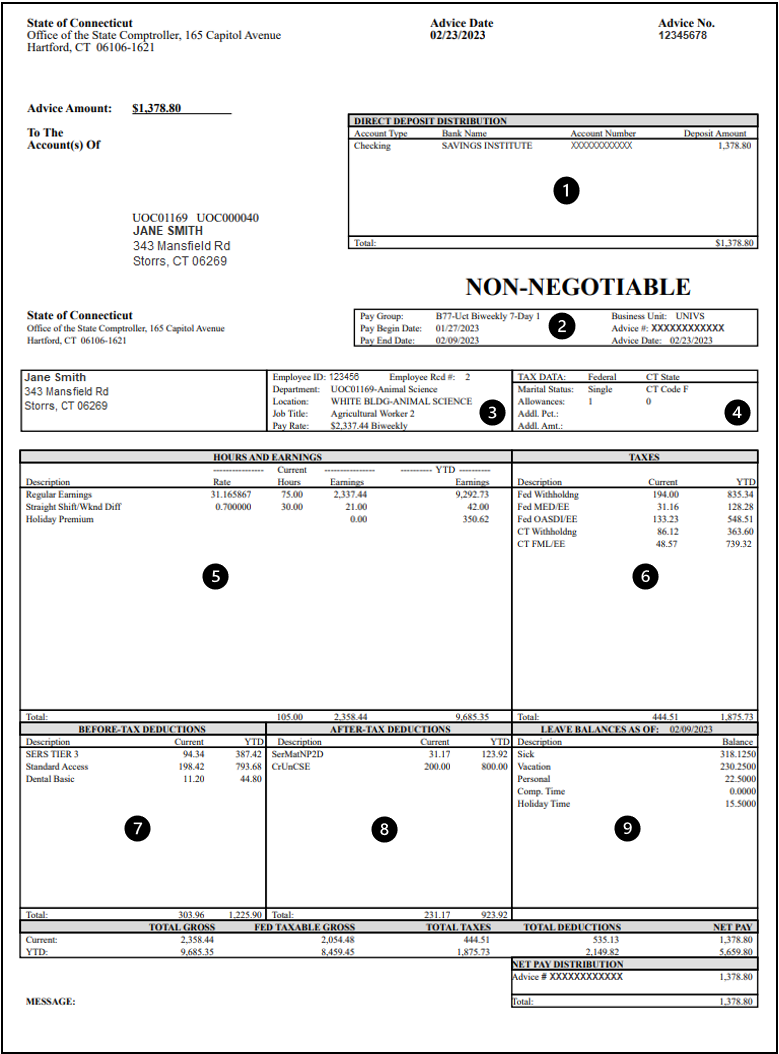
If you have ever taken a close look at your paystub, you’ve likely noticed a series of acronyms that seem to nibble away at your gross earnings before the money ever hits your bank account. Among the standard federal and state income tax withholdings, one of the most significant and often misunderstood entries is “OASDI.”
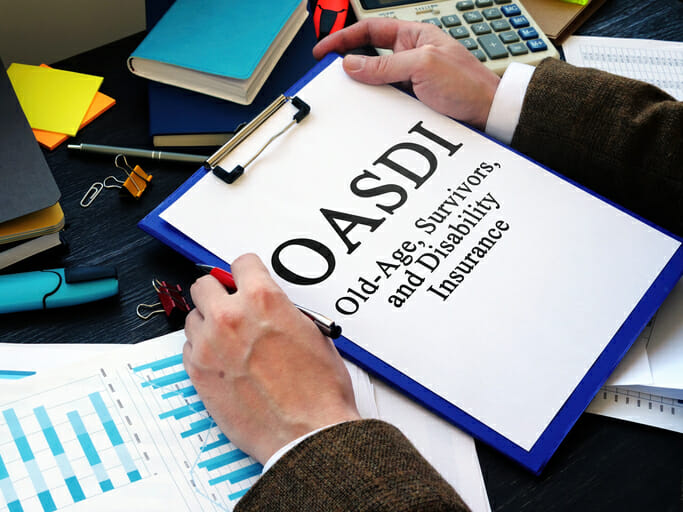
For many employees, OASDI feels like a phantom expense—a tax that disappears into the machinery of the government with little immediate reward. However, in the realm of personal finance, understanding OASDI is essential for long-term retirement planning and financial security. OASDI stands for Old-Age, Survivors, and Disability Insurance. It is the official name for what most people simply call Social Security.
Far from being just another line item, OASDI is a mandatory insurance premium that provides a safety net for you and your family. In this guide, we will break down what these deductions represent, how the math works, and why this specific tax is a cornerstone of your personal financial strategy.
Decoding the Acronym: Understanding the Three Pillars of OASDI
To understand why this money is being taken from your paycheck, you must first understand what the program actually covers. The Social Security Act, established in 1935 and expanded over decades, isn’t just a “retirement fund.” It is a multi-faceted insurance program designed to protect workers against the loss of income due to three specific life events.
The “Old-Age” Component (Retirement)
The most well-known aspect of OASDI is the retirement benefit. As you work and pay OASDI taxes, you earn “credits” toward your future Social Security benefits. For the majority of Americans, these monthly payments form the foundation of their retirement income. While financial advisors often suggest that Social Security should only be one part of a “three-legged stool” (alongside personal savings and employer-sponsored pensions), it remains a guaranteed, inflation-adjusted source of cash flow for your later years.
The “Survivors” Component
Personal finance isn’t just about how much you spend; it’s about risk management. The “S” in OASDI represents Survivors’ insurance. If a worker who has paid into the system passes away, certain family members—such as a surviving spouse, children, or even dependent parents—may be eligible for monthly benefits. This functions similarly to a life insurance policy, providing a financial cushion for your loved ones in the event of your untimely passing.
The “Disability” Component
The “D” stands for Disability Insurance (SSDI). Statistics from the Social Security Administration suggest that a significant percentage of today’s 20-year-olds will become disabled before reaching retirement age. If a severe physical or mental impairment prevents you from working for a year or more, OASDI provides monthly payments to help cover living expenses. In the world of finance, this is an essential form of long-term disability protection that you are automatically enrolled in through your payroll taxes.
The Mechanics of the OASDI Tax: Rates and Limits
From a budgeting perspective, knowing exactly how much will be deducted for OASDI helps you project your take-home pay more accurately. The funding for this program is governed by the Federal Insurance Contributions Act (FICA).
The Employee and Employer Split
The OASDI tax rate is currently set at 12.4%. However, if you are a traditional W-2 employee, you do not pay the full amount. The responsibility is split equally between you and your employer.
- Employee Share: 6.2% of your gross wages.
- Employer Share: 6.2% of your gross wages.
If you earn $1,000 in a pay period, $62 is deducted for OASDI, and your employer contributes another $62 on your behalf. This is a critical distinction in personal finance: the “hidden” benefit of being an employee is that your company subsidizes half of your Social Security insurance premiums.
The Self-Employed Contribution (SECA)
For freelancers, contractors, and small business owners, the math changes significantly. Under the Self-Employment Contributions Act (SECA), you are considered both the employer and the employee. Consequently, you are responsible for the full 12.4% OASDI tax. While this can feel like a heavy burden on your cash flow, the IRS allows self-employed individuals to deduct the “employer” portion (6.2%) of the tax when calculating their adjusted gross income, providing some relief during tax season.
The Social Security Wage Base Limit
One of the most unique features of the OASDI tax is that it is not applied to all of your income. Unlike Medicare taxes, which are levied on every dollar you earn, OASDI has a “Wage Base Limit.” This is a cap on the maximum amount of earnings subject to the tax each year.
As of 2024, the wage base limit is $168,600. If you earn $200,000 a year, you only pay the 6.2% tax on the first $168,600. Once you cross that threshold, OASDI deductions stop for the remainder of the calendar year. For high earners, this often results in a “stealth raise” in their late-year paychecks, which can be strategically redirected into high-yield savings or investment accounts.
Why OASDI Matters for Your Personal Finance Strategy
Understanding OASDI isn’t just about knowing why your check is smaller; it’s about integrating these future benefits into your current wealth-building plan. Thinking of OASDI as an asset rather than a tax can change how you approach your financial life.
Building Your Retirement Safety Net
When calculating how much you need to save for retirement, you must factor in your projected Social Security benefits. The amount you receive is based on your highest 35 years of earnings. By staying in the workforce and increasing your income, you are effectively “investing” in a higher future payout. Most financial planning software allows you to input your estimated OASDI benefits to determine the “gap” you need to fill with your 401(k) or IRA.
Protection Against Life’s Uncertainties
Private disability insurance can be expensive and difficult to qualify for if you have pre-existing conditions. OASDI provides a baseline of disability and survivors’ protection regardless of your health status, as long as you have worked long enough to qualify. For young families, this “government-sponsored insurance” is a vital part of their risk management strategy, often allowing them to spend less on private term-life insurance than they otherwise might need.
How to Track Your Future Benefits
Personal finance is data-driven. You shouldn’t guess what your OASDI contributions will yield. The Social Security Administration (SSA) provides an online portal where you can view your “Social Security Statement.” This document lists your entire earnings history and provides estimates for your retirement, disability, and survivors’ benefits. Reviewing this annually is a “best practice” for ensuring your employer is reporting your income correctly and for keeping your long-term goals on track.
Managing Your Cash Flow: Navigating Changes and Tax Planning
The way OASDI interacts with your paycheck can change based on your career trajectory and income levels. Savvy financial planners look for ways to optimize their cash flow around these tax rules.
What Happens When You Hit the Income Cap?
As mentioned earlier, once your year-to-date earnings exceed the wage base limit, OASDI deductions cease. For someone earning $250,000, this might happen around August or September. Suddenly, their take-home pay increases by 6.2%.
From a behavioral finance perspective, this is a “danger zone” for lifestyle creep. Rather than spending that extra money on luxury items, many choose to automate that 6.2% into a brokerage account or a 529 college savings plan. Since you were already living without that money earlier in the year, you won’t feel the “pinch” of saving it.
The Difference Between OASDI and Medicare Taxes
It is common to see OASDI grouped with Medicare under the heading “FICA” or “Social Security Tax.” However, they serve different purposes and have different rules.
- OASDI: 6.2% rate, capped at the wage base limit.
- Medicare: 1.45% rate, no income cap. Furthermore, high earners (over $200,000 for individuals) must pay an additional 0.9% Medicare surtax.
Distinguishing between these two is vital for accurate tax forecasting, especially for those in the “Money” niche who are managing multiple streams of income or high-salary careers.

Conclusion: Embracing Financial Literacy Through Your Paystub
The next time you see “OASDI” on your paycheck, try to view it through a different lens. It isn’t just a deduction; it is a forced savings mechanism and an insurance policy rolled into one. By funding the Old-Age, Survivors, and Disability Insurance program, you are participating in a massive collective risk-sharing pool that provides stability for millions of Americans—including your future self.
In the broader context of personal finance, the goal is always to maximize the utility of every dollar. By understanding the rates, the caps, and the benefits associated with OASDI, you can build a more robust retirement plan, manage your risks more effectively, and navigate your career transitions with greater confidence. Financial literacy starts with the smallest details, and few details are more fundamental than the acronyms on your paystub. Knowledge of OASDI turns a “tax” into a “tool” for long-term financial health.
aViewFromTheCave is a participant in the Amazon Services LLC Associates Program, an affiliate advertising program designed to provide a means for sites to earn advertising fees by advertising and linking to Amazon.com. Amazon, the Amazon logo, AmazonSupply, and the AmazonSupply logo are trademarks of Amazon.com, Inc. or its affiliates. As an Amazon Associate we earn affiliate commissions from qualifying purchases.