
NVIDIA, a name synonymous with cutting-edge graphics and revolutionary computing, stands as a titan in the technology industry. Far more than just a chipmaker, NVIDIA has evolved into a full-stack computing company whose innovations power everything from the most advanced video games and professional visualization tools to the foundational infrastructure for artificial intelligence, autonomous vehicles, and the emerging metaverse. Understanding NVIDIA is to grasp a significant portion of the modern technological landscape, where its graphical processing units (GPUs) have transcended their original purpose to become the indispensable engines of parallel computing. This article delves into the multifaceted identity of NVIDIA, exploring its historical journey, core technological contributions, expansive software ecosystem, and its profound impact on the future of computing.
The Genesis of a Computing Powerhouse
Founded in 1993 by Jensen Huang, Chris Malachowsky, and Curtis Priem, NVIDIA embarked on a mission to bring 3D graphics to the mass market. At a time when computer graphics were rudimentary and largely confined to specialized workstations, NVIDIA envisioned a future where powerful visual computing was accessible to everyone. This ambitious goal laid the groundwork for a company that would not only define the gaming experience but also inadvertently create the building blocks for an AI revolution.
From Graphics Cards to General Purpose GPUs
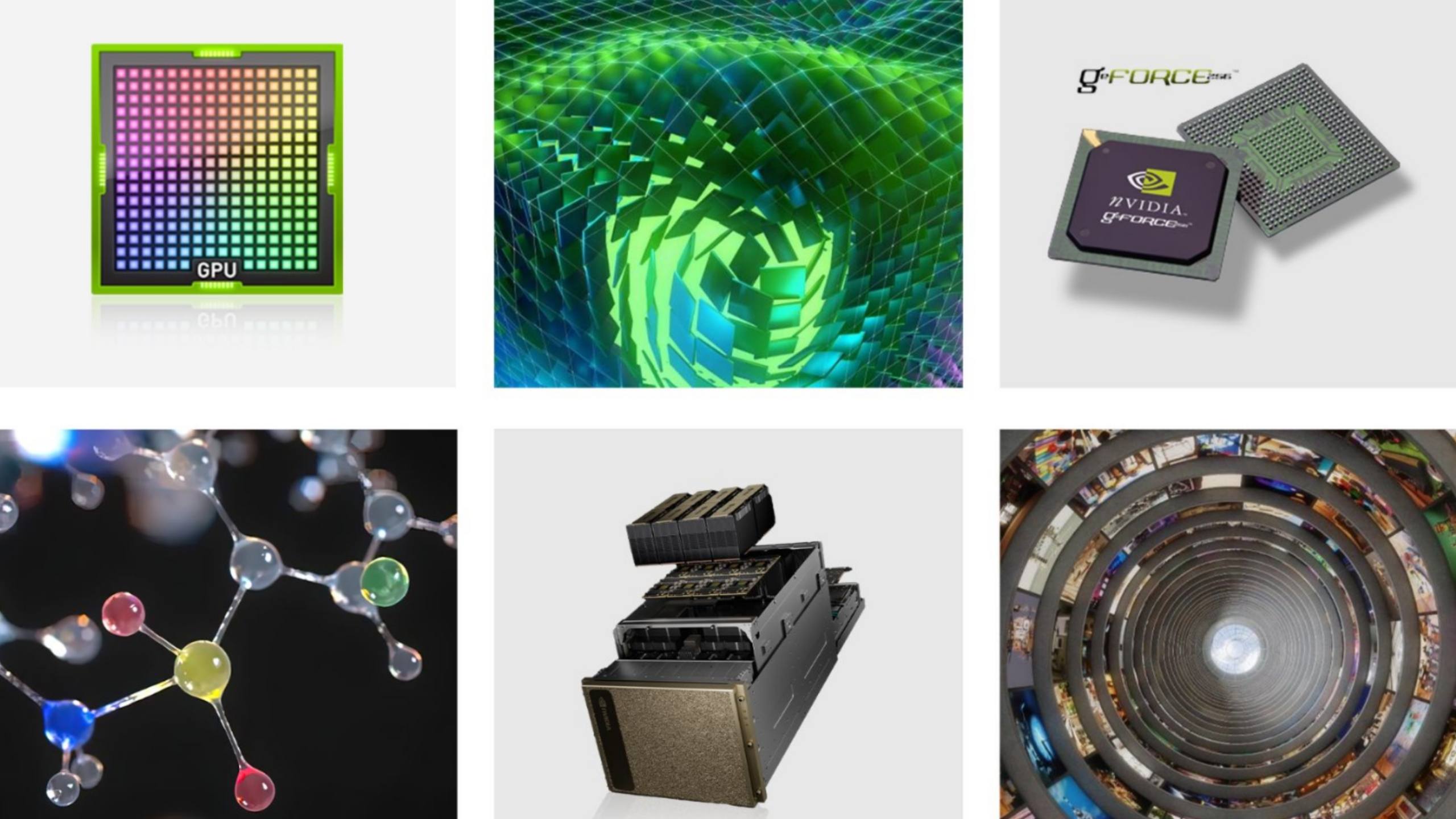
NVIDIA’s early focus was acutely on the PC gaming market. Their initial breakthroughs centered on developing dedicated graphics processors that could render complex 3D scenes in real-time. The launch of the Riva TNT in 1998 and, more significantly, the GeForce 256 in 1999, which NVIDIA famously dubbed the world’s first GPU (Graphics Processing Unit), marked pivotal moments. The GeForce 256 integrated transformation, clipping, and lighting (T&L) engines on a single chip, drastically improving 3D performance and offloading strenuous tasks from the CPU. This innovation solidified NVIDIA’s position as a leader in graphics hardware.
However, the true genius of NVIDIA’s architecture lay dormant, waiting for its full potential to be unlocked. GPUs, by their very nature, are designed for highly parallel operations – performing many calculations simultaneously, a task perfectly suited for rendering millions of pixels on a screen. Little did the world know that this parallel processing capability would become the bedrock of the AI and deep learning revolution. The seeds of this transformation were sown as researchers began to realize that the massively parallel architecture of GPUs could be repurposed for general-purpose computation, far beyond just graphics.
Key Innovations and Early Dominance
Beyond raw performance, NVIDIA consistently pushed the boundaries of what was possible with graphics. Early innovations included the introduction of programmable shaders, which gave developers unprecedented control over the visual appearance of their games, leading to more realistic and immersive experiences. Technologies like anti-aliasing and anisotropic filtering, which enhanced visual fidelity, became standard features, setting benchmarks for the entire industry. NVIDIA’s relentless pursuit of graphical excellence and its strong relationships with game developers ensured its hardware became the platform of choice for the most visually demanding PC titles. This period of intense competition with rivals like ATI (now AMD) fostered rapid innovation, ultimately benefiting consumers and laying a robust technical foundation for NVIDIA’s future ventures into diverse computing domains. The company’s commitment to pushing the envelope in terms of silicon design and software optimization created a powerful synergy that would later prove invaluable.
NVIDIA’s Core Technological Pillars
NVIDIA’s dominance stems from its strategic focus on several key technological areas, each leveraging the unparalleled parallel processing power of its GPUs. These pillars represent the core of the company’s influence across various high-growth sectors.
Graphics Processing Units (GPUs) and Gaming
At its heart, NVIDIA remains the undisputed leader in high-performance GPUs for gaming. Their GeForce line continues to set the standard for visual fidelity, frame rates, and immersive experiences. From ray tracing and DLSS (Deep Learning Super Sampling) to advanced streaming technologies, NVIDIA continuously innovates to deliver the most realistic and engaging gaming environments. Ray tracing, in particular, represents a significant leap, simulating the physical behavior of light to render incredibly lifelike reflections, shadows, and global illumination. DLSS, on the other hand, leverages AI to render images at lower resolutions and then intelligently upscale them to higher resolutions, resulting in significantly improved performance without compromising visual quality. These advancements are not merely incremental; they redefine the possibilities of interactive entertainment and drive the evolution of game development. The gaming segment provides NVIDIA with a substantial revenue stream and a vast ecosystem of passionate users and developers, ensuring continuous feedback and demand for new features.
Artificial Intelligence and Machine Learning Acceleration
Perhaps the most transformative shift for NVIDIA was the realization and subsequent cultivation of its GPUs as the primary accelerators for artificial intelligence and machine learning workloads. The parallel architecture of GPUs, initially designed for rendering millions of pixels, proved to be perfectly suited for the matrix multiplication and linear algebra operations fundamental to training deep neural networks. NVIDIA’s CUDA platform, which provided a programming interface to harness this power, quickly became the de facto standard for AI researchers and practitioners. Today, NVIDIA’s A100 and H100 Tensor Core GPUs are the workhorses of the world’s largest AI data centers, powering everything from natural language processing and image recognition to drug discovery and climate modeling. This strategic pivot has made NVIDIA an indispensable partner in the global AI race, providing the computational horsepower that fuels advancements across virtually every scientific and industrial domain.
Professional Visualization and Data Centers
Beyond gaming and AI, NVIDIA’s technologies are critical for professional visualization and high-performance computing (HPC) in data centers. Their Quadro and RTX professional GPUs are essential tools for architects, engineers, designers, and animators, enabling them to create complex 3D models, run simulations, and render photorealistic content with unprecedented speed and accuracy. In the realm of data centers, NVIDIA’s networking solutions, including Mellanox InfiniBand and Ethernet products, provide the high-speed interconnects necessary to link thousands of GPUs and CPUs into powerful supercomputing clusters. These clusters are used for scientific research, financial modeling, weather prediction, and other computationally intensive tasks, underpinning critical infrastructure across various industries. The combination of powerful GPUs, high-speed networking, and specialized software stacks allows NVIDIA to offer end-to-end solutions for the most demanding computational challenges.
Autonomous Driving and Robotics

NVIDIA is also at the forefront of the autonomous revolution. Their DRIVE platform provides a complete hardware and software stack for self-driving cars, including powerful AI processors, sensor fusion capabilities, and sophisticated algorithms for perception, planning, and control. NVIDIA’s systems are designed to process vast amounts of sensor data in real-time, enabling vehicles to understand their surroundings, predict potential hazards, and make safe driving decisions. Beyond cars, NVIDIA’s Jetson platform brings AI capabilities to the edge, powering a new generation of intelligent robots, drones, and smart devices. These embedded systems enable advanced functionalities like object recognition, navigation, and human-robot interaction, opening up possibilities for automation in manufacturing, logistics, healthcare, and beyond. NVIDIA’s commitment to these fields positions it as a key enabler for the future of intelligent machines and mobility.
The Software Ecosystem: More Than Just Hardware
While NVIDIA is renowned for its groundbreaking hardware, its true strength lies in the comprehensive software ecosystem that unlocks and amplifies the potential of its GPUs. This layered approach ensures that developers and researchers can easily access and leverage the immense power of NVIDIA’s technology.
CUDA: The Parallel Computing Platform
CUDA (Compute Unified Device Architecture) is NVIDIA’s most pivotal software innovation. Introduced in 2006, CUDA is a parallel computing platform and programming model that enables software developers to use a GPU for general-purpose processing. Before CUDA, programming GPUs was largely limited to graphics APIs, making it challenging to use them for non-graphics tasks. CUDA provided a straightforward C/C++ interface, allowing developers to write programs that could harness the massively parallel architecture of GPUs. This breakthrough was instrumental in transforming GPUs from specialized graphics accelerators into general-purpose parallel processors (GPGPUs). CUDA became the foundation for virtually all modern AI and scientific computing that relies on GPUs, creating a powerful moat around NVIDIA’s hardware and cementing its position as the go-to provider for accelerated computing. The continuous evolution of CUDA, with new libraries and tools, ensures it remains at the cutting edge.
NVIDIA Omniverse: Building the Metaverse
NVIDIA Omniverse is a relatively new but highly ambitious platform for building and operating metaverse applications. It’s an open, extensible platform built for virtual collaboration and real-time physically accurate simulation. Omniverse allows designers, engineers, and creatives to connect major 3D design tools to a single scene and collaborate in real-time. It’s built on Universal Scene Description (USD), an open-source framework developed by Pixar for robust interchange of 3D data. Omniverse’s power lies in its ability to simulate complex physical phenomena, from light and materials to robotics and autonomous systems, within a shared virtual space. This platform is envisioned as the operating system for the metaverse, enabling everything from industrial digital twins for factories to virtual worlds for entertainment and social interaction. By providing the tools for creators and enterprises to build and interact within virtual environments, NVIDIA is actively shaping the future of digital interaction and simulation.
Developer Tools and Libraries
NVIDIA fosters a vibrant and extensive developer community by providing a vast array of tools, SDKs (Software Development Kits), and specialized libraries. These include cuDNN for deep neural networks, TensorRT for optimizing AI inference, OptiX for ray tracing acceleration, and various libraries for scientific computing, image processing, and video encoding/decoding. These tools abstract away much of the low-level complexity of GPU programming, allowing developers to focus on their applications rather than the intricacies of hardware. Furthermore, NVIDIA actively contributes to open-source projects and provides comprehensive documentation, training, and support, making it easier for developers to integrate NVIDIA technology into their workflows. This commitment to the developer ecosystem ensures that NVIDIA’s hardware is not just powerful but also highly accessible and programmable, fueling continuous innovation across diverse fields.
Impact and Future Trajectory in the Tech Landscape
NVIDIA’s journey is a testament to the power of relentless innovation and strategic foresight. Its impact on the tech landscape is profound and continues to expand, reshaping industries and defining new frontiers of computing.
Driving Innovation Across Industries
NVIDIA’s technology acts as a fundamental accelerant for innovation across a multitude of industries. In healthcare, GPUs accelerate drug discovery, medical imaging, and genomics research. In manufacturing, digital twins built on Omniverse optimize factory operations and product design. Financial institutions leverage NVIDIA for high-speed trading and fraud detection. From scientific research to entertainment, NVIDIA’s hardware and software are providing the critical infrastructure for advancements that were once considered science fiction. The sheer computational power and programmability offered by NVIDIA’s stack empower researchers and engineers to tackle increasingly complex problems, leading to breakthroughs that benefit society as a whole. Its commitment to platform development, rather than just chip sales, ensures its deep integration into the future of technology.
Challenges and Opportunities
Despite its dominant position, NVIDIA faces ongoing challenges. Competition from rivals like AMD and Intel, who are also investing heavily in GPU and AI acceleration, remains intense. Supply chain complexities, geopolitical tensions affecting chip manufacturing, and the inherent volatility of the tech market pose constant threats. Ethical considerations surrounding AI, such as bias and accountability, also present a growing area of concern that NVIDIA, as a leading AI enabler, must address.
However, opportunities abound. The continued explosion of AI across all sectors, the emergence of the metaverse, the increasing demand for high-performance computing, and the ongoing push towards fully autonomous systems present massive growth avenues. NVIDIA’s strategy of delivering full-stack solutions – from silicon to software and services – positions it uniquely to capitalize on these trends. Its investments in networking, cloud services, and specialized platforms for vertical industries further solidify its future growth prospects.
Vision for the Future of Computing
NVIDIA’s vision for the future of computing is centered on accelerated, AI-powered, and interconnected systems. They envision a world where every industry leverages simulation, AI, and digital twins to innovate faster and more efficiently. The metaverse, powered by Omniverse, is seen as the next evolution of the internet, enabling richer, more immersive interactions and collaborative environments. From the individual developer to massive data centers, NVIDIA aims to provide the foundational technology that makes this future possible. By continuously pushing the boundaries of what GPUs can achieve and building comprehensive ecosystems around them, NVIDIA is not just participating in the future of technology; it is actively shaping it, ensuring its legacy as a true pioneer in the age of accelerated computing.
In conclusion, NVIDIA is far more than just a company that makes graphics cards. It is a strategic force in global technology, an indispensable engine behind the AI revolution, a pioneer in virtual worlds, and a key enabler for the future of intelligent machines. Its commitment to innovation, from silicon design to expansive software platforms, ensures that NVIDIA will continue to be a central figure in defining the next era of computing.
aViewFromTheCave is a participant in the Amazon Services LLC Associates Program, an affiliate advertising program designed to provide a means for sites to earn advertising fees by advertising and linking to Amazon.com. Amazon, the Amazon logo, AmazonSupply, and the AmazonSupply logo are trademarks of Amazon.com, Inc. or its affiliates. As an Amazon Associate we earn affiliate commissions from qualifying purchases.