
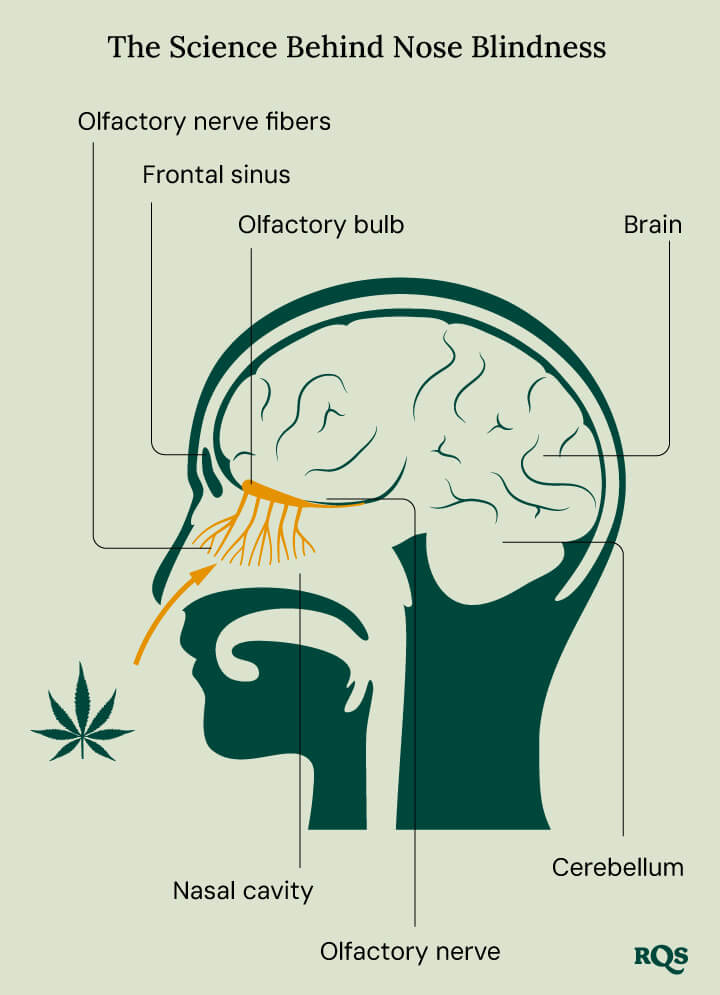
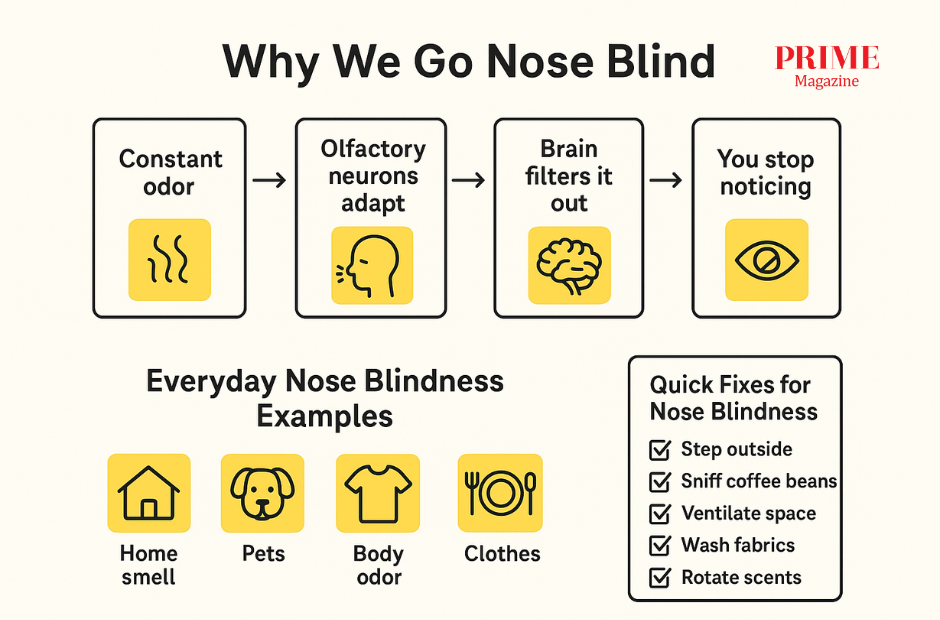
In the world of biological science, “nose blindness,” or olfactory fatigue, is a temporary, naturally occurring adaptation where the body becomes desensitized to a particular smell after prolonged exposure. While this is a useful evolutionary trait—allowing the brain to ignore constant background stimuli to stay alert for new, potentially dangerous scents—it is a catastrophic phenomenon when translated into the world of brand strategy.
In a professional context, brand nose blindness is the inability of an organization to recognize its own stagnation, the gradual degradation of its visual identity, or the growing disconnect between its internal values and public perception. When a leadership team becomes “nose blind,” they stop noticing the “odor” of outdated messaging or the “stench” of a toxic corporate culture. This article explores the mechanics of brand nose blindness, its impact on market longevity, and the strategic interventions required to reset a company’s sensory perception.
Defining Brand Nose Blindness: When Organizations Stop Seeing Themselves
Brand nose blindness occurs when the internal stakeholders of a company become so habituated to their environment, workflows, and marketing collateral that they lose the ability to view them through the eyes of a fresh consumer. It is a form of cognitive bias where familiarity breeds a dangerous sense of security.
The Psychology of Adaptation in Marketing
Human psychology is designed to filter out the redundant. In marketing, this translates to internal teams becoming immune to their own creative outputs. A logo that was revolutionary ten years ago becomes a permanent fixture of the office wallpaper. A tagline that once captured the zeitgeist becomes a hollow mantra repeated without thought. Because the team sees these elements every day, they fail to notice the subtle layer of “dust” that accumulates over time. This adaptation prevents leaders from asking the critical question: Does this still resonate, or are we just used to it?
Identifying the Symptoms of Visual and Messaging Stagnation
The first sign of brand nose blindness is often a reliance on “legacy logic”—doing things because “that’s the way we’ve always done them.” Symptomatically, this manifests as visual stagnation, where the brand’s aesthetic fails to evolve alongside industry trends, or messaging stagnation, where the brand’s voice feels increasingly out of touch with modern social values. When an organization is nose blind, it ignores the minor frictions in the customer journey because those frictions have become part of the internal “norm.”
The High Cost of Olfactory Fatigue in Brand Strategy
The dangers of brand nose blindness are not merely aesthetic; they are financial and existential. When a brand loses its ability to self-critique, it cedes its competitive advantage to more agile, self-aware challengers.
Losing Touch with the Customer Experience (CX)
The most immediate casualty of brand nose blindness is the customer experience. While the internal team may believe their processes are seamless, a customer experiencing the brand for the first time may find the website navigation clunky, the brand voice arrogant, or the packaging wasteful. Because the internal team is “blind” to these issues, they view customer complaints as outliers rather than data points. This disconnect creates a “reputation gap”—the space between how a brand views itself and how the market actually perceives it.
The “Echo Chamber” Effect in Creative Departments
Nose blindness is often exacerbated by a lack of diversity in thought within creative and strategic departments. When a team remains unchanged for years, it develops a collective blind spot. This “echo chamber” reinforces existing biases, leading to campaigns that feel safe and repetitive. Innovation requires a certain level of discomfort and “sensory agitation.” Without it, the brand’s output becomes predictable, losing the “scent” of excitement that attracts new demographics.
Case Studies: Brands that Succumbed to Internal Bias
History is littered with powerful brands that failed because they could no longer “smell” the changing air of their respective industries. Examining these instances provides a cautionary tale for modern brand managers.
The Legacy Trap: Why Heritage Brands Often Go Blind
Heritage brands are particularly susceptible to nose blindness because they mistake longevity for invincibility. Consider the decline of traditional department stores. For decades, these entities were the pinnacle of retail. However, leadership became nose blind to the shifting preferences of younger consumers who prioritized digital convenience and boutique experiences over massive, confusing floor plans. By the time these heritage brands realized their “scent” was that of a bygone era, the market had already moved on to e-commerce giants.
The Tech Titan Dilemma: Ignoring User Friction
Even modern tech companies are not immune. A prominent social media platform might become nose blind to the toxicity of its own user interface or the intrusiveness of its data collection. Because the engineers and product managers use the tool every day, they become habituated to the complexities and ethical compromises that a casual user might find abhorrent. This lack of sensory awareness often leads to massive user churn when a “fresher” alternative enters the market.
Curing the Condition: Strategies for Sensory Reset
Just as a physical “scent palette cleanser” like coffee beans can reset the olfactory system, a brand requires strategic interventions to regain its perspective. Curing brand nose blindness requires a willingness to invite external criticism and embrace radical honesty.
Leveraging Third-Party Audits and “Secret Shoppers”
The most effective way to combat nose blindness is to bring in “new noses.” Third-party brand auditors and consultants provide an objective viewpoint that internal teams simply cannot achieve. These experts can identify inconsistencies in brand application and weaknesses in the narrative that have become invisible to the staff. Similarly, “secret shopper” programs allow a brand to see the raw, unpolished version of their customer journey, revealing the “unpleasant odors” of poor service or broken tech that are often hidden in polished internal reports.
Reinvigorating Brand Guidelines for the Digital Age
Brand guidelines should not be static documents stored in a PDF; they should be living frameworks. To prevent nose blindness, companies must implement a “sunset clause” for creative assets, forcing a review and refresh every few years. This ensures that the brand’s visual and verbal identity is constantly being recalibrated to match the current market environment. A periodic “Brand Audit” should be a mandatory part of the annual fiscal cycle, treated with the same importance as a financial audit.
Future-Proofing the Brand Identity
In an era of rapid disruption, the ability to remain “sensory-aware” is a core competency for any successful brand strategist. Future-proofing involves building an organizational culture that prizes self-awareness over ego.
Creating a Culture of Continuous Feedback
To stay sharp, an organization must foster a culture where employees at all levels are encouraged to point out “smells.” This means empowering the frontline staff—the ones who interact with customers daily—to report frictions without fear of retribution. When the low-level employee can tell the CEO that a new ad campaign feels “off,” and the CEO actually listens, the brand is protected against nose blindness.

Embracing Data-Driven Self-Correction
While intuition is valuable, data is the ultimate cure for bias. By monitoring Brand Sentiment Analysis, Net Promoter Scores (NPS), and Social Listening tools, a company can get a real-time “scent profile” of how they are being perceived. If the data shows a decline in brand affinity, it is a clear signal that the team has become nose blind to a growing problem. The key is to act on the data even when it contradicts the internal narrative of success.
In conclusion, “nose blindness” in branding is a silent killer of corporate relevance. It turns once-vibrant market leaders into stagnant relics. By recognizing the psychological tendency toward habituation and implementing rigorous, externalized checks and balances, a brand can ensure it remains fresh, relevant, and highly “aromatic” in a crowded marketplace. The goal of every brand strategist should be to keep their senses sharp, ensuring they never lose the ability to smell the roses—or the smoke.
aViewFromTheCave is a participant in the Amazon Services LLC Associates Program, an affiliate advertising program designed to provide a means for sites to earn advertising fees by advertising and linking to Amazon.com. Amazon, the Amazon logo, AmazonSupply, and the AmazonSupply logo are trademarks of Amazon.com, Inc. or its affiliates. As an Amazon Associate we earn affiliate commissions from qualifying purchases.