
In the rapidly evolving landscape of data science and artificial intelligence, the distinction between parametric and non-parametric models forms the bedrock of how we build intelligent systems. For software engineers, data architects, and AI researchers, understanding “what is non-parametric” is not merely an academic exercise in statistics; it is a critical decision-making framework for building scalable, robust, and accurate software solutions. While traditional statistics often rely on rigid assumptions about data distribution, non-parametric methods offer a more fluid, data-driven approach that has become the backbone of modern algorithmic design, from recommendation engines to complex computer vision pipelines.

The Fundamental Shift: From Parametric to Non-Parametric Models
To understand non-parametric models, one must first look at their predecessor: the parametric model. In a parametric framework, such as linear regression or traditional neural networks with a fixed architecture, the model assumes that the data follows a specific distribution—usually a normal or Gaussian distribution. These models have a fixed number of parameters (weights and biases) that do not change regardless of how much data you throw at them. While efficient, they are often brittle; if the underlying data does not fit the assumed shape, the model’s predictive power collapses.
The Definition of Non-Parametric
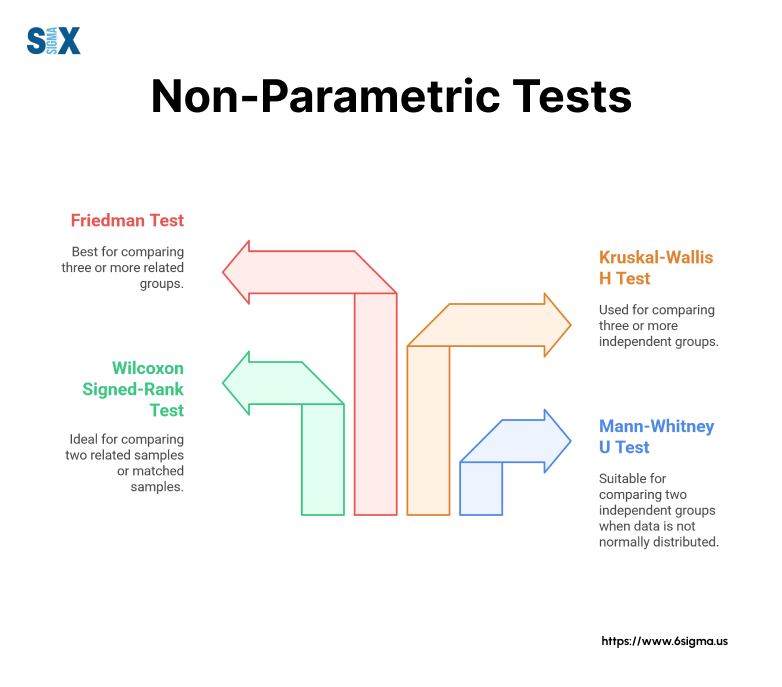
The term “non-parametric” is frequently misunderstood. It does not mean that the model has zero parameters. Rather, it signifies that the number of parameters is not fixed in advance. In a non-parametric system, the complexity of the model grows in proportion to the amount of data available. This makes these models “distribution-free,” meaning they do not require the developer to assume that the data fits a bell curve or any other specific mathematical shape. Instead, the model learns the functional form directly from the data itself.
The Flexibility of Growing Complexity
In a tech environment where data is often “noisy” or unstructured, non-parametric models provide an essential advantage: adaptability. Because the model architecture is flexible, it can capture intricate patterns that a fixed-parameter model might smooth over. For instance, in a parametric model, you might be limited to a straight line or a specific curve to represent a relationship. A non-parametric model, however, can twist and turn to fit the unique topography of the dataset, making it far more effective for complex tasks like fraud detection or sentiment analysis where patterns are rarely linear.
Key Non-Parametric Algorithms in the Modern Tech Stack
In the practical world of software development and AI engineering, non-parametric methods manifest in several highly effective algorithms. These tools are the workhorses of modern data-driven applications, providing the balance between predictive accuracy and the ability to handle high-dimensional data.
K-Nearest Neighbors (KNN)
KNN is perhaps the most intuitive example of a non-parametric algorithm. It operates on a simple principle: similar data points exist in close proximity. When the system receives a new input, it looks at the ‘k’ closest points in the training data to make a prediction. Because the model stores the entire training set (or a compressed version of it), its “parameters” are essentially the data points themselves. As you add more data, the model becomes more nuanced. This makes KNN highly effective for recommendation systems where user behavior is too erratic for a fixed mathematical formula to capture.
Decision Trees and Random Forests
While a single decision tree can sometimes be seen as a simple structure, the way it partitions data is fundamentally non-parametric. A tree does not assume a global functional form; instead, it recursively splits the data into smaller and smaller subsets based on feature values. When expanded into a Random Forest—an ensemble of hundreds or thousands of trees—the system becomes an incredibly powerful non-parametric tool. Random Forests are widely used in enterprise tech for everything from predicting server downtime to optimizing supply chain logistics because they can handle non-linear relationships and categorical data without extensive pre-processing.
Support Vector Machines (SVM) with the Kernel Trick
While a standard linear SVM is parametric, the use of kernels—specifically the Radial Basis Function (RBF) kernel—transforms it into a non-parametric powerhouse. The kernel trick allows the model to operate in an infinite-dimensional space, effectively allowing it to draw complex boundaries between data points that would be impossible in a lower-dimensional, fixed-parameter environment. This makes non-parametric SVMs particularly useful in bioinformatics and specialized image recognition tasks.
The Advantages of Distribution-Free Analysis

The tech industry thrives on big data, but big data is rarely “clean.” Real-world data generated by millions of app users, IoT sensors, or financial transactions is often skewed, full of outliers, and multi-modal (having multiple peaks). This is where non-parametric methods shine.
Handling Unstructured and Messy Data
Traditional parametric models require rigorous data cleaning and transformation—such as normalization or log transforms—to ensure the data fits the model’s assumptions. Non-parametric models bypass much of this overhead. Because they don’t assume a normal distribution, they are naturally more robust to outliers. In a cybersecurity context, where an “outlier” might actually be a sophisticated hacking attempt, a non-parametric model is far more likely to identify the anomaly than a parametric model that tries to force the data into a standard pattern.
Accuracy in High-Dimensional Spaces
In modern AI, we often deal with “the curse of dimensionality,” where the number of features (variables) is massive. Non-parametric models, particularly those based on manifold learning, are designed to find the underlying structure within these high-dimensional spaces. By focusing on the local relationships between data points rather than trying to fit a global model, they can maintain high levels of accuracy even when the number of features exceeds the number of observations.
Practical Trade-offs: Scalability, Latency, and Memory
Despite their power, non-parametric models are not a “silver bullet.” From a software engineering perspective, they introduce specific challenges that must be managed, particularly concerning computational resources and deployment latency.
The Memory Complexity Problem
Because non-parametric models grow with the data, their memory footprint can become substantial. In a parametric model like a logistic regression, once the model is trained, you only need to store a handful of coefficients. In a non-parametric model like KNN, the “model” is the data itself. If you have a dataset of 100 million users, storing and querying that data in real-time for every prediction can be prohibitively expensive. This requires tech teams to implement sophisticated indexing structures, such as KD-trees or Ball trees, or to use approximate nearest neighbor (ANN) libraries like FAISS to maintain performance.
Training vs. Inference Speed
Non-parametric models often shift the computational burden from training time to inference time. A deep neural network (parametric) might take days to train but can make a prediction in milliseconds. Conversely, a non-parametric model might “train” instantly (by simply storing the data) but take significantly longer to produce a result because it must search through the dataset. For real-time applications, such as high-frequency trading or autonomous driving, engineers must carefully optimize these models to ensure latency stays within acceptable limits.
The Risk of Overfitting
The very flexibility that makes non-parametric models powerful also makes them prone to overfitting. If a model is too flexible, it will start to “memorize” the noise in the data rather than learning the actual signal. This is why techniques like pruning in decision trees or choosing the right ‘k’ in KNN are essential. Developers must use cross-validation and regularization strategies to ensure the model generalizes well to new, unseen data.
The Future of Non-Parametric Methods in AI and Deep Learning
As we look toward the future of technology, the line between parametric and non-parametric is beginning to blur, leading to hybrid architectures that offer the best of both worlds.
Bayesian Non-Parametrics
One of the most exciting frontiers in AI is Bayesian non-parametrics. This approach uses stochastic processes, such as Gaussian Processes or Dirichlet Processes, to allow the number of clusters or features in a model to be determined by the data. This is particularly useful in unsupervised learning, where the system might need to discover an unknown number of topics in a document database or an unknown number of species in biological data.
Non-Parametric Components in Deep Learning
Modern neural networks are increasingly incorporating non-parametric components. For example, “Memory-Augmented Neural Networks” (MANNs) use a non-parametric external memory component to store information, allowing the network to handle tasks that require long-term reasoning. Similarly, “Neural Neighbors” approaches combine the feature-extraction power of deep learning with the flexible decision-making of KNN.
In conclusion, “what is non-parametric” is a question that leads to the heart of modern software intelligence. By moving away from rigid assumptions and embracing data-driven flexibility, tech professionals can build systems that are more accurate, more robust, and more capable of handling the complexities of the real world. Whether you are optimizing a search engine or building the next generation of AI tools, mastering non-parametric logic is an indispensable skill in the modern digital toolkit.
aViewFromTheCave is a participant in the Amazon Services LLC Associates Program, an affiliate advertising program designed to provide a means for sites to earn advertising fees by advertising and linking to Amazon.com. Amazon, the Amazon logo, AmazonSupply, and the AmazonSupply logo are trademarks of Amazon.com, Inc. or its affiliates. As an Amazon Associate we earn affiliate commissions from qualifying purchases.