
In the high-stakes arena of global QSR (Quick Service Restaurant) marketing, a product is rarely just a product; it is a strategic maneuver designed to capture a specific psychographic. When Domino’s announced the transition of its “Brooklyn Style” crust to the “New York Style” crust, it wasn’t merely a culinary adjustment. It was a sophisticated rebranding exercise aimed at aligning the company’s product architecture with consumer expectations of authenticity, regional identity, and premium positioning.
Understanding what New York Style crust is at Domino’s requires looking beyond the flour and water. It involves dissecting how a legacy brand uses nomenclature, product engineering, and competitive positioning to maintain its dominance in a market increasingly crowded by artisanal and local competitors.

From Brooklyn to Manhattan: The Strategic Rebranding of a Menu Staple
For years, the “Brooklyn Style” pizza was a mainstay of the Domino’s menu. It was marketed as a thinner, stretchier alternative to the classic hand-tossed dough, intended to appeal to those who preferred a foldable slice. However, in the landscape of brand strategy, names carry immense weight. By rebranding this specific crust as “New York Style,” Domino’s tapped into a more universal and prestigious geographic identifier.
The Transition from “Brooklyn Style” to “New York Style”
The shift from Brooklyn to New York is a move from the specific to the iconic. While Brooklyn implies a certain “gritty” authenticity, New York Style is a globally recognized category. For a brand operating in thousands of locations across various demographics, the broader term “New York Style” eliminates the niche friction of the Brooklyn label. It aligns the product with the consumer’s mental model of what a thin-crust pizza should be: large, wide, and structurally sound enough to be folded.
From a brand strategy perspective, this rebranding allows Domino’s to simplify its value proposition. Consumers do not have to wonder what “Brooklyn Style” means; they intuitively understand “New York Style.” This reduction in cognitive load is a hallmark of effective brand management, ensuring that the customer’s path from hunger to purchase is as frictionless as possible.
Leveraging Geographic Identity for Market Authority
Geographic branding is a powerful tool for establishing authority. When a brand like Domino’s—a massive corporate entity headquartered in Michigan—claims the “New York” moniker, it is performing an act of brand colonization. It is signaling to the consumer that it can replicate the hyper-local experience of a Manhattan corner slice shop with the consistency and speed of a global logistics powerhouse. This helps bridge the gap between “mass-produced” and “authentic,” a critical divide in modern food marketing.
Product Attributes as Brand Values: Defining the “Foldable” Experience
The New York Style crust at Domino’s is defined by three primary physical attributes: its thinness, its diameter, and its “foldability.” In branding, these are not just physical traits; they are the tangible manifestations of the brand’s promise to provide variety and customization.
Texture, Size, and Consumer Expectations
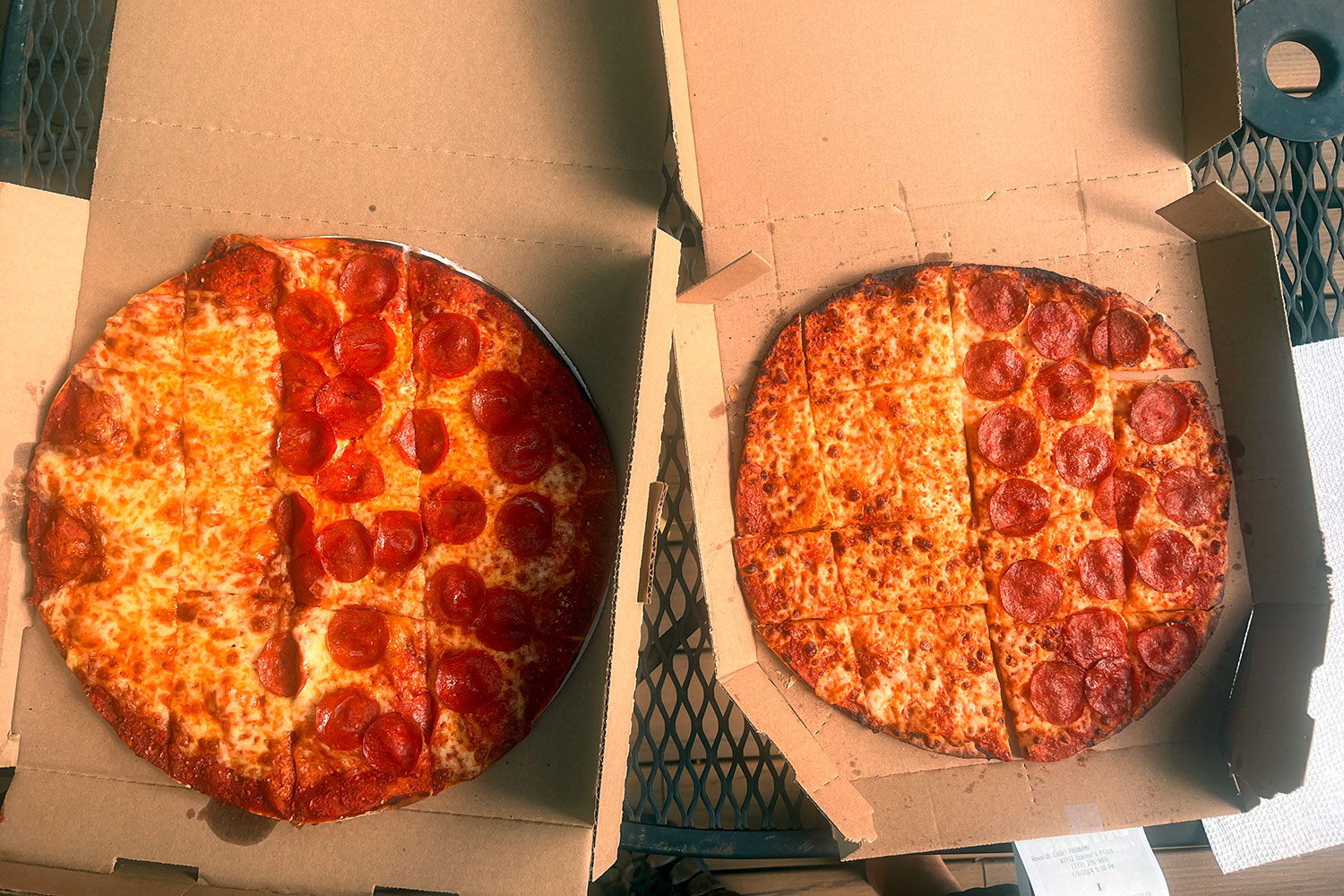
The New York Style crust uses a specific dough formula that results in a thinner profile than the standard Hand Tossed crust but maintains more chew than the Crunchy Thin Crust. Strategically, this fills a “middle-market” gap in the Domino’s portfolio.
The brand emphasizes that this crust is “hand-stretched,” a phrase carefully chosen to evoke artisanal craftsmanship. By highlighting the human element in the preparation of the New York Style crust, Domino’s counters the perception of being a purely automated, machine-driven kitchen. This sensory branding—the visual of the wide, thin slice and the tactile experience of the fold—creates a distinct “product personality” that differentiates it from the rest of the menu.
The Engineering of Authenticity in Mass-Market Fast Food
How does a brand scale authenticity? For Domino’s, the New York Style crust is a marvel of food engineering designed to mimic the characteristics of a coal-fired or deck-oven pizza within the constraints of a high-speed conveyor oven. The crust is designed to be crispy on the bottom while remaining pliable.
This “engineered authenticity” is a core part of the brand’s strategy to satisfy the “foodie” demographic without sacrificing the operational efficiency that defines the company. By perfecting the balance between a thin base and a sturdy edge (the cornicione), Domino’s reinforces its identity as an innovator that respects tradition while optimizing for the modern consumer’s need for speed.
Competitive Positioning: Domino’s vs. the “Local Slice” Narrative
One of the greatest threats to national pizza chains is the rise of the local, independent pizzeria that prides itself on “authentic” New York-style slices. Domino’s New York Style crust is a direct defensive and offensive maneuver against this segment of the market.
Hyper-Local Marketing on a Global Scale

By offering a New York Style crust, Domino’s is essentially telling its customers, “You don’t need to go to a local independent shop to get a New York slice; we can deliver that same experience to your door in 30 minutes.” This is a classic example of a “fast-follower” strategy where a large brand adopts the successful traits of niche competitors and scales them.
This positioning is particularly effective in regions far removed from the Northeast United States. In the Midwest, the South, or even internationally, Domino’s becomes the primary curator of the “New York experience.” The brand isn’t just selling pizza; it is selling a cultural icon, democratized through its vast delivery network.
Using Price Point to Displace Gourmet Alternatives
Brand strategy often intersects with pricing strategy. The New York Style crust is typically positioned as a premium or specialty offering, yet it remains significantly more affordable than a slice from a boutique pizzeria in a major metropolitan area.
By offering a large, New York-style pizza at a competitive price point—often bolstered by the brand’s aggressive “mix and match” or “weeklong carryout” deals—Domino’s creates a high “value-to-prestige” ratio. Consumers feel they are getting a premium product (New York Style) at a commodity price. This perceived value is a powerful driver of brand loyalty and market share acquisition.
Consumer Psychology and the Power of Nomenclature
The success of the New York Style crust is as much about psychology as it is about taste. The name evokes imagery of a bustling metropolis, late-night convenience, and a specific “cool” factor that a “Thin and Crispy” label simply cannot match.
Why “New York” Carries More Brand Equity than Generic Crust Types
In the world of brand equity, “New York” is a Tier-1 descriptor. It carries connotations of being the best, the original, and the most authentic in the pizza category. When Domino’s attaches this name to its crust, it inherits a portion of that equity.
Generic names like “Thin Crust” or “Extra Large” are functional but lack emotional resonance. “New York Style,” however, invites the consumer to participate in a storied tradition. This emotional branding is essential for a company like Domino’s, which must constantly work to elevate its brand image above the “cheap fast food” stereotype.
The Role of Product Consistency in Brand Loyalty
One of the strongest pillars of the Domino’s brand is consistency. Whether you order in London, Tokyo, or Des Moines, the product should be identical. The New York Style crust provides a consistent baseline for what a “premium” thin pizza should be.
For the consumer, this reliability becomes a key component of the brand’s identity. The New York Style crust offers a “safe” way to experiment with different pizza textures. The brand builds trust by delivering a product that looks like the marketing photography and tastes exactly as the consumer expects every single time. This reliability is the foundation upon which long-term brand equity is built.
The Future of Domino’s Product Branding Strategy
The introduction and refinement of the New York Style crust signal a broader shift in Domino’s corporate identity. The company is moving away from being just a delivery platform and toward being a culinary destination that offers a curated variety of “styles.”
Innovation Cycles and Limited Time Offers (LTOs)
Domino’s uses products like the New York Style crust to keep the brand relevant in a fast-moving market. While the New York Style is a permanent menu item, the branding surrounding it often mirrors the energy of a Limited Time Offer (LTO). This keeps the menu feeling fresh and gives the marketing team new “hooks” for digital advertising and social media campaigns.
The brand’s ability to iterate on its core offerings—changing a name, slightly adjusting a stretching technique, or resizing a slice—shows a high degree of organizational agility. This agility is what allows Domino’s to stay ahead of competitors who may be slower to react to changing consumer preferences for thinner, “healthier-feeling” (or at least less bready) options.
Scaling Regional Identities
The New York Style crust is likely just one chapter in a larger book of regional branding. As Domino’s continues to expand, we may see the brand experiment with other regional identities—perhaps a “Detroit Style” or a “Chicago Thin” (tavern style)—to capture other market segments.
Each of these moves would follow the same brand playbook established by the New York Style crust: identify a popular regional style, deconstruct its core attributes, engineer them for a mass-market environment, and rebrand them with an iconic name that resonates globally.
In conclusion, the New York Style crust at Domino’s is a masterclass in brand repositioning. It takes a functional product and wraps it in a narrative of geographic prestige, artisanal craftsmanship, and competitive value. For Domino’s, it’s not just a way to make pizza; it’s a way to own a piece of the “authentic” pizza narrative in the minds of millions of consumers worldwide.
aViewFromTheCave is a participant in the Amazon Services LLC Associates Program, an affiliate advertising program designed to provide a means for sites to earn advertising fees by advertising and linking to Amazon.com. Amazon, the Amazon logo, AmazonSupply, and the AmazonSupply logo are trademarks of Amazon.com, Inc. or its affiliates. As an Amazon Associate we earn affiliate commissions from qualifying purchases.