
In the rapidly evolving landscape of home automation and smart technology, the “neutral wire” has shifted from an obscure electrical term to a critical piece of knowledge for tech enthusiasts and DIYers alike. Whether you are installing a high-tech smart dimmer, a Wi-Fi-enabled thermostat, or a networked security system, the presence—or absence—of a neutral wire can be the difference between a seamless digital upgrade and a frustrating hardware failure.
Understanding the neutral wire requires moving beyond basic home maintenance into the realm of electrical engineering and hardware infrastructure. In this guide, we will explore the technical nuances of the neutral wire, its indispensable role in the Internet of Things (IoT) ecosystem, and how it serves as the silent backbone of modern smart home technology.

The Fundamentals of Electrical Circuitry in Modern Hardware
To understand what a neutral wire is, we must first look at how power is delivered to the gadgets and appliances that define our digital lives. Electricity is not a static resource; it is a flow of electrons that requires a complete, continuous path—a circuit—to perform work.
Hot, Neutral, and Ground: The Trinity of Power
In a standard North American 120V AC (Alternating Current) system, three primary wires work in tandem to power your technology.
- The Hot Wire (Line): Typically colored black or red, this wire carries the high-voltage electricity from the power source to the device.
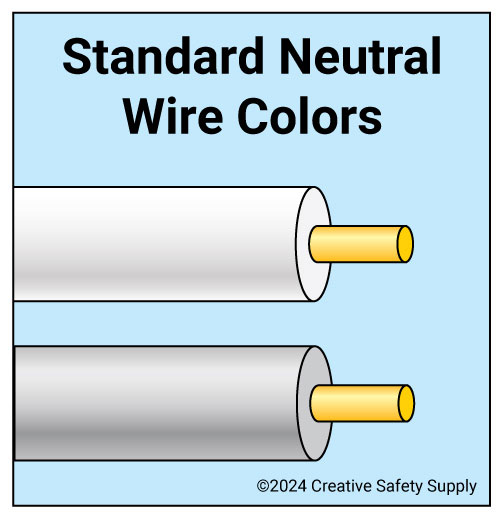
- The Neutral Wire: Usually white or gray, this wire provides the return path for the electricity to go back to the source, completing the circuit.
- The Ground Wire: Often green or bare copper, this is a safety feature designed to carry electricity safely into the earth in the event of a short circuit or hardware malfunction.
The Return Path: How the Neutral Wire Completes the Circuit
Think of electricity as a data loop. If you send a command to a server, you expect a response; without the return trip, the communication is incomplete. Similarly, the hot wire brings the “load” to your device, but the neutral wire is what allows that current to flow through the device and return to the electrical panel.
Without a neutral wire, electricity has no way to cycle back. While the hot wire provides the potential energy, the neutral wire ensures the “current” (the actual movement of electrons) can exist. In traditional tech, like a simple incandescent light bulb, the circuit is either closed (light on) or open (light off). However, as we will see, modern tech requires a more sophisticated approach.
Why the Neutral Wire is the Backbone of Smart Home Technology
For decades, basic light switches didn’t need a neutral wire at the switch box. They were simple mechanical gates that interrupted the hot wire. However, the rise of the smart home has fundamentally changed the requirements of our home’s internal wiring.
Powering the “Always-On” Requirement of IoT Devices
Modern smart switches, sensors, and controllers are not just mechanical toggles; they are sophisticated microcomputers. They contain Wi-Fi radios, Zigbee or Z-Wave chips, and LED indicators. For these devices to remain “smart,” they must be “always on.”
If a smart switch relied solely on a traditional “open/closed” hot wire circuit, it would lose power the moment you turned the lights off. A neutral wire allows the smart switch to tap into a constant, low-level stream of electricity. It uses the hot wire as its power source and the neutral wire as its own dedicated return path, allowing the device’s internal processor to stay connected to your home network even when your lights are physically dimmed or extinguished.
Why Smart Switches Demand a Neutral Connection
Most premium smart home brands—such as Lutron, TP-Link (Kasa), and Belkin (Wemo)—require a neutral wire for their flagship products. This is because the internal semiconductors and wireless modules require a stable 120V potential difference to function reliably.
When a neutral wire is present, the smart device acts as its own independent “load” on the circuit. It draws just enough power to keep its radio active, ensuring that when you tap a button on your smartphone or give a voice command to Alexa, the device is awake and ready to respond. Without that neutral wire, the device is essentially a paperweight once the main circuit is broken.
The Problem with “No-Neutral” Smart Switches
In older homes (typically those built before the mid-1980s), neutral wires were often not run to the switch boxes. To accommodate this, some tech companies have developed “no-neutral” smart switches.
These devices work by “leaking” a tiny amount of current through the light bulb itself to stay powered. While this is an ingenious workaround, it comes with technical limitations:
- Flickering: Low-power LED bulbs may flicker or glow dimly even when “off” because of the leaked current.
- Capacity: They often require a “bypass” capacitor installed at the light fixture to manage the current flow.
- Reliability: They are generally less stable for high-bandwidth Wi-Fi applications compared to neutral-required counterparts.
Identifying and Working with Neutral Wires in Your Tech Setup
Before upgrading your home to a “Smart Hub” environment, you must perform a technical audit of your existing infrastructure. Identifying the neutral wire is the first step in determining which hardware ecosystem is compatible with your space.
Standard Color Coding: Deciphering the Bundle
In modern electrical engineering standards, wires are color-coded to prevent installation errors. When you open a wall switch box, you will likely see a cluster of wires:
- The Bundle: In many cases, neutral wires are not even connected to the original “dumb” switch. They are often tucked into the back of the box, twisted together with a wire nut.
- The White Identifier: In the United States and Canada, the neutral wire is almost always white. In the UK and much of Europe, the neutral wire is blue (under the IEC standard).
However, tech-savvy installers know that you should never rely solely on color. Previous “handyman” work or non-standard wiring in older tech environments can lead to “hot whites,” where a white wire is actually carrying a current.
Testing with a Multimeter: A Tech-Focused Safety Protocol
To truly confirm the presence of a neutral wire, a digital multimeter is the preferred tool of the professional tech installer. By setting the multimeter to AC Voltage, you can test the potential difference between wires:
- Hot to Ground: Should read ~120V.
- Hot to Neutral: Should read ~120V.
- Neutral to Ground: Should read 0V (or a very negligible millivolt trace).
If you find a white wire that shows 0V when tested against the ground but completes a 120V circuit when tested against the hot wire, you have confirmed a functional neutral path. This technical verification ensures that your expensive smart home gadgets won’t be fried by improper wiring.
The Future of Power Delivery in Personal Tech
As we look toward the future of home infrastructure, the way we perceive power and neutral wires is evolving. We are moving toward a world where electrical systems are becoming as “data-rich” as our fiber-optic lines.
Matter, Thread, and the Evolution of Connected Infrastructure
The new “Matter” standard—backed by Apple, Google, and Amazon—aims to unify the smart home. As more devices adopt the “Thread” protocol (a low-power mesh network), the demand for reliable, always-on power becomes even more critical. Neutral wires will continue to be the gold standard for these installations because they provide the most stable power profile for mesh “routers” (devices that extend the network range).

Energy Monitoring and Smart Panels
The next frontier in tech is the “Smart Electrical Panel.” Companies like Span and Schneider Electric are creating digital-first breaker boxes that monitor energy usage at the circuit level. These systems rely heavily on the neutral wire to accurately measure the return current, allowing AI-driven software to tell you exactly how much energy your gaming PC or your Tesla charger is consuming in real-time.
By understanding the neutral wire, you aren’t just learning about old-school electricity; you are mastering the foundational layer of the modern digital home. As we transition toward more sustainable, AI-monitored, and highly connected living spaces, the humble white wire remains the essential link that keeps our high-tech world powered and responsive.
aViewFromTheCave is a participant in the Amazon Services LLC Associates Program, an affiliate advertising program designed to provide a means for sites to earn advertising fees by advertising and linking to Amazon.com. Amazon, the Amazon logo, AmazonSupply, and the AmazonSupply logo are trademarks of Amazon.com, Inc. or its affiliates. As an Amazon Associate we earn affiliate commissions from qualifying purchases.