
Accounts receivable (AR) stands as a critical component of any business’s financial health, representing the money owed to the company by its customers for goods or services delivered on credit. In essence, it’s a promise of future cash inflow, a testament to sales made but not yet collected. While vital for revenue generation and growth, the true value of these outstanding invoices isn’t always their face value. This is where the concept of net accounts receivable becomes indispensable, providing a more realistic and conservative measure of a company’s collectable assets.
Understanding Accounts Receivable
- What are Accounts Receivable (AR)?
At its core, AR is an asset account on a company’s balance sheet. When a business extends credit to its customers, allowing them to pay at a later date, it creates an accounts receivable. These are typically short-term assets, expected to be converted into cash within an accounting period, usually 30 to 90 days. Common examples include invoices issued to clients, medical bills pending payment from insurance companies, or trade credit extended to other businesses. Managing AR effectively is crucial because it directly impacts a company’s liquidity and cash flow. A healthy AR balance indicates strong sales, but an excessively high or slow-collecting AR can signal underlying issues with credit policies or collection efforts.

-
The Importance of AR for Businesses
Accounts receivable are more than just numbers on a ledger; they are the lifeblood of many businesses, particularly those operating in B2B sectors or offering high-value services. They allow businesses to make sales to a broader customer base, facilitating transactions that might not occur if upfront payment were the sole option. This flexibility can drive sales volume, foster customer loyalty, and ultimately contribute to market expansion. However, the inherent risk with AR is the uncertainty of collection. Not all receivables will be fully recovered, and some may never be collected at all. This potential for uncollectible debt underscores the need for a precise method of valuation, leading us to the distinction between gross and net AR. -
Gross Accounts Receivable vs. Net Accounts Receivable
Gross accounts receivable refers to the total dollar amount of all outstanding invoices owed to a company by its customers. It is the sum of all sales made on credit, without any adjustments for potential non-payment. While gross AR provides an initial snapshot of the total outstanding debt, it often presents an overly optimistic view of a company’s collectable assets.
Net accounts receivable, on the other hand, offers a more conservative and accurate representation. It is the gross accounts receivable figure minus an allowance for accounts that are estimated to be uncollectible. This “allowance” acknowledges the reality that a certain percentage of credit sales will inevitably turn into bad debt. Consequently, net AR reflects the amount a company realistically expects to collect, making it a far more reliable metric for financial analysis and decision-making.
Deconstructing Net Accounts Receivable
The calculation of net accounts receivable is a fundamental accounting practice designed to present a true and fair view of a company’s financial position. It explicitly addresses the risk of bad debt, providing stakeholders with a more realistic assessment of future cash inflows.
-
The Formula for Net AR
The core formula is straightforward:
Net Accounts Receivable = Gross Accounts Receivable – Allowance for Doubtful Accounts
Let’s break down the components:- Gross Accounts Receivable: As established, this is the total face value of all invoices outstanding from credit sales. It’s the starting point for the calculation.
- Allowance for Doubtful Accounts (AFDA): This is a contra-asset account, meaning it reduces the book value of an asset (in this case, gross AR). AFDA is an estimate of the portion of gross accounts receivable that a company believes will ultimately be uncollectible. It is not an actual cash account; rather, it’s a valuation adjustment. The expense associated with this allowance is recorded as “Bad Debt Expense” on the income statement.
- While sales returns and allowances can also technically reduce the amount owed by customers, they are typically handled as direct reductions to revenue and accounts receivable at the time of the return, rather than being part of the AFDA calculation for estimating uncollectible amounts. The AFDA specifically targets the risk of non-payment due to customer inability or unwillingness to pay.
-
The Role of the Allowance for Doubtful Accounts (AFDA)
The AFDA is arguably the most critical element in determining net accounts receivable. It embodies the principle of conservatism in accounting, ensuring that assets are not overstated.-
Why AFDA is Necessary: Businesses operate in a dynamic environment where customer creditworthiness can fluctuate. Default, bankruptcy, disputes, or simply financial difficulty can lead to customers being unable to pay their debts. Without an AFDA, a company’s balance sheet would inflate its assets, presenting a misleading picture of its financial strength. This could lead to poor operational decisions, incorrect valuations, and misinformed investor sentiment. By anticipating and reserving for bad debt, companies maintain a more accurate and prudent financial posture.
-
Estimating AFDA: Estimating the allowance for doubtful accounts is inherently subjective, requiring management judgment. Common methods include:
- Percentage of Sales Method: This approach estimates bad debt expense as a percentage of total credit sales for a period. The percentage is usually derived from historical data or industry benchmarks. While simple, it focuses on the income statement impact (bad debt expense) and doesn’t directly analyze the existing AR balance for collectability.
- Aging of Accounts Receivable Method (Balance Sheet Method): This is generally considered more accurate. It involves classifying each outstanding invoice by its age (e.g., current, 1-30 days past due, 31-60 days past due, etc.). Older receivables are assigned a higher percentage likelihood of being uncollectible. These percentages are then applied to the respective age categories, and the sum provides the desired ending balance for the Allowance for Doubtful Accounts. This method provides a direct estimate of the uncollectible portion of the existing AR balance.
-
Impact on Financial Statements: The establishment and adjustment of the AFDA have direct implications for both the balance sheet and the income statement. On the balance sheet, it directly reduces the reported value of accounts receivable to its net realizable value. On the income statement, the corresponding bad debt expense reduces net income, reflecting the cost of extending credit that ultimately goes unpaid.
-
Why Net Accounts Receivable Matters
The calculation and ongoing management of net accounts receivable are far from a mere accounting formality. They provide invaluable insights into a company’s operational efficiency, risk profile, and overall financial health.
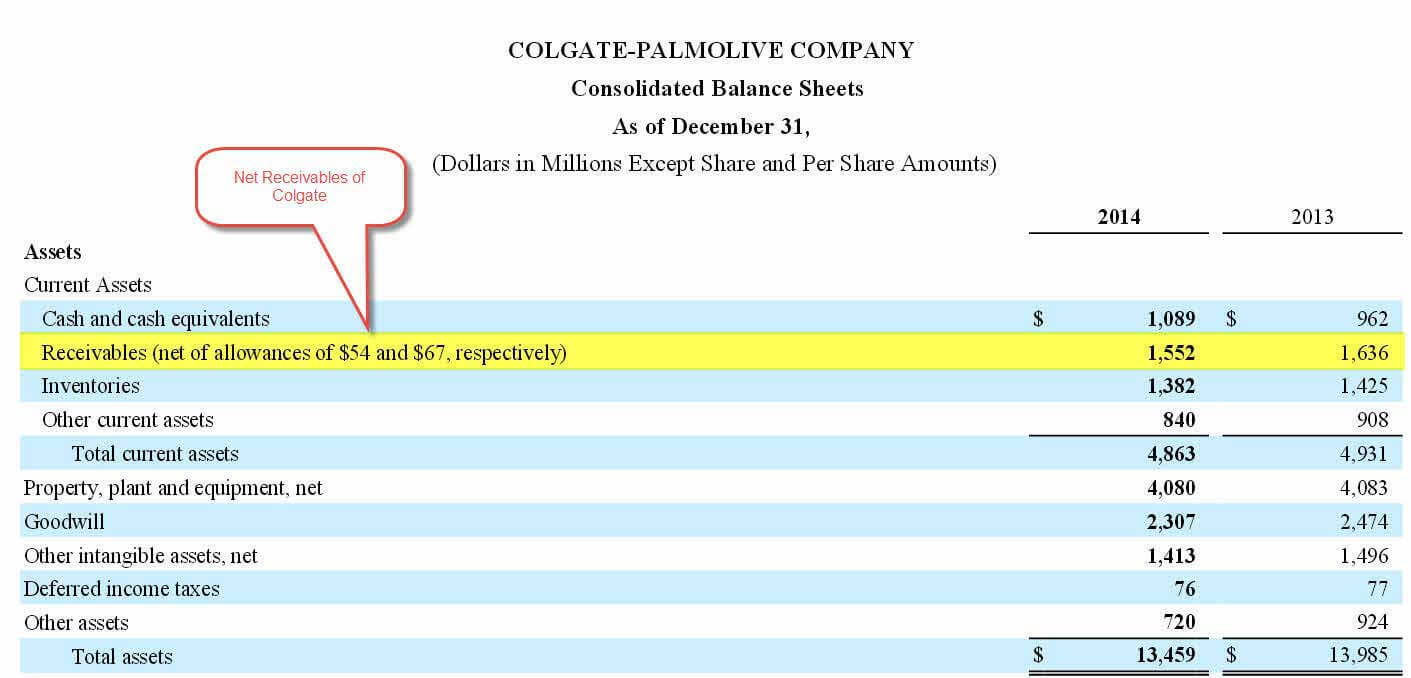
- Accurate Financial Reporting: For external stakeholders like investors, lenders, and regulators, net accounts receivable offers a more truthful reflection of a company’s current assets. It prevents the overstatement of assets, thereby enhancing the reliability and credibility of financial statements. This accuracy is paramount for maintaining transparency and fulfilling regulatory obligations.
-
Liquidity Assessment: Net AR is a crucial input for assessing a company’s short-term liquidity. While gross AR might suggest a robust pipeline of incoming cash, net AR provides a more realistic expectation of the cash that will actually be collected. This distinction is vital for cash flow planning, ensuring the company has sufficient funds to meet its immediate obligations.
-
Credit Risk Management: The process of estimating and setting the AFDA forces companies to systematically evaluate the creditworthiness of their customer base. A rising AFDA relative to gross AR can signal deteriorating customer credit quality or overly generous credit policies, prompting management to review and adjust their credit risk strategies. It acts as an early warning system for potential financial distress within the customer portfolio.
-
Forecasting and Budgeting: Realistic cash flow forecasts are built on realistic assumptions about collections. By using net AR, businesses can create more accurate budgets and financial projections, enabling better planning for expenditures, investments, and debt servicing. Overestimating collections based on gross AR can lead to significant budgetary shortfalls.
-
Investor and Lender Confidence: Companies that diligently manage and report net accounts receivable demonstrate financial prudence and a sophisticated understanding of their business risks. This instills greater confidence in investors and lenders, potentially leading to more favorable financing terms or higher valuations, as it signals a commitment to accurate financial representation and strong internal controls.
Strategies for Managing Net Accounts Receivable Effectively
Effective management of accounts receivable extends beyond merely calculating the net figure; it encompasses a comprehensive strategy aimed at optimizing collections while minimizing bad debt.
-
Robust Credit Policies: The first line of defense against uncollectible debt is a well-defined credit policy. This includes thorough credit checks for new customers, setting clear credit limits, and establishing payment terms that are realistic yet encourage timely payment. Regularly reviewing and updating these policies based on economic conditions and customer performance is critical.
-
Proactive Invoicing and Collection Procedures: Efficiency in invoicing is key. Invoices should be accurate, clear, and sent promptly. Furthermore, a systematic collection process, including timely reminders for overdue payments, clear communication with customers, and escalating actions for severely past-due accounts, can significantly improve collection rates. Leveraging technology for automated reminders can be highly effective.
-
Regular Monitoring and Analysis: Continuous monitoring of accounts receivable metrics provides actionable insights. Key performance indicators (KPIs) include:
- Accounts Receivable Turnover Ratio: Measures how many times, on average, a company collects its accounts receivable during a period. A higher ratio generally indicates efficient collection.
- Days Sales Outstanding (DSO): Represents the average number of days it takes for a company to collect revenue after a sale has been made. A lower DSO is preferable.
Analyzing trends in these metrics can highlight issues early, allowing for timely intervention.
-
Leveraging Technology: Modern accounting software and Customer Relationship Management (CRM) systems offer powerful tools for managing AR. These systems can automate invoicing, track payment statuses, generate aging reports, and even facilitate automated collection reminders. This streamlines processes, reduces manual errors, and provides real-time data for better decision-making.
-
Factoring and Invoice Discounting: For businesses facing immediate cash flow needs or looking to offload the risk of non-payment, factoring and invoice discounting can be viable options. Factoring involves selling accounts receivable to a third-party (a factor) at a discount. Invoice discounting is similar but often allows the business to retain control over collections. While these can provide quick capital, the associated costs must be carefully weighed against the benefits.

Impact on Business Decisions and Valuation
The accuracy provided by net accounts receivable extends its influence far beyond mere financial reporting, fundamentally shaping strategic business decisions and perceptions of a company’s intrinsic value.
-
Working Capital Management: Net AR directly impacts a company’s working capital – the difference between current assets and current liabilities. A healthy, well-managed net AR contributes positively to working capital, indicating sufficient short-term liquidity to cover operational expenses. Conversely, a high gross AR with a disproportionately large AFDA suggests a significant portion of working capital is tied up in potentially uncollectible debt, straining cash flow and limiting investment opportunities. Decisions regarding inventory levels, operational expansion, or even employee hiring are often predicated on the expected cash conversion cycle, where net AR plays a central role.
-
Cash Flow Implications: Ultimately, the goal of accounts receivable is to convert sales into cash. Net AR provides the most realistic forecast of that conversion. A business might show strong revenue growth on its income statement, but if its net AR is steadily declining relative to gross AR (due to increasing bad debt), it signals a potential cash crunch. Understanding net AR allows management to anticipate cash inflows more accurately, enabling better planning for debt repayments, capital expenditures, and dividend distributions. Mismanagement of net AR can lead to liquidity crises, even for otherwise profitable companies.
-
Valuation Multiples: For investors and potential acquirers, the quality and collectability of accounts receivable are significant factors in a company’s valuation. When assessing a business, financial analysts often look at various valuation multiples (e.g., Price-to-Earnings, Enterprise Value-to-EBITDA). However, the underlying health of assets, especially those expected to convert to cash, informs the confidence placed in these multiples. A company with a low-quality AR portfolio (reflected in a high allowance for doubtful accounts relative to its industry peers) might be viewed as riskier, potentially leading to a lower valuation multiple applied to its earnings or revenue. Conversely, a business demonstrating strong AR management, consistently translating gross AR into healthy net AR and subsequently into cash, is often perceived as more stable and valuable. This is because a robust net AR indicates not just sales, but collectable sales, which are the true drivers of sustainable profitability and cash generation.