
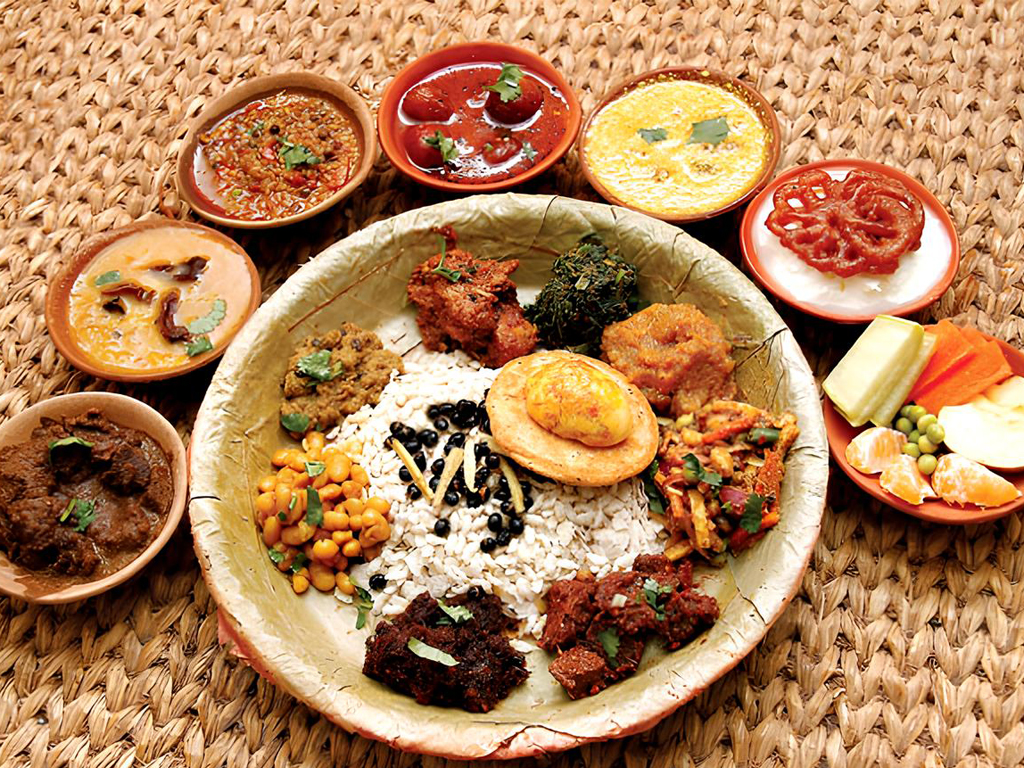
In the traditional sense, “Nepal food” is a tapestry of Himalayan flavors, ranging from the staple Dal Bhat to the globally recognized Momo. However, from a financial and business perspective, Nepal’s food sector represents one of the most significant and under-leveraged economic engines in South Asia. For investors, entrepreneurs, and financial analysts, understanding what constitutes the food industry in Nepal requires moving beyond recipes and into the realm of supply chain logistics, agrotechnology, export markets, and the burgeoning service economy of Kathmandu and beyond.

The Agrarian Foundation: Analyzing the Economic Impact of Primary Production
At its core, the definition of food in Nepal is inextricably linked to the country’s Gross Domestic Product (GDP). Agriculture remains the backbone of the Nepalese economy, contributing approximately 24% to 27% of the total GDP and employing over 60% of the workforce. When we discuss “Nepal food” in a financial context, we are discussing a massive labor market and a primary sector that dictates the nation’s fiscal health.
The Role of Rice and Grains in National GDP
Rice is the primary cereal crop of Nepal, and its production levels serve as a leading indicator for the country’s economic performance. In years with favorable monsoons and high yields, the national economy often sees a corresponding uptick in growth. From a money management perspective, the volatility of grain prices in Nepal is a critical factor for inflation monitoring. The transition from subsistence farming to commercial grain production is currently one of the most significant investment opportunities in the region, as modernization of milling and storage facilities offers substantial returns on capital.
High-Value Exports: Cardamom, Tea, and Coffee
While staples form the foundation, the real “wealth” of Nepal food lies in high-value cash crops. Nepal is one of the world’s largest producers of large cardamom, a spice that commands premium prices in international markets, particularly in India and the Middle East. Similarly, the Orthodox tea produced in the hills of Ilam and the high-altitude Arabica coffee are gaining traction as luxury brands globally. For the savvy investor, these sectors represent “green gold”—commodities with high profit margins that benefit from Nepal’s unique geographical indications (GI).
The Food Service Revolution: Investment Opportunities in Hospitality and QSRs
The urban landscape of Nepal, particularly the Kathmandu Valley, is witnessing a radical shift in consumer behavior. As disposable income rises among the middle class and the diaspora returns with international tastes, the “Nepal food” scene is transforming into a sophisticated marketplace for Quick Service Restaurants (QSRs) and fine dining.
The Rise of Franchise Models in Kathmandu
The commercialization of traditional food has paved the way for scalable business models. The “Momo” (Nepalese dumpling) is no longer just a street food; it has become a franchisable asset. Brands like Bota Momo and various local chains have demonstrated that standardized quality control and modern branding can turn a traditional dish into a high-revenue corporate entity. This shift toward organized retail in the food sector is attracting private equity interest and local venture capital, as the scalability of these models offers a clear path to exit or expansion.
Tourism as a Catalyst for Culinary Revenue
Tourism is a major source of foreign exchange for Nepal. The culinary experience is a central component of the tourism value proposition. From “Thakali” sets served in high-end boutiques to the organic “Farm-to-Table” initiatives in Pokhara, the intersection of food and hospitality is a high-growth area. Investors are increasingly looking at integrated models where agro-tourism and high-end culinary experiences create a synergistic revenue stream, capitalizing on the “authentic” Nepal food brand to attract high-spending international visitors.
The Digital Transformation of the Food Market: Fintech and E-commerce Integration
Perhaps the most exciting development in the financial landscape of Nepal’s food industry is the rapid adoption of technology. The “what” of Nepal food is now being defined by “how” it is purchased and delivered.
Mobile Wallets and the Cashless Transition in Local Markets
The integration of fintech tools like eSewa, Khalti, and Fonepay has revolutionized the micro-economy of food. Even small-scale vegetable vendors in Kalimati (Nepal’s largest wholesale market) are adopting QR code payments. This digitalization provides a treasure trove of data for financial institutions to assess creditworthiness, allowing for the introduction of micro-loans and working capital for food vendors who were previously excluded from the formal banking sector.
Logistics and the Profitability of Food Delivery Startups
Companies like Foodmandu and Bhojdeals have changed the unit economics of the restaurant industry in Nepal. By providing a third-party delivery infrastructure, these platforms have allowed restaurants to expand their market reach without increasing their physical footprint. However, the high cost of fuel and the complexities of Kathmandu’s geography make logistics a challenging but rewarding investment. The next phase of this evolution involves the development of “Cloud Kitchens” (delivery-only restaurants), which optimize real estate costs and maximize profit margins in the food service sector.
Scaling the Global Brand: The Business of Exporting “Momo” and Himalayan Spices
The concept of Nepal food is no longer confined to the borders of the country. With millions of Nepalese living abroad, there is a burgeoning international market for authentic Himalayan ingredients and ready-to-eat products.
Supply Chain Challenges and Regulatory Compliance
The export of Nepalese food products faces significant hurdles, primarily in the form of Sanitary and Phytosanitary (SPS) measures and quality certification. For businesses looking to tap into the European or North American markets, investing in international standard laboratories and certification (such as ISO or HACCP) is a mandatory financial hurdle. However, once these barriers are crossed, the price arbitrage between local production costs and international retail prices offers immense profitability.
Strategic Branding for Premium Organic Products
There is a growing global trend toward organic and “superfood” consumption. Nepal’s “Himalayan” brand is a powerful marketing tool. Products such as Himalayan honey (including the rare medicinal “Mad Honey”), Shilajit, and mountain-grown herbs are being positioned as premium wellness products. Financial growth in this niche is driven by storytelling and brand equity, where the “origin story” of the food adds significant value to the commodity.
Financial Outlook: Navigating Inflation and Resource Allocation in the Food Sector
Investing in the Nepal food sector is not without its risks. As a landlocked country, Nepal is highly susceptible to external shocks, particularly fluctuations in Indian trade policies and global fuel prices.
Managing Cost of Goods Sold (COGS) in a Landlocked Economy
For any food business in Nepal, the Cost of Goods Sold (COGS) is heavily influenced by import dependencies. Despite being an agrarian society, Nepal imports a significant amount of its oil, sugar, and even rice. This creates a currency risk and an inflation risk. Successful businesses in this sector are those that focus on vertical integration—controlling their own supply chains from the farm to the processing unit—to mitigate the volatility of market prices.

Future Projections for Agrobusiness Investors
The future of “Nepal food” as a financial sector lies in processing and value addition. The government of Nepal has identified “Agribusiness and Processing” as a priority sector for Foreign Direct Investment (FDI). Tax incentives, subsidized loans for agricultural ventures, and the development of Special Economic Zones (SEZs) are making the sector more attractive.
As the country moves toward middle-income status, the demand for processed, packaged, and branded food products will only increase. For the financial community, the question “What is Nepal food?” is answered by a multi-billion dollar opportunity to modernize a traditional industry, bridge the gap between rural production and urban consumption, and project a unique culinary identity onto the global stage.
The transition from a subsistence-based food system to a commercialized, tech-enabled, and export-oriented industry represents the next great frontier in Nepal’s economic development. Whether through investing in cold-chain logistics, backing the next big food-tech startup, or financing the export of Himalayan spices, the financial potential of Nepal food is as vast as the mountains from which it originates.
aViewFromTheCave is a participant in the Amazon Services LLC Associates Program, an affiliate advertising program designed to provide a means for sites to earn advertising fees by advertising and linking to Amazon.com. Amazon, the Amazon logo, AmazonSupply, and the AmazonSupply logo are trademarks of Amazon.com, Inc. or its affiliates. As an Amazon Associate we earn affiliate commissions from qualifying purchases.