
In the intricate world of investment funds, understanding key metrics is paramount for making informed decisions. One such critical concept is Net Asset Value, or NAV. While NAV itself represents the per-share value of a fund, its “erosion” signifies a reduction in this intrinsic worth, a phenomenon that can significantly impact an investor’s returns. Far from a mere accounting entry, NAV erosion is a tangible concern that reflects underlying challenges within a fund’s operations or market environment. For both seasoned investors and newcomers, grasping the nuances of NAV erosion is essential for evaluating performance, mitigating risks, and safeguarding investment capital.
This article delves deep into what NAV erosion entails, exploring its foundational elements, identifying its primary causes, dissecting its impact on investors, and outlining strategies to monitor and potentially counteract its effects. By demystifying this crucial financial concept, we aim to provide a clearer path for investors to navigate the complexities of fund valuation and optimize their financial journeys.
Understanding Net Asset Value (NAV) at Its Core
Before we can fully grasp the concept of NAV erosion, it’s imperative to establish a clear understanding of what Net Asset Value (NAV) actually represents. NAV is the cornerstone of valuation for many collective investment schemes, offering a snapshot of a fund’s intrinsic worth on a per-share basis.
Defining NAV: The True Value Per Share
At its most fundamental, Net Asset Value is the total value of a fund’s assets minus its liabilities, divided by the number of outstanding shares or units. The formula is straightforward:
NAV = (Total Assets – Total Liabilities) / Number of Outstanding Shares
-
Total Assets include the market value of all securities held by the fund (stocks, bonds, cash, real estate, etc.), as well as any accrued income.
-
Total Liabilities encompass expenses such as management fees, administrative costs, brokerage commissions, and any outstanding payables.
For open-end mutual funds, the NAV is the price at which investors buy shares from the fund and sell shares back to the fund. It’s calculated once per day, typically at the close of the major U.S. stock exchanges, reflecting the end-of-day market value of all holdings. This daily calculation ensures that all transactions are based on the latest available market prices, providing transparency and fairness to investors. For exchange-traded funds (ETFs) and closed-end funds (CEFs), while NAV is still calculated daily, their market price can fluctuate throughout the trading day based on supply and demand, often trading at a premium or discount to their NAV.
Daily Calculation and Market Impact
The daily calculation of NAV is a critical ritual in the investment world. Fund administrators meticulously gather the closing prices of all securities held in the portfolio, factor in cash balances and any other assets, subtract the accrued liabilities, and then divide by the total number of shares in circulation. This process determines the exact value of each share.
The significance of NAV extends beyond mere pricing. It serves as a vital benchmark for performance evaluation, allowing investors to track how well a fund’s underlying portfolio is performing relative to its costs and the broader market. A consistent increase in NAV indicates growth in the fund’s underlying assets, while a decline, or erosion, signals a reduction in its inherent value. Understanding this daily rhythm and its implications is the first step toward recognizing the early signs of NAV erosion and its potential impact on an investment.
Decoding NAV Erosion: Causes and Mechanisms
NAV erosion is not a singular event but rather the outcome of various factors working in concert, chipping away at the fund’s intrinsic value. Identifying these causes is crucial for investors seeking to understand why their fund’s per-share value might be declining.
Investment Performance and Market Fluctuations
The most direct and significant cause of NAV erosion is a decline in the market value of the underlying securities held within the fund’s portfolio. If the stocks, bonds, or other assets that the fund owns decrease in price, the fund’s total assets will shrink, directly leading to a lower NAV.
-
Broad Market Downturns: During periods of economic recession, bear markets, or widespread geopolitical instability, entire markets can decline. A diversified fund, while protected from single-stock risk, is still susceptible to systemic market risk, leading to an overall drop in the value of its holdings.
-
Sector-Specific Challenges: Even in a generally bullish market, specific sectors or industries can face headwinds. A technology fund, for instance, might experience NAV erosion if the tech sector undergoes a correction, regardless of how the broader market performs.
-
Poor Stock Selection: Fund managers might make investment decisions that underperform the market or their benchmarks. Misjudging market trends, investing in overvalued securities, or failing to adapt to changing economic conditions can lead to losses within the portfolio.
Operational Costs and Expense Ratios
Funds incur a variety of operational costs, and these expenses directly reduce the fund’s total assets, thereby impacting NAV. While necessary for the fund’s operation, excessively high or poorly managed costs can significantly contribute to NAV erosion, even when the underlying investments are performing reasonably well.
-
Management Fees: These are the fees paid to the fund manager for their expertise and services. Higher management fees mean a larger deduction from the fund’s assets.
-
Administrative and Operating Expenses: This category includes costs for legal services, auditing, record-keeping, and marketing.
-
Trading Costs: Brokerage commissions and other fees incurred from buying and selling securities within the portfolio also reduce the fund’s assets. Funds with high portfolio turnover (frequent buying and selling) tend to have higher trading costs.
The expense ratio – the total annual operating expenses as a percentage of average net assets – is a critical metric here. A high expense ratio can perpetually eat into returns, causing a slow but steady erosion of NAV over time, making it harder for the fund to generate net positive returns for investors.
Redemptions and Fund Flows
The flow of money into and out of a fund can also influence NAV, particularly for open-end funds. While inflows generally increase a fund’s assets (and potentially its NAV if invested wisely), significant outflows or redemptions can contribute to erosion.
-
Forced Selling: When a large number of investors redeem their shares, the fund manager may be forced to sell off underlying assets to meet those redemption requests. If these sales occur during unfavorable market conditions, the fund might have to sell securities at a loss, thus reducing the fund’s overall value and its NAV.
-
Impact on Portfolio Strategy: Large outflows can disrupt the fund’s carefully constructed portfolio strategy, forcing managers to liquidate holdings that they might otherwise prefer to keep, or making it difficult to maintain desired asset allocations. This can lead to suboptimal portfolio management and further erode future returns.
Distributions and Their Mechanical Impact on NAV (Not True Erosion)
It’s crucial to distinguish between true NAV erosion, which signifies a loss of underlying value, and the mechanical reduction in NAV that occurs due to dividend and capital gains distributions.
-
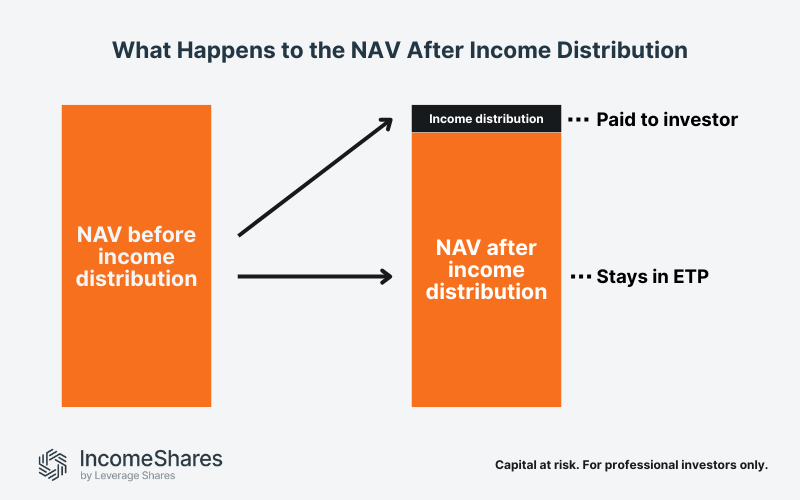
Dividend Distributions: When a fund pays out dividends from the income it generates (e.g., from bond interest or stock dividends), its NAV will decrease by the amount of the distribution per share on the ex-dividend date. This is because the cash has moved out of the fund and into the hands of the shareholders.
-
Capital Gains Distributions: Similarly, when a fund sells securities at a profit and distributes these realized capital gains to shareholders, its NAV will decrease by the amount of the distribution.
While these distributions cause a temporary dip in NAV, they do not represent erosion in the negative sense. Instead, they are a transfer of value from the fund to the investor. An investor’s total return (NAV change plus distributions) would still reflect the fund’s overall performance. Misinterpreting this mechanical adjustment as erosion can lead to unnecessary concern. True NAV erosion refers to a reduction in the fund’s underlying value that isn’t offset by a distribution of that value to shareholders.
The Tangible Impact of NAV Erosion on Investors
NAV erosion is more than just a theoretical concept; it has direct, tangible consequences that can significantly affect an investor’s financial well-being and psychological state. Understanding these impacts is crucial for appreciating the importance of monitoring fund performance closely.
Diminished Returns and Wealth Accumulation
The most straightforward impact of NAV erosion is a reduction in investment returns. If the NAV of a fund you hold is consistently declining, the value of your initial investment is shrinking. This means:
-
Loss of Principal: In severe cases, significant NAV erosion can lead to a loss of your original invested capital, meaning you get back less than you put in.
-
Compromised Compounding: The power of compound interest, where earnings generate further earnings, is severely hampered. With a shrinking principal, future gains (if any) will be calculated on a smaller base, significantly slowing down or reversing wealth accumulation.
-
Failure to Meet Financial Goals: Whether it’s saving for retirement, a down payment on a house, or a child’s education, sustained NAV erosion makes it harder, if not impossible, to achieve these long-term financial objectives within the planned timeframe.
Over time, even seemingly small rates of NAV erosion can have a profound impact, gradually eroding wealth that might have taken years to build.
Psychological Toll and Investment Behavior
Beyond the financial spreadsheet, NAV erosion can take a significant psychological toll on investors, often leading to detrimental behavioral biases.
-
Anxiety and Stress: Watching the value of one’s investments decline can cause significant anxiety and stress, especially if a large portion of one’s savings is tied up in the affected fund.
-
Panic Selling: A common reaction to sustained losses is panic selling, where investors liquidate their holdings out of fear that the value will fall further. While sometimes a necessary risk management strategy, panic selling often locks in losses and prevents investors from participating in subsequent market rebounds, further exacerbating the financial hit.
-
Loss of Confidence: Erosion can lead to a loss of confidence in the fund manager, the investment strategy, or even the stock market in general. This can deter investors from participating in future opportunities or cause them to shy away from necessary risk-taking.
-
Regret and Self-Blame: Investors may experience regret over their initial investment choices and engage in self-blame, which can affect future decision-making.
Recognizing these psychological impacts is important for developing a disciplined investment approach that can weather market downturns without succumbing to emotional traps.
Strategies to Mitigate and Monitor NAV Erosion
While it’s impossible to entirely eliminate the risk of NAV erosion, particularly due to market-wide downturns, investors can adopt several proactive strategies to mitigate its impact and monitor their investments effectively.
Diligent Due Diligence and Fund Selection
The first line of defense against NAV erosion lies in thorough research before investing.
-
Understand Fund Objectives and Strategy: Ensure the fund’s investment philosophy aligns with your risk tolerance and financial goals. A fund focusing on highly speculative assets will inherently carry higher NAV erosion risk during market downturns.
-
Evaluate Management Team: Research the experience and track record of the fund manager. Look for stability in leadership and a consistent investment approach.
-
Analyze Historical Performance: While past performance doesn’t guarantee future results, it can offer insights into how the fund has navigated different market cycles. Compare its performance against relevant benchmarks and peers.
-
Scrutinize Expense Ratios: Opt for funds with lower expense ratios, as high fees can contribute significantly to long-term NAV erosion. Actively managed funds often have higher fees than passively managed index funds or ETFs.
-
Review Underlying Holdings: Understand what the fund invests in. A concentrated portfolio might offer higher upside but also greater downside risk, leading to more volatile NAV fluctuations.
Diversification Across Asset Classes and Funds
Diversification is a cornerstone of prudent investing and a powerful tool against NAV erosion.
-
Asset Class Diversification: Spread your investments across different asset classes such as stocks, bonds, real estate, and commodities. When one asset class underperforms, others may perform well, cushioning the overall portfolio against significant declines.
-
Fund Diversification: Within each asset class, diversify across multiple funds, ideally with different investment strategies or managers. This reduces reliance on the performance of a single fund or manager.
-
Geographic Diversification: Invest in funds that have exposure to different global markets, as economic conditions can vary significantly by region.
By not putting all your eggs in one basket, you reduce the likelihood that a downturn in one area will severely erode your entire investment portfolio’s value.
Regular Portfolio Review and Rebalancing
Investing is not a set-it-and-forget-it endeavor. Regular monitoring and periodic adjustments are essential.
-
Monitor Fund Performance: Regularly check the NAV and overall performance of your funds against their benchmarks and your expectations. Look for consistent underperformance relative to peers or the market.
-
Stay Informed: Keep abreast of market conditions, economic news, and any changes within the funds you hold (e.g., change in management, shift in strategy).
-
Rebalancing: Periodically review your asset allocation and rebalance your portfolio to bring it back to your target proportions. For instance, if a particular asset class has performed very well, its weight in your portfolio might have grown beyond your desired level, potentially increasing risk. Rebalancing involves selling some of the outperforming assets and buying more of the underperforming ones, effectively selling high and buying low, which can also help mitigate future NAV erosion in overvalued segments.
Long-Term Perspective and Dollar-Cost Averaging
Adopting a long-term mindset and utilizing strategic investment techniques can help smooth out the impact of short-term NAV fluctuations.
-
Long-Term View: Market downturns and periods of NAV erosion are often temporary. Investors with a long-term horizon (many years or decades) have the advantage of riding out these fluctuations, allowing their investments time to recover and grow. Panicking and selling during a dip often locks in losses.
-
Dollar-Cost Averaging: This strategy involves investing a fixed amount of money at regular intervals (e.g., monthly). When the fund’s NAV is high, your fixed investment buys fewer shares; when the NAV is low (potentially due to erosion), it buys more shares. Over time, this averages out your purchase price, reducing the risk of making a large investment right before a significant drop in NAV and potentially benefiting from subsequent recoveries.
By combining diligent research with strategic diversification, regular monitoring, and a patient, long-term approach, investors can significantly enhance their resilience against NAV erosion and work towards achieving their financial goals more securely.
Differentiating NAV Erosion from Other Fund Fluctuations
It’s vital for investors to accurately interpret changes in fund values, distinguishing between true NAV erosion and other normal or even beneficial fluctuations. Misinterpretation can lead to poor decision-making.
Market Price vs. NAV (for ETFs/Closed-End Funds)
For Exchange-Traded Funds (ETFs) and Closed-End Funds (CEFs), a crucial distinction exists between their market price and their Net Asset Value (NAV). Unlike open-end mutual funds, which are bought and sold directly from the fund at their NAV, ETFs and CEFs trade on stock exchanges like individual stocks throughout the day.
-
Premium/Discount to NAV: Because their market price is determined by supply and demand on the exchange, it can deviate from the fund’s underlying NAV.
-
A premium occurs when the market price is higher than the NAV.
-
A discount occurs when the market price is lower than the NAV.
-
-
Market Price Fluctuations are Not Always NAV Erosion: If an ETF’s market price drops significantly, it doesn’t automatically mean its NAV has eroded. The underlying value of its holdings (NAV) might have remained stable, but investor sentiment or trading activity could have pushed its market price down, creating a wider discount to NAV. Conversely, a rising market price might simply be narrowing a discount or expanding a premium, not necessarily indicating a rise in the intrinsic value of the underlying assets. Investors in ETFs and CEFs must therefore monitor both the market price and the NAV to understand the fund’s true valuation and make informed decisions.
Distributions vs. Erosion (Reiterating the Distinction)
As discussed earlier, a reduction in a fund’s NAV due to a distribution of dividends or capital gains is fundamentally different from NAV erosion.
-
Distributions: When a fund distributes income or realized capital gains, the cash or assets are paid out to shareholders. The fund’s NAV decreases by the amount of the distribution per share. However, the shareholder receives that value directly, either as cash or through reinvestment in additional shares. Thus, the shareholder’s total wealth from that investment typically remains unchanged (pre-tax), as value has simply moved from the fund’s internal holdings to the shareholder’s account. This is a transfer of value, not a loss.
-
True Erosion: In contrast, true NAV erosion refers to a situation where the market value of the fund’s underlying assets decreases, or its operational liabilities increase, resulting in a net reduction of its intrinsic value that is not distributed to shareholders. This represents a genuine loss of value within the fund itself, directly diminishing the investor’s principal without any compensating payout.
Understanding this critical difference prevents investors from misinterpreting a normal, often beneficial, distribution event as a negative sign of fund performance. Always consider the total return, which combines NAV change with any distributions, for an accurate picture of your investment’s health.
Conclusion: Navigating the Waters of Fund Valuation
NAV erosion, while a complex concept influenced by a myriad of factors, is a fundamental aspect of investment fund management that every investor should comprehend. It transcends mere market volatility, delving into the core operational efficiency, strategic acumen, and underlying asset performance of a fund. From the pervasive impact of market downturns and the subtle drag of high expense ratios to the strategic implications of fund redemptions, various forces can contribute to the decline in a fund’s per-share value.
The consequences of NAV erosion are far-reaching, directly impacting an investor’s ability to accumulate wealth and, equally important, testing their psychological resilience. A sustained decrease in NAV can erode principal, hinder compounding, and, if not properly understood, lead to emotional decisions like panic selling.
However, armed with knowledge, investors are not powerless. Through diligent due diligence, strategic diversification, consistent portfolio monitoring, and a disciplined, long-term investment approach, the risks associated with NAV erosion can be significantly mitigated. Furthermore, distinguishing between genuine value loss and the mechanical adjustments due to distributions or market price deviations for ETFs is paramount for accurate interpretation of fund performance.
In the dynamic landscape of finance, a clear understanding of “what is NAV erosion” empowers investors to make more informed choices, protect their capital, and ultimately navigate the waters of fund valuation with greater confidence and strategic foresight. By focusing on intrinsic value and maintaining a balanced perspective, investors can better weather market storms and work towards their long-term financial objectives.
aViewFromTheCave is a participant in the Amazon Services LLC Associates Program, an affiliate advertising program designed to provide a means for sites to earn advertising fees by advertising and linking to Amazon.com. Amazon, the Amazon logo, AmazonSupply, and the AmazonSupply logo are trademarks of Amazon.com, Inc. or its affiliates. As an Amazon Associate we earn affiliate commissions from qualifying purchases.