
For the modern investor, the daily fluctuations of the stock market are often distilled into two or three names that dominate the headlines: the Nasdaq and the Dow. Whether you are checking a financial app on your phone or watching the evening news, these indices are used as shorthand for the health of the economy. However, despite their ubiquity, the Nasdaq and the Dow Jones Industrial Average (DJIA) represent fundamentally different aspects of the financial landscape. Understanding the distinction between them is not just an academic exercise; it is a critical component of building a sophisticated investment strategy and managing risk in a volatile global economy.
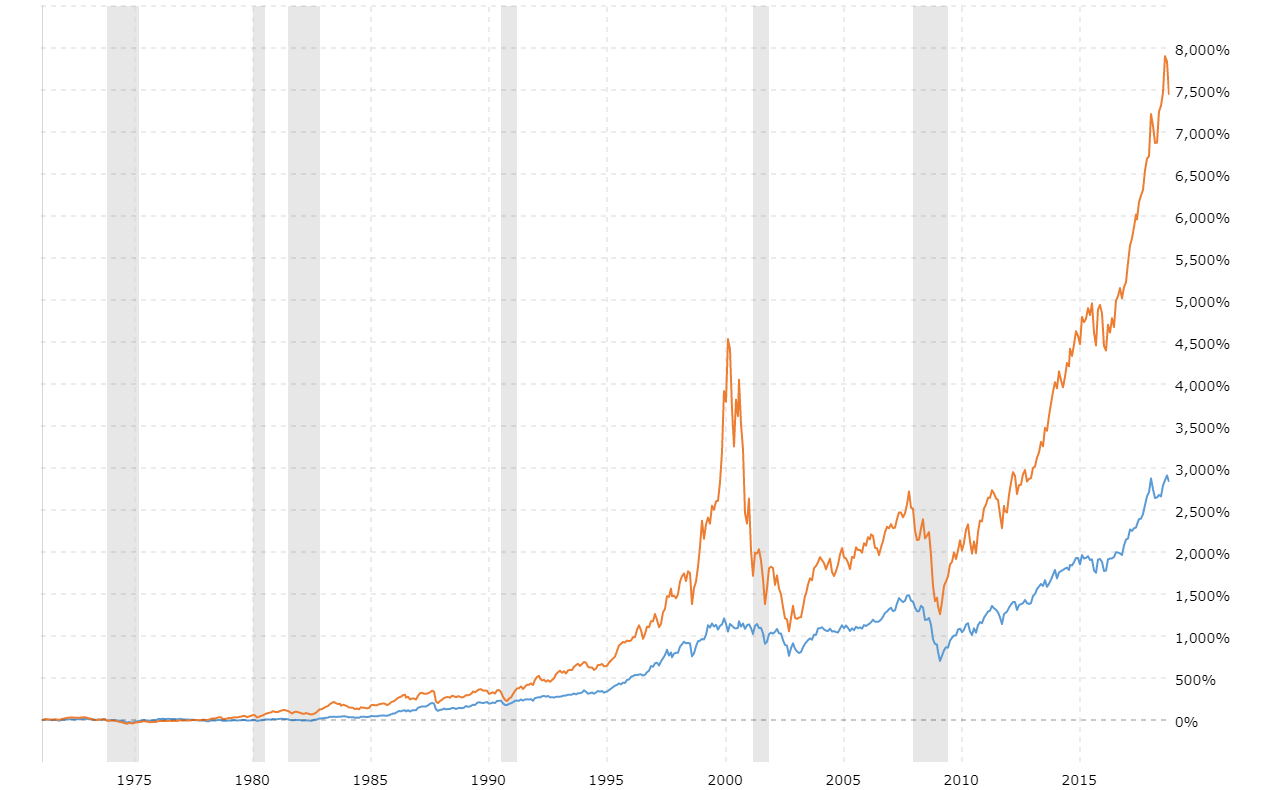
To the uninitiated, a “up” day for the Dow and a “down” day for the Nasdaq might seem like a contradiction. In reality, these discrepancies highlight the different methodologies, sector weights, and philosophies that underpin the two most famous benchmarks in American finance. By dissecting the mechanics of each, investors can better interpret market signals and align their portfolios with their specific financial goals.
Understanding the Nasdaq: The Engine of Growth and Innovation
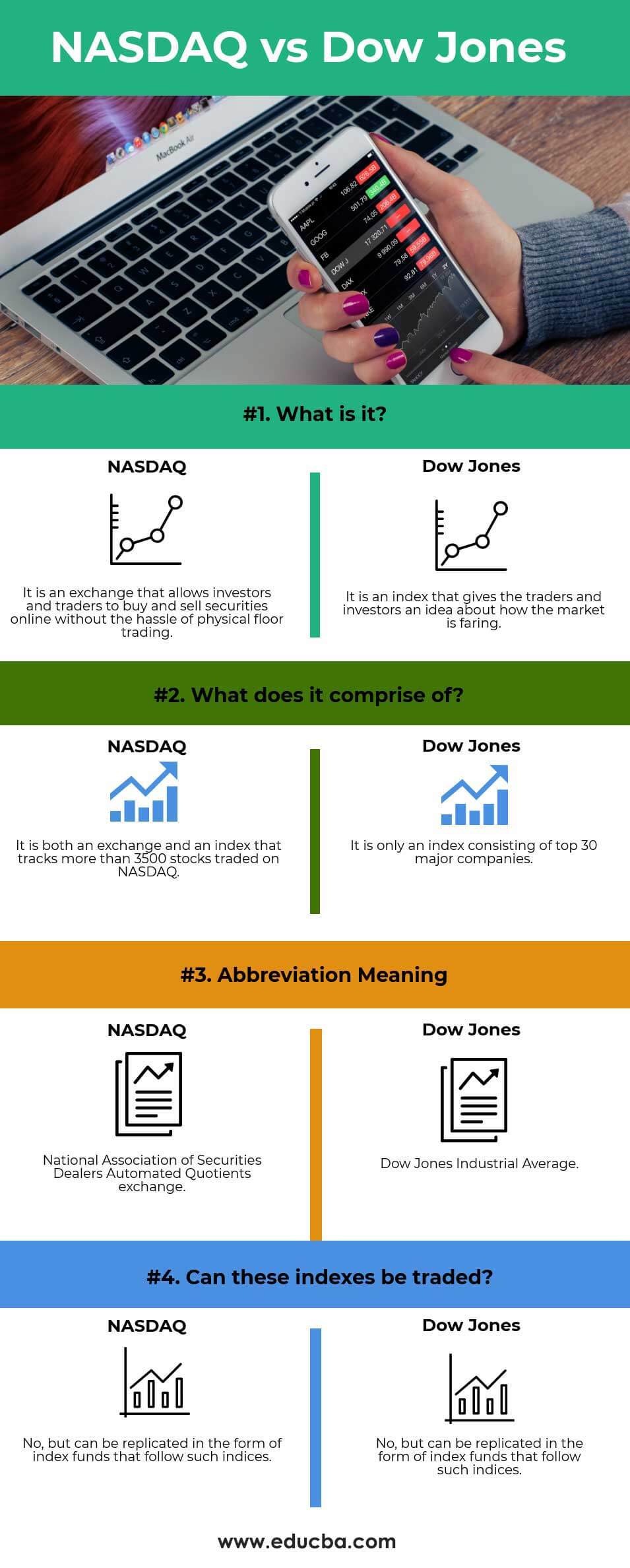
The term “Nasdaq” is often used interchangeably to describe two different things: a stock exchange and a market index. To understand the Nasdaq’s role in the financial world, one must first distinguish between the Nasdaq Stock Market (the physical and electronic infrastructure where trades happen) and the Nasdaq Composite Index (the statistical measure of performance).
The Nasdaq Composite vs. the Nasdaq 100
The Nasdaq Composite Index is a broad-based index that includes nearly all stocks listed on the Nasdaq Stock Market—over 3,000 companies. This makes it a massive representation of the speculative and growth-oriented segments of the economy. However, when financial analysts talk about “the Nasdaq” in the context of high-performance tech, they are often referring to the Nasdaq 100. This is a subset of the 100 largest non-financial companies listed on the exchange. While the Composite gives a bird’s-eye view, the Nasdaq 100 is the powerhouse that drives investor sentiment in the technology and biotechnology sectors.
The Power of Market Capitalization Weighting
One of the most defining characteristics of the Nasdaq is that it is a “market-cap-weighted” index. In this system, companies with a larger total market value (share price multiplied by the number of outstanding shares) have a proportionally greater impact on the index’s movement. For example, a 1% move in a trillion-dollar company like Apple or Microsoft will shift the Nasdaq significantly more than a 1% move in a small-cap software firm.
This weighting reflects the actual economic reality of the market; larger companies influence the economy more than smaller ones. However, it also means that the Nasdaq can be top-heavy. If the “Magnificent Seven” tech giants are performing well, the Nasdaq can soar even if hundreds of smaller companies are struggling. This makes it an excellent barometer for the growth sector, but potentially a skewed representation of the broader business environment.
The Tech-Heavy Persona
Since its inception in 1971 as the world’s first electronic stock market, the Nasdaq has attracted companies at the forefront of innovation. Today, it is synonymous with the technology sector. While it does include consumer services, healthcare, and industrial firms, its heavy concentration in software, semiconductors, and internet giants makes it the go-to index for investors seeking growth. Consequently, the Nasdaq tends to be more volatile than other indices. It thrives during periods of low interest rates and high economic optimism but can face sharp corrections when the “risk-on” sentiment fades.
Decoding the Dow Jones Industrial Average: The Historical Benchmark
If the Nasdaq represents the future, the Dow Jones Industrial Average (DJIA) represents the establishment. Often simply called “the Dow,” it is the oldest and most recognized stock market index in the world. Founded by Charles Dow in 1896, it was originally designed to track the health of the American industrial sector. Over a century later, it remains the primary way the general public perceives the “stock market.”
The Methodology: The Price-Weighted Paradox
The most striking difference between the Dow and almost every other modern index is its “price-weighted” methodology. Unlike the Nasdaq, which looks at the total value of a company, the Dow is calculated based on the share price of its component stocks.
In the Dow, a stock trading at $200 per share has twice the influence of a stock trading at $100, regardless of the companies’ actual sizes. This methodology is often criticized by modern financial theorists because a company’s share price is somewhat arbitrary—influenced by stock splits and the number of shares issued—and does not necessarily reflect its importance to the economy. However, this quirk is a relic of the pre-computer era when Charles Dow needed a simple way to calculate a daily average by hand.
The Selection Process: Identifying the Blue Chips
The Dow consists of only 30 companies. These are not just any companies; they are “blue chips”—mature, household names with a history of stable earnings and reliable dividends. Unlike the Nasdaq, which is governed by strict mathematical eligibility, the components of the Dow are selected by a committee at S&P Dow Jones Indices.
The goal of the committee is to ensure the Dow represents a broad cross-section of the U.S. economy. This is why you will find companies like Coca-Cola, Goldman Sachs, and Walmart in the index alongside tech players like Salesforce and Apple. Because it only tracks 30 stocks, the Dow is not a “broad” market index, but rather a snapshot of the elite titans of American industry.
The Psychological Weight of the Dow
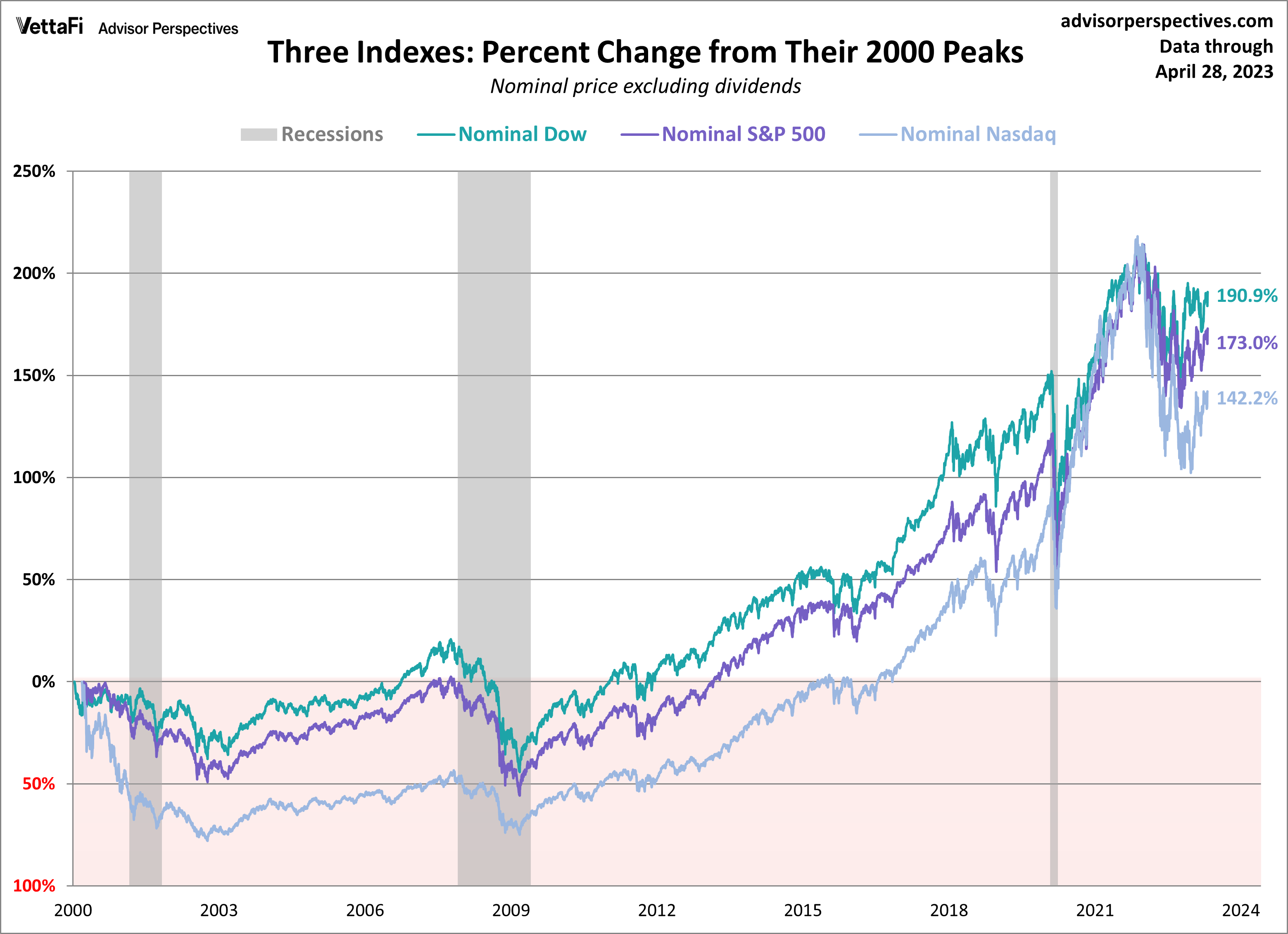
Despite its mathematical eccentricities and small sample size, the Dow remains incredibly influential. Because it focuses on profitable, established companies, it is often seen as a measure of “value” and stability. When the economy faces turbulence, investors often flock to the Dow as a defensive play. Its movements are generally less erratic than the Nasdaq, making it the preferred benchmark for conservative investors and those focused on capital preservation and dividend income.
Fundamental Differences: Composition, Calculation, and Diversification
When deciding how to use these indices to inform your financial decisions, it is helpful to look at them side-by-side. Their differences create distinct risk-reward profiles that serve different roles in a diversified portfolio.
Breadth: 3,000 vs. 30
The first major difference is the scope. The Nasdaq Composite offers exposure to thousands of companies, offering a glimpse into the “under-the-hood” health of emerging industries. The Dow is an exclusive club of 30. If you are looking for diversification, the Nasdaq inherently provides more—at least in terms of the number of tickers. However, because the Nasdaq is so tech-heavy, it lacks the sector diversification found in the Dow, which spans healthcare, financials, consumer staples, and industrials more evenly.
Sensitivity to Sector Shifts
The Nasdaq is hyper-sensitive to changes in the technology cycle and interest rate fluctuations. Growth companies often rely on borrowing to fund expansion; therefore, when the Federal Reserve raises interest rates, the Nasdaq often feels the pressure first.
The Dow, conversely, is more sensitive to the “real economy”—consumer spending, manufacturing output, and banking health. While it is not immune to interest rate hikes, the mature companies within the Dow often have stronger balance sheets and cash flows, allowing them to weather economic storms that might cripple a high-growth startup on the Nasdaq.
Calculation Dynamics: Price vs. Value
As previously mentioned, the price-weighting of the Dow versus the cap-weighting of the Nasdaq leads to different behaviors. In the Nasdaq, the “winners” grow in importance. As a company’s valuation rises, its influence on the index increases. This creates a momentum effect. In the Dow, a high-priced stock can dominate the index regardless of its market cap. For example, a high-priced industrial stock could have a larger impact on the Dow than a massive tech company with a lower share price. Investors must be aware of these distortions when interpreting why an index is moving a certain way on a given day.
Investment Implications: Choosing the Right Index for Your Strategy
For a person managing their own money, the choice between following the Nasdaq or the Dow often comes down to their stage in life and their tolerance for risk. Neither is “better,” but they serve different masters in the world of personal finance.
Growth vs. Value Styles
If your goal is aggressive wealth accumulation over a 20-to-30-year horizon, the Nasdaq has historically provided higher returns, albeit with much higher volatility. It captures the “disruptors” of the world. Investing in Nasdaq-linked instruments, such as the QQQ ETF, allows you to bet on the continued digital transformation of the global economy.
If you are closer to retirement or prefer a “sleep-well-at-night” portfolio, the Dow may be more appealing. Its focus on blue-chip companies means you are investing in businesses that have survived multiple recessions and continue to pay out dividends. The Dow represents “Value” investing—buying established businesses at reasonable prices.
Using Indices to Gauge Market Sentiment
The interplay between the Nasdaq and the Dow can tell you a lot about the current “mood” of the market.
- Nasdaq outperforming Dow: This usually indicates a “risk-on” environment where investors are optimistic about future growth and are willing to pay a premium for tech stocks.
- Dow outperforming Nasdaq: This often signals a “flight to quality.” When investors are worried about inflation or a recession, they rotate out of volatile tech stocks and into the stable, cash-producing companies found in the Dow.
The ETF Advantage
In the past, individual investors had to pick specific stocks to mirror these indices. Today, the rise of Exchange-Traded Funds (ETFs) has made it possible to buy the entire Nasdaq or Dow with a single click. ETFs like the Dia (tracking the Dow) or the ONEQ (tracking the Nasdaq Composite) provide instant diversification. For many, the best strategy is not choosing one over the other, but using both to create a balanced approach that captures both the stability of the Dow and the explosive potential of the Nasdaq.
Building a Balanced Financial Future
The debate of Nasdaq vs. Dow is not about identifying a winner, but about understanding the tools at your disposal. The Nasdaq is your window into innovation, capturing the rapid shifts in technology and the companies that will define the next decade. The Dow is your anchor, representing the enduring strength of the companies that provide the backbone of the current economy.
A sophisticated investor recognizes that the market is not a monolith. By monitoring both indices, you gain a dual perspective: one eye on the fast-paced growth of tomorrow and one eye on the proven stability of today. Whether you are looking to capitalize on the next AI breakthrough or secure a steady stream of dividend income, knowing the mechanics of these two indices is the first step toward making informed, strategic financial decisions. In the world of investing, knowledge is the most valuable asset, and understanding the pillars of the market is where that wealth begins.
aViewFromTheCave is a participant in the Amazon Services LLC Associates Program, an affiliate advertising program designed to provide a means for sites to earn advertising fees by advertising and linking to Amazon.com. Amazon, the Amazon logo, AmazonSupply, and the AmazonSupply logo are trademarks of Amazon.com, Inc. or its affiliates. As an Amazon Associate we earn affiliate commissions from qualifying purchases.