
In the world of industrial investment, infrastructure development, and corporate finance, terms often bridge the gap between pure engineering and high-level fiscal strategy. One such term is “nameplate capacity.” At its core, nameplate capacity represents the intended full-load sustained output of a facility, such as a power plant, a chemical laboratory, a fuel refinery, or a manufacturing assembly line.
From a financial perspective, nameplate capacity is more than just a technical specification; it is the theoretical maximum upon which revenue projections, return on investment (ROI) calculations, and asset valuations are built. Understanding the nuances of this metric is essential for investors, business owners, and financial analysts who must distinguish between what an asset can do on paper and what it will do in the real world.

Understanding the Fundamentals: Defining Nameplate Capacity
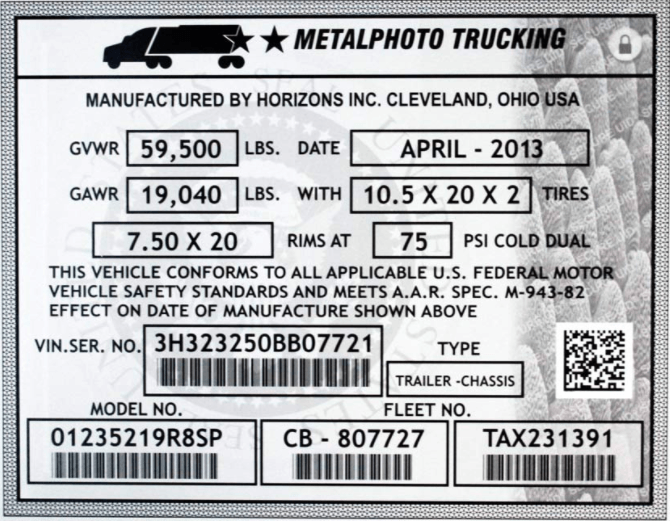
The term “nameplate” originates from the physical metal plate attached to machinery—such as generators, transformers, or industrial motors—that lists the manufacturer’s rated output under specific operating conditions. In a broader business sense, nameplate capacity refers to the maximum designed output of an entire production system.
The Theoretical Maximum vs. Real-World Performance
Nameplate capacity is inherently a theoretical figure. It assumes that a machine or facility is operating under ideal conditions, without interruptions, mechanical failures, or environmental constraints. For a solar farm, the nameplate capacity might be 100 megawatts (MW), representing the total power the panels can generate under peak sunlight. However, because the sun does not shine 24 hours a day and weather patterns fluctuate, the actual output will always be lower than this peak figure.
In business finance, treating nameplate capacity as a guaranteed output is a common pitfall. To move from a theoretical number to a realistic financial forecast, analysts must apply a “capacity factor.” This factor is the ratio of actual output over a period of time to the potential output if the asset had operated at nameplate capacity continuously. For example, if a plant with a 100 MW nameplate capacity produces 438,000 MWh in a year (out of a possible 876,000 MWh), its capacity factor is 50%.
Why the Term “Nameplate” Matters for Scalability
When a company scales its operations, it often does so by increasing its aggregate nameplate capacity. Whether this involves purchasing more servers for a data center or adding more production lines to a textile factory, the nameplate rating serves as the benchmark for growth. It allows leadership to communicate to stakeholders the potential of the firm’s physical capital. When a company announces a “billion-dollar expansion,” they are typically referring to the acquisition of nameplate capacity that will drive future revenue.
Nameplate Capacity in Business Finance and Industrial Operations
For a Chief Financial Officer or a project manager, nameplate capacity is the primary input for capital budgeting. It dictates the scale of Capital Expenditure (CapEx) required and sets the stage for the expected Operating Expenditure (OpEx).
Capital Expenditure (CapEx) and Resource Allocation
When a firm decides to invest in a new project, the nameplate capacity determines the size of the initial investment. In industries like renewable energy or heavy manufacturing, the cost per unit of nameplate capacity (e.g., dollars per kilowatt or dollars per ton of steel) is a standard metric used to compare different technologies or vendors.
If Company A can build a plant with a nameplate capacity of 1,000 units for $10 million, and Company B can build a similar plant for $8 million, the financial preference is clear—provided the reliability and lifespan of the assets are comparable. Financial analysts use these figures to perform sensitivity analyses, determining how much nameplate capacity is needed to reach the “break-even” point where the project begins to generate profit.
The Role of Nameplate Capacity in Resource Planning
Beyond the initial investment, nameplate capacity influences the entire supply chain. If a manufacturing plant has a nameplate capacity of 5,000 automobiles per month, the procurement team must ensure they have the raw materials—steel, rubber, semiconductors—to support that maximum potential, even if the plant currently operates at only 80% capacity. Overestimating the realistic output relative to the nameplate capacity can lead to bloated inventories and wasted capital, while underestimating it can lead to supply chain bottlenecks.
The Financial Impact of Nameplate Capacity on ROI
For investors, nameplate capacity is a vital component of due diligence. It serves as the ceiling for potential earnings. If an investor is looking at a private equity deal involving a fleet of cargo ships, the nameplate capacity (in this case, deadweight tonnage) dictates the maximum revenue that fleet can earn in a perfect market.
Valuation of Industrial Assets
In mergers and acquisitions (M&A), the valuation of industrial assets is often tied to their remaining nameplate life. As machinery ages, its ability to reach its original nameplate capacity often diminishes—a process known as “de-rating.” A plant that was rated for 500 units at the time of construction but can now only safely produce 400 units has seen its economic value decline significantly.
Valuators must adjust their Discounted Cash Flow (DCF) models to account for this de-rating. If an asset is consistently underperforming its nameplate capacity due to poor maintenance or technological obsolescence, it may be treated as a “distressed asset,” requiring a lower valuation or a significant injection of capital to restore its original performance levels.
Projecting Revenue Streams and LCOE
In the energy sector, nameplate capacity is the foundation for calculating the Levelized Cost of Energy (LCOE). LCOE is the average cost per unit of energy produced over the lifetime of an asset. To calculate this, one must take the total costs (CapEx and OpEx) and divide them by the total expected energy output.
Because the total expected output is a derivative of the nameplate capacity multiplied by the expected capacity factor, any error in assessing the nameplate capacity will ripple through the entire financial model. A 10% overestimation of nameplate efficiency can lead to a significant shortfall in revenue, potentially causing a project to default on its debt obligations.
Factors That Prevent Assets from Reaching Nameplate Capacity
It is a rare occurrence for any industrial asset to operate at 100% of its nameplate capacity for an extended period. Understanding the financial drains that prevent this is crucial for maintaining healthy margins.
Maintenance and Operational Downtime
No machine can run forever without maintenance. Scheduled downtime is a planned reduction in capacity, but unscheduled downtime—caused by mechanical failure or human error—is a direct hit to the bottom line. Financial models must account for “availability,” which is the percentage of time the asset is actually capable of producing at its nameplate capacity.
In high-stakes industries like semiconductor manufacturing, even a few hours of unscheduled downtime can result in millions of dollars in lost revenue. Therefore, companies often invest in redundant nameplate capacity (redundancy) to ensure that if one unit fails, the overall system output remains stable.
Environmental and External Constraints
External factors often act as a “soft cap” on nameplate capacity. A hydroelectric dam may have a massive nameplate capacity, but if a region is suffering from a drought, the actual output will be a fraction of that potential. Similarly, a data center’s nameplate capacity might be limited by the local power grid’s ability to supply electricity or the facility’s ability to dissipate heat.
For investors, these “curtailment” risks must be priced into the investment. An asset with a high nameplate capacity in a volatile environment may be less valuable than an asset with a lower capacity in a stable, high-resource environment.
Strategies for Optimizing Asset Performance Against Nameplate Benchmarks
Modern business finance is increasingly focused on “asset optimization”—the practice of squeezing as much value as possible out of existing nameplate capacity without incurring excessive maintenance costs.
Technological Upgrades and Retrofitting
As technology evolves, it is sometimes possible to “uprate” an asset, effectively increasing its nameplate capacity beyond its original design. In the nuclear power industry, for example, many plants have undergone “power uprates” through the installation of more efficient turbines or improved cooling systems. From a financial standpoint, uprating is often more cost-effective than building a new facility from scratch, as it leverages existing infrastructure and regulatory approvals to increase revenue-generating potential.

Strategic Financial Management of Underperforming Assets
When an asset consistently falls short of its nameplate capacity, management must decide whether to “repair, replace, or retire.” This decision is driven by a comparison between the Marginal Cost of improvement and the Marginal Revenue that the restored capacity would provide.
If an aging factory can be restored to its full nameplate capacity for $2 million, and that restoration will generate $500,000 in additional annual profit, the four-year payback period makes the investment attractive. However, if the market has shifted and there is no demand for that additional capacity, the financially prudent move may be to continue operating at a de-rated level or to sell the asset entirely.
Ultimately, nameplate capacity serves as the “north star” for industrial performance. It defines the limits of what is possible, providing a standardized metric for comparing assets, valuing companies, and planning for a profitable future. By understanding the gap between nameplate capacity and actual performance, financial professionals can make more informed decisions, mitigate risks, and maximize the long-term value of their capital investments.
aViewFromTheCave is a participant in the Amazon Services LLC Associates Program, an affiliate advertising program designed to provide a means for sites to earn advertising fees by advertising and linking to Amazon.com. Amazon, the Amazon logo, AmazonSupply, and the AmazonSupply logo are trademarks of Amazon.com, Inc. or its affiliates. As an Amazon Associate we earn affiliate commissions from qualifying purchases.