
In the evolving landscape of culinary technology, the tools we use are as critical as the ingredients we source. While the classic Western chef’s knife has long been the centerpiece of the kitchen, specialized tools have gained significant traction among enthusiasts and professionals seeking peak performance. One such tool is the Nakiri knife. To the uninitiated, it may resemble a small meat cleaver, but its purpose is far more refined. The Nakiri is a specialized Japanese gadget designed with a singular, high-efficiency focus: the precision processing of vegetables.
Understanding what a Nakiri knife is used for requires a deep dive into its unique geometry, the metallurgy behind its construction, and the specific mechanical techniques it enables. As kitchens become more tech-oriented, with a focus on ergonomics and specialized utility, the Nakiri stands out as a masterpiece of functional design.
The Anatomy of a Nakiri Knife: Precision Engineering for Modern Kitchens
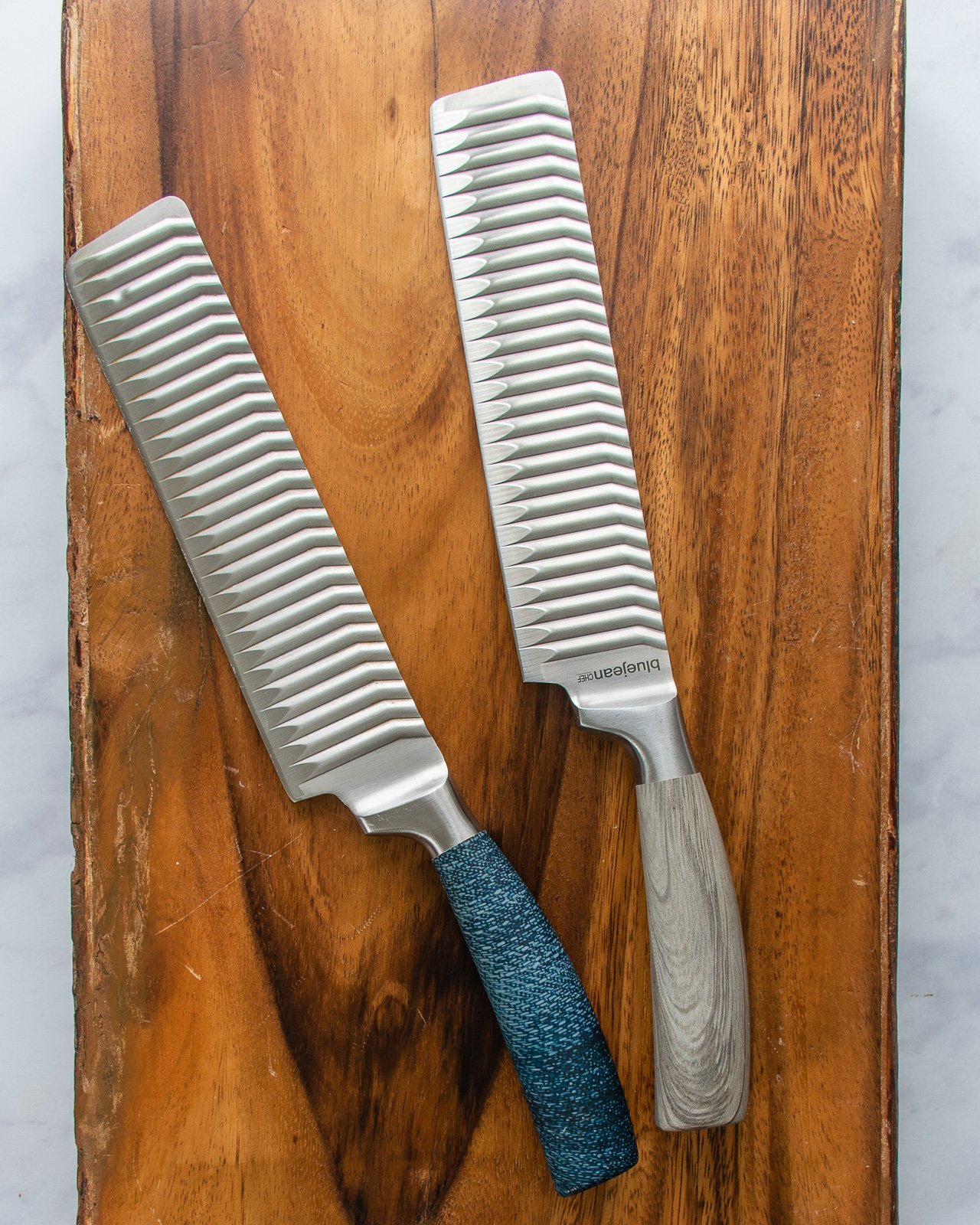
The Nakiri Bocho (literally “knife for cutting greens”) is characterized by its distinctive rectangular profile. Unlike most knives found in a standard Western block, the Nakiri lacks a pointed tip and a curved belly. This design is not aesthetic; it is a result of centuries of iterative engineering aimed at solving specific friction and contact problems in vegetable preparation.
The Rectangular Blade Profile
The most striking feature of the Nakiri is its flat edge. In the world of tool design, the shape of the edge dictates the mechanical motion required for use. A curved blade, such as that on a French chef’s knife, necessitates a “rocking” motion. While versatile, the rocking motion can often lead to “accordion cuts”—where the bottom of the vegetable remains connected because the curve of the blade didn’t make full contact with the cutting board.
The Nakiri’s flat edge ensures that the entire length of the blade hits the board simultaneously. This allows for a “push-cut” or “pull-cut” motion, which provides a cleaner, more consistent slice through everything from delicate herbs to dense root vegetables.
Double-Bevel Edge vs. Single-Bevel
When evaluating the technical specs of Japanese cutlery, the bevel (the angle of the edge) is paramount. The Nakiri is a “Ryoba” or double-bevel knife, meaning it is sharpened on both sides. This makes it accessible to both left- and right-handed users and provides a more balanced cut through symmetrical items.
In contrast, its cousin, the Usuba, is a single-bevel tool used primarily by professional sushi chefs for decorative work. For the modern home cook or the high-volume prep cook, the Nakiri’s double-bevel design offers the perfect balance of precision and ease of use, making it the superior gadget for daily tasks.
Material Composition and Hardness
The performance of a Nakiri is largely determined by the “tech” inside the steel. Many high-end Nakiris utilize Japanese “Super Steels” like VG-10, Blue Steel #2, or SG2 powdered steel. These materials are characterized by high Rockwell hardness (HRC), often ranging from 60 to 64.
This high hardness allows the blade to be ground to a much finer, thinner angle—often 12 to 15 degrees—compared to the 20-degree angles found on sturdier Western blades. This thinness reduces the “wedging” effect when cutting through hard vegetables like carrots or sweet potatoes, allowing the blade to glide through cell walls with minimal resistance.
Core Functionality: The Art of Vegetable Preparation
The primary use of a Nakiri is the rapid, efficient, and precise slicing, dicing, and mincing of vegetables. Because the blade is thin and flat, it excels at tasks that require uniform thickness, which is essential for even cooking and professional presentation.
Perfecting the Push-Cut Technique
The Nakiri is the primary tool for the “push-cut.” Instead of rocking the knife, the user moves the blade forward and down in a single fluid motion. This technique minimizes the horizontal friction applied to the food, preventing bruising in delicate leafy greens like spinach or basil. If you have ever noticed your chopped herbs turning black quickly, it is often due to the crushing force of a dull or improperly shaped knife; the Nakiri’s geometry is designed specifically to mitigate this.
Efficiency in Volume: Prepping for Meal Prep
For those who treat their kitchen workflow like a production line, the Nakiri is a significant upgrade in efficiency. Its tall blade serves two secondary functions: guidance and transport. The height of the blade allows the user to rest their knuckles against the flat side of the knife while cutting, providing a physical guide for consistent thickness. Furthermore, once the vegetables are diced, the wide surface area of the Nakiri makes it an excellent “scoop” to transfer ingredients from the cutting board to the pan, streamlining the transition from prep to heat.
Achieving Translucent Slices
The precision of a well-maintained Nakiri allows for paper-thin slicing. Whether it is radishes for a salad, onions for a burger, or cucumbers for pickling, the ability to achieve translucency is a hallmark of high-end culinary tech. The thin spine of the Nakiri prevents the “cracking” sound often heard when a thicker chef’s knife enters a dense vegetable, ensuring that the structural integrity of the slice remains intact.

Comparing the Nakiri to Other Culinary Tech
In a market saturated with “multi-tools,” it is important to understand where the Nakiri fits in comparison to other popular blade geometries. It is not a replacement for every knife, but rather a specialized component of a high-performance kit.
Nakiri vs. Santoku: Choosing the Right Utility
The Santoku is often called a “three-purpose” knife (slicing, dicing, and mincing). While it shares some similarities with the Nakiri, such as a flatter edge than a chef’s knife, the Santoku still retains a slight curve and a pointed tip (the “sheep’s foot”).
The Santoku is a generalist; it can handle proteins and vegetables with equal competency. However, if your diet or cooking style is vegetable-forward, the Nakiri outperforms the Santoku. The Nakiri’s lack of a tip and its completely flat profile provide more surface contact, making it faster and more accurate for specialized vegetable work.
Nakiri vs. Chef’s Knife (Gyuto): The Difference in Rocking
The Western Chef’s Knife (or the Japanese Gyuto) is the ultimate general-purpose tool. Its pointed tip is essential for tasks like deboning poultry or fine detail work. However, the curve of the blade—designed for rocking—actually hinders efficiency when processing flat vegetables. When you use a Nakiri, you eliminate the “dead space” in the stroke that occurs with a curved blade. For high-volume chopping, the Nakiri reduces wrist fatigue because the motion is a simple, vertical drop rather than a complex rotational movement.
When to Use a Usuba Instead
As mentioned earlier, the Usuba is the professional, single-bevel version of the Nakiri. While the Nakiri is a “gadget” for the masses, the Usuba is a “precision instrument” for the specialist. The Usuba requires significant technical skill to prevent the blade from veering to one side during a cut. For 99% of users—including many professional chefs—the Nakiri provides all the benefits of the Usuba’s flat profile without the steep learning curve and maintenance requirements of a single-bevel edge.
Integrating the Nakiri into Your Digital and Physical Workflow
Modern cooking is increasingly data-driven, with users following precise recipes found on apps and digital platforms. These recipes often demand specific cuts—julienne, brunoise, or chiffonade. The Nakiri is the hardware that allows you to execute these software-driven instructions with the highest degree of accuracy.
Maintenance Tech: Sharpening and Honing
To keep a Nakiri performing at its peak, one must understand the maintenance required for high-carbon tools. Unlike cheap stainless steel knives that can be run through a mechanical pull-through sharpener, a Nakiri deserves the precision of whetstones.
Maintaining a 15-degree angle on a flat blade is technically easier than maintaining it on a curved blade, making the Nakiri an excellent entry point for those looking to learn the art of hand-sharpening. Using a 1000-grit stone for sharpening and a 6000-grit stone for polishing will ensure the blade maintains its “laser” status, allowing it to drop through a tomato using only its own weight.
Ergonomics and User Experience
The “User Interface” (UI) of a knife is its handle. Many Nakiris come with a traditional Japanese “Wa-handle” (often octagonal or D-shaped). These handles are designed to be lightweight, shifting the balance of the knife forward toward the blade. This forward balance works in tandem with the push-cut motion, allowing gravity to do much of the work. For the user, this means less exertion and higher precision over long prep sessions—a critical consideration for professional environments or heavy home use.
Is the Nakiri Knife Worth the Investment?
When building a high-performance kitchen, the question of ROI (Return on Investment) always arises. Does a specialized vegetable knife justify its place in the drawer?
Evaluating Build Quality and Longevity
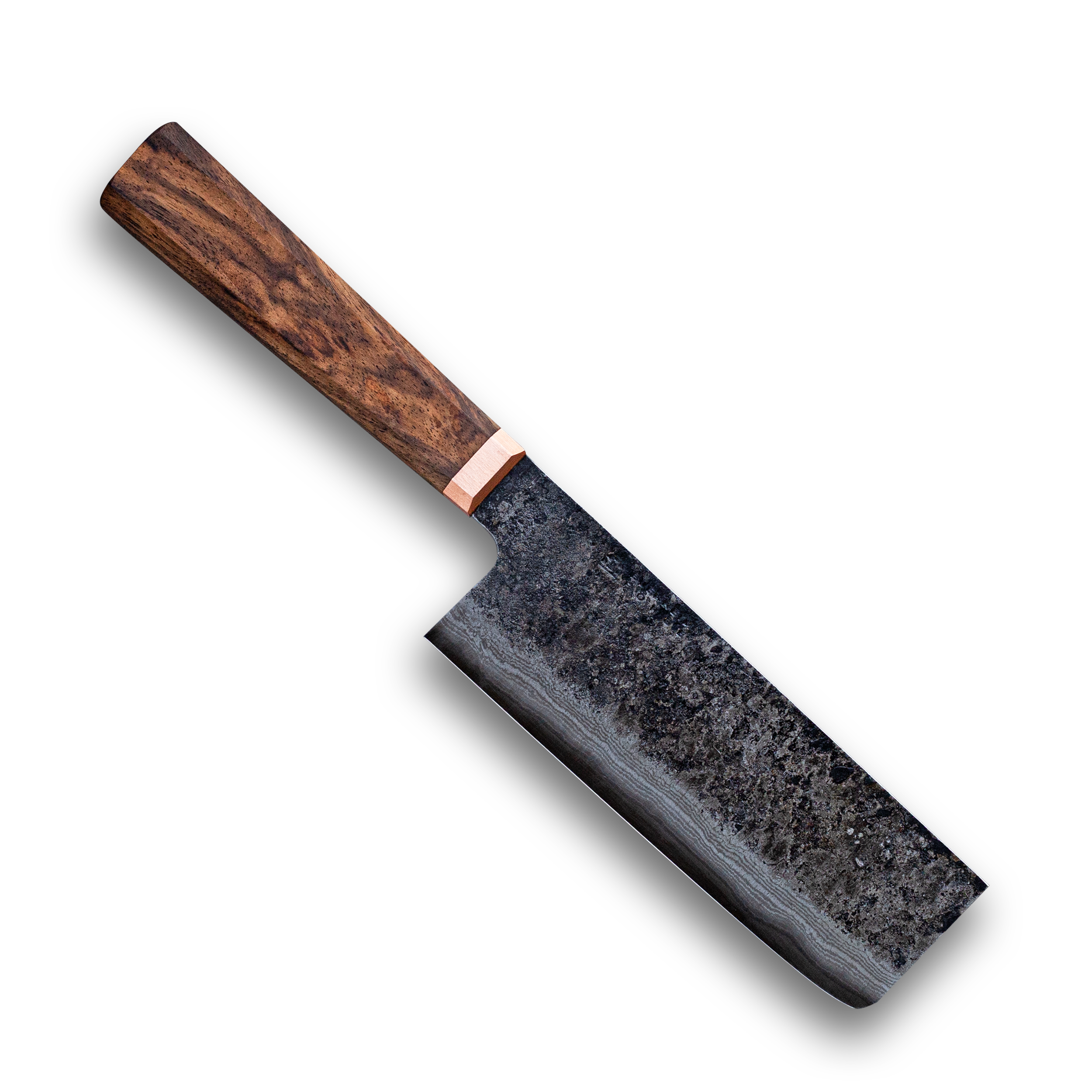
A high-quality Nakiri is not a disposable tool; it is a lifetime investment. When you opt for a knife made from premium steel with a Damascus or Tsuchime (hammered) finish, you are buying a tool that holds its edge significantly longer than standard retail knives. The Tsuchime finish, in particular, isn’t just for show—the hammered indentations create air pockets that help food release from the blade, preventing the “vacuum effect” when slicing starchy vegetables like potatoes.
Final Verdict for Home Chefs and Professionals
The Nakiri is more than just a niche gadget; it is a fundamental upgrade for anyone who takes vegetable preparation seriously. In an era where plant-based diets and farm-to-table cooking are at the forefront of culinary trends, having a tool optimized for that specific workflow is essential.
The Nakiri excels in precision, speed, and ergonomics. It forces the user to adopt a cleaner, more efficient cutting technique, which ultimately leads to better-textured food and a more enjoyable cooking experience. While it won’t replace your chef’s knife for breaking down a chicken or slicing a roast, it will quickly become the most-used tool in your kit for everything else. If your “kitchen tech” stack is missing a specialized vegetable processor, the Nakiri is the hardware upgrade you need.
aViewFromTheCave is a participant in the Amazon Services LLC Associates Program, an affiliate advertising program designed to provide a means for sites to earn advertising fees by advertising and linking to Amazon.com. Amazon, the Amazon logo, AmazonSupply, and the AmazonSupply logo are trademarks of Amazon.com, Inc. or its affiliates. As an Amazon Associate we earn affiliate commissions from qualifying purchases.