
In the vast lexicon of scientific and technical terminology, “N2O” stands out as a compound with a multifaceted identity and a surprisingly diverse range of applications. Often colloquially known as “laughing gas,” its utility extends far beyond the confines of a dentist’s office. From critical roles in healthcare and industrial manufacturing to a surprising presence in high-performance automotive engines and even environmental science, Nitrous Oxide (N2O) is a chemical compound whose technological footprint is both significant and evolving.
This article delves into the fundamental chemistry of N2O, explores its pivotal roles in various technological sectors, and touches upon its broader implications. By understanding its properties and applications, we gain insight into why this simple molecule remains a subject of ongoing research and technological integration.

The Fundamental Chemistry of Nitrous Oxide
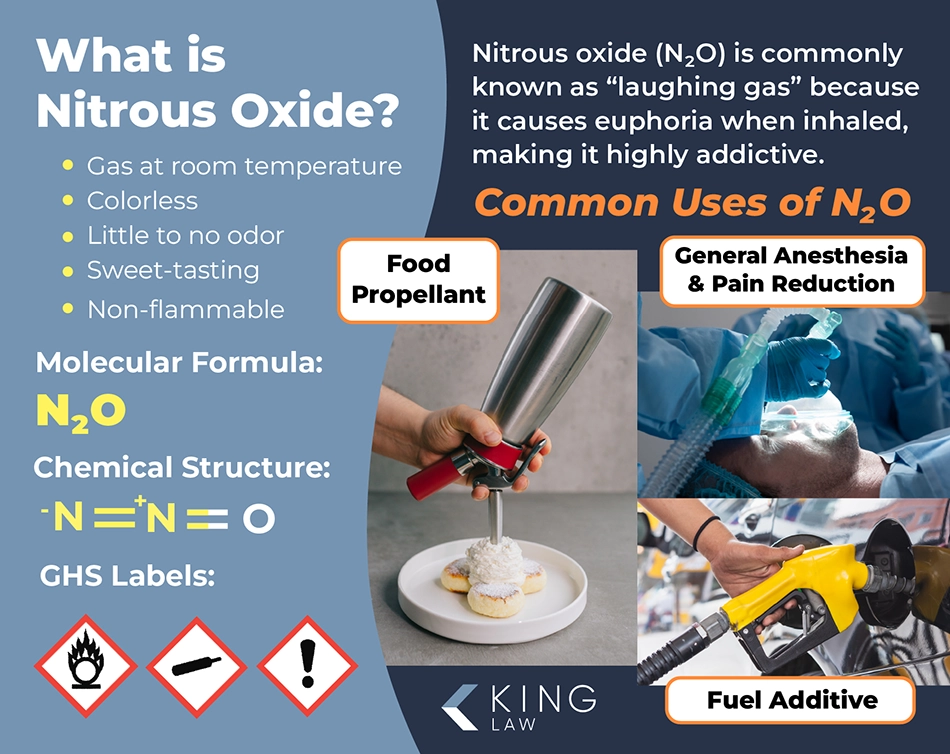
To truly appreciate the technological applications of N2O, one must first understand its basic chemical nature. Nitrous Oxide is an inorganic compound with the chemical formula N2O, meaning it consists of two nitrogen atoms covalently bonded to one oxygen atom.
Molecular Structure and Properties
N2O is a linear molecule, but unlike carbon dioxide (CO2) which is also linear, N2O is asymmetric with the structure N-N-O. This asymmetry contributes to its slight polarity. At standard temperature and pressure, N2O exists as a colorless, non-flammable gas with a faint, sweet odor and taste. Its molar mass is approximately 44.01 g/mol.
Key physical and chemical properties that make N2O valuable in various technologies include:
- Stability: It is relatively stable under normal conditions but can decompose at high temperatures.
- Solubility: Moderately soluble in water and highly soluble in organic solvents.
- Oxidizing Agent: Under certain conditions, N2O can act as an oxidizer, meaning it can support combustion, albeit less vigorously than pure oxygen. This property is particularly relevant in combustion and propulsion technologies.
- Anesthetic Properties: Its interaction with the human central nervous system is the basis for its long-standing medical application.
The precise control over its synthesis and handling allows for its safe and effective deployment across diverse fields, each leveraging specific aspects of its chemical and physical characteristics.
Synthesis and Production Methods
Nitrous oxide is primarily produced industrially through the controlled thermal decomposition of ammonium nitrate (NH4NO3). The reaction proceeds as follows:
NH4NO3(s) → N2O(g) + 2H2O(g)
This process involves heating ammonium nitrate to temperatures between 240°C and 270°C. Careful control of temperature is crucial, as higher temperatures can lead to the explosive decomposition of ammonium nitrate, yielding other nitrogen oxides and dinitrogen. The N2O gas produced is then purified through scrubbing, drying, and liquefaction processes to remove impurities such as nitric oxide, nitrogen dioxide, and unreacted ammonia, ensuring the high purity required for medical and other sensitive applications.
Alternative, less common methods include the reaction of sodium nitrite with hydroxylamine hydrochloride or the catalytic reduction of nitric acid. However, the ammonium nitrate method remains the predominant industrial route due to its efficiency and cost-effectiveness.
Nitrous Oxide in Medical Technology and Healthcare
Perhaps the most widely recognized application of N2O is in the medical field, where its anesthetic and analgesic properties have been utilized for over a century. Its nickname, “laughing gas,” stems from the euphoric effects it can induce.
Anesthesia and Analgesia: “Laughing Gas” Explained
In dentistry, N2O is commonly administered as a mild sedative and anxiolytic (anxiety-reducing agent) during various procedures. It is typically inhaled through a nasal mask, often mixed with oxygen (usually 50-70% N2O, 30-50% O2). The onset of action is rapid, usually within minutes, and its effects dissipate quickly once administration ceases, allowing for a fast recovery time. This rapid reversibility makes it particularly advantageous for outpatient procedures.
The precise mechanism of N2O’s anesthetic action is complex and not fully understood, but it is believed to involve modulation of neurotransmitter receptors in the brain, particularly the N-methyl-D-aspartate (NMDA) receptors. It produces a state of conscious sedation, where the patient remains awake and responsive but feels relaxed, detached, and experiences a reduced perception of pain. While it provides good analgesia (pain relief), it is a relatively weak anesthetic and is often used in conjunction with other agents for deeper sedation or general anesthesia.
Beyond the Dentist’s Chair: Other Medical Uses
The utility of N2O extends beyond dental practices. In emergency medicine and ambulance services, it is used for short-term pain relief for acute injuries, such as fractures or burns, offering a rapid and non-invasive option for managing distress. Its quick onset and offset make it ideal for pre-hospital care.
In labor and delivery wards, N2O is frequently offered to women for pain management during childbirth. Similar to its dental application, it provides effective analgesia without causing significant respiratory depression in the mother or neonate, and it allows the mother to remain mobile and in control.
Furthermore, N2O is also utilized in cryosurgery, a medical technique that uses extreme cold to destroy abnormal tissues. The gas can be used as a refrigerant to cool probes that freeze and destroy warts, tumors, and other lesions. This application leverages N2O’s ability to rapidly cool upon expansion, a physical property that finds use in other industrial contexts as well.

Industrial and Automotive Applications
Beyond its medical roles, N2O plays critical roles in various industrial processes and has a niche, yet impactful, presence in the automotive world. These applications typically leverage its properties as a propellant, an oxidizer, or a source of nitrogen for various reactions.
Propellant and Oxidizer: From Aerosols to Rocketry
Nitrous oxide’s ability to be easily compressed into a liquid and released as a gas under pressure makes it an excellent propellant. This is most commonly seen in consumer products like whipped cream dispensers, where it acts as a non-flammable and bacteriostatic (inhibits bacterial growth) propellant. When released, the N2O dissolves into the cream, forming tiny bubbles that create the foamy texture.
Industrially, N2O is also used as an oxidizing agent in certain semiconductor manufacturing processes, particularly in the production of silicon nitride films, which are critical components in integrated circuits. Its ability to provide oxygen atoms in a controlled environment is highly valuable for depositing precise thin films.
Perhaps one of its more dramatic applications is in rocketry, though less commonly than liquid oxygen. N2O can be used as a monopropellant or as an oxidizer in hybrid rocket engines. When heated, N2O decomposes into nitrogen and oxygen, providing both thrust and an oxidizer for a fuel source. Its advantage lies in its storage as a liquid at relatively low pressures and room temperature, making it safer and easier to handle than cryogenic liquid oxygen.
Enhancing Performance: Nitrous Oxide in Automotive Sports
In the realm of high-performance automotive sports and racing, N2O is employed as a power-boosting agent, often referred to simply as “nitrous.” The principle behind its use is clever and effective: when injected into an engine’s intake manifold, the N2O liquid rapidly vaporizes and then decomposes under the engine’s heat (around 570°C) into nitrogen and oxygen.
N2O(g) → N2(g) + ½O2(g)
The release of extra oxygen significantly increases the amount of fuel that can be burned in the combustion chamber during each power stroke, leading to a substantial, albeit temporary, increase in horsepower. This effect is further amplified by two factors:
- Cooling Effect: The rapid vaporization of liquid N2O absorbs heat from the intake air, making it denser. Denser air allows more oxygen into the cylinder, further enhancing combustion efficiency.
- Increased Mass Flow: Beyond the chemical decomposition, simply adding more gas (N2O) to the intake manifold increases the total mass of reactants available for combustion.
Nitrous systems are typically activated for short bursts during acceleration, providing a competitive edge in drag racing, circuit racing, and other forms of motorsports. However, its use requires careful engine tuning to prevent damage due to excessive pressure or lean fuel mixtures.
Environmental Considerations and Emerging Technologies
While N2O has many beneficial applications, it also carries significant environmental implications, primarily as a potent greenhouse gas. Understanding these environmental impacts is crucial for developing sustainable technologies and practices.
Greenhouse Gas Implications
Nitrous oxide is a long-lived and powerful greenhouse gas. Though present in much lower concentrations than carbon dioxide, its Global Warming Potential (GWP) is about 265-298 times that of CO2 over a 100-year period. This means that each molecule of N2O traps significantly more heat in the atmosphere than a molecule of CO2.
Anthropogenic (human-caused) sources of N2O emissions primarily stem from agriculture (especially nitrogen fertilizer use and livestock waste), industrial processes (like nylon production and nitric acid manufacturing), and the combustion of fossil fuels and biomass. Natural sources also contribute, largely from microbial processes in soils and oceans.
Addressing N2O emissions is a critical component of global climate change mitigation strategies. This involves improving agricultural practices to optimize nitrogen use efficiency, developing advanced industrial catalysts to abate emissions, and exploring carbon capture and utilization technologies.
Current Research and Future Outlook
Research into N2O continues on multiple fronts. In medicine, studies are exploring its potential in treating depression (given its mood-altering effects) and improving post-operative pain management protocols. Scientists are also investigating safer and more efficient ways to synthesize and handle N2O, particularly for high-purity applications.
From an environmental technology perspective, significant efforts are focused on developing catalysts and processes for N2O abatement from industrial sources and identifying novel ways to convert it into less harmful or even useful products. Technologies for direct air capture of N2O are also being explored, though they are currently in nascent stages.
The future of N2O likely involves a dual approach: optimizing its beneficial technological applications while rigorously mitigating its environmental footprint. Innovations in catalytic converters, agricultural technology, and new chemical synthesis pathways will be crucial in ensuring that the utility of N2O can be harnessed responsibly.
Conclusion
Nitrous oxide, or N2O, is far more than just “laughing gas.” It is a chemical compound with a fascinating array of physical and chemical properties that have made it indispensable across numerous technological domains. From its critical role as an anesthetic and analgesic in healthcare to its powerful capabilities as a propellant and oxidizer in industrial and automotive applications, N2O exemplifies how fundamental chemistry translates into tangible technological advancements.
However, its environmental impact as a potent greenhouse gas serves as a crucial reminder of the intricate balance between technological progress and ecological responsibility. As we continue to innovate, a deeper understanding and responsible management of compounds like N2O will be paramount in shaping a sustainable and technologically advanced future. The ongoing research and development surrounding N2O underscore its enduring significance and highlight the complex challenges and opportunities it presents in the ever-evolving landscape of science and technology.
aViewFromTheCave is a participant in the Amazon Services LLC Associates Program, an affiliate advertising program designed to provide a means for sites to earn advertising fees by advertising and linking to Amazon.com. Amazon, the Amazon logo, AmazonSupply, and the AmazonSupply logo are trademarks of Amazon.com, Inc. or its affiliates. As an Amazon Associate we earn affiliate commissions from qualifying purchases.