
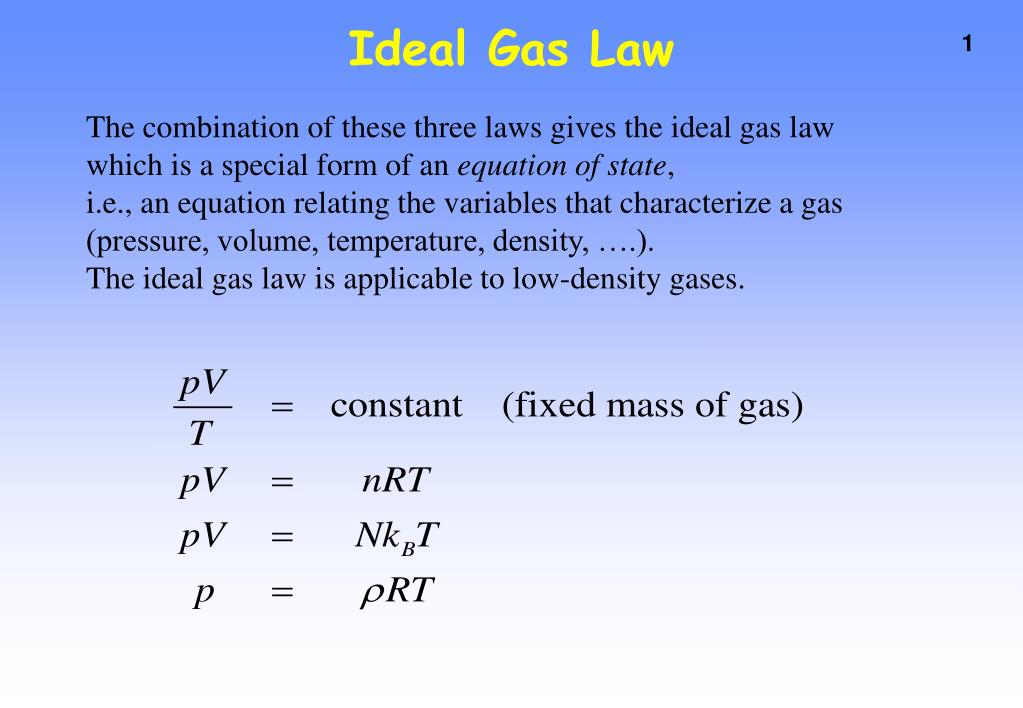
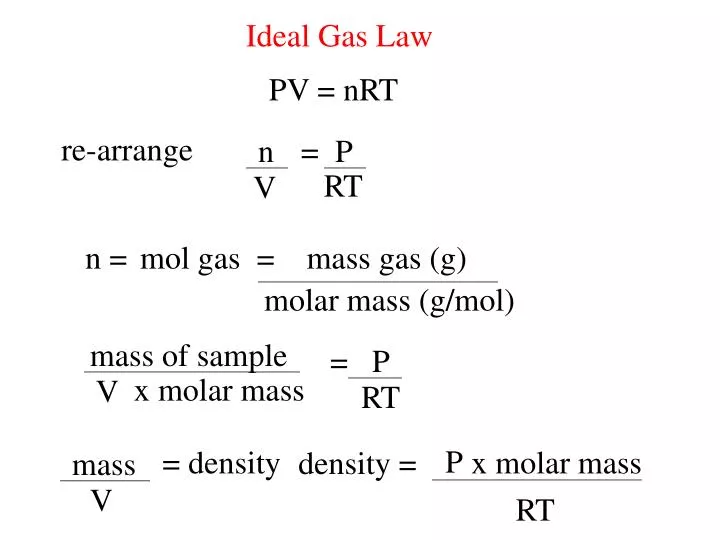
The ideal gas law, a cornerstone of chemistry and physics, provides a remarkably accurate description of the behavior of gases under many common conditions. Its elegant equation, PV = nRT, unravels the relationship between pressure (P), volume (V), the amount of gas (n), the ideal gas constant (R), and temperature (T). While pressure, volume, and temperature are readily understandable physical quantities, the term ‘n’ often sparks curiosity. What exactly does this seemingly abstract ‘n’ represent, and why is it crucial to understanding how gases behave?
In essence, ‘n’ in the ideal gas law represents the amount of substance, specifically the number of moles of the gas. It’s the quantitative measure of how much “stuff” – in terms of gas particles – is present in a given volume. While it might sound like a simple concept, understanding moles and their significance opens doors to a vast array of applications across scientific disciplines, technological advancements, and even financial considerations in specialized industries.
The Foundation: Understanding the Ideal Gas Law
Before delving deeper into ‘n’, it’s essential to grasp the fundamental principles of the ideal gas law itself. This law is an empirical relationship, meaning it’s derived from experimental observations. It describes the behavior of an ideal gas, a theoretical construct that simplifies real-world gas behavior by assuming:
- No intermolecular forces: Gas particles are assumed to have no attraction or repulsion towards each other. They interact only through perfectly elastic collisions.
- Negligible particle volume: The volume occupied by the gas particles themselves is considered insignificant compared to the total volume of the container.
While no real gas is perfectly ideal, most gases behave very similarly to ideal gases at high temperatures and low pressures. These conditions minimize the effects of intermolecular forces and the volume of the particles themselves.
The ideal gas law elegantly combines several other gas laws:
- Boyle’s Law: At constant temperature and amount of gas, pressure is inversely proportional to volume (P ∝ 1/V).
- Charles’s Law: At constant pressure and amount of gas, volume is directly proportional to temperature (V ∝ T).
- Avogadro’s Law: At constant temperature and pressure, volume is directly proportional to the amount of gas (V ∝ n).
The ideal gas law, PV = nRT, is a powerful synthesis of these relationships, allowing us to predict the state of a gas given any three of the variables.
Deciphering ‘n’: The Mole as the Unit of Amount
The ‘n’ in PV = nRT stands for the number of moles. A mole is a fundamental unit of measurement in chemistry, analogous to how a “dozen” represents 12 items or a “ream” represents 500 sheets of paper. However, the mole is a much larger and more specific quantity.
One mole of any substance contains exactly 6.022 x 10^23 elementary entities (such as atoms, molecules, ions, or electrons). This number is known as Avogadro’s number (N_A). It’s a staggering quantity, reflecting the incredibly small size of atoms and molecules.
Why Moles? The Bridge Between Microscopic and Macroscopic
Why do scientists use moles instead of simply counting individual particles? The answer lies in bridging the gap between the microscopic world of atoms and molecules and the macroscopic world we can observe and measure.
- Practicality: Counting individual atoms or molecules in a lab experiment is impossible. Moles provide a convenient and manageable way to quantify amounts of substances in bulk.
- Chemical Reactions: Chemical reactions occur between specific ratios of molecules. The mole concept allows chemists to easily calculate the stoichiometric ratios required for reactions, ensuring the correct amounts of reactants are used to produce desired products. For instance, if a reaction requires 2 molecules of hydrogen for every 1 molecule of oxygen to form water, then 2 moles of hydrogen react with 1 mole of oxygen.
- Mass-Mole Relationship: Each element and compound has a molar mass, which is the mass of one mole of that substance (expressed in grams per mole, g/mol). This molar mass is numerically equivalent to the atomic or molecular weight of the substance. This allows us to easily convert between the mass of a substance (which we can weigh) and the number of moles (which dictates its reactivity and behavior in gas laws).
Calculating ‘n’: From Mass to Moles
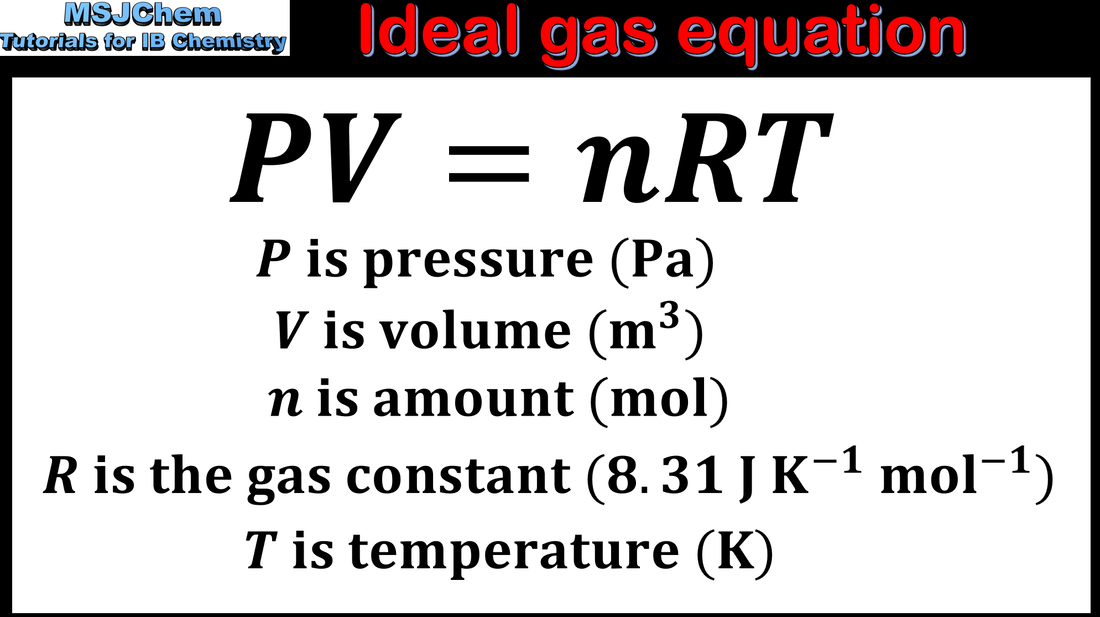
In practical applications of the ideal gas law, you’ll often be given the mass of a gas and need to calculate ‘n’. The conversion is straightforward:
n (moles) = Mass of substance (grams) / Molar mass of substance (g/mol)
For example, if you have 44 grams of carbon dioxide (CO2), and you know its molar mass is approximately 44 g/mol (12 g/mol for Carbon + 2 * 16 g/mol for Oxygen), then:
n = 44 g / 44 g/mol = 1 mole of CO2
This means that 44 grams of CO2 contains 6.022 x 10^23 molecules of CO2.
‘n’ in Action: Applications Across Industries
The significance of ‘n’ extends far beyond the confines of a chemistry classroom. Its ability to quantify the amount of a gaseous substance makes it indispensable in various technological, industrial, and even financial contexts.
Technological Frontiers and Engineering Solutions
In the realm of Tech, understanding ‘n’ is critical for the design, operation, and optimization of systems involving gases.
- Industrial Gas Production and Handling: Manufacturing processes that rely on gases, such as semiconductor fabrication, welding, and the production of industrial chemicals, require precise control over the amount of gas used. Engineers use ‘n’ to calculate the required quantities for reactions, to determine storage volumes, and to ensure safety protocols are met. For instance, in the production of inert gases like nitrogen or argon for electronics manufacturing, knowing the number of moles is essential for maintaining product purity and process efficiency.
- Aerospace and Automotive Engineering: The behavior of gases is paramount in the design of engines, fuel systems, and pneumatic controls. The ideal gas law, with ‘n’ as a key variable, is used to model combustion processes, predict engine performance, and design airbags that deploy effectively. The amount of air (and thus, the number of moles of gas particles) entering an engine directly impacts its power output and fuel efficiency.
- Environmental Monitoring and Climate Science: Understanding atmospheric composition and changes involves quantifying gases. Scientists use ‘n’ to study the concentration of greenhouse gases, air pollutants, and other atmospheric components. This data is crucial for developing climate models, assessing air quality, and formulating environmental policies. For example, measuring the number of moles of carbon dioxide in a specific volume of air helps scientists track its contribution to global warming.
- Medical Devices and Respiratory Care: In medical applications, precise control of gas mixtures is vital. Ventilators, anesthesia machines, and oxygen delivery systems all rely on accurate calculations of the number of moles of gases being administered to patients. The concentration of oxygen in the air a patient breathes, for instance, is directly related to the number of moles of oxygen molecules present.
- Research and Development of New Materials: The creation of advanced materials often involves gas-phase reactions. Researchers designing new catalysts, nanomaterials, or specialized coatings use the ideal gas law to control the reactants and optimize the conditions for material synthesis.
Brand Strategy and Market Dynamics
While not as direct as in scientific applications, the concept of ‘n’ can offer insightful parallels in the world of Brand.
- Market Saturation and Growth Potential: Imagine a new product entering a market. The “ideal gas law” can be a metaphor for market dynamics. ‘n’ can represent the “amount of available market share” or “customer interest” for a particular product category. If ‘n’ is already high and the market is saturated (high pressure), introducing a similar product might lead to diminishing returns. Conversely, a large untapped ‘n’ (low pressure, high temperature representing favorable conditions) indicates significant growth potential.
- Resource Allocation and Impact: For a brand, ‘n’ can also symbolize the “amount of resources” (financial, human, marketing efforts) allocated to a specific campaign or product. The effectiveness of these resources (like the pressure exerted by gas molecules) depends on the “container” (the market) and the “temperature” (the prevailing economic and social climate). Understanding ‘n’ helps brands optimize their resource allocation for maximum impact.
- Reputation Management and Information Spread: In the digital age, information spreads like gas particles. ‘n’ could represent the “volume of conversation” or “number of mentions” a brand receives online. The “pressure” of this conversation (positive or negative sentiment) and the “temperature” (timeliness and relevance) influence its overall impact on brand reputation. Analysing these ‘n’ values helps brands manage their online presence effectively.
Financial Markets and Investment Strategies
In the Money domain, ‘n’ can be abstractly applied to concepts of supply, demand, and potential returns, particularly in industries where physical quantities of gases are traded or produced.
- Commodity Trading: The price of commodities like natural gas, helium, or hydrogen is directly influenced by their supply and demand. ‘n’ (the number of moles of gas available) is a fundamental determinant of supply. Fluctuations in production (affecting ‘n’) and consumption patterns (influenced by temperature and pressure, i.e., economic activity and seasonal demand) directly impact market prices. Traders use this understanding to make informed investment decisions.
- Business Finance and Production Costs: Companies involved in gas extraction, processing, or distribution need to meticulously track the ‘n’ of their operations. This directly impacts their cost of goods sold, inventory management, and overall profitability. For example, a natural gas producer must accurately estimate the ‘n’ of extractable reserves to project future revenue and operational expenses.
- Investment in Energy Infrastructure: Investments in pipelines, storage facilities, and liquefaction plants for gases are driven by projections of future demand, which is intrinsically linked to the number of moles of gas that will need to be transported and stored. ‘n’ plays a crucial role in the financial modelling and valuation of these large-scale infrastructure projects.
- Economic Indicators and Industrial Output: The consumption of industrial gases can be an indicator of overall economic activity. A rise in the ‘n’ of gases used in manufacturing processes suggests an increase in industrial output and economic growth. Financial analysts often monitor these trends to assess the health of the economy.
Conclusion: The Ubiquitous ‘n’
The ‘n’ in the ideal gas law, representing the number of moles, is far more than just a symbol. It’s a fundamental concept that quantifies the amount of gaseous substance, acting as a vital bridge between the microscopic world of particles and the macroscopic world of observable phenomena. From the intricate designs of advanced technology and the strategic branding of corporations to the financial calculations that drive global markets, the implications of understanding and quantifying ‘n’ are vast and ever-expanding. It underscores how a seemingly simple scientific principle can have profound and far-reaching consequences across diverse fields, shaping innovation, informing decisions, and ultimately, driving progress.
aViewFromTheCave is a participant in the Amazon Services LLC Associates Program, an affiliate advertising program designed to provide a means for sites to earn advertising fees by advertising and linking to Amazon.com. Amazon, the Amazon logo, AmazonSupply, and the AmazonSupply logo are trademarks of Amazon.com, Inc. or its affiliates. As an Amazon Associate we earn affiliate commissions from qualifying purchases.