
Understanding your Social Security retirement date is a cornerstone of effective retirement planning. It’s not merely a single calendar day but a pivotal financial decision that significantly impacts the lifetime benefits you and potentially your family will receive. While many assume Social Security benefits become available at age 62 or 65, the concept of “full retirement age” (FRA) introduces nuances that can mean hundreds of thousands of dollars difference over the course of your retirement. Pinpointing your specific date and understanding the financial implications of claiming early, at full retirement age, or delaying benefits is crucial for optimizing your financial security in your golden years.
Understanding Your Full Retirement Age (FRA)
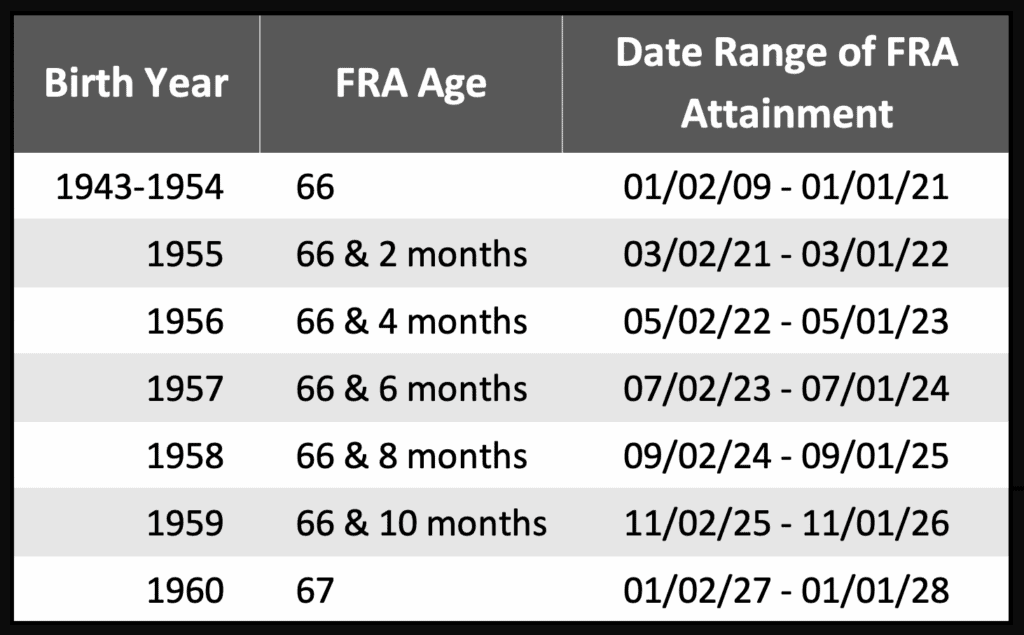
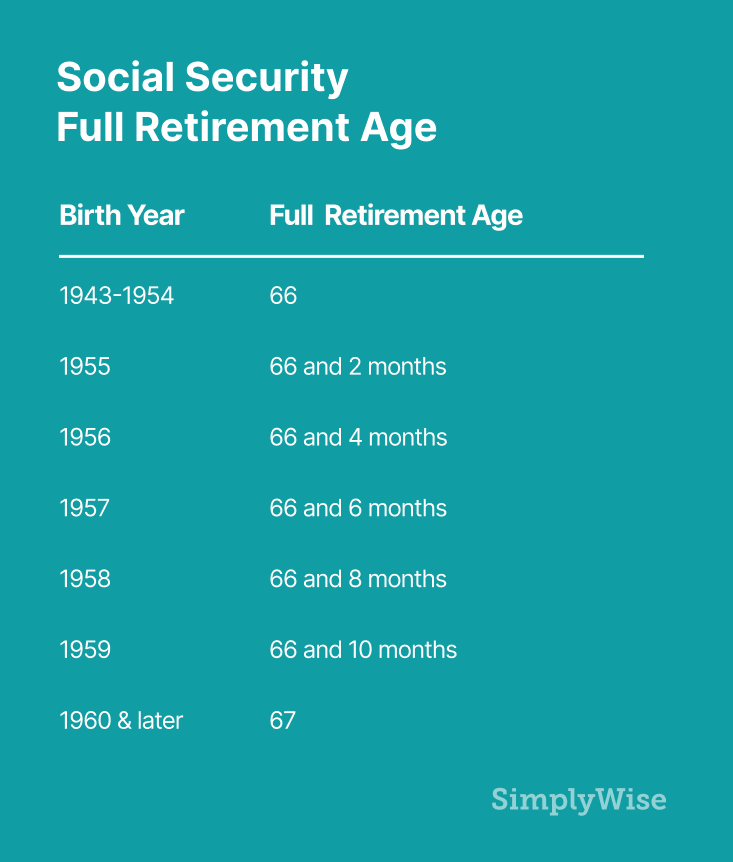
Your Full Retirement Age (FRA), sometimes referred to as “normal retirement age,” is the age at which you are entitled to receive 100% of your Social Security primary insurance amount (PIA). This is the monthly benefit calculated based on your average indexed monthly earnings over your 35 highest-earning years. Your FRA is not universal; it’s determined by your birth year, a staggered system implemented to address the fiscal solvency of the Social Security program.
For those born in 1937 or earlier, FRA was 65. However, due to legislative changes enacted in 1983, the FRA has gradually increased. If you were born between 1943 and 1954, your FRA is 66. For those born in 1960 or later, your FRA is 67. Individuals born in the years between 1955 and 1959 have an FRA that gradually increases by two months for each subsequent birth year. For instance, if you were born in 1955, your FRA is 66 and 2 months; for 1956, it’s 66 and 4 months, and so on. Knowing this specific age is the first step in calculating your optimal claiming strategy, as it serves as the baseline for determining reductions for early claims or credits for delayed claims.
Early vs. Delayed Claiming: The Financial Impact
The decision of when to start receiving Social Security benefits is one of the most critical financial choices you’ll make in retirement. It’s not a one-size-fits-all answer, as various personal, health, and financial factors come into play. The three primary claiming strategies are early, at full retirement age, or delayed, each with distinct financial consequences.
Claiming Early (as early as 62)
You are eligible to begin receiving Social Security retirement benefits as early as age 62. This option appeals to many for several reasons: it provides immediate income, can act as a bridge if you retire before other pension plans or savings are accessible, or if health issues necessitate an earlier departure from the workforce. However, this convenience comes at a significant financial cost.
By claiming benefits before your Full Retirement Age (FRA), your monthly benefit amount is permanently reduced. The reduction is calculated based on the number of months you claim benefits early. For someone with an FRA of 67, claiming at age 62 results in a permanent reduction of up to 30% of your Primary Insurance Amount (PIA). If your FRA is 66, claiming at 62 means a 25% reduction. This reduction is not temporary; it lasts for the entirety of your life, impacting not only your benefits but also potential survivor benefits for your spouse. Careful consideration must be given to your projected longevity, other income sources, and the necessity of these funds before opting for early claiming.
Claiming at Full Retirement Age
Claiming benefits precisely at your Full Retirement Age (FRA) means you receive 100% of your Primary Insurance Amount (PIA). This is the monthly benefit figure that the Social Security Administration (SSA) calculates based on your earnings record. For many, this represents a balanced approach, providing a substantial income without the permanent reductions associated with early claiming, while also not requiring the extended wait period of delayed claiming.
This strategy often aligns well with traditional retirement timelines and can be a sensible choice if you have adequate savings to cover living expenses until your FRA, or if you plan to transition into part-time work without exceeding Social Security’s earnings limits before FRA. At FRA, your benefits are no longer subject to earnings limits, meaning you can work and earn any amount without having your Social Security benefits temporarily reduced. It’s a point where you maximize your basic benefit without the additional wait for delayed retirement credits.
Delaying Benefits (up to age 70)
For those who can financially afford to wait, delaying benefits beyond your Full Retirement Age (FRA) can be a highly lucrative strategy. For each year you defer claiming Social Security past your FRA, up until age 70, you earn Delayed Retirement Credits (DRCs). These credits permanently increase your monthly benefit amount by 8% per year.
For someone with an FRA of 67, delaying until age 70 would result in a benefit that is 24% higher than their PIA (3 years x 8% per year). Combined with the base PIA, this means your monthly check at age 70 would be 124% of what you would have received at your FRA. This strategy is particularly appealing to individuals who anticipate a long life, have sufficient retirement savings or other income sources to cover expenses during the waiting period, or whose spouse might benefit from a larger survivor benefit in the future. After age 70, there are no additional Delayed Retirement Credits earned, so there is no financial advantage to delaying further.
How to Find Your Specific Retirement Date and Estimate Benefits
The Social Security Administration (SSA) provides several tools and resources to help you determine your Full Retirement Age, estimate your benefits, and plan your claiming strategy. These resources are designed to offer personalized information based on your unique earnings history.
Creating a “My Social Security” Account
The single most valuable tool for understanding your Social Security benefits is the “My Social Security” online account. This secure portal allows you to access a wealth of personalized information about your benefits at any time. By creating an account, you can:
- View your complete Social Security earnings record, ensuring its accuracy.
- Get personalized estimates of your future benefits at different claiming ages (62, FRA, and 70).
- Check the status of your application once you’ve applied.
- Request a replacement Social Security card.
- Receive official notices from the SSA.
- Apply for benefits online.
Creating an account is straightforward and involves a verification process to protect your personal information. It is highly recommended for anyone approaching retirement age or even those much younger, as it allows for proactive financial planning and the identification of any discrepancies in your earnings record.
Reviewing Your Social Security Statement
The Social Security Statement is a vital document that provides a comprehensive overview of your earnings history and estimated future benefits. While the SSA no longer mails annual paper statements to all workers, you can access and download your personalized statement instantly through your “My Social Security” online account.
Your statement details your yearly earnings on which Social Security taxes were paid, an estimate of your benefits at age 62, your Full Retirement Age, and age 70. It also provides estimates for disability and survivor benefits. It’s crucial to review your earnings record for accuracy, as any missing or incorrect earnings could impact your future benefit calculations. If you find errors, you should contact the SSA to correct them, as this directly affects the calculation of your Primary Insurance Amount.
Using Online Calculators
Beyond your personalized statement, the SSA offers various online calculators that allow you to explore different retirement scenarios. These tools can help you model the financial impact of different claiming ages, consider the effect of future earnings, or calculate potential spousal and survivor benefits. Specialized calculators can help navigate more complex situations, such as the Windfall Elimination Provision (WEP) or Government Pension Offset (GPO), which affect individuals who also receive a pension from employment not covered by Social Security. Utilizing these tools can provide deeper insights into how your claiming decision aligns with your broader financial plan and goals.
Factors Influencing Your Retirement Date Decision
Deciding on your Social Security retirement date extends beyond just knowing your Full Retirement Age. It involves a holistic assessment of your personal circumstances, health, other financial resources, and family situation.
Personal Health and Longevity
Your health and expected lifespan are significant determinants in your claiming strategy. If you anticipate a longer lifespan, delaying benefits to age 70 might offer the greatest cumulative benefit over time due to the higher monthly payments. However, if your health is poor or you have a family history of shorter lifespans, claiming earlier might be a more prudent choice to maximize the total amount received during your lifetime. While no one can predict the future, honest self-assessment and discussion with healthcare professionals can inform this crucial aspect of your decision.
Other Income and Savings
The availability of other income streams and substantial retirement savings plays a critical role. If you have a robust 401(k), IRA, pension, or other investment income, you might have the flexibility to delay Social Security benefits, allowing them to grow larger. Conversely, if Social Security will be your primary source of retirement income, the need for earlier funds might outweigh the benefits of delaying. It’s also important to consider if you plan to work in retirement. Before your Full Retirement Age, if your earnings exceed certain limits, your Social Security benefits can be temporarily reduced. At or after your FRA, there are no earnings limits.
Spousal and Survivor Benefits
The decision of one spouse to claim benefits can significantly impact the other, especially regarding survivor benefits. If you are married, your claiming strategy should be coordinated with your spouse’s to optimize benefits for both of you. A common strategy involves the higher-earning spouse delaying benefits to maximize their monthly payment, which in turn becomes the basis for the surviving spouse’s benefit should they outlive their partner. Divorced individuals may also be eligible for benefits based on an ex-spouse’s record, provided certain conditions are met. Understanding these interdependencies is vital for maximizing financial security for your entire household.
Economic Conditions and Inflation
While Social Security benefits include an annual Cost-of-Living Adjustment (COLA) to help maintain purchasing power against inflation, the long-term impact of economic conditions should be considered. A higher initial monthly benefit, achieved through delaying, might provide a better hedge against inflation over an extended retirement. However, the exact impact of inflation and future COLAs is difficult to predict. Consulting with a financial advisor can provide insights into how broader economic trends might influence your Social Security strategy within your overall financial plan.
Navigating the Application Process
Once you’ve made an informed decision about when to claim your Social Security retirement benefits, the next step is the application process. The Social Security Administration generally recommends applying approximately three months before you wish your benefits to start. This allows ample time for processing and for any necessary documentation to be submitted.
You can apply for benefits online, which is the easiest and most convenient method for most individuals. The SSA’s website guides you through the application, and you can save your progress and return to it later. Alternatively, you can apply by phone or in person at your local Social Security office. Regardless of the method, you will need to provide certain documents, such as your birth certificate, proof of U.S. citizenship or lawful alien status (if not born in the U.S.), your W-2 forms or self-employment tax returns for the previous year, and your bank account information for direct deposit. The SSA will notify you of their decision, and if approved, your benefits will typically begin in the month following the month you applied for your chosen start date.
aViewFromTheCave is a participant in the Amazon Services LLC Associates Program, an affiliate advertising program designed to provide a means for sites to earn advertising fees by advertising and linking to Amazon.com. Amazon, the Amazon logo, AmazonSupply, and the AmazonSupply logo are trademarks of Amazon.com, Inc. or its affiliates. As an Amazon Associate we earn affiliate commissions from qualifying purchases.