
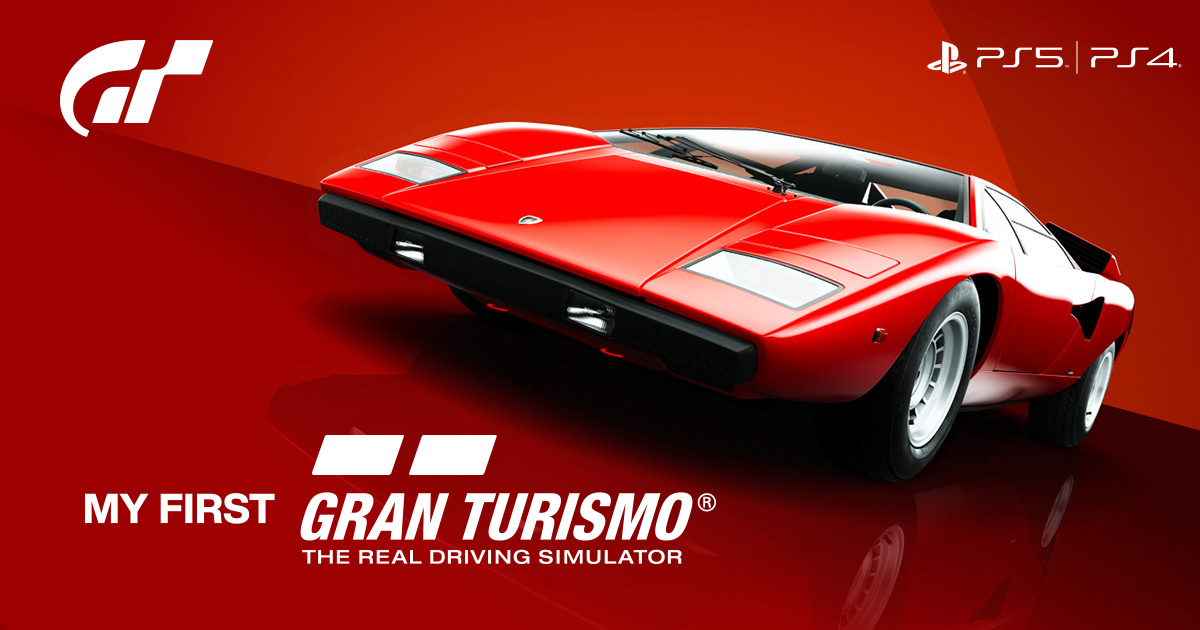
The question “What is my first Gran Turismo?” delves into a very specific and often deeply personal corner of the gaming world. It’s a query that resonates with a generation of gamers who grew up with the franchise, and it speaks to the evolution of automotive simulation, digital entertainment, and the way we experience virtual worlds. To truly understand the significance of one’s “first” Gran Turismo, we need to explore the technological leaps, the evolving gameplay mechanics, and the cultural impact that has cemented this series as a titan in the racing simulation genre. This isn’t just about picking up a controller; it’s about embarking on a journey of automotive discovery, skill refinement, and a deep appreciation for the digital representation of real-world vehicles.
The Genesis of a Racing Phenomenon: Early Innovations and Technological Foundations
The Gran Turismo series didn’t just appear; it was meticulously crafted, representing a significant leap forward in video game technology upon its debut. The ambition was clear from the outset: to create a racing simulator that felt authentic, engaging, and accessible to a broad audience, while still pushing the boundaries of what was technically possible on the hardware of the time.
The PS1 Era: Groundbreaking Realism and Vehicle Fidelity
When Gran Turismo first graced the original PlayStation in 1997 (Japan) and 1998 (worldwide), it was a revelation. The team at Polyphony Digital, led by Kazunori Yamauchi, aimed for a level of realism unprecedented in console racing games.
Unprecedented Graphics and Physics Models
The graphical fidelity achieved on the PlayStation was remarkable. While primitive by today’s standards, the cars were rendered with a surprising level of detail, and the tracks, though often simple in design, provided distinct environments. More importantly, the game introduced a rudimentary but effective physics engine. This wasn’t just about cars sliding around corners; it was an attempt to model tire grip, suspension dynamics, and the impact of acceleration and braking. Players could feel the difference between a lightweight sports car and a heavier sedan, a nuanced sensation that was largely absent in arcade-style racers.
The Introduction of the “Real Driving Simulator” Philosophy
The core philosophy of Gran Turismo has always been the pursuit of realism, earning it the moniker “The Real Driving Simulator.” This wasn’t just marketing jargon. It meant meticulously recreating the driving experience, from the subtle feedback through the controller to the complex interplay of forces acting on a vehicle. This commitment to authenticity set it apart from its contemporaries, attracting a player base that craved a more profound and challenging racing experience.
A Vast Garage: The Allure of Licensed Vehicles
A key element that contributed to the series’ immediate success was its extensive car roster. Gran Turismo boasted hundreds of real-world cars from various manufacturers, each licensed and reproduced with a degree of accuracy. This wasn’t just about having a lot of cars; it was about offering a digital showroom, allowing players to experience vehicles they might only dream of owning. The ability to acquire, customize, and then drive these iconic machines was a powerful draw, fostering a sense of ownership and collection that went beyond typical gaming mechanics.
Evolution and Expansion: The PlayStation 2 and Beyond
The transition to the PlayStation 2 marked another significant milestone for Gran Turismo. With increased processing power, Polyphony Digital could push the boundaries of realism even further, introducing new features and refining existing ones to create an even more immersive and comprehensive automotive simulation.
Gran Turismo 3: A Visual and Gameplay Leap
Gran Turismo 3: A-Spec (2001) was a showcase for the PS2’s capabilities. The visual upgrade was stark. Cars were more detailed, with realistic lighting and reflections. The environments became more complex, and the sense of speed was amplified.
Enhanced Physics and Driving Dynamics
The physics engine saw substantial improvements. Cars handled with greater precision, and the impact of tire wear, fuel load, and even aerodynamic elements began to be felt. This pushed the gameplay beyond simple cornering to a more strategic and nuanced form of racing. The introduction of advanced tuning options also allowed players to fine-tune their vehicles for specific tracks and racing conditions, adding another layer of depth.
The Birth of Deeper Career Modes and Licensing
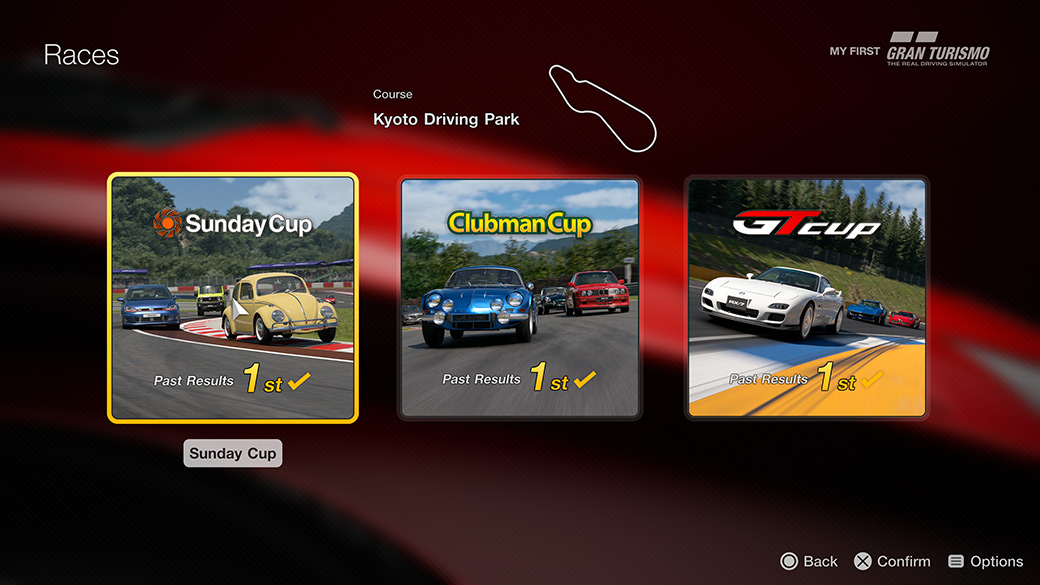
The career mode in Gran Turismo 3 became more intricate. Players had to earn racing licenses to compete in higher tiers of events, mirroring the progression of a real racing driver. This provided a tangible sense of achievement and encouraged players to master different driving techniques. The focus on progression and skill development became a cornerstone of the series.
Gran Turismo 4: Unprecedented Depth and Global Scope
Gran Turismo 4 (2004) represented a massive expansion in scope and ambition. It wasn’t just about racing; it was about celebrating automotive culture in its entirety.
The World Map and Real-World Tracks
The inclusion of a global map and a vast array of real-world locations and famous circuits, such as the Nürburgring Nordschleife, was a game-changer. This brought a sense of global exploration and provided a true test for even the most seasoned virtual drivers. The level of detail in these tracks was exceptional, capturing the nuances of their real-world counterparts.
The Photo Mode and the Art of the Car
A particularly significant addition was the introduction of Photo Mode. This feature allowed players to meticulously pose their cars in stunning real-world locations and capture high-resolution images. This tapped into a creative and artistic side of the game, appealing to car enthusiasts who appreciated the aesthetics of automobiles as much as their performance. It underscored the series’ evolution from a pure racing simulator to an all-encompassing automotive experience.
The Driving Missions and Skill Challenges
GT4 also expanded its repertoire of challenges with the introduction of Driving Missions and Skill Tests. These focused on specific driving techniques, such as braking points, acceleration control, and overtaking maneuvers, providing targeted training and rewarding players for demonstrating mastery. This further solidified the “Real Driving Simulator” ethos by breaking down complex driving skills into digestible and achievable challenges.
The Modern Gran Turismo: Embracing Online, Evolution, and Legacy
The Gran Turismo series continued to evolve with each subsequent generation, adapting to new technologies and player expectations. The emphasis on online multiplayer, advanced simulation, and the expansion of its role as an automotive educational tool have defined its modern era.
Gran Turismo 5: Pushing the Boundaries of Next-Gen Simulation
Gran Turismo 5 (2010) on the PlayStation 3 represented another significant technological leap. The visual fidelity was staggering, with highly detailed car models, complex damage modeling, and sophisticated lighting effects.
The Impact of Online Multiplayer and Community
GT5 was one of the first entries to fully embrace online multiplayer on a large scale. This allowed players from around the world to compete head-to-head, fostering a vibrant online community. The ability to race against human opponents added an unpredictable and exciting dimension to the gameplay, pushing players to refine their skills and strategies.
Advanced Simulation and Damage Modeling
The simulation aspects were further refined, with more complex tire models, suspension physics, and the introduction of rudimentary damage modeling. While not as destructive as some other racing games, the visual feedback of collisions added to the sense of realism and consequence. The “premium” vs. “standard” car distinction, while debated, allowed for a massive car count while still offering exceptionally detailed premium models.
Gran Turismo 6 and Beyond: Refining the Formula and Looking Forward
Gran Turismo 6 (2013) continued to build on the foundation of GT5, refining the physics, expanding the car and track selection, and introducing new social features. The focus remained on delivering a high-fidelity simulation experience.
The Role of Gran Turismo Sport: A New Direction
Gran Turismo Sport (2017) marked a deliberate shift in focus for the series. While retaining the core simulation elements, it emphasized online competition and e-sports. The game introduced a new FIA-certified online racing system, focusing on fair play and driver etiquette.
The Future of Gran Turismo: PlayStation 5 and Continued Innovation
With the advent of the PlayStation 5, Gran Turismo 7 (2022) has once again pushed the boundaries of what’s possible. Leveraging the power of the new console, it delivers breathtaking visual fidelity, lightning-fast loading times, and immersive haptic feedback through the DualSense controller. The game continues to champion its legacy as “The Real Driving Simulator” while exploring new avenues for player engagement and automotive appreciation. The consistent dedication to detail, the vast selection of meticulously recreated vehicles, and the pursuit of an authentic driving experience have ensured that Gran Turismo remains a benchmark in the racing simulation genre, constantly inviting players to discover and master the nuances of driving.
aViewFromTheCave is a participant in the Amazon Services LLC Associates Program, an affiliate advertising program designed to provide a means for sites to earn advertising fees by advertising and linking to Amazon.com. Amazon, the Amazon logo, AmazonSupply, and the AmazonSupply logo are trademarks of Amazon.com, Inc. or its affiliates. As an Amazon Associate we earn affiliate commissions from qualifying purchases.