
In the intricate world of personal finance, a few numbers stand as fundamental pillars, defining and enabling virtually every interaction you have with your money. Among these, your checking account number holds a particularly prominent position. Far more than just a random sequence of digits, it is your unique identifier within your bank’s system, a digital fingerprint that facilitates transactions, secures your funds, and connects you to a vast network of financial services. Understanding what your checking account number is, where to find it, why it’s crucial, and how to protect it, is not just a matter of convenience; it’s a cornerstone of effective financial management and digital security in the modern age.

This article delves deep into the essence of your checking account number, unraveling its significance in personal finance. We’ll explore its role, guide you through the various methods of locating it, outline the scenarios where it becomes indispensable, and crucially, discuss the best practices for safeguarding this vital piece of your financial identity. Whether you’re setting up direct deposit, paying bills online, or simply managing your daily finances, a clear grasp of your checking account number is paramount.
The Indispensable Role of Your Checking Account Number
At its core, your checking account number serves as a unique identifier for your specific checking account at a financial institution. It differentiates your account from millions of others, ensuring that money transfers and transactions are accurately directed to and from your personal funds. Without this number, the seamless flow of modern finance would grind to a halt.
Beyond Simple Identification: Its Core Functions
The importance of your checking account number extends far beyond mere identification. It underpins numerous critical financial functions that most people rely on daily:
- Transaction Routing: Every deposit, withdrawal, or transfer linked to your account uses this number to ensure funds land in or leave the correct destination. Imagine a postal service where every house looked identical; your account number is the unique address that ensures your financial mail reaches you.
- Direct Deposit: For many, paychecks, government benefits, or tax refunds are electronically transferred directly into their checking accounts. This process, known as direct deposit, requires your checking account number to ensure your earnings are correctly routed to you.
- Automated Bill Payments: Setting up recurring payments for utilities, loans, or subscriptions often involves providing your checking account number, allowing companies to directly debit funds from your account on scheduled dates.
- Wire Transfers and ACH Transactions: For larger transfers, both domestically and internationally, or for specific Automated Clearing House (ACH) transactions (like direct deposit or electronic bill pay), your account number is a non-negotiable piece of information.
- Account Management: When you interact with your bank, whether through customer service or online portals, your checking account number helps them quickly access your specific account details, verifying your identity and expediting service requests.
Distinguishing Between Account and Routing Numbers
It’s common for individuals to confuse their checking account number with their bank’s routing number, or to perceive them as a single entity. However, they serve distinct, albeit complementary, purposes:
- Checking Account Number: This is your specific account’s unique identifier within your bank. It tells the financial system which account at a particular bank is involved in a transaction. It typically ranges from 10 to 12 digits, but can vary depending on the bank.
- Routing Number (ABA Transit Number): This is a 9-digit code that identifies your bank (or credit union) within the U.S. financial system. It tells the financial system where your bank is located. Every bank has one or more routing numbers, often tied to geographical regions or specific types of transactions.
Both numbers are essential for most electronic transactions. The routing number gets the transaction to the right bank, and the checking account number gets it to the right account within that bank. Think of the routing number as the city and street, and the account number as the house number on that street.
Navigating the Pathways to Find Your Account Number
Given its critical role, knowing how to quickly and securely locate your checking account number is a fundamental financial skill. Fortunately, banks provide several convenient and secure methods to access this information.
The Traditional Route: Your Physical Checks
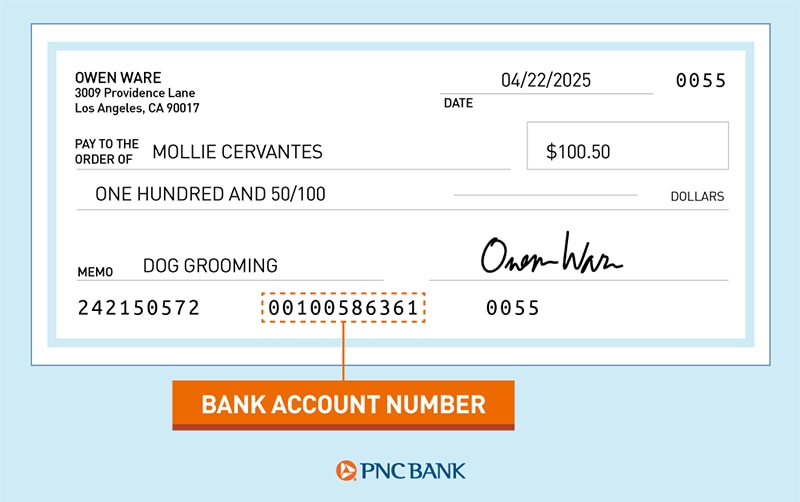
For those who still use paper checks, this is perhaps the most straightforward and traditional method. Look at the bottom of one of your checks. You’ll typically find three sets of numbers printed in magnetic ink (MICR line):
- First set: This is usually the 9-digit routing number.
- Second set: This is your checking account number. It’s usually the middle set of numbers.
- Third set: This is the check number, which corresponds to the sequential number printed in the upper right corner of the check.
Always double-check which set is your account number, as the order can occasionally vary slightly between banks.
Digital Accessibility: Online Banking and Mobile Apps
In today’s digital age, online banking portals and mobile banking applications have become primary tools for managing finances, and they offer quick access to your account number.
- Online Banking: After logging into your bank’s website, navigate to your checking account details. You’ll typically find an option to view account details, account summary, or sometimes even “show account number.” For security, some banks might require you to enter your password or answer a security question again before revealing the full number.
- Mobile Apps: Most bank apps also provide this functionality. Once logged in, select your checking account, and look for an option like “account details,” “settings,” or an “i” (information) icon. Again, a security prompt might appear to protect your information.
The Paper Trail: Bank Statements
Your monthly or quarterly bank statements, whether physical or digital (e-statements), are another reliable source. Your checking account number is prominently displayed on your statement, usually near your name and address, or within the account summary section. If you receive e-statements, you can access them by logging into your online banking portal and downloading the PDF versions.
Direct Assistance: Contacting Your Bank
If you’re unable to find your account number through the methods above, or if you prefer direct assistance, calling your bank’s customer service is always an option. Be prepared to verify your identity thoroughly. This usually involves providing personal information such as your full name, address, date of birth, Social Security number, and potentially answering security questions specific to your account. For in-person assistance, visiting a local branch with a valid photo ID will also allow you to retrieve your account number.
Situations Demanding Your Account Number
Knowing where your account number is located is one thing; understanding when you’ll need it is another. Various common financial transactions and administrative tasks necessitate the use of your checking account number to ensure smooth operation.
Streamlining Income: Direct Deposit Set-up
Perhaps the most frequent use of your checking account number is for setting up direct deposit. Whether it’s for your salary, government benefits (like Social Security), or tax refunds, employers and agencies require your account and routing numbers to electronically deposit funds directly into your bank account. This eliminates the need for paper checks, reducing delays and the risk of loss or theft. You’ll typically fill out a direct deposit authorization form, which explicitly asks for these details.
Automating Payments: Bill Pay and Transfers
Automating your finances is a cornerstone of smart money management, and your checking account number is key to making this happen.
- Online Bill Pay: Many service providers (utilities, internet, credit card companies) allow you to set up recurring payments directly from your bank account. This often requires you to provide your account and routing numbers to authorize direct debits.
- Bank-to-Bank Transfers: If you need to transfer money between your accounts at different banks, or to another person’s account at a different institution, you’ll need both your account number and the recipient’s (or your other account’s) routing and account numbers.
Securing Financing: Loan Applications
When applying for various types of loans—be it a personal loan, auto loan, or even a mortgage—lenders often require your checking account information. This allows them to verify your financial standing, potentially set up automated loan payments from your account, or disburse loan funds directly into your account once approved.
Handling Discrepancies: Resolving Banking Issues
In the unfortunate event of a transaction dispute, an erroneous charge, or any other issue that requires your bank’s investigation, providing your checking account number helps customer service representatives quickly identify your account and delve into the specifics of your inquiry. This expedites the resolution process and ensures accuracy.
Safeguarding Your Financial Identity: Security Best Practices
While your checking account number is essential for financial operations, it is also a sensitive piece of information. Its improper handling or exposure can lead to financial fraud, identity theft, and significant headaches. Therefore, exercising diligence in protecting it is paramount.
The Risks of Undue Exposure
The primary risk associated with an exposed checking account number is unauthorized access to your funds. If a malicious actor obtains your account number along with other identifying information (like your name or address), they could potentially:
- Initiate unauthorized transactions: They might attempt to set up fraudulent direct debits from your account.
- Create fake checks: Using your account and routing numbers, they could print counterfeit checks and attempt to cash them.
- Identity Theft: While less direct than with a Social Security number, an account number can be a piece of a larger puzzle for identity thieves, helping them build a profile to open new accounts in your name or access existing ones.
Practical Steps for Protection
Implementing simple, yet effective, security measures can significantly mitigate these risks:
- Shred Old Statements and Checks: Before discarding any documents containing your account number (old checks, bank statements, deposit slips), always shred them using a cross-cut shredder.
- Be Cautious with Sharing: Only provide your checking account number to trusted entities that genuinely require it, such as your employer for direct deposit, government agencies, or established bill payment services.
- Secure Online Access: Use strong, unique passwords for your online banking accounts. Enable two-factor authentication (2FA) wherever possible, which adds an extra layer of security by requiring a code from your phone in addition to your password.
- Monitor Your Accounts Regularly: Regularly review your bank statements and transaction history for any unfamiliar or suspicious activity. Promptly report anything unusual to your bank.
- Use Secure Connections: When accessing online banking, ensure you are using a secure internet connection (e.g., your home Wi-Fi, not public Wi-Fi without a VPN). Always check that the website address begins with “https://” and shows a padlock icon.
- Be Wary of Phishing Attempts: Never click on suspicious links in emails or text messages that claim to be from your bank. Banks will generally not ask for your account number or other sensitive information via unsolicited email or text. If in doubt, contact your bank directly using a verified phone number or website.
Recognizing and Reporting Suspicious Activity
Should you suspect your checking account number has been compromised, or if you notice any unauthorized transactions, act immediately:
- Contact Your Bank: Report the suspicious activity or potential compromise to your bank’s fraud department as soon as possible. They can guide you through the process of securing your account, potentially closing it and opening a new one, and initiating an investigation.
- Change Passwords: Update your online banking password immediately.
- Monitor Credit Reports: While not directly linked, it’s wise to monitor your credit reports for any new accounts opened in your name as a result of potential identity theft.
Common Misconceptions and Troubleshooting
Despite its widespread use, the checking account number often comes with its share of confusion and occasional challenges. Addressing these can further enhance your financial literacy and preparedness.
The Routing Number Riddle: A Separate Entity
As highlighted earlier, the most frequent misconception is the conflation of the checking account number with the routing number. It’s crucial to always provide both numbers when requested for electronic transactions. Providing just one, or mixing them up, will inevitably lead to transaction failures and potential delays. Always verify which number is being asked for and double-check your input.
When to Share and When to Hold Back
A rule of thumb is to only share your checking account number when initiating a transaction from your account (like setting up direct deposit or automated bill pay) or when you need to receive funds into your account from a trusted source. You generally do not need to provide it for making purchases with a debit card (the card number suffices) or for simply inquiring about general bank services. Be particularly wary of unsolicited requests for your account number, especially from individuals or organizations you do not recognize or trust.

What to Do If You Can’t Find It
If you’ve exhausted all immediate avenues (checks, online banking, statements) and still can’t locate your account number, the best course of action is to contact your bank directly. This might involve:
- Calling Customer Service: Have your personal identification details ready for verification.
- Visiting a Branch: Bring a valid government-issued photo ID.
Avoid guessing or using outdated information, as providing incorrect details can lead to failed transactions, fees, and further complications.
In conclusion, your checking account number is a critical component of your financial life. It’s the unique key that unlocks and directs your money within the banking system. By understanding its purpose, knowing where to find it, recognizing when it’s needed, and diligently protecting it, you empower yourself with greater control over your personal finances, safeguarding your assets in an increasingly digital world.
aViewFromTheCave is a participant in the Amazon Services LLC Associates Program, an affiliate advertising program designed to provide a means for sites to earn advertising fees by advertising and linking to Amazon.com. Amazon, the Amazon logo, AmazonSupply, and the AmazonSupply logo are trademarks of Amazon.com, Inc. or its affiliates. As an Amazon Associate we earn affiliate commissions from qualifying purchases.