
Understanding the true financial worth of your vehicle is far more than a casual curiosity; it’s a critical component of sound personal finance. For many, a car represents one of the largest depreciating assets they own, second only to a home. Whether you’re contemplating a sale, trade-in, refinancing, or simply assessing your net worth, having an accurate valuation is indispensable. Kelley Blue Book (KBB) has long stood as a cornerstone in this realm, serving as a trusted financial tool that empowers consumers to navigate the complex automotive market with confidence. Delving into “What is my car worth KBB?” isn’t just about getting a number; it’s about unlocking financial insights that can save you thousands and enhance your overall financial strategy.

The Financial Imperative of Knowing Your Car’s Value
In the intricate tapestry of personal finance, every asset contributes to your overall financial picture. Your vehicle, despite its depreciating nature, holds significant monetary value that directly impacts your liquidity, net worth, and future financial planning. Ignoring its true worth is akin to overlooking a substantial portion of your personal balance sheet.
Beyond Just a Number: Why Car Valuation Matters for Your Wallet
Accurate car valuation serves multiple vital financial functions:
- Selling Your Vehicle: If you’re planning to sell your car privately, knowing its market value is your primary negotiation tool. Overprice it, and it sits unsold; underprice it, and you leave money on the table. KBB provides a realistic benchmark for a private party sale, ensuring you maximize your return.
- Trade-ins and New Car Purchases: When buying a new vehicle, the trade-in value of your old one directly affects the total cost of your new purchase. A well-informed understanding of your car’s trade-in value, as provided by KBB, allows you to negotiate effectively with dealerships, potentially reducing the financing amount needed or the out-of-pocket expense.
- Refinancing Loans: If you’re looking to refinance an existing auto loan, lenders will assess the car’s current market value against the outstanding loan balance. Knowing your car’s worth helps you understand if refinancing is a viable option and what kind of loan terms you might expect.
- Insurance Coverage: In the unfortunate event of an accident or theft, your insurance payout is often based on the Actual Cash Value (ACV) of your vehicle. Understanding what KBB says your car is worth helps you ensure your insurance coverage is adequate and that you’re not underinsured or overpaying for unnecessary coverage.
- Estate Planning and Divorce Settlements: In more complex financial scenarios, such as estate planning or divorce proceedings, a car’s value needs to be accurately assessed to ensure fair distribution of assets. KBB offers an impartial, recognized valuation standard.
Depreciation: The Silent Wealth Eroder
Perhaps one of the most critical financial aspects of car ownership is depreciation. This is the reduction in value of an asset over time due due to wear and tear, age, and obsolescence. For vehicles, depreciation is relentless and often the largest “cost” of ownership after fuel and insurance.
Understanding your car’s depreciation curve – how quickly its value erodes – is crucial for long-term financial planning. A new car can lose 20-30% of its value in the first year alone, and continue to depreciate at 15-20% annually for the next few years. KBB provides context for this by showing current market values, allowing you to:
- Project Future Value: Estimate how much your car might be worth in a few years, helping you decide when to sell or trade in to minimize losses.
- Assess Total Cost of Ownership: Factor in depreciation when comparing different vehicles, realizing that a cheaper car upfront might hold its value better or worse than a more expensive one, affecting your overall financial outlay.
- Make Strategic Purchase Decisions: Opting for models known for better resale value can be a wise financial move, preserving more of your initial investment over time.
Recognizing depreciation isn’t just about lamenting lost value; it’s about making financially astute decisions about when to buy, when to sell, and what kind of vehicle to choose to protect your wealth.
Leveraging Kelley Blue Book (KBB) as a Financial Tool
Kelley Blue Book stands as a benchmark in automotive valuation, offering a sophisticated and data-driven approach to determining a car’s worth. Its reputation is built on decades of providing transparent and reliable market insights, making it an indispensable financial tool for car owners and buyers alike.
KBB’s Methodology: How it Calculates Market Value
KBB doesn’t simply pull numbers out of thin air. Its valuation methodology is a complex algorithm that processes vast amounts of real-world data to provide the most accurate estimate possible. Key factors influencing KBB’s calculations include:
- Recent Sales Data: The cornerstone of KBB’s valuation is actual transaction prices from millions of vehicle sales across the country. This data reflects what people are actually paying for cars, not just what sellers are asking.
- Market Supply and Demand: Economic principles play a significant role. If a particular model is in high demand but short supply, its value will naturally be higher. Conversely, an oversupply can drive prices down.
- Vehicle Condition and History: Factors like mileage, mechanical integrity, cosmetic appearance, presence of maintenance records, and a clean vehicle history report (e.g., no accidents, flood damage, or salvage titles) are heavily weighted.
- Geographic Location: Car values can vary significantly by region. A car that’s popular in a sunny climate might not fetch as much in a snowy region, or vice-versa. KBB accounts for local market dynamics.
- Time of Year: Seasonal demand can also influence values, especially for certain types of vehicles (e.g., convertibles in summer, SUVs in winter).
- Economic Factors: Broader economic trends, interest rates, and fuel prices can indirectly affect car values.
By synthesizing these diverse data points, KBB provides a dynamic and current valuation that reflects the true market conditions.
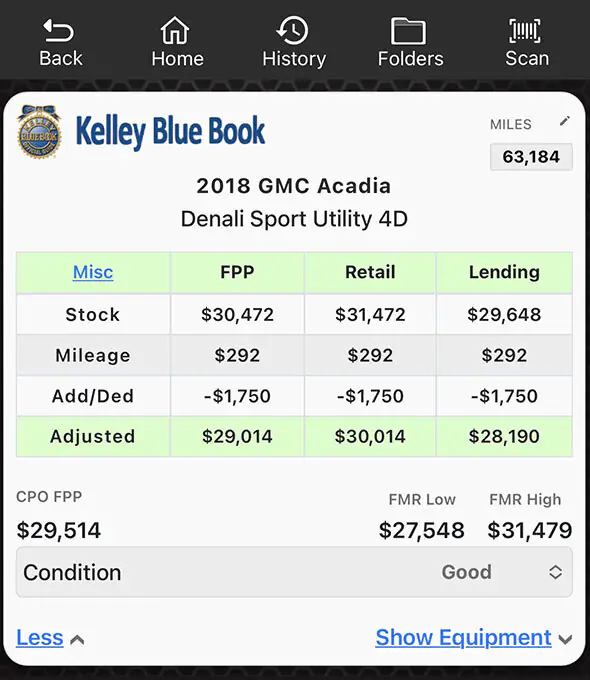
Different KBB Values: Trade-in, Private Party, Retail
One of KBB’s most valuable contributions to personal finance is its differentiation of vehicle values based on the transaction type. Understanding these distinctions is crucial for financial planning, whether you’re buying or selling.
- Trade-in Value: This is the amount a dealership is typically willing to pay you for your car when you’re purchasing another vehicle from them. It’s generally the lowest of the three values because the dealer needs to recondition the car, market it, and make a profit. KBB’s trade-in value helps you set realistic expectations and negotiate effectively at the dealership.
- Private Party Value: This is the amount you can expect to get when selling your car directly to another individual. It’s usually higher than the trade-in value because you’re cutting out the dealer’s overhead and profit margin. However, it requires more effort on your part (marketing, showing the car, handling paperwork). KBB’s private party value is ideal for setting your asking price.
- Retail Value: This is the price you would expect to pay when buying a used car from a dealership. It’s typically the highest value because it includes the dealer’s reconditioning costs, warranty (if any), profit margin, and the convenience of a professional sales process. KBB’s retail value is useful for buyers to assess if a dealer’s asking price is fair.
Recognizing these distinct values empowers you to choose the most financially advantageous path, whether you’re selling for convenience or maximum return, or buying with an eye on market fairness.
Navigating the KBB Platform: A Step-by-Step Financial Guide
Accessing your car’s KBB valuation is a straightforward process designed to provide quick and comprehensive financial insights.
- Start with Your Vehicle’s Identity: Input the year, make, model, and trim level of your car. The more specific you are, the more accurate the initial estimate.
- Detail the Mileage: Provide the current odometer reading. Mileage is a primary factor in depreciation and valuation.
- Assess Condition Accurately: This is where many people can unintentionally inflate or deflate their car’s value. KBB prompts you to assess various aspects from excellent to poor condition. Be honest about dents, scratches, mechanical issues, tire wear, and interior cleanliness. A fair assessment here ensures a realistic valuation.
- List Optional Features: Select any significant optional extras or packages your car has, such as premium audio systems, navigation, sunroof, advanced safety features, or special wheel packages. These can impact value, particularly on higher-end vehicles.
- Choose Your Transaction Type: Select whether you want the trade-in, private party, or retail value. This determines the specific valuation range KBB provides.
By meticulously following these steps, you obtain a customized valuation that serves as a robust financial starting point for any automotive transaction.
Key Factors Influencing Your Car’s Financial Worth
While the KBB platform streamlines the valuation process, understanding the underlying financial dynamics that dictate a car’s worth allows for more strategic decision-making. These factors aren’t just data points; they are variables that you can, to some extent, manage to preserve or enhance your car’s monetary value.
Vehicle Condition: The Cornerstone of Value
The physical and mechanical state of your car is arguably the single most impactful factor on its financial worth. A well-maintained vehicle commands a premium, reflecting reliability and reduced future costs for the next owner.
- Mechanical Integrity: A car that runs smoothly, with no warning lights, recent major service, and strong brakes, will fetch significantly more. Regular oil changes, timely belt replacements, and addressing minor issues promptly prevent larger, more costly problems that drastically reduce value.
- Cosmetic Appeal: First impressions matter. A clean, dent-free exterior, intact paint, and a well-maintained interior (no tears, stains, or lingering odors) signal that the car has been cared for. While minor imperfections are expected, major damage will require significant discounts.
- Maintenance Records: A complete service history provides tangible proof of care and greatly enhances buyer confidence. This financial documentation can add hundreds, if not thousands, to your car’s value by demonstrating proactive maintenance and reducing perceived risk for the buyer.
Mileage and Age: The Depreciation Accelerators
Mileage and age are twin forces driving depreciation. Generally, higher mileage and older vehicles equate to lower financial worth, as they imply more wear and tear and a shorter remaining lifespan.
- Mileage: Every mile driven adds wear and tear to components. While there’s no magic number, typical annual mileage averages around 12,000-15,000 miles. Significantly higher mileage than average for the car’s age will reduce its value.
- Age: Even a car sitting in a garage depreciates due to time. Technology evolves, designs change, and materials degrade. Newer models often incorporate features that make older ones seem less desirable, pushing values down.
Understanding these intertwined factors allows you to make financially savvy decisions about when to sell your car – often before it hits major mileage milestones or becomes significantly outdated.
Make, Model, and Trim: Market Demand and Resale Value
Not all cars are created equal in terms of financial performance. Some brands and models are renowned for their strong resale value, making them more attractive investments.
- Brand Reputation: Toyota, Honda, Subaru, and certain luxury brands often boast strong resale values due to their reputation for reliability, durability, and customer satisfaction.
- Model Popularity and Demand: Popular models that are consistently in demand will hold their value better. Conversely, niche models or those with known reliability issues tend to depreciate faster.
- Trim Level and Engine Options: While base models are cheaper, higher trim levels with desirable features can sometimes retain a larger percentage of their initial value, especially if those features are sought after in the used market. However, certain high-performance engines might deter some buyers due to fuel economy or maintenance concerns.
Researching resale value projections before purchasing a vehicle can be a crucial financial decision, impacting your total cost of ownership significantly.

Features and Optional Extras: Do They Always Add Value?
The impact of optional extras on a car’s financial worth can be a nuanced area. While some features add tangible value, others may not recoup their initial cost.
- Desirable Add-ons: Features like advanced safety systems (blind-spot monitoring, adaptive cruise control), navigation, sunroofs, leather seats, and premium sound systems often enhance a car’s appeal and can contribute positively to its resale value.
- Limited Impact: Some highly specialized or very expensive custom modifications may not appeal to a broad market and might not add significant financial value, or could even detract from it. Similarly, extremely basic features like floor mats are generally assumed and don’t add specific value.
- Technology Shelf Life: Rapidly evolving technology means that an expensive infotainment system from five years ago might now be outdated, having a limited impact on current value.
The key is to consider what features are broadly desirable in the used car market rather than just what was expensive at the time of purchase.
Geographic Location and Local Market Dynamics
Where your car is located and the specific dynamics of that local market play a direct role in its financial valuation.
- Regional Preferences: A four-wheel-drive SUV might fetch a higher price in a snowy climate than in a sunny desert region, for instance.
- Local Supply and Demand: A city with many dealerships selling a particular model might see more competitive pricing than a rural area with limited options.
- State Regulations: Emissions requirements or inspection standards can subtly influence values in different states.
KBB’s algorithms incorporate these regional variations, ensuring the valuation provided is relevant to your specific location, a critical detail for accurate financial planning.
Strategic Financial Decisions Based on Car Valuation
Understanding “what is my car worth KBB” is not an end in itself; it’s the foundation for making financially astute decisions throughout your car ownership lifecycle. This knowledge transforms you from a passive participant into an empowered negotiator and planner.
When to Sell vs. When to Trade In: Maximizing Your Return
One of the most common financial dilemmas for car owners is deciding between selling privately and trading in at a dealership. KBB values are indispensable here.
- Private Sale Advantage: If maximizing your financial return is the top priority, a private sale, guided by KBB’s private party value, nearly always yields more money. You absorb the effort of marketing and selling, but capture the dealer’s profit margin.
- Trade-in Convenience: If convenience, tax savings (in some states, you only pay sales tax on the difference between the new car’s price and your trade-in value), and speed are paramount, trading in is easier. KBB’s trade-in value helps you ensure the dealer’s offer is fair.
By comparing the KBB private party and trade-in values, you can financially quantify the “cost” of convenience versus the “gain” of effort, allowing you to choose the path that best aligns with your financial goals.
Negotiating Power: Saving and Earning More
Armed with KBB’s valuation, your negotiation position is significantly strengthened, whether you’re buying or selling.
- As a Seller: You know your car’s fair market value, so you can confidently set an asking price and resist lowball offers. You can also justify your price with objective data from a trusted source.
- As a Buyer: You know what a fair retail price is for the car you’re interested in. This prevents you from overpaying and gives you leverage to negotiate down to a more appropriate price. You can also use KBB to assess the trade-in value of your own car, strengthening your position in a two-part negotiation.
This financial transparency empowers you to save money when buying and earn more money when selling.
Insurance Implications: Ensuring Adequate Coverage
Your car’s KBB valuation has direct implications for your insurance policies.
- Actual Cash Value (ACV): In the event of a total loss (theft or severe damage), your insurance company typically pays out the Actual Cash Value of your vehicle at the time of the incident. This value is often derived from market data, similar to KBB’s methodology.
- Avoiding Over/Underinsurance: Knowing your car’s worth helps you ensure your coverage limits align with its current value. You don’t want to pay for coverage on a $20,000 car when it’s only worth $10,000, nor do you want to be underinsured if your car is worth more than your policy allows for. Regularly checking KBB values helps you adjust your coverage as your car depreciates.
This ensures that your insurance premiums are financially sensible and that you’re adequately protected against potential financial losses.
Budgeting for Your Next Vehicle: Planning for Depreciation and Future Costs
Car valuation is a forward-looking financial exercise. By understanding your current car’s worth and its depreciation trajectory, you can better budget for your next purchase.
- Down Payment Calculation: Knowing your trade-in or private party sale proceeds helps you estimate the down payment you’ll have available for your next car.
- Future Loan Amount: A larger down payment (from your current car’s value) means a smaller loan, lower monthly payments, and less interest paid over the life of the loan – a significant financial advantage.
- Total Cost of Ownership: When evaluating new car options, consider not just the purchase price but also estimated depreciation over the years you plan to own it. KBB and similar resources can help you identify models with better long-term financial retention.
Integrating KBB insights into your budgeting process helps you make financially sustainable choices for your automotive future.
Asset Management: Integrating Your Car’s Value into Your Personal Net Worth
For a comprehensive personal financial picture, all significant assets must be accounted for. Your car, despite its depreciating nature, is a substantial asset.
- Net Worth Calculation: Regularly updating your car’s value in your personal net worth statements provides a more accurate reflection of your overall financial health.
- Debt-to-Asset Ratios: Understanding the value of your car in relation to any outstanding auto loans helps you assess your leverage and make decisions about accelerating loan payments or managing other debts.
- Investment Decisions: Knowing the capital tied up in your vehicle might influence decisions about freeing up cash by selling an older car or making a more financially prudent choice for your next vehicle.
By viewing your car as a managed financial asset rather than just a mode of transport, you gain greater control over your financial destiny.
Beyond KBB: Other Financial Resources and Considerations
While Kelley Blue Book is an undisputed leader, a truly comprehensive financial assessment sometimes benefits from cross-referencing and practical considerations.
Other Valuation Tools: Complementing KBB
While KBB is excellent, consulting other reputable sources can provide an even more robust financial perspective, especially if there are significant discrepancies or unique vehicle attributes.
- Edmunds: Another widely respected source, Edmunds often provides similar valuation categories and incorporates local market data.
- NADA Guides (J.D. Power Valuation Services): Often used by dealerships and lenders, NADA values can sometimes be slightly different, making them useful for comparison, especially for trade-ins.
- Local Dealership Appraisals: While these are primarily sales tools, getting a few no-obligation trade-in appraisals from different dealerships can give you real-world insights into what your car is actually worth to professional buyers in your immediate area.
Using these resources in conjunction with KBB ensures you have a well-rounded financial understanding of your car’s market position.
The Human Element: Test Drives and Pre-Purchase Inspections
For buyers, especially in private sales, a thorough physical inspection is the financial safeguard against unforeseen costs.
- Test Drives: This isn’t just about comfort; it’s about listening for unusual noises, feeling for odd vibrations, and testing all systems (AC, radio, lights) to identify potential financial liabilities.
- Pre-Purchase Inspection (PPI): For a significant purchase, investing in a PPI by an independent mechanic is a wise financial move. They can uncover hidden mechanical issues that might not be apparent to the untrained eye, saving you potentially thousands in repair costs down the line.
Ultimately, knowing “what is my car worth KBB” is the first, crucial step in a financially informed journey through vehicle ownership. It transforms a potentially confusing process into a clear, strategic path, empowering you to make decisions that protect and enhance your financial well-being.
aViewFromTheCave is a participant in the Amazon Services LLC Associates Program, an affiliate advertising program designed to provide a means for sites to earn advertising fees by advertising and linking to Amazon.com. Amazon, the Amazon logo, AmazonSupply, and the AmazonSupply logo are trademarks of Amazon.com, Inc. or its affiliates. As an Amazon Associate we earn affiliate commissions from qualifying purchases.