
Understanding the true market value of your vehicle is far more than just a matter of curiosity; it’s a critical component of sound personal finance. Whether you’re contemplating a sale, planning a trade-in, assessing your net worth, or simply trying to make informed decisions about your automotive investments, knowing your car’s worth is an indispensable financial skill. The term “Blue Book” has become synonymous with vehicle valuation, primarily referencing Kelley Blue Book (KBB), a long-standing authority in the automotive market. This comprehensive guide will delve into the intricacies of car valuation, empowering you to accurately assess your vehicle’s worth and leverage that knowledge for optimal financial outcomes.

The Indispensable Role of Knowing Your Car’s Value
In the intricate landscape of personal finance, every asset contributes to your overall financial picture. Your car, for many, represents one of their most significant depreciating assets, yet its value plays a pivotal role in various financial transactions and planning scenarios. Overlooking its true worth can lead to missed opportunities, poor deals, or inadequate financial protection.
Strategic Selling and Trading
The most immediate and obvious reason to know your car’s value is when you’re looking to sell it or trade it in for a newer model. Without an accurate valuation, you risk pricing your vehicle too low, leaving money on the table, or pricing it too high, deterring potential buyers. When trading in, dealers often use a lower valuation to maximize their profit margins. Armed with objective data from resources like the “Blue Book,” you enter negotiations from a position of strength, ensuring you receive a fair price, whether selling privately or to a dealership. This financial acumen can save you hundreds, if not thousands, of dollars.
Insurance and Asset Protection
Your car’s value is also fundamental to its insurance coverage. In the event of an accident that results in a total loss, your insurer will typically compensate you based on the vehicle’s actual cash value (ACV). If you’re unaware of what your car is truly worth, you might be underinsured, leading to a significant financial shortfall when it comes time to replace it. Conversely, overpaying for insurance based on an inflated perceived value is an unnecessary drain on your monthly budget. Regular valuation checks help you ensure your coverage aligns with your car’s current market value, protecting your asset adequately without overspending.
Informed Financial Planning
Beyond immediate transactions, understanding your car’s worth contributes to a broader picture of your personal financial health. It impacts your net worth calculations, helps you assess the depreciation rate of your assets, and informs future purchasing decisions. For instance, if you’re considering taking out a car loan or refinancing an existing one, the lender will use your car’s value as collateral. A strong understanding of this value can help you secure better loan terms, a lower interest rate, or avoid being upside down on your loan (owing more than the car is worth). It allows you to integrate your vehicle as a conscious part of your overall financial strategy, rather than an isolated expense.
Demystifying the “Blue Book”: Kelley Blue Book and Beyond
For decades, “Blue Book” has been the colloquial standard for vehicle valuation in the United States. While the term broadly refers to any authoritative guide, it most commonly points to Kelley Blue Book. However, KBB is not the only player in the valuation arena, and a holistic approach often involves consulting multiple sources.
A Brief History and KBB’s Methodology
Kelley Blue Book started as a family-run business in 1926, initially publishing a list of used car values for car dealers. Over time, it evolved into the comprehensive consumer resource it is today. KBB’s methodology is sophisticated, drawing data from a vast array of sources. This includes actual vehicle transactions from dealerships, wholesale auctions, private party sales, manufacturer invoice data, economic conditions, and even regional market demand. Their proprietary algorithms process this massive dataset to generate what they believe to be the most accurate market values. They don’t just pull numbers out of thin air; their valuations are the product of complex data analysis and market intelligence.
Understanding Different Value Types (Trade-in, Private Party, Retail)
One crucial aspect often overlooked is that KBB provides different values depending on the context of the sale. Understanding these distinctions is paramount for effective financial negotiation:
- Trade-in Value: This is the lowest value, representing what a dealership is likely to offer you for your car when you trade it in towards the purchase of a new one. It accounts for the dealer’s need to recondition the vehicle, market it, and make a profit.
- Private Party Value: This is typically higher than the trade-in value, reflecting what you might expect to receive if you sell your car directly to another individual. It accounts for the absence of a dealer’s overhead and profit margin, but also the effort involved in selling privately.
- Retail Value: This is the highest value, representing what you would expect to pay for a similar car if you were buying it from a dealership. It reflects the dealership’s investment in reconditioning, warranty (if applicable), marketing, and profit.
Recognizing which value applies to your specific situation ensures you set realistic expectations and negotiate effectively.
Exploring Alternative Valuation Resources (Edmunds, NADAguides)
While KBB is prominent, smart financial consumers consult multiple sources for a more complete picture. Each valuation service has its own proprietary methodology and data sources, which can lead to slightly different results.
- Edmunds: Known for its detailed pricing tools and expert reviews, Edmunds also offers comprehensive valuation services. Their “True Market Value” (TMV) pricing aims to reflect real-world transaction prices in your local area, based on extensive dealer data.
- NADAguides (National Automobile Dealers Association): Often considered the “dealer’s blue book,” NADAguides values are typically used by financial institutions and dealerships. Their values tend to be a bit higher than KBB’s for a given vehicle, as they often reflect the “clean trade-in” or “retail” value rather than private party sale figures.
By comparing valuations from KBB, Edmunds, and NADAguides, you gain a more robust understanding of your car’s potential worth across different sales scenarios and market perspectives, strengthening your financial position.
Key Factors That Drive Your Car’s Value
Determining your car’s worth isn’t solely about its make, model, and year. A myriad of factors, both internal and external, converge to influence its ultimate market value. Being aware of these elements allows you to better understand the valuation process and even strategize to improve your car’s standing.
Condition, Mileage, and Maintenance History
These three elements are arguably the most significant internal determinants of a car’s value.
- Condition: A vehicle’s physical and mechanical state is paramount. Categories like “Excellent,” “Good,” “Fair,” and “Poor” are often used. An “Excellent” condition car means it’s mechanically sound, cosmetically flawless, and requires no reconditioning. Dents, scratches, torn upholstery, or malfunctioning components significantly reduce value.
- Mileage: Lower mileage for the vehicle’s age almost always translates to higher value. High mileage often implies more wear and tear on critical components, impacting perceived longevity and reliability. There’s a widely accepted benchmark of around 12,000-15,000 miles per year, with deviations impacting value.
- Maintenance History: A comprehensive, well-documented maintenance history (service records, repair invoices) proves the car has been properly cared for. This transparency builds trust with buyers and signals fewer potential future issues, commanding a higher price. It’s a tangible record of your financial investment in the car’s upkeep.
Features, Trim Level, and Desirability
Beyond the basics, specific features and the overall appeal of your car play a crucial role.
- Features and Trim Level: A higher trim level with desirable features (e.g., leather seats, navigation system, sunroof, advanced safety features like adaptive cruise control) will fetch a better price than a base model. Modern tech features, especially, can significantly boost value.
- Desirability: This is a somewhat subjective but critical factor driven by market trends, brand perception, and reliability ratings. Certain models or brands hold their value better due to strong reputations for reliability, lower ownership costs, or perceived luxury. Conversely, models with known mechanical issues or poor crash test ratings will depreciate faster.
Geographical Market Dynamics and Timing
External factors related to location and time also heavily influence value.
- Geographical Market Dynamics: A car highly sought after in one region might be less desirable in another. For example, a four-wheel-drive SUV might command a premium in snowy climates, while a convertible might fetch more in sunnier states. Local inventory levels also play a role; if there’s a surplus of a particular model in your area, its value may be depressed.
- Timing: The time of year can affect demand. Convertibles often sell better in spring, while SUVs and AWD vehicles see increased interest in fall and winter. Economic conditions, such as rising gas prices, can also shift demand away from large, inefficient vehicles. Being strategic about when you sell can sometimes yield a better financial return.
Strategies to Enhance and Maximize Your Car’s Resale Value
While some depreciation is inevitable, smart financial management of your vehicle can significantly mitigate losses and even enhance its eventual resale value. Thinking proactively about maintaining and presenting your car is an investment that pays dividends.
Proactive Maintenance and Record Keeping
The cornerstone of maximizing value lies in consistent, proactive maintenance. Adhering to the manufacturer’s recommended service schedule isn’t just about keeping your car running; it’s about preserving its long-term health and value. Regular oil changes, tire rotations, fluid checks, and timely replacement of wear-and-tear items prevent minor issues from escalating into costly major repairs. Crucially, keep meticulous records of all maintenance and repairs. A folder filled with service invoices and receipts acts as irrefutable proof of diligent care, instilling confidence in potential buyers and substantiating a higher asking price. This documentation is a tangible asset in itself.
The Power of Presentation: Detailing and Minor Repairs
First impressions matter immensely. A clean, well-maintained car not only looks appealing but also signals to a buyer that it has been cared for. Before selling, invest in a thorough detailing. This includes:
- Exterior: Washing, waxing, polishing, tire shining, and cleaning wheels.
- Interior: Vacuuming, cleaning upholstery and carpets, wiping down surfaces, and eliminating odors.
- Minor cosmetic repairs: Addressing small dents, scratches, paint chips, or windshield cracks can significantly boost appeal. Replacing worn floor mats, fixing a broken vent, or repairing a sagging headliner are inexpensive fixes that yield substantial returns.
These efforts enhance the perceived value far beyond their cost, making your car stand out in a competitive market.
Strategic Upgrades and Aftermarket Additions
While major modifications often don’t increase value and can even detract from it, certain strategic upgrades or features can positively impact your car’s appeal and price.
- Technology Upgrades: If your car is a bit older, adding a modern infotainment system with Apple CarPlay/Android Auto, or a backup camera (if it’s not standard) can make it much more desirable without breaking the bank.
- Safety Features: While not always aftermarket, if your car has advanced safety features, highlight them. These are increasingly important to buyers.
- High-Quality Tires: Having a good set of tires with plenty of tread depth is a strong selling point and a sign of good maintenance.
- Original Equipment (OE) Parts: When replacing parts, opting for OE or equivalent quality parts rather than cheaper, generic alternatives can maintain the car’s integrity and value.
Focus on upgrades that enhance safety, convenience, or reliability, as these are the most broadly appealing and fiscally responsible choices.
Leveraging Your Car’s Valuation for Smarter Financial Decisions
The ultimate goal of understanding your car’s Blue Book value is to empower you to make financially savvy decisions. This knowledge translates directly into better deals, improved financial planning, and a stronger personal balance sheet.
Negotiating Your Best Deal: Selling Privately vs. Dealership Trade-in
Armed with your car’s precise valuation (private party, trade-in, and retail), you’re perfectly positioned for negotiations.
- Selling Privately: This route generally yields the highest financial return. Knowing your car’s private party value helps you set a competitive asking price. You can confidently justify your price to potential buyers by referencing objective valuation data, pushing back against lowball offers.
- Dealership Trade-in: While offering less convenience, trading in can be less hassle. With the trade-in value from KBB or Edmunds in hand, you can challenge a dealership’s initial low offer. Remember, a dealer’s goal is profit. Your goal is a fair financial transaction. Use your research to negotiate the trade-in value separately from the purchase price of your new vehicle. This dual-negotiation strategy is a key financial tactic.
Impact on Loan-to-Value Ratios and Refinancing
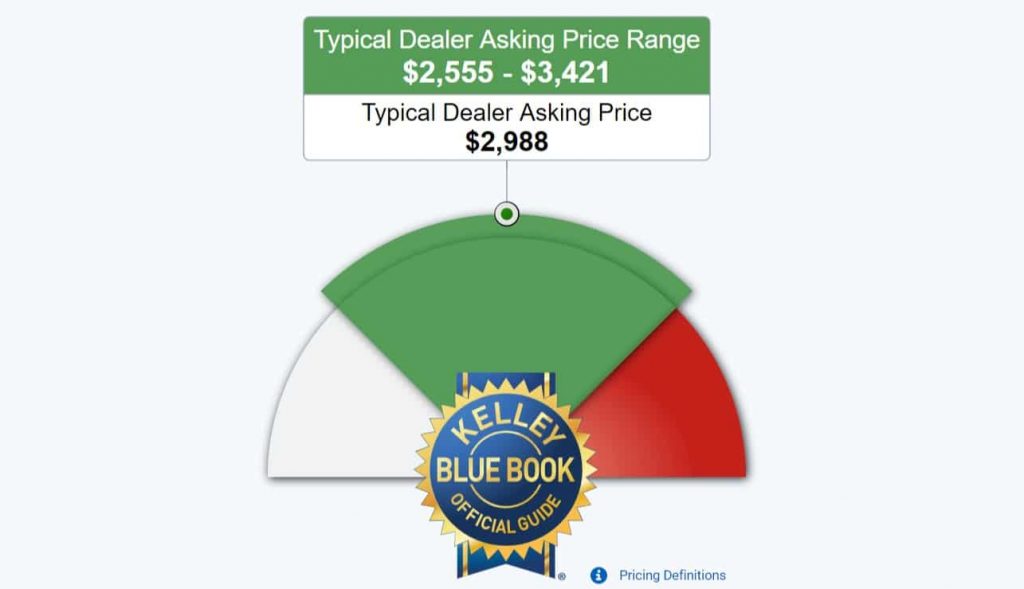
Your car’s value is fundamental to its loan-to-value (LTV) ratio, a critical metric for lenders. The LTV compares the amount of your loan to the car’s market value. A high LTV (e.g., owing more than the car is worth, or being “upside down”) can make it difficult to sell or trade in the car without incurring a financial loss. Regularly checking your car’s value allows you to monitor your LTV. If interest rates have dropped or your credit score has improved, knowing your car’s current value can help you determine if refinancing your car loan is a financially advantageous move. A lower LTV can qualify you for better refinancing terms, reducing your monthly payments or total interest paid.
Assessing Your Net Worth and Future Automotive Investments
Finally, incorporating your car’s current Blue Book value into your overall net worth calculation provides a more accurate financial snapshot. While it’s a depreciating asset, it still holds significant value that contributes to your total assets. Understanding this depreciation over time can inform future automotive decisions:
- Should you buy new or used?
- How long should you keep a car to minimize depreciation loss?
- What models hold their value best, potentially making for a better long-term investment?
By consistently tracking your vehicle’s worth, you transform it from a mere mode of transport into an actively managed financial asset. This holistic approach empowers you to make smarter spending decisions, build greater wealth, and navigate the complex world of automotive ownership with financial confidence. The “Blue Book” isn’t just a guide; it’s a powerful financial tool for every car owner.
aViewFromTheCave is a participant in the Amazon Services LLC Associates Program, an affiliate advertising program designed to provide a means for sites to earn advertising fees by advertising and linking to Amazon.com. Amazon, the Amazon logo, AmazonSupply, and the AmazonSupply logo are trademarks of Amazon.com, Inc. or its affiliates. As an Amazon Associate we earn affiliate commissions from qualifying purchases.