
The Dawn of a New Reality: Defining Mixed Reality
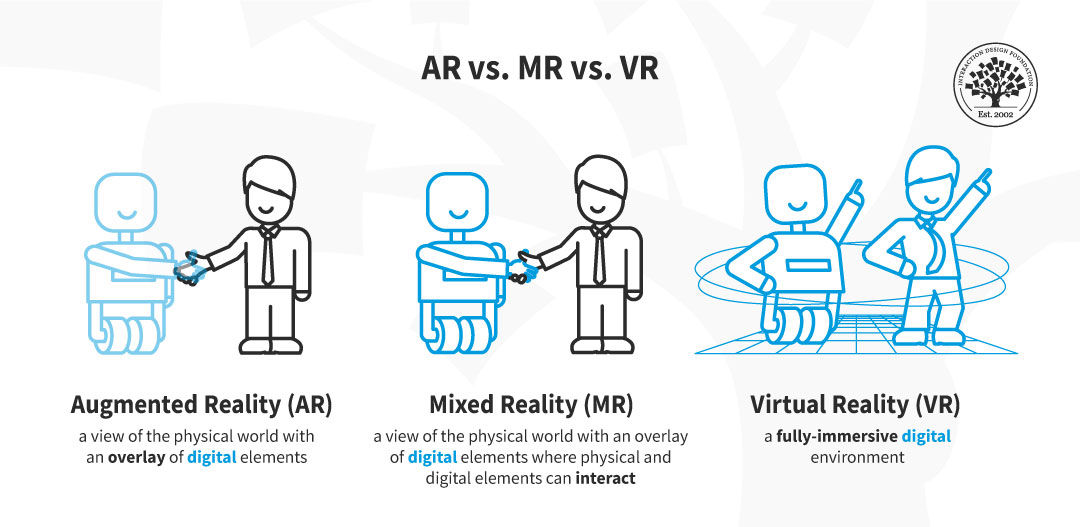
Mixed Reality (MR) represents a paradigm shift in how humans interact with digital information and the physical world. Far more than a mere evolution of virtual or augmented reality, MR stands as a distinct technological category that seamlessly blends real and virtual environments, allowing for real-time interaction between physical and digital objects. It crafts an experience where users are grounded in their actual surroundings while simultaneously engaging with holographic content that appears to exist within that space. This is not about being fully immersed in a simulated world, nor is it merely overlaying digital information onto the real world. Instead, MR actively understands and manipulates both the physical and digital realms, creating a truly hybrid environment.
Beyond VR and AR: A Seamless Blend
To truly grasp MR, it’s essential to understand its relationship with its predecessors: Virtual Reality (VR) and Augmented Reality (AR). Virtual Reality transports users entirely into a simulated digital environment, completely obscuring the real world. While incredibly immersive, it disconnects users from their physical surroundings. Augmented Reality, on the other hand, overlays digital content onto the real world, typically through smartphone cameras or smart glasses. This content exists as an overlay, generally without understanding or interacting with the three-dimensional depth and surfaces of the physical environment in a sophisticated way. MR transcends both by enabling digital objects to not only appear in the physical world but also to interact with it, be occluded by real objects, and even influence real-world outcomes through sophisticated spatial mapping and computation. The key distinction lies in the level of interaction and environmental understanding; MR systems possess a deep comprehension of the physical space, including its dimensions, surfaces, and lighting, allowing digital content to appear and behave as if it were truly part of that environment.
Key Characteristics of MR Experiences
Several defining characteristics set MR apart. Firstly, persistence is crucial: holographic content can remain in a fixed position within the physical world, even as the user moves around it. When the user leaves and returns, the digital object is still there, exactly where it was left. Secondly, spatial anchoring allows digital objects to be “locked” into specific physical locations or surfaces, responding accurately to real-world physics and occlusions. This means a digital character could walk behind a physical desk, or a holographic instruction manual could be placed directly onto a piece of machinery. Thirdly, natural interaction is paramount, often involving gaze, gestures, and voice commands, eliminating the need for complex controllers and making interaction intuitive and fluid. Finally, MR systems typically incorporate environmental understanding, using an array of sensors to map the room, identify surfaces, and track physical objects, which in turn informs how digital content behaves and integrates into the scene. These characteristics collectively create a compelling illusion that blurs the lines between what is real and what is digital.
The Technological Foundation: How MR Works
The sophisticated experiences delivered by Mixed Reality are underpinned by a complex interplay of advanced hardware and software technologies. Unlike simple AR overlays, MR demands real-time processing of vast amounts of environmental data, intricate spatial computations, and highly accurate tracking systems to convincingly blend the digital with the physical.
Advanced Sensors and Cameras
At the core of any MR device, such as the Microsoft HoloLens or Magic Leap One, is an array of sophisticated sensors and cameras. These include depth-sensing cameras (like time-of-flight or structured light sensors) that accurately measure distances and construct 3D models of the physical environment in real-time. Wide-angle cameras capture the user’s surroundings, feeding visual data to the system for object recognition and contextual understanding. Inertial Measurement Units (IMUs) — comprising accelerometers, gyroscopes, and magnetometers — meticulously track the user’s head movements and orientation with sub-millimeter precision. These sensors work in concert, continuously scanning the environment and the user’s position within it, forming the raw data foundation for the MR experience.
Real-time Environmental Mapping
The data collected by the sensors is immediately processed to create a dynamic, real-time map of the physical environment. This process, often referred to as Simultaneous Localization and Mapping (SLAM), allows the MR device to understand its own position and orientation within an unknown environment while simultaneously building a detailed 3D map of that environment. The system identifies surfaces (walls, floors, tables), understands their dimensions, and even detects obstacles. This environmental understanding is critical for spatial anchoring, enabling digital holograms to correctly interact with physical surfaces – appearing to sit on a table, walk across a floor, or be hidden behind a real-world object. Without precise and continuous environmental mapping, digital content would simply float disconnectedly in space, breaking the illusion of mixed reality.
Spatial Computing and AI Integration
Once the physical environment is mapped, the real magic of spatial computing begins. This involves sophisticated algorithms that process the 3D data to place, scale, and orient digital objects within the physical space accurately. Spatial computing manages the rendering of holograms from the correct perspective, ensuring they appear stable and realistic from the user’s vantage point. Increasingly, Artificial Intelligence (AI) and Machine Learning (ML) play a vital role here. AI can enhance environmental understanding by recognizing specific objects (e.g., a chair, a door, a monitor), allowing for more intelligent interactions. It also assists in gesture recognition, voice command processing, and even anticipating user intent, making the MR interface more intuitive and responsive. AI-powered algorithms can optimize the rendering pipeline, ensure seamless occlusion, and adapt content based on lighting conditions or user context.
High-Fidelity Graphics and Haptic Feedback
For digital objects to convincingly blend with the real world, they must be rendered with high fidelity and at high frame rates to avoid visual discomfort or motion sickness. MR devices employ powerful, miniaturized graphics processing units (GPUs) to generate photorealistic holograms and seamlessly integrate them into the real-time video feed or optical pass-through. Display technologies must offer a wide field of view, excellent resolution, and accurate color reproduction. While primarily visual and auditory, the future of MR increasingly incorporates haptic feedback. This technology simulates touch sensations, allowing users to “feel” digital objects through specialized gloves or controllers, further blurring the lines between the physical and virtual and enhancing the sense of presence and interaction.
Transformative Applications Across Industries
Mixed Reality is not merely a novelty; its capacity to merge digital insights with physical presence is unlocking unprecedented efficiencies and opportunities across a diverse array of sectors, fundamentally reshaping workflows and user experiences.
Healthcare: Enhancing Diagnostics and Training
In healthcare, MR is revolutionizing medical training, surgical planning, and even patient care. Medical students can interact with holographic anatomical models, dissecting them virtually with precision and understanding complex structures in 3D. Surgeons can overlay patient CT or MRI scans directly onto a patient’s body during operations, providing a “x-ray vision” effect that guides precise incisions and procedures. This spatial guidance significantly reduces errors and improves outcomes. For diagnostics, MR allows radiologists to visualize complex data in 3D, collaborating remotely on holographic patient models. Furthermore, MR can provide therapeutic experiences, such as virtual physiotherapy or mental health support, by creating interactive digital environments within the patient’s real room.
Manufacturing and Engineering: Design and Prototyping
Manufacturing and engineering benefit immensely from MR’s ability to visualize and interact with digital models in a physical context. Designers can develop and refine product prototypes as holograms, iterating on designs in real-time without the need for expensive physical mock-ups. Engineers can walk around a holographic representation of a new factory floor layout, identifying potential bottlenecks or ergonomic issues before construction even begins. Assembly line workers can receive step-by-step holographic instructions overlaid directly onto the machinery they are working on, significantly reducing training time and errors. Remote collaboration also thrives, with geographically dispersed teams able to jointly inspect and manipulate 3D designs as if they were in the same room.

Education and Training: Immersive Learning Environments
MR transforms traditional educational paradigms by creating deeply immersive and interactive learning environments. Students can explore historical sites as 3D models appearing in their classroom, or conduct virtual chemistry experiments with holographic apparatus that reacts realistically. Vocational training benefits from realistic simulations where trainees can practice complex tasks, like repairing intricate machinery or performing delicate procedures, without risk or expense. Educators can present abstract concepts in tangible, interactive forms, making learning more engaging and accessible. The ability to place dynamic, interactive content directly within a student’s physical space makes abstract knowledge concrete and facilitates deeper understanding and retention.
Retail and E-commerce: Revolutionary Customer Experiences
The retail sector is leveraging MR to offer revolutionary customer experiences. Shoppers can preview how furniture or appliances would look and fit in their homes before making a purchase, placing holographic items directly into their living rooms. Clothing retailers can offer virtual try-ons, allowing customers to see how garments look on their own bodies without physically trying them on. In-store experiences can be enhanced with MR overlays that provide product information, reviews, or personalized recommendations as customers browse shelves. This technology bridges the gap between online convenience and the tangibility of physical shopping, reducing returns and boosting customer confidence.
Entertainment and Gaming: Next-Level Immersion
While often associated with VR, MR pushes the boundaries of entertainment and gaming into the real world. Imagine playing a strategy game where digital characters battle across your living room floor, or a puzzle game where holographic elements interact with your physical furniture. MR allows developers to create experiences that are deeply integrated with a user’s unique environment, offering personalized and endlessly varied gameplay. Location-based entertainment can be transformed, turning parks or historical sites into interactive game boards. This blend of real and virtual opens up new genres and forms of interactive storytelling, creating truly unique and memorable experiences that are inherently social and grounded in shared physical space.
Challenges and the Road Ahead for MR Adoption
Despite its immense potential, Mixed Reality faces several significant hurdles before achieving widespread adoption. These challenges span technological limitations, content creation complexities, user experience considerations, and critical issues surrounding privacy and security. Addressing these will be key to MR’s future success and integration into daily life.
Hardware Constraints and Accessibility
One of the most immediate challenges is the current state of MR hardware. Devices like the HoloLens, while powerful, are still relatively bulky, expensive, and have a somewhat limited field of view. The processing power required for real-time spatial computing and high-fidelity rendering demands robust components, which often translate to higher cost and increased device size and weight. Battery life also remains a concern for untethered experiences. For MR to become ubiquitous, devices need to become lighter, more comfortable, more aesthetically pleasing, offer a wider field of view, and significantly drop in price, making them accessible to a broader consumer and enterprise market. Miniaturization, increased energy efficiency, and cost-effective manufacturing processes are critical areas of ongoing research and development.
Content Creation and Development Ecosystem
The development of compelling and high-quality MR content is another substantial hurdle. Creating sophisticated holographic applications requires specialized skills in 3D modeling, spatial interaction design, game engines (like Unity or Unreal Engine), and understanding the intricacies of MR platforms. The existing content creation ecosystem is still nascent compared to traditional software or even VR/AR. There’s a need for more intuitive development tools, robust SDKs, and a larger pool of skilled developers and designers who understand the unique challenges and opportunities of spatial computing. Building rich, persistent MR environments that seamlessly integrate with diverse physical spaces is a complex task that requires significant investment and innovation in authoring tools and workflows.
User Experience and Ergonomics
While MR promises intuitive interaction, the actual user experience can still be challenging. Issues like optical discomfort, eye strain, or motion sickness (though less prevalent than in VR) need to be mitigated. The current interaction paradigms, relying heavily on gestures and gaze, can sometimes feel cumbersome or fatiguing for extended use. Furthermore, the societal acceptance of wearing head-mounted devices in various contexts is still evolving. Ergonomic design, intuitive user interfaces, and robust tracking systems that minimize latency and jitter are paramount. The goal is to make the technology disappear, allowing users to focus entirely on the mixed-reality experience itself, without being distracted by technical limitations or physical discomfort.
Data Privacy and Security Considerations
As MR systems extensively map and understand the physical environment, including potentially sensitive personal spaces, significant data privacy and security concerns arise. MR devices capture vast amounts of data about the user’s surroundings, their movements, and their interactions. Questions about how this data is stored, processed, and shared, and who has access to it, are critical. Protecting this highly personal spatial data from misuse, unauthorized access, or breaches is essential. Robust security protocols, transparent data governance policies, and user control over their data are not just desirable but absolutely necessary for building trust and enabling widespread adoption of MR technology. Ethical considerations surrounding spatial surveillance and digital presence also need to be carefully addressed.
The Future Landscape: MR as the Computing Platform of Tomorrow
Mixed Reality is poised to evolve beyond specialized hardware and niche applications, gradually transforming into a fundamental computing platform that blends digital information seamlessly with our everyday physical existence. Its future is characterized by increasing interoperability, widespread accessibility, and its eventual integration into broader concepts like the Metaverse.
Interoperability and Standardisation
For MR to truly flourish, there is an urgent need for greater interoperability between different hardware devices, software platforms, and content formats. Currently, the MR landscape is somewhat fragmented, with various proprietary systems and development kits. Future advancements will likely see the emergence of open standards and protocols that allow applications to run across different devices and enable digital content to be shared and persist across diverse environments. This standardization will foster a more robust and expansive ecosystem, similar to how the internet or mobile operating systems enabled mass adoption by providing a common framework for development and consumption. Cross-platform compatibility will unlock richer, more connected mixed-reality experiences.
Democratisation of MR Technology
As research and development progress, the cost of MR hardware is expected to decrease significantly, and the form factor will become more lightweight and inconspicuous. The trend toward miniaturization, increased processing power in compact chipsets, and more efficient display technologies will make MR devices more affordable and accessible to a wider audience. Furthermore, the integration of MR capabilities into more common devices, such as advanced smartphones with increasingly powerful AR features that verge on MR, will further democratize the technology. Cloud-based rendering and processing will offload some of the heavy computational demands from local devices, making even more advanced MR experiences possible on less powerful hardware, ultimately bringing mixed reality to the masses.
The Metaverse and the MR Continuum
The concept of the Metaverse, a persistent, interconnected virtual universe, is often discussed in conjunction with VR. However, Mixed Reality is arguably the most crucial technology for realizing a truly meaningful and impactful Metaverse. Rather than merely entering a separate virtual world, MR allows users to experience aspects of the Metaverse within their own physical reality. It represents the “on-ramp” from the physical world into a persistent digital one, allowing for seamless transitions and hybrid experiences. The future of MR is a continuum, from subtle AR overlays on glasses to full-sensory XR experiences, all contributing to a rich, spatial internet that blends physical and digital realities. As MR technology matures, it will empower us to interact with digital information in entirely new, intuitive, and deeply integrated ways, making it an indispensable part of our professional and personal lives.
aViewFromTheCave is a participant in the Amazon Services LLC Associates Program, an affiliate advertising program designed to provide a means for sites to earn advertising fees by advertising and linking to Amazon.com. Amazon, the Amazon logo, AmazonSupply, and the AmazonSupply logo are trademarks of Amazon.com, Inc. or its affiliates. As an Amazon Associate we earn affiliate commissions from qualifying purchases.