
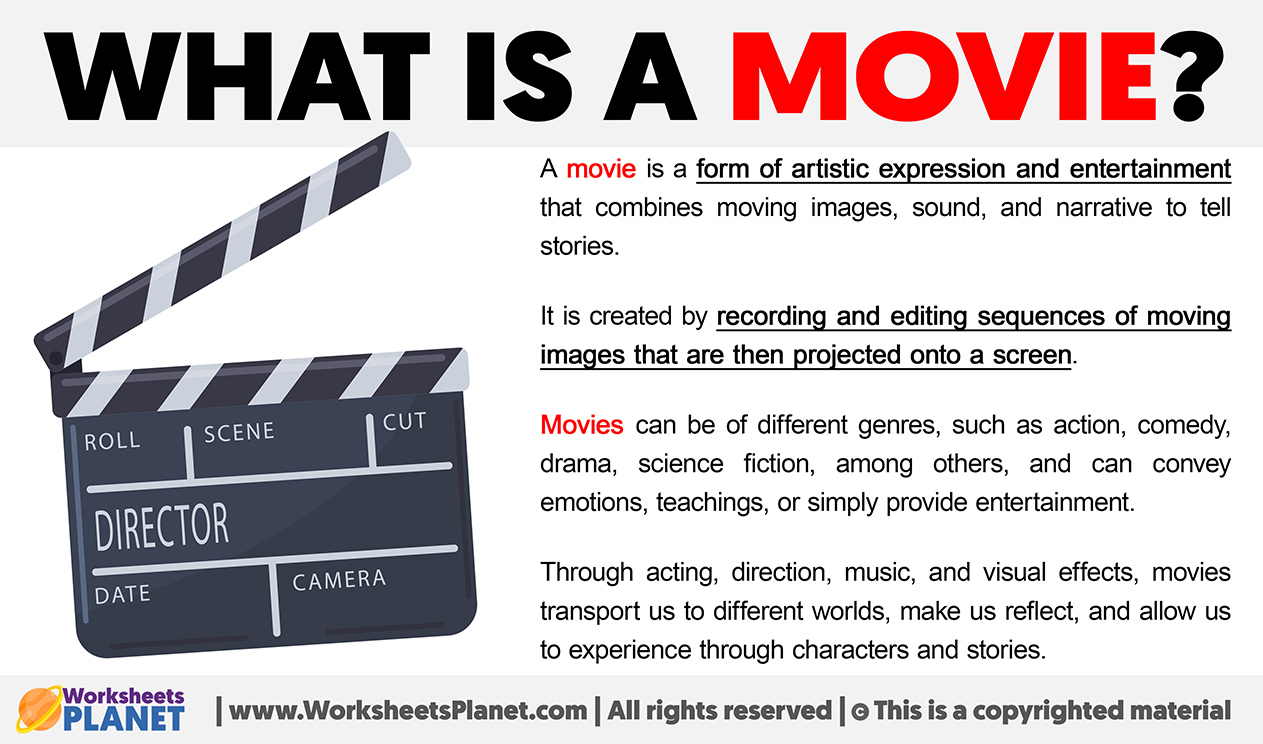
A “movie,” at its core, is a technological marvel: a series of still images projected in rapid succession to create the illusion of continuous movement, often accompanied by synchronized sound. Beyond this fundamental definition, a movie represents the culmination of complex technological innovations that have transformed storytelling, entertainment, and cultural dissemination. From its nascent forms in the late 19th century to the immersive digital experiences of today, the essence of a movie is inextricably linked to the technology that enables its creation, distribution, and consumption.
The Technological Evolution of Cinema
The journey of the movie began with scientific curiosity and mechanical ingenuity, evolving into an art form through continuous technological breakthroughs. Understanding what a movie is requires tracing its technological lineage.
Early Innovations: From Kinetoscope to Silent Era Projection
The late 1800s saw the birth of motion pictures, driven by inventors like Thomas Edison and the Lumière brothers. Edison’s Kinetoscope, patented in 1891, allowed individual viewers to watch a film loop through a peephole, marking one of the earliest forms of cinematic display. However, it was the Lumière brothers’ Cinématographe, introduced in 1895, that truly laid the groundwork for modern cinema. This device functioned as a camera, projector, and printer, allowing images to be captured and then projected onto a large screen for a collective audience.
Early films were silent, relying on visual storytelling, intertitles for dialogue or narration, and often live musical accompaniment. The technology of projection involved intricate mechanical systems, light sources, and celluloid film strips, all meticulously crafted to create the desired illusion of motion. These foundational technologies established the basic principles of cinematography and projection that, in refined forms, persist even today.
Sound and Color: Revolutionizing the Sensory Experience
The introduction of synchronized sound fundamentally reshaped what a movie could be. While early attempts at sound synchronization existed, it was the commercial success of The Jazz Singer in 1927, utilizing the Vitaphone sound-on-disc system, that ushered in the “talkie” era. This technological leap required integrating audio recording and playback systems with film projection, a complex engineering feat that redefined narrative possibilities and audience engagement.
Similarly, color transformed the visual landscape of cinema. Early colorization experiments were manual and often impractical. The development of Technicolor, particularly its three-strip process in the 1930s, allowed for rich, vibrant, and more realistic color reproduction, adding another dimension to cinematic storytelling. These innovations were not merely aesthetic enhancements; they were profound technological advancements that expanded the sensory and emotional impact of movies, making them more immersive and lifelike.
Digital Transformation: Production, Post-Production, and Distribution
The late 20th and early 21st centuries witnessed the most radical technological shift in cinema: the transition from analog film to digital. Digital cameras, initially used for visual effects, eventually became capable of capturing images with resolution and dynamic range comparable to, or even surpassing, traditional film. This digital revolution streamlined the entire filmmaking process.
In production, digital cinematography eliminated the need for chemical processing, reduced material costs, and offered instant playback. In post-production, non-linear editing systems (NLEs) replaced laborious manual film splicing, allowing for unparalleled flexibility and creative control. Visual effects, once a costly and time-consuming physical process, became largely software-driven through computer-generated imagery (CGI), opening up new realms of imaginative possibilities. Digital distribution, initially through Digital Cinema Packages (DCPs) for theaters and later via streaming platforms, replaced physical reels, making delivery faster, cheaper, and more global. This digital pivot redefined what constitutes a movie at every stage of its lifecycle.
The Technologies of Filmmaking
Understanding what a movie is also necessitates an examination of the sophisticated tools and software that bring cinematic visions to life. These technologies are the engine of creative expression in modern filmmaking.
Cameras and Lenses: Capturing the Vision
At the heart of filmmaking technology are cameras and their accompanying lenses. Modern digital cinema cameras are highly advanced computing devices, capable of capturing vast amounts of visual data at incredible resolutions (4K, 6K, 8K, and beyond) and frame rates. These cameras feature sophisticated sensors, advanced image processors, and modular designs that allow cinematographers to customize them for specific artistic and technical requirements.
Lenses, equally crucial, are precision optical instruments designed to shape the light entering the camera. Different lenses—wide-angle, telephoto, prime, zoom—offer distinct aesthetic qualities, affecting depth of field, perspective, and overall image texture. The choice of camera and lens system is a fundamental technological decision that profoundly impacts the visual language and mood of a movie, from the intimate feel of a shallow depth of field to the expansive scope of a wide shot.
Editing Software: Crafting the Narrative
Post-production is where raw footage is transformed into a cohesive narrative, and this process is almost entirely driven by sophisticated editing software. Non-linear editing (NLE) platforms like Adobe Premiere Pro, Avid Media Composer, and DaVinci Resolve allow editors to manipulate video and audio clips digitally, arrange them, cut them, and apply various effects without altering the original source material.
These software tools offer precise control over timing, rhythm, and pacing, enabling editors to sculpt performances, build suspense, and guide the audience’s emotional journey. Beyond basic cutting, modern NLEs integrate advanced features for color grading, sound mixing, motion graphics, and even preliminary visual effects, making them central to the final realization of a movie’s narrative and aesthetic intent.
Visual Effects and CGI: Expanding the Impossible
Perhaps no technological advancement has had as profound an impact on the scope of cinematic storytelling as visual effects (VFX) and computer-generated imagery (CGI). VFX encompasses all techniques used to create images or manipulate existing ones outside the context of a live action shoot, while CGI specifically refers to computer graphics used to create or enhance scenes.
Software suites like Autodesk Maya, Foundry Nuke, and SideFX Houdini are industry standards for creating photorealistic digital characters, fantastical creatures, sprawling environments, and complex simulations. These tools allow filmmakers to render scenes that would be impossible, too dangerous, or too expensive to capture practically. From subtle set extensions to entirely digital worlds, CGI has expanded the imaginative canvas of cinema, pushing the boundaries of what stories can be told and how they can be visualized. The seamless integration of live-action footage with CGI is a testament to the immense computing power and specialized software that define modern movie production.
Technology in Distribution and Consumption
The definition of a movie extends beyond its creation to how it reaches and is experienced by its audience. Distribution and consumption technologies have democratized access and diversified viewing habits.
Home Entertainment: From VHS to Streaming Platforms
For decades, the cinematic experience was largely confined to theaters. The advent of home video technology in the late 1970s and 80s, primarily through VHS and later DVD and Blu-ray, brought movies directly into people’s homes. These physical media formats relied on encoding and decoding technologies to store and play back cinematic content on consumer devices, profoundly changing how and when audiences could watch films.
The most significant technological shift in consumption has been the rise of streaming platforms. Services like Netflix, Amazon Prime Video, and Disney+ leverage vast global networks, advanced video compression algorithms, and personalized recommendation engines to deliver movies on demand to millions of devices worldwide. This digital distribution model, reliant on high-speed internet infrastructure and sophisticated content delivery networks (CDNs), has fundamentally redefined what a movie is in terms of its accessibility and consumption pattern, shifting the paradigm from a collective theatrical experience to an individualized, on-demand one.
Immersive Experiences: VR and Beyond
Emerging technologies are continually pushing the boundaries of movie consumption, moving towards increasingly immersive experiences. Virtual Reality (VR) and Augmented Reality (AR) platforms offer glimpses into a future where movies might transcend the traditional flat screen. While still in their early stages for mainstream narrative cinema, VR headsets can place viewers directly within a cinematic environment, offering 360-degree perspectives and interactive elements.
Technologies like haptic feedback, motion platforms, and advanced multi-sensory cinema setups (e.g., 4DX with moving seats, smells, and environmental effects) aim to heighten the physical and emotional engagement with a movie. These innovations suggest that the definition of a movie is fluid, constantly expanding to incorporate new ways of engaging senses and creating presence, moving beyond passive viewing to active participation.
The Future of Movie Technology
The trajectory of movie technology points towards even greater personalization, efficiency, and immersion, further blurring the lines between creation and consumption.
AI in Production and Personalization
Artificial intelligence (AI) is beginning to permeate various stages of movie production. AI tools are being developed for script analysis, character animation, voice synthesis, deepfake technology for digital doubles, and even for generating preliminary visual effects. Beyond creation, AI-driven algorithms power the recommendation systems of streaming platforms, personalizing content discovery based on viewer preferences and consumption history. The integration of AI promises to optimize workflows, unlock new creative possibilities, and tailor the cinematic experience to individual tastes more precisely than ever before.

Interactive Storytelling and Experiential Cinema
The future of movies may increasingly involve interactive elements, allowing audiences to influence narrative choices or explore storylines in non-linear ways. Technologies derived from video games, such as real-time rendering and branching narratives, could merge with traditional cinematic techniques to create new forms of “experiential cinema.” This shift suggests a move away from a fixed, passive narrative towards a dynamic, participant-driven experience, challenging the conventional definition of a movie as a singular, pre-determined piece of content.
Ultimately, a movie is a dynamic technological construct designed to tell stories through moving images and sound. Its evolution mirrors advancements in optics, mechanics, electronics, and digital computing. What began as a simple illusion has grown into a sophisticated, multi-faceted medium, continually redefined by the relentless march of technological innovation, always seeking new ways to captivate, transport, and immerse its audience.
aViewFromTheCave is a participant in the Amazon Services LLC Associates Program, an affiliate advertising program designed to provide a means for sites to earn advertising fees by advertising and linking to Amazon.com. Amazon, the Amazon logo, AmazonSupply, and the AmazonSupply logo are trademarks of Amazon.com, Inc. or its affiliates. As an Amazon Associate we earn affiliate commissions from qualifying purchases.