
Mosaic art, in its essence, is a discipline of visual art where small, individually crafted pieces are assembled and adhered to a surface to create a larger, unified image or pattern. These individual pieces, known as tesserae, can be fashioned from a remarkably diverse range of materials, including stone, glass, ceramic, shell, metal, and even found objects. The beauty and complexity of mosaic art lie not only in the final composition but also in the meticulous process of selecting, cutting, and arranging each tessera. Historically, mosaics have adorned the walls, floors, and ceilings of architectural wonders, religious sites, and public spaces, telling stories, celebrating deities, and showcasing the wealth and artistry of civilizations. Today, mosaic art continues to evolve, with contemporary artists pushing the boundaries of tradition, exploring new materials, techniques, and conceptual approaches to this ancient craft.
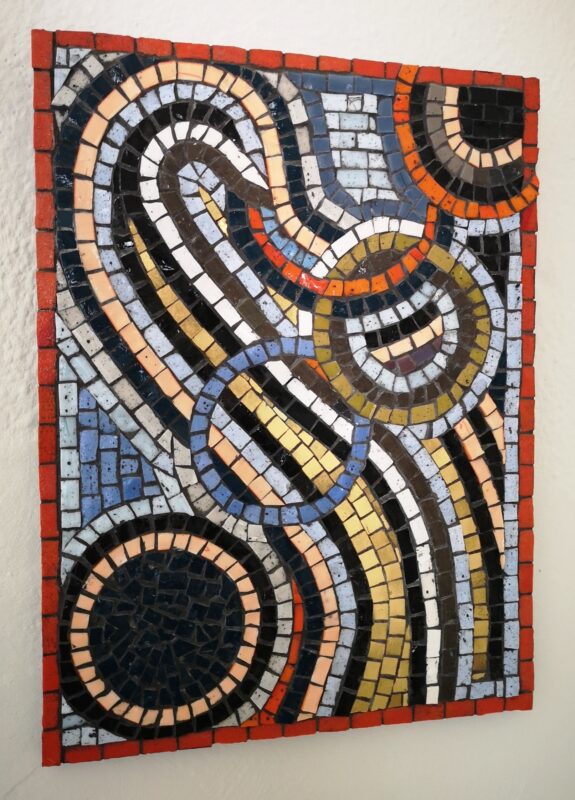
The Enduring Allure of Mosaic Art: A Cross-Cultural Legacy
Mosaic art boasts a lineage stretching back millennia, originating in ancient Mesopotamia and finding its zenith in the Roman and Byzantine empires. Its remarkable ability to withstand the ravages of time, coupled with its inherent decorative and narrative potential, cemented its place as a significant artistic medium across diverse cultures and eras. From the intricate floors of Roman villas to the shimmering domes of Byzantine churches, mosaics have consistently served as powerful visual statements, conveying religious devotion, imperial grandeur, and the everyday life of past societies. The durability of tesserae, often made from materials like stone and glass that resist decay, has preserved countless masterpieces for us to study and admire today.
The Genesis of the Medium: Early Civilizations and the Dawn of Pattern
The earliest known examples of mosaic art can be traced back to Sumerian civilization in Mesopotamia, around the 4th millennium BCE. These early works utilized polished stones and shell to create geometric patterns and simple depictions on decorative panels and columns. The practice gradually spread and evolved. In Ancient Greece, mosaic art began to gain prominence, with artists developing techniques for creating more detailed figurative scenes using pebbles and small stones. However, it was the Roman Empire that truly elevated mosaic art to new heights of sophistication and widespread application. Roman artisans mastered the use of precisely cut stone and glass tesserae, creating elaborate pavement mosaics that depicted mythological scenes, historical events, and daily life with astonishing realism.
The Golden Age of Byzantine Mosaics: Light, Color, and Spiritual Narratives
The fall of the Western Roman Empire did not spell the end of mosaic art; instead, it found a powerful new home and expression within the Eastern Roman (Byzantine) Empire, particularly in Constantinople (modern-day Istanbul). Byzantine mosaics are renowned for their luminous quality, achieved through the extensive use of gold leaf tesserae that reflect light, creating an otherworldly, spiritual atmosphere. These mosaics predominantly adorned the interiors of churches and basilicas, serving as visual catechisms and conduits to the divine. Subjects ranged from Christ Pantocrator to scenes from the life of the Virgin Mary and various saints. The characteristic style of Byzantine mosaics – characterized by stylized figures, rich jewel-like colors, and a sense of solemn grandeur – has had a profound and lasting influence on subsequent artistic traditions, particularly in Orthodox Christianity.
Beyond the Empires: Mosaics in the Islamic World and Renaissance Revival
The influence of mosaic art extended beyond the Roman and Byzantine spheres. In the Islamic world, particularly in mosques and palaces, mosaics were employed to create breathtaking geometric patterns and intricate arabesques, often in vibrant colors and with a strong emphasis on the beauty of calligraphy. Due to the Islamic prohibition against figurative representation in religious contexts, geometric and floral motifs became the dominant language of Islamic mosaics. During the Renaissance in Europe, while painting and sculpture took center stage, mosaic art experienced a resurgence, particularly in Italy. Artists like Raphael incorporated mosaic designs into their work, and the Vatican Mosaic Studio was established, continuing the tradition of large-scale mosaic commissions for religious and secular buildings.
The Art of Assembly: Materials, Techniques, and Processes
The creation of a mosaic is a process that requires both artistic vision and meticulous craftsmanship. The choice of materials, the cutting and shaping of tesserae, and the methods of application all contribute significantly to the final aesthetic and structural integrity of the artwork. Understanding these elements provides insight into the labor-intensive yet rewarding nature of mosaic art.
The Palette of the Mosaicist: A Symphony of Materials
The versatility of mosaic art is directly linked to the vast array of materials that can be employed as tesserae. Historically, materials like marble, limestone, and other natural stones were favored for their durability and availability. With the advent of glassmaking, the possibilities expanded exponentially. Smalti, a type of opaque glass specifically manufactured for mosaic work, became a cornerstone material, offering a rich spectrum of colors and a distinct luster. In addition to stone and glass, artists have incorporated ceramic tiles, porcelain shards, seashells, beads, metal pieces, and even found objects, each lending its unique texture, color, and reflectivity to the composition. The selection of materials often dictates the overall mood and style of the mosaic, from the earthy tones of stone to the shimmering brilliance of glass.
Shaping the Shards: The Art of Cutting and Preparing Tesserae
The process of preparing tesserae is as crucial as selecting them. Tesserae are typically cut or broken into smaller pieces that suit the scale and desired effect of the mosaic. For stone and glass, this often involves using specialized tools such as hammers and hardie tools (a chisel-like implement set in a sturdy base) for traditional methods, or nippers for more contemporary approaches. The shape and size of the tesserae can range from uniformly cut squares and rectangles to irregular fragments, depending on the artist’s intention. Some artists opt for a more organic, irregular look, while others prefer precise, geometric forms. The careful consideration of how each tessera will fit and interact with its neighbors is fundamental to the success of the overall design.
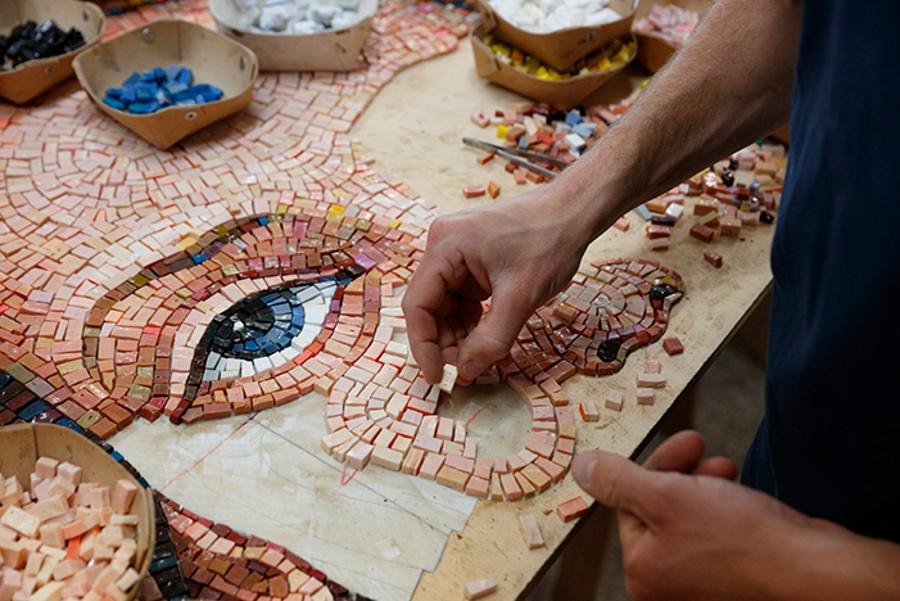
Adhering to the Vision: Application Methods and Substrates
Once the tesserae are prepared, they are adhered to a substrate, or base, which can be a rigid surface like wood, concrete, or a metal panel, or a flexible surface like mesh for later application to curved areas. The most common adhesives include cementitious mortars, epoxy resins, and specialized mosaic adhesives. The method of application can be divided into two main techniques: the direct method and the indirect method.
The Direct Method: Immediate Placement and Tactile Connection
In the direct method, tesserae are applied directly onto the substrate, often with the artist working piece by piece, imbedding them into the adhesive. This method allows the artist to see the mosaic as it develops and to make immediate adjustments to spacing and positioning. It often results in a more tactile and varied surface, as the tesserae may not be perfectly flush. This technique is well-suited for intricate designs and for artists who enjoy a direct, hands-on connection with their materials throughout the entire creation process.
The Indirect Method: Precision and Smooth Surfaces
The indirect method involves adhering the tesserae face down onto a temporary backing paper or mesh, using a water-soluble adhesive. Once the mosaic is complete on the backing, it is then transferred and adhered to its final substrate. This method is particularly useful for creating very flat and smooth surfaces, as the tesserae are aligned on the backing before being transferred. It is also beneficial for large-scale installations and for mosaics intended for floors, where a uniform surface is desirable. The indirect method allows for greater precision in the alignment of tesserae and can be more efficient for complex, repetitive patterns.
Modern Interpretations and the Future of Mosaic Art
While rooted in ancient traditions, mosaic art is far from a static discipline. Contemporary artists are continuously exploring new frontiers, embracing technological advancements and pushing the conceptual boundaries of what mosaic art can be. This dynamism ensures the medium’s continued relevance and its capacity to engage with modern audiences.
Embracing Innovation: New Materials and Digital Influences
The 21st century has witnessed an expansion in the materials used for mosaic art. Beyond traditional stone and glass, artists are incorporating recycled materials, found objects, and even digital elements. The digital age has also influenced mosaic design and creation. While traditional techniques remain vital, some artists are utilizing digital design software to plan complex patterns and even to guide automated cutting or placement processes for certain elements. This integration of technology does not diminish the artistic merit but rather expands the palette of possibilities for the mosaicist.
Conceptual and Environmental Mosaics: Art with a Message
Contemporary mosaic artists are increasingly using their medium to address social, political, and environmental issues. Mosaics are being created as public art installations that transform urban spaces, raise awareness about local history, or advocate for environmental conservation. The durability and permanence of mosaic art make it an ideal medium for creating lasting public statements. Artists are also exploring the conceptual aspects of mosaic, using the act of assembling fragmented pieces to explore themes of identity, memory, and societal connection.
The Accessibility and Democratization of Mosaic Art
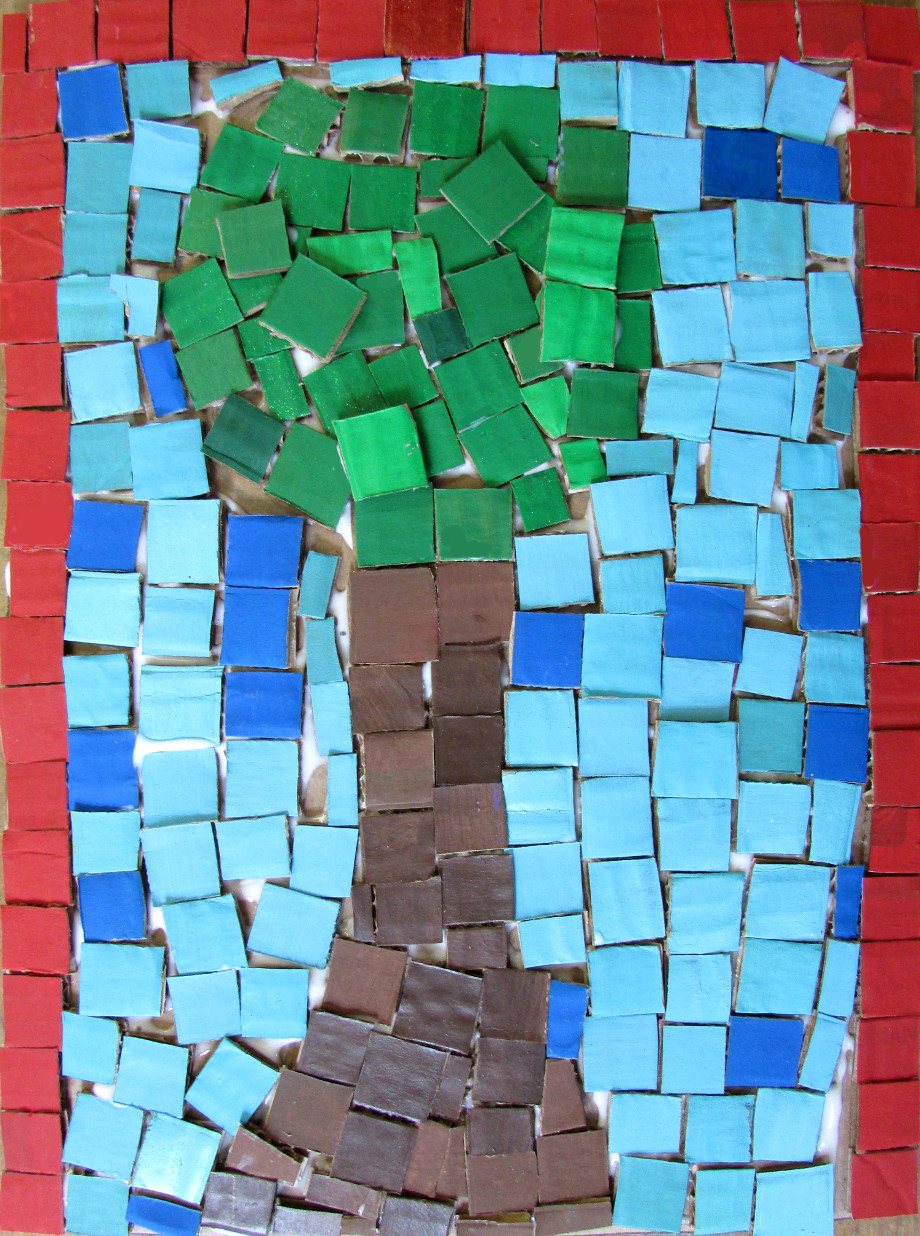
Mosaic art, once primarily the domain of grand architectural projects and skilled artisans, is becoming more accessible to a wider audience. Workshops and online tutorials are readily available, empowering individuals to explore their creativity through this ancient craft. Furthermore, the increasing availability of pre-cut tesserae and mosaic kits has made it easier for hobbyists and beginners to engage with the medium. This democratization of mosaic art ensures its continued growth and the emergence of new voices and perspectives within this vibrant artistic field.
Conclusion: A Timeless Art Form in a Modern World
Mosaic art, with its rich history and diverse applications, continues to captivate and inspire. From its ancient origins to its contemporary manifestations, the art of assembling small pieces into a grand design remains a powerful form of visual storytelling and aesthetic expression. The careful selection of materials, the meticulous execution of techniques, and the boundless creativity of artists ensure that mosaic art will continue to adorn our world, telling stories, evoking emotions, and celebrating the enduring beauty of human ingenuity for generations to come. Whether adorning a sacred space, a public plaza, or a personal artwork, the mosaic’s ability to transform the fragmented into the unified is a testament to its timeless appeal.
aViewFromTheCave is a participant in the Amazon Services LLC Associates Program, an affiliate advertising program designed to provide a means for sites to earn advertising fees by advertising and linking to Amazon.com. Amazon, the Amazon logo, AmazonSupply, and the AmazonSupply logo are trademarks of Amazon.com, Inc. or its affiliates. As an Amazon Associate we earn affiliate commissions from qualifying purchases.