
When evaluating the landscape of luxury goods and the shifting paradigm of high-end consumer purchasing, moissanite stands out as a fascinating case study in brand disruption. Within the context of the jewelry market, moissanite is not merely a gemstone; it is a financial alternative that has challenged traditional pricing models and market dominance. Understanding its composition is the first step in recognizing why this stone has become a primary choice for savvy consumers and investors looking to maximize value without compromising on aesthetic prestige.
The Mineral Foundation: Science Meets Market Value
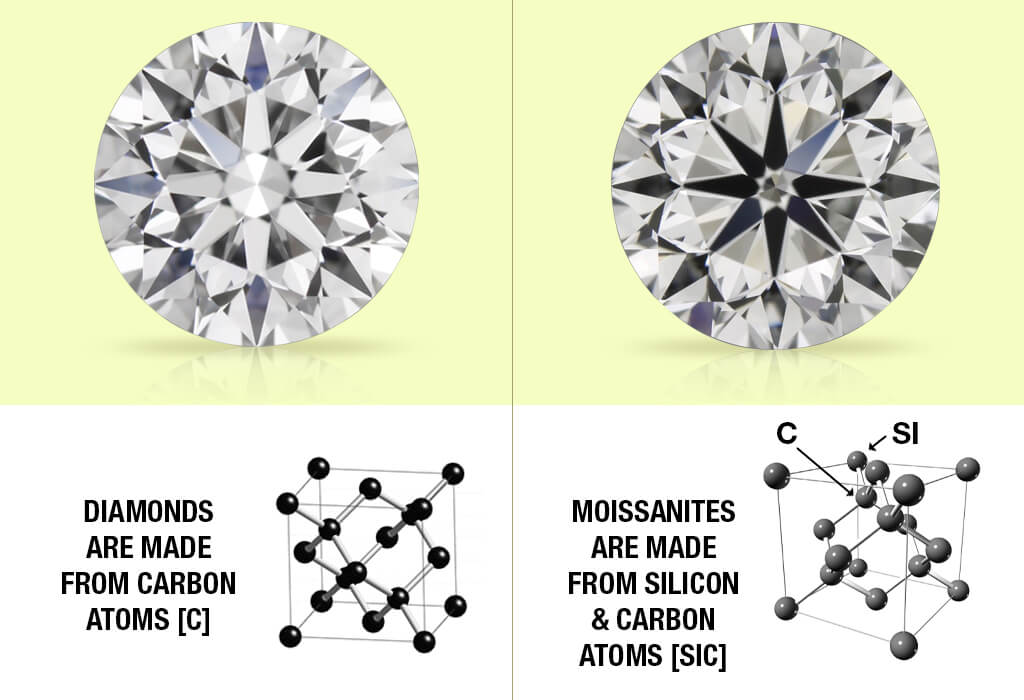
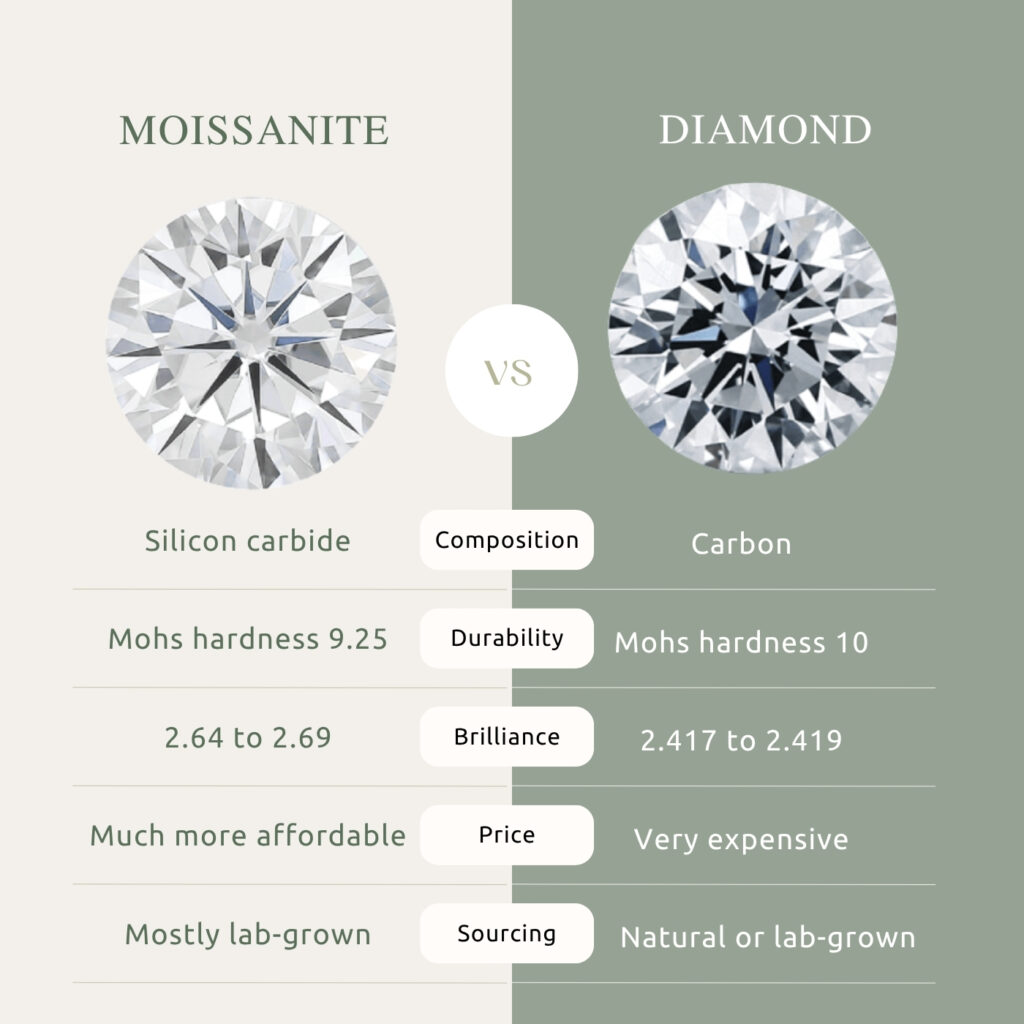
At its chemical core, moissanite is silicon carbide (SiC). While it is technically a mineral—first discovered by French scientist Henri Moissan in 1893 within a meteor crater in Arizona—natural moissanite is so rare that it is virtually impossible to harvest for the jewelry trade. Consequently, all moissanite found in retail jewelry today is lab-created.

From a business finance perspective, the laboratory synthesis of silicon carbide represents a triumph of industrial efficiency. The manufacturing process mimics the high-pressure, high-heat conditions of deep-earth crystallization. Because the supply chain is controlled and renewable through manufacturing rather than finite extraction, the price elasticity of moissanite remains far more stable than that of mined diamonds. For the consumer, this translates to a lower cost of entry, allowing capital that would have been tied up in an appreciating but highly illiquid diamond asset to be deployed elsewhere.
The Thermal and Optical Profile
The durability of moissanite, measuring 9.25 on the Mohs scale, positions it as an ideal candidate for daily wear. This level of hardness—only exceeded by diamond—ensures that the asset maintains its physical integrity over time. When businesses analyze the lifecycle of high-ticket retail items, durability is a key factor in perceived value. Because moissanite resists scratching and clouding, it retains its “fire” and brilliance, providing a better long-term return on investment than lower-grade diamond alternatives or synthetic cubic zirconia, which tend to degrade significantly over time.
Disrupting the Luxury Gemstone Market
The rise of moissanite is a masterclass in market repositioning. For decades, the diamond industry maintained an iron grip on the concept of “value” through artificial scarcity and aggressive marketing campaigns. Moissanite has effectively dismantled the monopoly on brilliance by offering an alternative that is chemically distinct yet visually superior in terms of light dispersion.
The Branding of “Affordable Luxury”
Brands that have successfully pivoted to include moissanite in their collections are leveraging the “smart shopper” psychology. They are moving away from the outdated narrative that an engagement ring must cost three months of a person’s salary. Instead, these brands are positioning moissanite as the pragmatic choice for the modern, budget-conscious couple. This shift is not just about price; it is about financial empowerment. By opting for a stone that offers a comparable aesthetic for a fraction of the cost, consumers can allocate their excess capital toward down payments, investments, or debt repayment—financial decisions that provide a better long-term yield than a luxury depreciating asset.
Strategic Price Positioning
From a financial modeling standpoint, the pricing of moissanite has created a distinct tier within the jewelry sector. It effectively occupies the “value luxury” segment. For retailers, this is an excellent strategy for capturing market share from middle-income demographics who still desire the aesthetic of a diamond but find the price-to-utility ratio of diamonds to be unfavorable. By maintaining a high-quality product that is transparent about its lab-grown origins, businesses are building trust with a demographic that prioritizes transparency and ethical sourcing over traditional prestige-based marketing.
Financial Implications and Asset Allocation
In the broader context of personal finance, the choice to purchase a diamond versus a moissanite is an exercise in asset management. A diamond is often sold as an investment, yet the reality of the resale market for consumer-grade diamonds is notoriously difficult. Markup rates at retail are substantial, and the liquidity of a single, small-carat diamond is extremely low.
Opportunity Cost Analysis
When an individual spends $5,000 on a diamond versus $800 on a high-quality moissanite of similar visual appearance, they are engaging in a decision that impacts their broader net worth. The $4,200 difference, if invested in a diversified portfolio with an average annual return, could grow significantly over the next few decades. This is the “opportunity cost” of the traditional diamond purchase. Financial advisors increasingly point to the rise of moissanite as a positive development for personal balance sheets. By decoupling the emotional weight of a jewelry purchase from the requirement to overspend, consumers are afforded the flexibility to prioritize their long-term financial security.
Resale Value vs. Consumption Value
It is critical to be objective: moissanite does not currently hold a high secondary market value. However, neither does the average engagement diamond. Because both items are consumer goods rather than investment-grade commodities, the “resale value” argument often used by diamond retailers is largely speculative. Moissanite wins on a consumption value basis—the pleasure of wearing a beautiful, durable item without the accompanying financial burden. Recognizing that jewelry is a consumption expense rather than a wealth-building tool allows the consumer to make a decision based on cash flow management rather than misleading investment myths.
Future Outlook: The Sustainable Growth of Lab-Grown Alternatives
The market for silicon carbide-based gems is still in a growth phase. As manufacturing technology improves, the quality of cut, color, and clarity continues to increase, further diminishing the visible gap between moissanite and its more expensive counterparts. We are seeing a shift where the “brand” of a gemstone is becoming secondary to the “specs” of the stone, much like how consumers now look for technical specifications in gadgets rather than relying solely on legacy brand recognition.
Sustainability as a Financial Driver
Environmental, Social, and Governance (ESG) criteria are becoming increasingly important for modern investors and consumers. Lab-grown gems, including moissanite, have a drastically smaller carbon footprint compared to traditional open-pit mining. As younger generations—specifically Millennials and Gen Z—begin to dominate the luxury market, their preference for ethically sourced and sustainable goods will likely continue to drive the growth of lab-grown alternatives. This demographic shift is a clear signal that the business of traditional mining is facing long-term structural headwinds.
The Role of Technology in Market Expansion
The democratization of information has allowed consumers to understand exactly what moissanite is made of. The internet has stripped away the information asymmetry that previously allowed jewelers to charge exorbitant premiums for stones with minimal utility differences. Now, consumers can compare hardness, refractive indices, and price points with a few clicks. This transparency is the catalyst for a more efficient market. As buyers become better educated, they are increasingly choosing to favor performance and value over legacy markup.
Moissanite is not just a material; it is a signal of a changing economic landscape in the luxury sector. It represents a move toward rationality, where the intrinsic quality of a product is valued higher than the legacy narrative attached to it. For the financial-minded consumer, moissanite offers a clear pathway to achieving lifestyle goals without sacrificing the aesthetic standards they demand. As the jewelry industry continues to evolve, the integration of lab-grown stones like moissanite will remain a pivotal element in the broader strategy of providing value-driven luxury in an increasingly transparent and cost-conscious global economy.
aViewFromTheCave is a participant in the Amazon Services LLC Associates Program, an affiliate advertising program designed to provide a means for sites to earn advertising fees by advertising and linking to Amazon.com. Amazon, the Amazon logo, AmazonSupply, and the AmazonSupply logo are trademarks of Amazon.com, Inc. or its affiliates. As an Amazon Associate we earn affiliate commissions from qualifying purchases.