
At the heart of every professional recording studio, live concert venue, and broadcast suite lies a piece of technology that serves as the central nervous system for audio production: the mixing console. Often referred to as a “soundboard,” “mixer,” or “desk,” the mixing console is a sophisticated electronic device designed to combine, route, and change the dynamics and tonal qualities of audio signals. In the modern era, where digital technology and analog craftsmanship intersect, understanding the mixing console is essential for anyone navigating the landscape of audio engineering, music production, or media creation.
The primary function of a mixing console is to take multiple sound sources—such as microphones, instruments, and digital playback—and merge them into a cohesive stereo or multi-channel output. However, its role extends far beyond simple summation. It is a tool for precision engineering, allowing a technician to manipulate the frequency response, volume levels, and spatial positioning of every individual sound within a complex sonic environment.
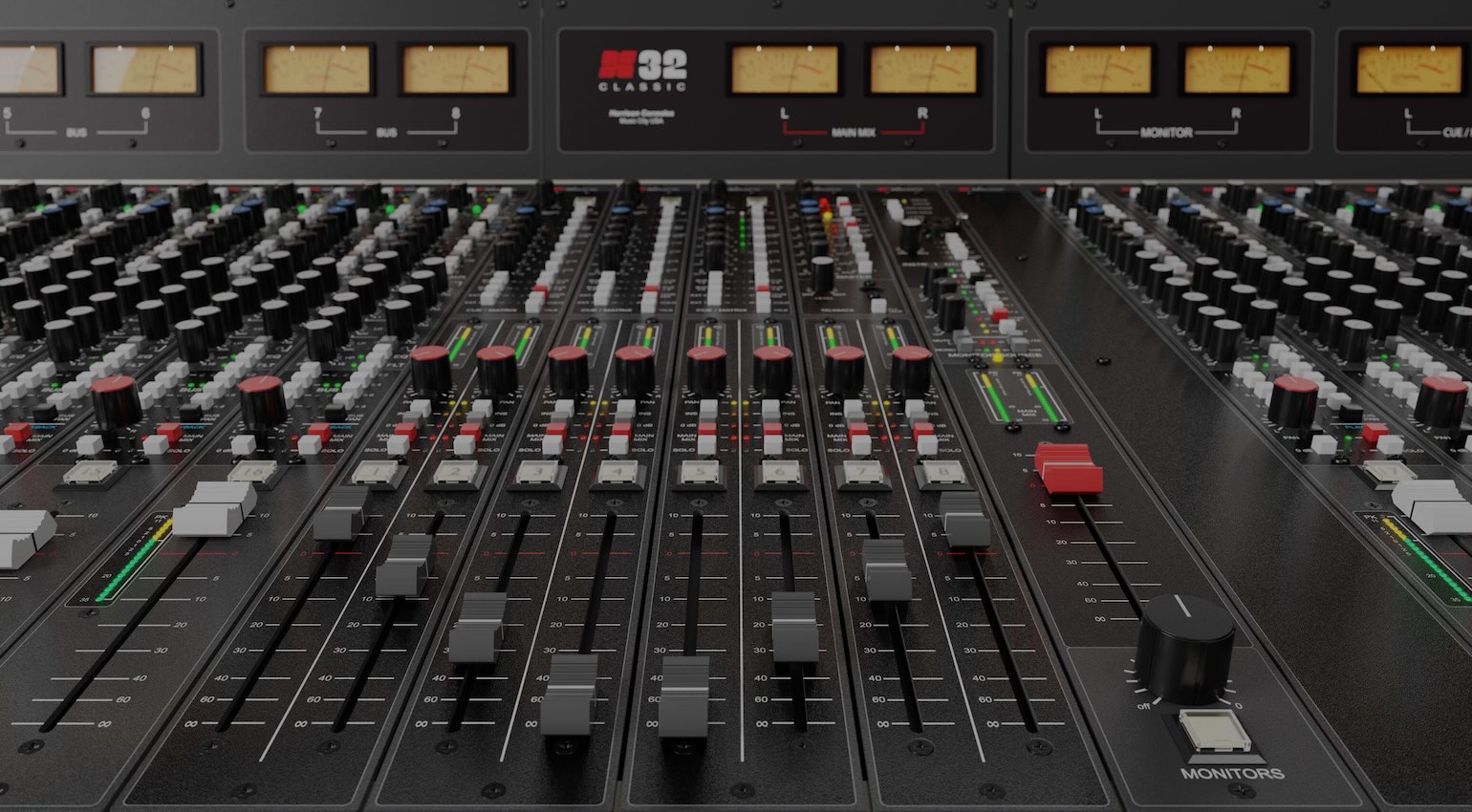
The Core Architecture of Modern Audio Routing
To understand what a mixing console is, one must first understand its architecture. Most consoles are organized into a series of identical vertical columns known as “channel strips.” Each channel strip represents a single path for an audio signal to travel from input to output.
Input Stages and Preamplification
The journey of an audio signal begins at the input stage. Most professional consoles feature XLR and TRS inputs to accommodate microphones and line-level signals. Because microphones generate a very weak electrical voltage, the mixing console utilizes a “preamplifier” (pre-amp) to boost the signal to a usable “line level.” In the tech world, the quality of these pre-amps is a major point of differentiation between entry-level hardware and high-end professional desks. High-quality pre-amps provide a high signal-to-noise ratio, ensuring that the audio remains clean and transparent even when significant gain is applied.
The Channel Strip: Control at the Source
Once the signal is amplified, it passes through several processing modules within the channel strip. The first is typically the Equalizer (EQ). This allows the engineer to boost or cut specific frequency ranges, such as removing low-end rumble or adding clarity to a vocal’s high frequencies.
Following the EQ, many consoles include dynamics processing, such as compressors or gates. A compressor narrows the dynamic range of a signal—making the quiet parts louder and the loud parts quieter—to ensure a consistent level. In digital consoles, these processors are powered by complex algorithms and Digital Signal Processing (DSP) chips, while in analog consoles, they rely on physical components like transistors and vacuum tubes.
Panning and Level Control
At the bottom of the channel strip, we find the pan pot and the fader. The pan pot determines the signal’s placement in the stereo field (left, right, or center), while the fader is a sliding potentiometer that controls the final output volume of that specific channel. The ergonomic design of these faders allows engineers to perform “active mixing,” moving multiple faders simultaneously to create a balanced performance in real-time.
Analog vs. Digital: Navigating the Technological Divide
One of the most significant debates in audio technology involves the choice between analog and digital mixing consoles. Both have evolved significantly, and the choice often depends on the specific requirements of the project and the desired “sonic fingerprint.”
The Legacy of Analog Circuits
Analog mixing consoles process audio signals as continuous electrical voltages. The technology is valued for its “warmth” and “character.” When an analog circuit is pushed to its limits, it introduces subtle harmonic distortion that many engineers find musically pleasing. From a technical standpoint, analog consoles offer a “one-knob-per-function” interface, providing immediate tactile feedback without the need to navigate through digital menus. However, analog consoles are physically large, require significant power, and lack the ability to save and recall settings instantly—a major drawback in modern fast-paced workflows.
Digital Signal Processing (DSP) and Versatility
Digital consoles convert incoming analog signals into binary data (1s and 0s) via Analog-to-Digital Converters (ADC). Once the audio is in the digital domain, it can be manipulated by onboard computers. The primary advantage of digital technology is “Total Recall.” An engineer can save every single setting on the desk and recall it instantly with the touch of a button. This is revolutionary for live touring, where a band’s settings can be loaded for different venues in seconds.
Digital consoles also boast significantly more processing power in a smaller footprint. A single digital desk can replace racks of external hardware by including hundreds of built-in effects, compressors, and delays. Furthermore, digital consoles often feature “layers,” allowing a 24-fader desk to control 96 or more channels by switching between banks of inputs.
Hybrid Solutions
In recent years, the industry has seen a rise in hybrid technology. These systems combine the tactile feel and summing quality of analog hardware with the control and automation of digital software. Some consoles act as high-end audio interfaces, sending multi-track audio directly into a computer via USB, Thunderbolt, or Ethernet (Dante) while allowing the engineer to mix using physical faders.
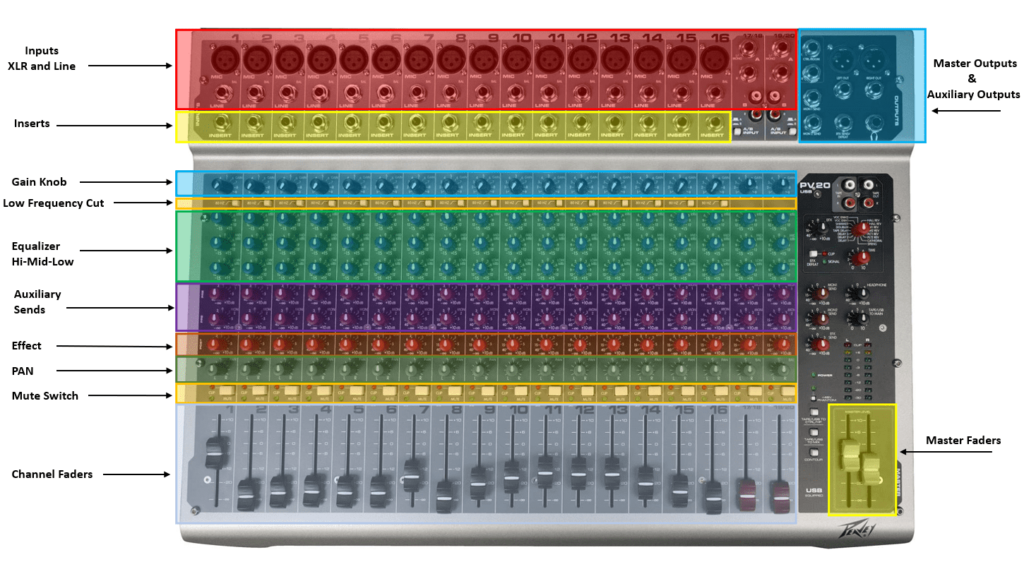
Understanding Signal Flow and Summing
The true power of a mixing console lies in its routing capabilities. It is not just about bringing sound in; it is about where that sound can be sent. This is managed through buses, auxiliary sends, and the master section.
The Bus System
A “bus” is essentially a common path where multiple signals are gathered. For example, all the individual microphones on a drum kit (snare, kick, toms, overheads) can be routed to a single “stereo bus.” This allows the engineer to control the volume of the entire drum kit with just two faders rather than eight. In complex tech setups, these buses are used to create sub-mixes for different purposes, such as a separate mix for a live broadcast or a recording feed.
Aux Sends and Returns
Auxiliary (Aux) sends are used to route a portion of a signal to an external destination. This is most commonly used for two purposes:
- Monitor Mixes: In a live setting, musicians need to hear themselves through floor wedges or in-ear monitors. The engineer uses Aux sends to create custom mixes for each performer.
- Parallel Processing: A signal can be sent to an external effects processor (like a reverb unit) and then brought back into the console. This allows the engineer to blend the “wet” processed signal with the “dry” original signal.
The Master Section and Summing
The final stage of the console is the master section, where all individual channels and buses are “summed” together into the final output. The quality of the summing—how the console mathematically or electrically combines these signals—is a hallmark of high-end technology. The master section also includes controls for talkback (communication with the performers) and monitoring (switching between different sets of speakers).
The Role of the Mixing Console in the Digital Age
As the world moves toward software-based production, some might wonder if physical mixing consoles are becoming obsolete. The reality is quite the opposite; the technology is simply evolving to integrate more deeply with Digital Audio Workstations (DAWs).
Control Surfaces vs. Audio Interfaces
Many modern “consoles” are actually sophisticated control surfaces. They do not process audio themselves but act as a physical “remote control” for software like Pro Tools, Logic Pro, or Ableton Live. This provides the engineer with the tactile experience of a traditional desk—physical faders, knobs, and buttons—while maintaining the infinite flexibility of software.
On the other hand, many consoles now function as massive audio interfaces. Through a single USB or Ethernet cable, a console can send 64 channels of high-resolution audio directly into a computer for recording, while simultaneously receiving 64 channels back for mixing. This integration of hardware and software has streamlined the production process, making high-quality recording more accessible than ever.
Virtual Desks and Software Emulation
For home studios where space is at a premium, the concept of the mixing console has been virtualized. Software developers create “console emulations” that replicate the circuitry and sonic characteristics of legendary analog desks. While these lack the physical faders of a hardware unit, they utilize the same signal flow logic and provide the “look and feel” of a traditional console on a computer screen.
Selecting Gear: Technical Considerations for Every Budget
Choosing a mixing console requires a deep dive into technical specifications. Whether for a podcast, a home studio, or a professional venue, the following tech specs are paramount:
Connectivity and I/O (Input/Output)
The first consideration is the number of “channels” required. A podcaster might only need a 4-channel mixer, while a medium-sized church or music venue might require 32 to 48 channels. Additionally, one must consider the type of I/O. Modern digital consoles often use “Digital Snakes,” which carry dozens of audio channels over a single Cat5 or Cat6 cable, replacing heavy, expensive copper cables.
Bit Depth and Sample Rate
For digital consoles, the quality of the internal processing is defined by its bit depth and sample rate. Professional standards typically demand at least 24-bit depth and a 48kHz or 96kHz sample rate. These specs ensure that the audio has a high dynamic range and can accurately represent high-frequency content without aliasing or digital artifacts.
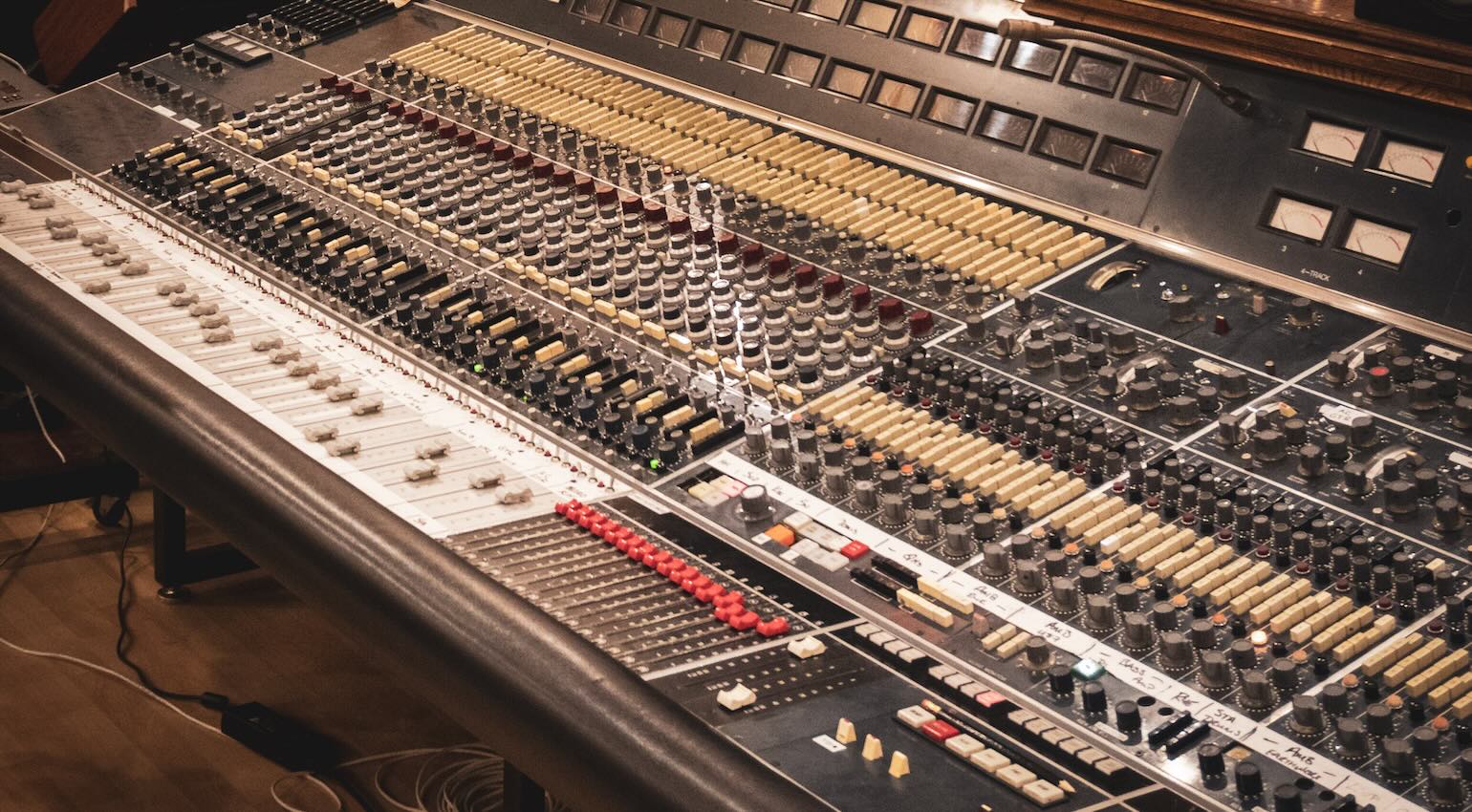
Ergonomics and Tactile Feedback
Technology is only as good as its usability. A well-designed console allows an engineer to work quickly and intuitively. This includes the “throw” of the faders (usually 60mm on compact desks and 100mm on professional ones), the spacing of the knobs, and the brightness of the metering displays. In high-stress environments like live television or concerts, the ergonomics of the mixing console can be the difference between a flawless production and a technical failure.
The mixing console remains the ultimate symbol of audio technology. It is a bridge between the physical world of vibrating air and the digital world of data. From the massive 96-channel analog desks found in historic studios to the compact digital mixers that can be controlled via an iPad, the mixing console continues to be the essential tool for shaping the sound of our world. As technology continues to advance, these devices will only become more integrated, powerful, and central to the creative process.
aViewFromTheCave is a participant in the Amazon Services LLC Associates Program, an affiliate advertising program designed to provide a means for sites to earn advertising fees by advertising and linking to Amazon.com. Amazon, the Amazon logo, AmazonSupply, and the AmazonSupply logo are trademarks of Amazon.com, Inc. or its affiliates. As an Amazon Associate we earn affiliate commissions from qualifying purchases.