
The National Basketball Association (NBA) is a multi-billion dollar enterprise, renowned for its dazzling talent, global reach, and the astronomical salaries commanded by its biggest stars. Yet, beneath the headlines celebrating multi-million dollar contracts lies a foundational financial structure that includes a minimum wage for its players. Understanding this minimum wage is crucial for comprehending the financial ecosystem of the league, its collective bargaining intricacies, and the personal finance realities for many professional athletes. It’s a complex figure, not static, and deeply intertwined with a player’s experience level, the league’s financial health, and the ongoing negotiations between the NBA and its players’ union.
The Foundation: NBA’s Collective Bargaining Agreement (CBA)
At the heart of all financial arrangements in the NBA, including minimum salaries, is the Collective Bargaining Agreement (CBA). This comprehensive contract is negotiated between the National Basketball Association (representing the owners) and the National Basketball Players Association (NBPA, representing the players). The CBA dictates virtually every aspect of the league’s economic landscape, from the salary cap and luxury tax thresholds to player benefits, contract lengths, and, critically, minimum salary scales.
The CBA is a living document, typically renegotiated every few years. Each iteration reflects the evolving financial realities of the league, changes in revenue streams, and the priorities of both the owners and the players. Minimum salaries are not arbitrary figures; they are carefully calculated to ensure a baseline level of compensation while also fitting within the broader financial frameworks designed to maintain competitive balance and financial stability across all 30 franchises. Without the CBA, there would be no standardized minimum, leading to potential wage exploitation and vast inconsistencies in player compensation across the league.
Dissecting the Minimum Salary Structure
Unlike many industries where a single minimum wage applies, the NBA’s minimum salary structure is tiered, directly correlating with a player’s years of experience in the league. This stratification acknowledges the varying levels of skill, maturity, and contribution expected from players at different stages of their careers.
Tiers Based on Experience
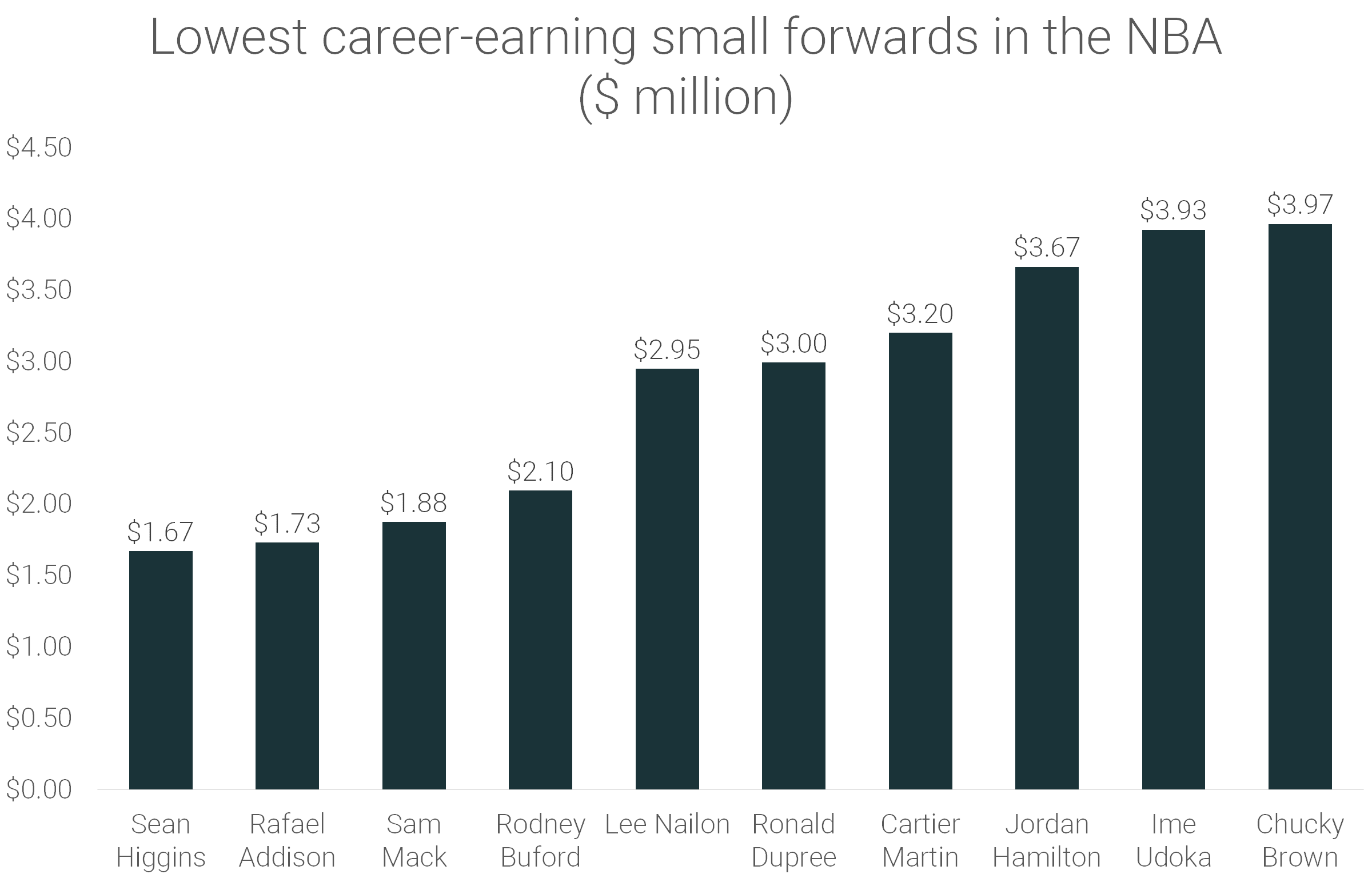
A rookie entering the league on a minimum contract will earn significantly less than a 10-year veteran on a minimum deal. For the 2023-24 season, for instance, a player with no prior NBA experience on a minimum contract earned approximately $1,119,563. This figure escalates progressively. A player with one year of experience might earn around $1,801,769, while a player with five years of experience could command a minimum of about $2,694,000. For a seasoned veteran with ten or more years of experience, the minimum salary climbed to approximately $3,196,448. These figures are not fixed for all time but adjust annually based on factors like the league’s Basketball Related Income (BRI) and the specific terms outlined in the CBA.
It’s crucial to understand that these minimums represent the lowest allowable salary a team can pay a player at that experience level. Many players, of course, earn substantially more, but these minimums provide a safety net and a clear entry point for compensation. The tiered system ensures that even a veteran who might not be a superstar still receives a higher baseline income reflective of their sustained contribution and accumulated experience in a demanding professional environment.
The Nuance of Non-Guaranteed Contracts and Two-Way Deals
While the published minimums are clear, the actual earnings for some players can be more complex due to contract specifics. Many minimum-salary contracts, especially for players on the fringes of a roster or those signed during training camp, might be non-guaranteed. This means a player might be waived before a specific date (often early in the season) without receiving their full salary, or even any portion if waived before the season begins.
The introduction of “two-way contracts” further adds a layer of complexity. These contracts are specifically designed for players who split their time between an NBA team and its G-League affiliate. While offering more pay than a standard G-League contract, a two-way deal provides a significantly lower salary than the NBA minimum, typically around $559,782 for the 2023-24 season. These contracts are a stepping stone for young talent, offering development opportunities and a chance to prove themselves worthy of a full NBA roster spot and a standard minimum contract.
Financial Realities for NBA Players
While an NBA minimum salary, even for a rookie, might seem substantial to the average person, the actual take-home pay and long-term financial planning required for these athletes are often misunderstood. The financial journey of an NBA player, particularly one on a minimum contract, is far from straightforward.
Beyond the Base Salary: Taxes, Agents, and Expenses
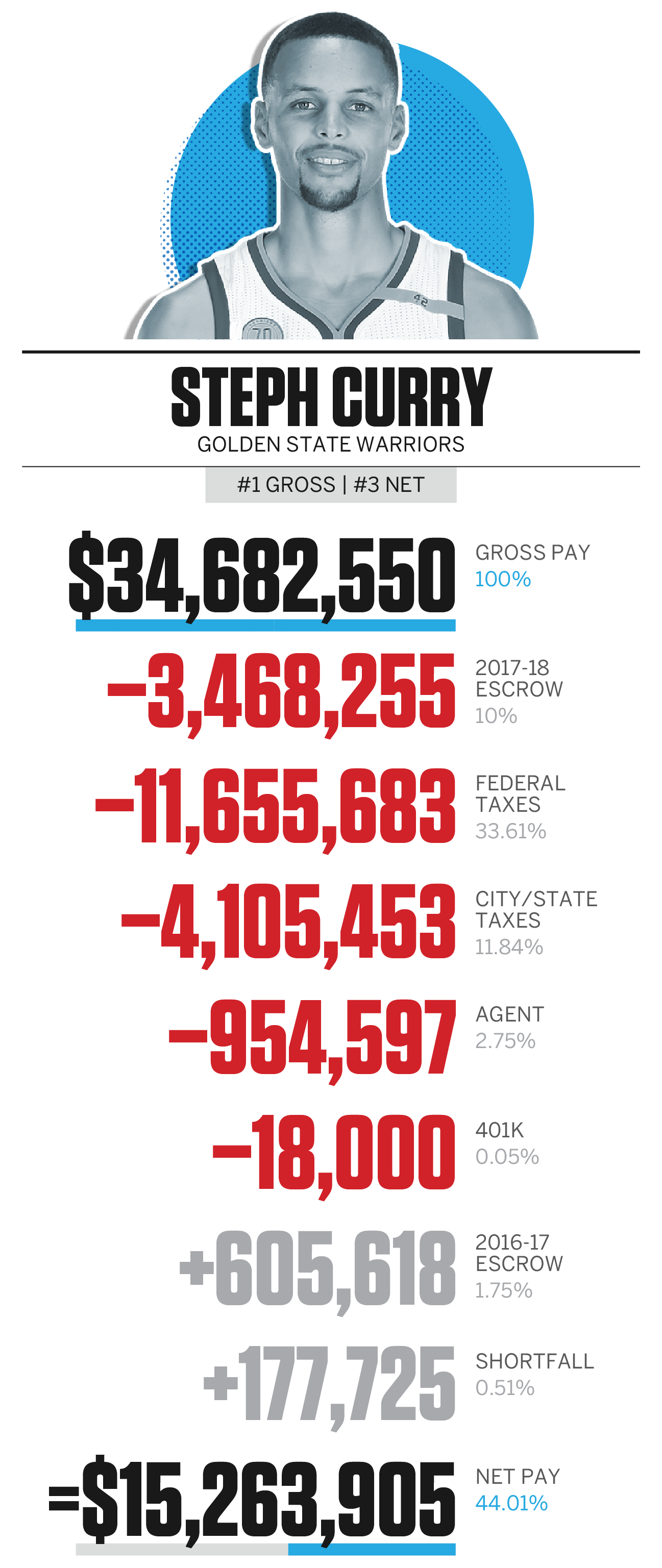
The listed minimum salary is merely the gross figure. A significant portion is immediately deducted. Federal and state income taxes, which can be substantial given the high-income brackets, take a large bite. State taxes are particularly complex for NBA players due to the “jock tax,” which applies to income earned in every state where they play a game. Agent fees, typically 3-4% of a player’s salary, are also mandatory deductions. Additionally, players contribute to the NBPA for union dues.
Beyond these mandatory deductions, players incur substantial living expenses. These include housing in often high-cost cities, transportation, specialized training and rehabilitation, nutritionists, and often supporting family members. For many, especially young players, managing this sudden influx of wealth and navigating complex financial obligations without prior experience can be daunting. The “minimum” becomes much less once all these factors are accounted for, making prudent financial management absolutely critical.
Short-Term Careers and Financial Planning
The average NBA career length is notably short, often cited as around 4.5 years. For players primarily on minimum contracts, this window can be even narrower. This brevity underscores the immense pressure on these athletes to maximize their earnings and establish a solid financial foundation in a very limited timeframe. Without proper financial planning, investment strategies, and disciplined budgeting, even an NBA minimum salary can quickly dissipate, leaving former players in precarious financial situations post-career.
Many minimum-contract players face the constant threat of being cut or not having their contract renewed, adding financial instability to an already demanding career. This emphasizes the importance of financial literacy programs offered by the NBPA and the need for players to work with trusted financial advisors to plan for post-NBA life, which may involve career changes or long-term investment strategies.
The Business Economics of Minimum Wage Players
From a team’s perspective, minimum wage players are not merely placeholders; they are vital components of roster construction, strategic financial management, and competitive balance within the league’s salary cap system.
Roster Construction and Team Value
Every NBA team operates under a salary cap, which limits the total amount of money they can spend on player salaries. Minimum contracts offer invaluable flexibility. They allow teams to fill out their 15-man rosters, provide depth, and carry players for specific roles (e.g., a defensive specialist, a locker room veteran, a third-string point guard) without tying up significant cap space. This financial efficiency is critical, especially for teams aiming to contend, as it allows them to allocate the bulk of their salary cap to star players while still ensuring a complete and functional roster.
Minimum players also represent a low-risk investment. If a player on a minimum contract doesn’t perform, they can be waived with minimal financial impact compared to a highly paid player. This provides teams with agility in managing their personnel throughout a demanding 82-game season.
Player Development and Return on Investment
For younger players, a minimum contract often serves as an entry point into the league. Teams might draft a player and sign them to a minimum deal to develop their talent, hoping they will outperform their contract value. If a player on a minimum contract blossoms into a star, the team reaps an enormous return on investment. Even if they become a solid role player, they still provide excellent value given their low salary. This aspect of the minimum wage structure fuels player development pipelines and provides opportunities for overlooked talent to emerge.
Moreover, veteran players on minimum deals often bring invaluable experience, leadership, and stability to a locker room. They can mentor younger players, provide reliable backup minutes, and contribute to team culture without demanding a large salary, freeing up resources for higher-priced talent.
Evolution and Future of NBA Minimum Salaries
The trajectory of NBA minimum salaries has consistently been upward, reflecting the league’s phenomenal growth in revenue, global popularity, and collective bargaining strength of the NBPA. Each successive CBA has generally seen an increase in these baseline figures, driven by the overall increase in Basketball Related Income (BRI) that the players share with the owners.
Looking forward, the evolution of minimum salaries will continue to be a focal point in future CBA negotiations. Factors such as continued growth in media rights deals, expansion into new international markets, and the overall economic health of the sport will influence these figures. As the league expands and revenues climb, the players’ union will undoubtedly push for a fair share of that prosperity to extend to all players, including those at the minimum salary level. The goal for both sides is a system that compensates players fairly while maintaining the competitive and financial integrity of the league, ensuring that the NBA remains a sustainable and attractive enterprise for all stakeholders.
aViewFromTheCave is a participant in the Amazon Services LLC Associates Program, an affiliate advertising program designed to provide a means for sites to earn advertising fees by advertising and linking to Amazon.com. Amazon, the Amazon logo, AmazonSupply, and the AmazonSupply logo are trademarks of Amazon.com, Inc. or its affiliates. As an Amazon Associate we earn affiliate commissions from qualifying purchases.