
The minimum wage in Los Angeles, California, is a dynamic and frequently discussed topic that significantly impacts both individual financial stability and the broader economic landscape of one of the nation’s largest metropolitan areas. Understanding its nuances is crucial for residents, employers, and anyone considering living or working in the city. California has a state minimum wage, but many cities, including Los Angeles, have implemented their own higher local ordinances to address the unique economic conditions and high cost of living within their jurisdictions. This tiered approach creates a complex but essential framework for earning and spending in LA.
The Current Landscape of LA’s Minimum Wage
Los Angeles operates under a system where local minimum wage ordinances often supersede the state minimum, providing a higher floor for workers’ earnings. This structure reflects a commitment to ensuring that wages keep pace, to some extent, with the region’s notoriously high cost of living.
City of Los Angeles vs. County Unincorporated Areas
It’s vital to distinguish between the City of Los Angeles and the broader Los Angeles County. The city itself, encompassing areas like Downtown LA, Hollywood, and much of the San Fernando Valley, maintains its own minimum wage ordinance. As of July 1, 2023, the minimum wage for most employers within the City of Los Angeles increased to $16.78 per hour. This rate applies to employees who perform at least two hours of work within the geographical boundaries of the City of Los Angeles.
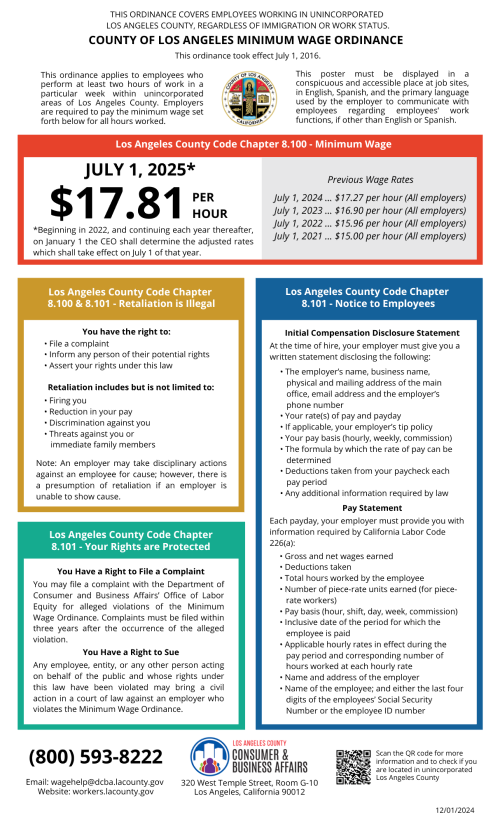
However, unincorporated areas of Los Angeles County—regions that are not part of any incorporated city but are governed directly by the county—may follow a different schedule. For example, as of July 1, 2023, the minimum wage for the unincorporated areas of Los Angeles County also increased to $16.90 per hour. While the rates are often similar or closely aligned, this distinction is critical for employers and employees to ensure compliance and accurate compensation. Businesses need to verify whether their physical location falls within an incorporated city or an unincorporated county area. Furthermore, some specific industries within the City of Los Angeles, such as hotels, may have even higher minimum wage requirements due to targeted ordinances, reflecting sector-specific economic considerations and advocacy efforts.
State vs. Local Ordinances
California’s state minimum wage provides a baseline for the entire state. For 2024, the statewide minimum wage is set at $16.00 per hour for all employers, regardless of size. This state rate serves as a floor. Cities and counties, like Los Angeles, are permitted to establish their own minimum wages that are higher than the state minimum. They cannot, however, set a minimum wage lower than the state’s. This is a common practice in high-cost-of-living areas throughout California, where local governments recognize that the state minimum may not be sufficient for residents to afford basic necessities.
The City of Los Angeles’s minimum wage of $16.78 per hour (as of July 1, 2023) and the unincorporated County’s rate of $16.90 per hour (as of July 1, 2023) both exceed the current statewide minimum. This layering of regulations means that employers in LA must always adhere to the highest applicable minimum wage, whether it’s the state, county, or city ordinance, or even a specific industry-based wage. This system is designed to provide greater financial security for workers in areas where economic pressures are most acute, directly impacting personal budgeting and disposable income.
Impact on Different Business Sizes
The minimum wage laws in Los Angeles, both at the city and county levels, typically apply uniformly to all employers, regardless of their size, once they meet the two-hour work within the jurisdiction threshold. Unlike some state or federal minimum wage laws that might have different rates or compliance schedules for businesses with fewer employees, LA’s ordinances generally do not make such distinctions. This means a small independent coffee shop is subject to the same minimum wage requirements as a large multinational corporation operating within the city or county limits.
This uniform application ensures that all workers receive the same base pay, regardless of where they are employed. However, the financial impact of these higher wages can vary significantly for businesses. Small businesses, particularly those with tight profit margins or those heavily reliant on minimum wage labor, often face greater challenges in absorbing increased labor costs. They may need to adjust pricing, re-evaluate staffing levels, or seek efficiencies in other areas of their operations. Larger businesses, with more robust financial structures and economies of scale, may find it easier to adapt to these wage increases. Understanding these dynamics is crucial for business owners engaging in financial forecasting and operational planning in Los Angeles.
Understanding the Wage Determination Process
The minimum wage in Los Angeles is not static; it is subject to regular reviews and adjustments. This dynamic process is designed to ensure that the wage remains relevant to economic conditions and the cost of living.
Cost of Living Adjustments (COLAs)
A key feature of the minimum wage ordinances in both the City of Los Angeles and unincorporated LA County is the provision for annual Cost of Living Adjustments (COLAs). These adjustments are typically tied to inflation metrics, such as the Consumer Price Index (CPI), which measures changes in the prices of goods and services. For example, the City of Los Angeles’s minimum wage is generally adjusted annually on July 1st, based on the prior year’s CPI for All Urban Consumers (CPI-U) for the Los Angeles-Long Beach-Anaheim metropolitan area.
The purpose of COLAs is to prevent the real value of the minimum wage from eroding over time due to inflation. Without these automatic adjustments, a fixed minimum wage would effectively decrease in purchasing power each year, diminishing its ability to support workers and their families. For individuals, these annual increases are vital for maintaining their standard of living and keeping pace with rising expenses like rent, food, and transportation. For businesses, COLAs provide a predictable mechanism for wage increases, allowing them to better plan their financial budgets and labor costs year over year.
Role of the Minimum Wage Commission
While COLAs provide automatic adjustments, broader policy changes or significant rate increases often stem from recommendations made by a Minimum Wage Commission or similar advisory body. In the past, the City of Los Angeles established an advisory committee to study the economic impacts of a potential minimum wage increase and provide recommendations to the City Council. These commissions typically comprise representatives from labor, business, academia, and community groups, offering a diverse perspective on the socio-economic implications of wage policy.
The role of such a commission is critical in evaluating economic data, conducting impact analyses, and facilitating public dialogue. They assess factors such as the local poverty rate, employment levels, business profitability, and the overall cost of living. Their recommendations inform policymakers, who then vote on ordinances to implement new wage schedules. This collaborative and data-driven approach aims to strike a balance between providing a living wage for workers and ensuring the economic viability of local businesses. It reflects a detailed financial analysis of the city’s economic health and its impact on its constituents.
Historical Trajectory and Future Projections
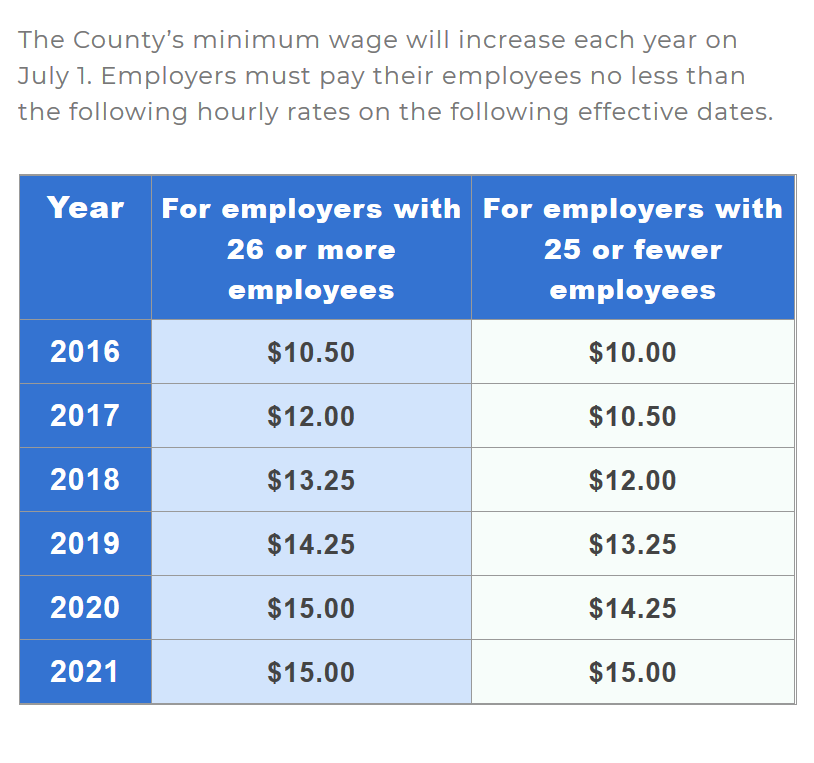
Los Angeles has a clear historical trajectory of progressively increasing its minimum wage, moving significantly beyond the federal and state baselines. This movement began with substantial increases implemented in phases, leading up to the current rates. For instance, the City of Los Angeles implemented a series of gradual increases starting in 2016, ultimately reaching a $15.00 per hour minimum wage by July 1, 2020, for all employers, followed by annual COLAs thereafter.
Looking ahead, the minimum wage in LA is expected to continue its annual adjustments based on the CPI, ensuring its purchasing power is maintained. While major legislative overhauls are less frequent once a phased increase plan is fully implemented, advocacy groups and policymakers continuously monitor economic conditions. Discussions around a “living wage” versus the minimum wage are ongoing, and future policy decisions may explore additional sector-specific wages or further accelerate increases if economic indicators warrant it. For individuals and businesses, anticipating these annual increases is a fundamental aspect of long-term financial planning in the LA metropolitan area.
Financial Implications for Individuals and Households
The minimum wage directly influences the financial well-being of countless individuals and households in Los Angeles, a city notorious for its high cost of living.
Budgeting for LA’s High Cost of Living
Even with a minimum wage significantly higher than federal and state standards, budgeting for life in Los Angeles remains a considerable challenge. The median rent for a one-bedroom apartment in many parts of LA can consume a substantial portion, if not all, of a minimum wage earner’s monthly income. For an individual working full-time at $16.78 per hour, grossing approximately $2,908 per month (before taxes and deductions), securing affordable housing, food, transportation, and other basic necessities requires stringent financial management and often multiple income streams.
Many minimum wage earners in LA find themselves spending upwards of 50-70% of their gross income on housing alone. This leaves minimal funds for other essential expenses, let alone savings or discretionary spending. Consequently, individuals often resort to sharing housing, utilizing public transportation, seeking government assistance programs, or taking on side hustles to make ends meet. Effective personal finance strategies in LA must prioritize aggressive budgeting, expense tracking, and exploring all available avenues for financial support or additional income.
The Living Wage vs. Minimum Wage Debate
The concept of a “living wage” often arises in discussions about the minimum wage in high-cost areas like Los Angeles. A living wage is generally defined as the minimum income necessary for a worker to meet their basic needs without reliance on public or private charity. Unlike the minimum wage, which is a legally mandated floor, the living wage is an economic benchmark calculated based on local costs for housing, food, transportation, healthcare, and childcare.
Studies by organizations like MIT’s Living Wage Calculator consistently show that the minimum wage in Los Angeles, even with its local adjustments, falls short of what is considered a true living wage for many individuals, especially those supporting families. For instance, a single adult with no children in Los Angeles County might need to earn closer to $24-25 per hour to meet basic needs comfortably. This disparity highlights a significant financial gap for minimum wage earners, often leading to financial stress, reliance on public assistance, and delayed economic advancement. The ongoing debate emphasizes that while the minimum wage provides a crucial safety net, it may not guarantee financial self-sufficiency in expensive urban environments.
Accessing Financial Resources and Support

Given the challenges of living on a minimum wage in Los Angeles, numerous financial resources and support programs are available to assist individuals and families. These include:
- Housing Assistance: Rent relief programs, affordable housing lotteries, and rental subsidies are critical for mitigating the largest expense.
- Food Assistance: Programs like CalFresh (SNAP in California), food banks, and community pantries help ensure access to nutritious food.
- Healthcare Subsidies: Medi-Cal and Covered California offer affordable healthcare options based on income.
- Childcare Subsidies: Programs are available to help low-income families afford childcare costs, which are substantial in LA.
- Utility Assistance: Programs like LIHEAP (Low Income Home Energy Assistance Program) can help with energy bills.
- Financial Literacy and Counseling: Non-profit organizations offer free or low-cost financial counseling to help individuals with budgeting, debt management, and savings strategies.
Navigating these resources can be complex, but they represent essential financial lifelines for many working individuals and families striving for economic stability in Los Angeles. Understanding and accessing these programs is a key component of personal finance for those earning at or near the minimum wage.
Economic Impact on Businesses in Los Angeles
The minimum wage also profoundly impacts businesses operating within the competitive and expensive Los Angeles market. Businesses must strategically manage increased labor costs while maintaining profitability and competitiveness.
Labor Costs and Operational Adjustments
For businesses, especially those in service industries heavily reliant on hourly workers, minimum wage increases directly translate into higher labor costs. Payroll is often one of the largest expenses for many companies, and a significant wage hike requires careful financial re-evaluation. Businesses typically respond to these increased costs through several operational adjustments:
- Price Increases: Passing some of the increased costs onto consumers through higher prices for goods or services.
- Efficiency Improvements: Investing in technology or process improvements to enhance productivity and reduce the need for additional labor hours. This might include automation, optimizing workflows, or better inventory management.
- Staffing Adjustments: Carefully reviewing staffing levels, potentially reducing hours, or slowing down hiring to manage the overall wage bill.
- Benefit Reductions or Adjustments: While less common for minimum wage earners, some businesses might reassess non-mandated benefits to offset rising wage expenses.
These adjustments are critical for businesses to maintain their financial health and continue operating in a high-wage environment.
Small Business Challenges and Strategies
Small businesses in Los Angeles often face a disproportionate impact from minimum wage increases compared to larger corporations. They typically have narrower profit margins, less access to capital for technological investments, and less bargaining power with suppliers. For these businesses, strategies to cope with rising labor costs are even more crucial:
- Strategic Pricing: Carefully analyzing pricing elasticity to determine how much prices can be raised without deterring customers.
- Value Proposition Enhancement: Focusing on delivering exceptional customer service or unique products to justify higher prices and retain customer loyalty.
- Talent Retention: Investing in training and creating a positive work environment to reduce employee turnover, as the cost of recruiting and training new staff can be substantial.
- Seeking Financial Assistance: Exploring local, state, or federal programs designed to support small businesses, which may include grants, loans, or tax incentives.
- Community Engagement: Leveraging local community support and partnerships to gain a competitive edge.
The ability of small businesses to innovate and adapt their financial and operational models is paramount to their survival and growth in a high minimum wage city like LA.
Wage Compression and Employee Morale
Minimum wage increases can also lead to a phenomenon known as “wage compression.” This occurs when the gap between the lowest-paid employees and those earning slightly above the minimum wage narrows. For example, if a long-term employee was earning $17.50 per hour and the new minimum wage rises to $16.78, their pay differential significantly shrinks.
Wage compression can have several financial and psychological impacts:
- Morale Issues: Employees who have gained experience or seniority and previously earned a higher differential may feel undervalued, potentially leading to decreased morale, job dissatisfaction, or even attrition.
- Retention Challenges: Businesses might find it harder to retain more experienced or skilled workers if their pay is not significantly higher than entry-level positions.
- Budgetary Pressures for Adjustment: To mitigate wage compression and maintain a hierarchical pay structure, businesses may feel pressured to raise the wages of mid-tier employees, leading to an even greater overall increase in their payroll expenses.
Managing wage compression requires businesses to carefully evaluate their entire compensation structure, not just the minimum wage. It involves strategic financial planning to ensure that pay scales remain equitable and motivating across all employee levels, recognizing both the financial contribution and experience of each worker.
Navigating Compliance and Future Outlook
Adhering to minimum wage laws is not just about financial fairness; it’s a legal obligation with significant consequences for non-compliance. Understanding the regulatory environment and anticipating future trends is vital for all stakeholders in Los Angeles.
Employer Responsibilities and Penalties
Employers in Los Angeles bear a significant responsibility for adhering to the city’s and county’s minimum wage ordinances. This includes not only paying the correct hourly rate but also ensuring proper record-keeping, providing required notices to employees, and accurately calculating overtime pay based on the higher local minimum wage. Employers must display official posters regarding minimum wage and workers’ rights in a conspicuous place at the workplace.
Failure to comply can result in severe penalties, including:
- Back Pay: Employers can be ordered to pay employees the difference between what they were paid and what they should have been paid, often with interest.
- Liquidated Damages: In some cases, employers may be required to pay additional damages equal to the amount of unpaid wages.
- Administrative Penalties: Fines and other penalties imposed by enforcement agencies.
- Legal Fees: Employers may be responsible for the employee’s legal fees if a lawsuit is filed.
- Reputational Damage: Non-compliance can severely harm a business’s reputation, leading to customer loss and difficulty attracting talent.
The City of Los Angeles Department of Public Works, Bureau of Contract Administration, Wage Enforcement Division is typically responsible for enforcing these ordinances, providing a clear avenue for employees to report violations and for employers to seek clarification. Proactive compliance is a sound financial and ethical strategy for any business operating in LA.
Advocacy and Policy Discussions
The minimum wage in Los Angeles is not a static policy; it is continually subject to advocacy and policy discussions. Labor unions, worker advocacy groups, and social justice organizations frequently lobby for higher wages, citing the escalating cost of living and the need for greater income equality. They often present data on the economic struggles of low-wage workers and the broader societal benefits of a stronger economic floor.
Conversely, business associations and employer groups often advocate for more moderate wage increases or argue for policies that provide greater flexibility, citing concerns about business viability, job losses, and the competitive landscape. These discussions typically involve economic impact studies, public hearings, and intense lobbying efforts directed at the City Council and County Board of Supervisors. The ongoing dialogue shapes future adjustments and potential reforms to the minimum wage structure, reflecting the complex interplay between financial considerations, social equity, and economic development in the region.
Long-Term Financial Planning in a Dynamic Wage Environment
For both individuals and businesses, long-term financial planning in Los Angeles must account for a dynamic minimum wage environment.
For Individuals:
- Continuous Skill Development: Investing in education and skills to move into higher-paying roles that offer greater financial security.
- Diversified Income Streams: Exploring side hustles, gig economy work, or secondary employment to supplement minimum wage earnings.
- Aggressive Savings and Debt Management: Prioritizing emergency savings and reducing high-interest debt to build a stronger financial foundation.
- Leveraging Benefits: Maximizing participation in employer-sponsored benefits (if available) and government assistance programs.
For Businesses:
- Proactive Budgeting: Incorporating anticipated annual minimum wage increases into financial forecasts and operational budgets well in advance.
- Investment in Productivity: Allocating capital towards technologies and training that can enhance employee productivity and potentially reduce reliance on sheer labor hours.
- Competitive Compensation Strategies: Developing a holistic compensation package that includes wages, benefits, and a positive work culture to attract and retain talent, mitigating the impacts of wage compression.
- Market Analysis: Continuously analyzing the competitive landscape and consumer spending patterns to make informed decisions about pricing and service offerings.
The minimum wage in LA is a critical financial benchmark, shaping economic realities for millions. Its evolution requires constant vigilance and adaptive financial strategies from all who live and work within its vibrant but challenging economic ecosystem.
aViewFromTheCave is a participant in the Amazon Services LLC Associates Program, an affiliate advertising program designed to provide a means for sites to earn advertising fees by advertising and linking to Amazon.com. Amazon, the Amazon logo, AmazonSupply, and the AmazonSupply logo are trademarks of Amazon.com, Inc. or its affiliates. As an Amazon Associate we earn affiliate commissions from qualifying purchases.