
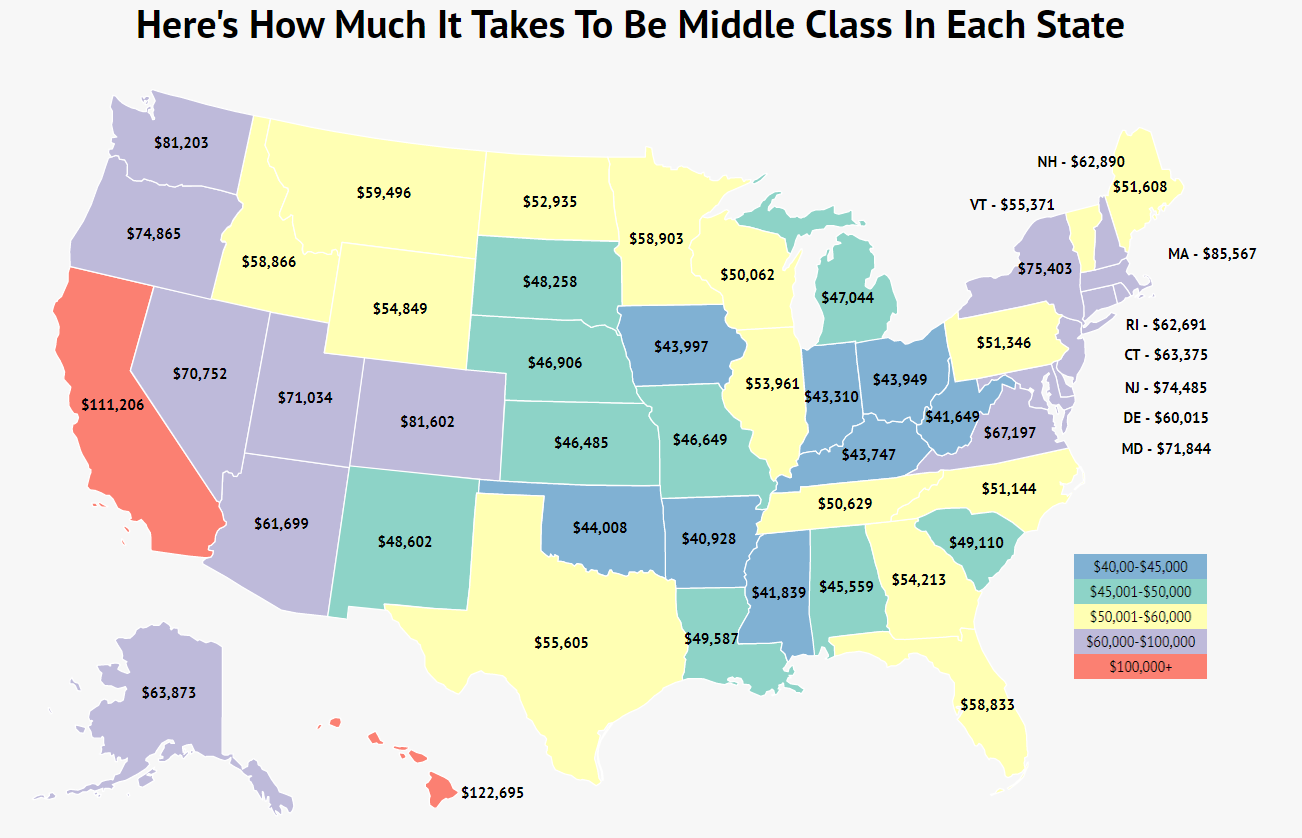
The concept of “middle class” is often invoked in economic discussions, political rhetoric, and personal aspirations, yet its precise definition remains remarkably fluid. What constitutes a middle-class income in one state, or even one city, can differ dramatically from another. In Texas, a state characterized by its vast geography, diverse economy, and booming population centers, identifying a definitive middle-class income requires a nuanced understanding that goes far beyond a simple number. It’s not just about what you earn, but what that income can buy, where you live, and the financial responsibilities you carry.

Defining the Elusive Middle Class: A National and Texas Perspective
Defining the middle class is a complex undertaking, primarily because there’s no single, universally accepted threshold. Economists, sociologists, and policymakers often employ different methodologies, leading to varying income ranges. Generally, the middle class is viewed as the segment of the population that enjoys a certain level of economic stability, security, and the ability to pursue opportunities for upward mobility.
The Shifting Sands of “Middle Class”
Nationally, common definitions often peg the middle class as households earning between two-thirds and double the national median income. Some analyses further refine this by considering family size, recognizing that a higher income is needed to maintain the same standard of living for a larger household. The Pew Research Center, for example, frequently defines middle-income households as those with an annual income that is two-thirds to double the U.S. median household income, adjusted for household size. However, this national benchmark provides only a starting point.
The true picture emerges when these national figures are localized. Cost of living, regional economic conditions, and state-specific tax structures significantly alter what an income range signifies in terms of purchasing power and quality of life. An income that comfortably places a family in the middle class in a rural Texas county might barely cover essentials in the highly competitive urban centers like Austin or Dallas.
National Benchmarks vs. Local Realities
While national income data offers a macro view, its application to specific states like Texas can be misleading. Texas boasts one of the largest and most dynamic economies in the United States, with a robust job market, particularly in sectors like energy, technology, healthcare, and manufacturing. This economic strength attracts talent and investment, contributing to diverse income levels across its metropolitan areas and rural communities.
The absence of a state income tax in Texas is a significant financial advantage, leaving more gross income in residents’ pockets compared to states with high income taxes. However, this benefit is often offset by other taxes, notably property taxes, which can be among the highest in the nation, and sales taxes. These local realities mean that a direct application of national middle-class income ranges without significant adjustment for Texas’s unique economic landscape will inevitably fall short of providing an accurate picture.
Income Thresholds in the Lone Star State
To understand middle-class income in Texas, it’s essential to look at the median income data for the state and then consider how that number shifts based on household size and location. While precise, real-time figures are constantly changing, we can use established methodologies and recent trends to provide illustrative income ranges.
Data-Driven Insights: Illustrative Income Ranges for Texas Households
Based on analyses from organizations like the Pew Research Center, applied to Texas median income data from sources like the U.S. Census Bureau, we can estimate general middle-class income brackets. These figures typically adjust for household size, as a single individual needs less income to achieve a middle-class lifestyle than a family of four.
For a general estimate, considering two-thirds to double the median income, and accounting for the higher cost of living in Texas’s major metropolitan areas compared to national averages:
- Single Individual: A middle-class income might range from approximately $40,000 to $120,000.
- Two-Person Household (e.g., married couple without children): This range could be roughly $55,000 to $160,000.
- Three-Person Household (e.g., couple with one child): The range could extend from $70,000 to $200,000.
- Four-Person Household (e.g., couple with two children): This often falls within $80,000 to $240,000.
It is critical to remember that these are illustrative figures and can vary significantly based on the specific year, the data source, and most importantly, the exact location within Texas. A family earning $80,000 might feel financially comfortable in a smaller Texas town, but struggle to maintain a middle-class lifestyle in central Austin or parts of Dallas.
The Impact of Household Composition
The number of earners and dependents within a household profoundly impacts what constitutes a middle-class income. A single individual earning $60,000 might enjoy a comfortable middle-class existence, with disposable income for savings, leisure, and investments. However, a family of four with the same $60,000 income would likely find themselves in a lower-income bracket, struggling to cover basic necessities like housing, childcare, food, and healthcare.
Similarly, a two-income household often benefits from combined earnings, potentially elevating them into a higher middle-class tier or even beyond, offering greater financial resilience and opportunities. Childcare costs, in particular, represent a substantial expense for families with young children, significantly impacting their effective middle-class threshold.
Beyond the Paycheck: The Crucial Role of Cost of Living
Income figures alone paint an incomplete picture of middle-class status in Texas. The purchasing power of that income is profoundly shaped by the state’s diverse cost of living. Texas is not a monolith; the expenses associated with maintaining a comfortable lifestyle vary wildly from one region to another.
Housing: The Dominant Factor
Housing is typically the largest expenditure for most households, and in Texas, its cost varies dramatically. Major metropolitan areas like Austin, Dallas-Fort Worth, and Houston have seen significant increases in home prices and rental rates over the past decade, driven by population growth and strong job markets. For example, a modest home in Austin might cost upwards of $500,000, while a comparable property in a smaller city like Lubbock or Amarillo could be less than half that price. This disparity means that an income sufficient to afford a home and live comfortably in one part of the state might barely cover rent for a small apartment in another. Property taxes, while not an income tax, are a major component of housing costs for homeowners in Texas and contribute significantly to the overall cost of living.
Everyday Expenses: Groceries, Transportation, and Utilities
While housing dominates, other everyday expenses also influence a household’s financial well-being. Groceries, while relatively stable across the state, can see slight variations. Transportation costs are particularly relevant in a sprawling state like Texas, where commuting long distances is common, especially in urban areas. Fuel prices, vehicle maintenance, and insurance can add up, particularly for families requiring multiple cars. Utilities, including electricity, water, and internet, also contribute to the monthly budget, with summer electricity bills often higher due to air conditioning demands in Texas’s hot climate.
Healthcare and Education Costs
Healthcare costs continue to be a significant burden for many middle-class families, even with employer-sponsored insurance. Out-of-pocket expenses, deductibles, and prescription costs can quickly erode disposable income. Similarly, while public K-12 education is available, costs associated with extracurricular activities, school supplies, and potential private school tuition can add substantial financial pressure. For higher education, tuition at Texas’s public universities is generally more affordable for in-state residents than in many other states, but it still represents a major investment, often requiring loans or significant savings.
The Tax Landscape in Texas
One of Texas’s most distinguishing financial characteristics is the absence of a state income tax. This means that residents keep a larger percentage of their gross wages compared to those in states like California or New York. However, this benefit is often counterbalanced by other forms of taxation. As mentioned, Texas has some of the highest property taxes in the nation, which fund local services like schools and municipal infrastructure. Sales tax, another significant revenue source for the state, is 6.25% statewide, with local jurisdictions adding up to an additional 2%, bringing the total sales tax rate to 8.25% in many areas. While not directly deducted from a paycheck, these taxes impact purchasing power and overall cost of living.
Navigating the Texas Economic Landscape: Challenges and Opportunities
Texas’s dynamic economy presents both challenges and significant opportunities for those striving for or maintaining a middle-class lifestyle. Understanding these broader economic forces is crucial for financial planning.
Inflationary Pressures and Wage Growth
Like the rest of the nation, Texas has experienced inflationary pressures, particularly in recent years. Rising costs for housing, groceries, and services can quickly erode the purchasing power of a middle-class income. While Texas’s job market has been robust, wage growth hasn’t always kept pace with the rate of inflation, creating a squeeze for many households. The balancing act between rising expenses and stagnant or slower-growing wages is a persistent challenge for maintaining financial stability.
Economic Dynamism and Sector Growth
Texas is a hub for innovation and industry, with leading sectors including oil and gas, technology, aerospace, renewable energy, advanced manufacturing, and healthcare. This economic dynamism creates a wealth of job opportunities, often with competitive salaries, especially for skilled workers. The growth of major tech companies in Austin, the energy sector in Houston, and diverse industries in Dallas-Fort Worth fuels job creation and can offer pathways to higher incomes. However, this growth also contributes to demand-driven cost increases, particularly in housing, in these very same prosperous areas.
The Pursuit of Financial Security
Given the varied costs and economic conditions across Texas, achieving and maintaining middle-class financial security requires proactive management. It’s not enough to earn a certain income; one must also manage it effectively to build wealth, mitigate risks, and plan for the future. This involves a diligent focus on budgeting, saving, investing, and making informed decisions about major financial commitments like housing and education.
Strategies for Sustained Financial Well-being in Texas
For Texans aiming to achieve or maintain a solid middle-class standing, strategic financial planning is paramount. Leveraging the state’s economic advantages while navigating its challenges requires informed decision-making.
Smart Budgeting and Expense Tracking
Effective budgeting is the cornerstone of financial stability. Texans should create a detailed budget that accounts for the specific costs in their region, including property taxes, sales tax on purchases, higher utility bills during summer, and potential commuting costs. Tools for expense tracking can help identify areas where spending can be reduced, freeing up funds for savings or debt repayment.
Building an Emergency Fund and Strategic Savings
An emergency fund, typically 3-6 months’ worth of living expenses, is crucial for weathering unexpected financial shocks like job loss, medical emergencies, or car repairs. Beyond that, strategic savings for specific goals—a down payment on a home, a child’s education, or a new vehicle—should be prioritized. High-yield savings accounts or money market accounts can be good options for these short-to-medium-term goals.
Wise Investing for Long-Term Growth
To truly build wealth and secure a long-term middle-class lifestyle, investing is essential. This includes maximizing contributions to retirement accounts like 401(k)s (especially if there’s an employer match) and IRAs. Diversified investment portfolios that align with individual risk tolerance can help grow assets over time, combating inflation and providing financial security in retirement. Exploring investment opportunities within Texas’s robust economy, while diversified, can also be a consideration.
Managing Debt Effectively
High-interest debt, such as credit card balances, can quickly derail financial progress. Prioritizing the repayment of these debts is crucial. For larger debts like mortgages or student loans, developing a solid repayment strategy, exploring refinancing options if rates are favorable, and understanding the terms can help manage these obligations efficiently.
Leveraging Career Growth and Skill Development
In Texas’s competitive job market, continuous skill development and career advancement are key to increasing earning potential. Investing in education, certifications, or training relevant to in-demand industries (like tech, healthcare, or skilled trades) can open doors to higher-paying positions and greater job security, helping to push a household into or further solidify its middle-class standing.

Real Estate Decisions in a Dynamic Market
Given the variability of Texas’s housing market, decisions about buying versus renting, and where to live, hold significant financial implications. While homeownership is often seen as a pillar of middle-class status, it’s essential to assess affordability realistically based on local market conditions, property taxes, and long-term financial goals. Exploring communities slightly outside major urban cores might offer more affordable housing options without sacrificing too much in terms of commute or amenities.
Ultimately, defining “middle-class income” in Texas is an ongoing negotiation between earnings and expenses, influenced by geography, household structure, and individual financial choices. By understanding the specific economic landscape of the Lone Star State and implementing sound financial strategies, Texans can effectively navigate their path toward sustained financial well-being.
aViewFromTheCave is a participant in the Amazon Services LLC Associates Program, an affiliate advertising program designed to provide a means for sites to earn advertising fees by advertising and linking to Amazon.com. Amazon, the Amazon logo, AmazonSupply, and the AmazonSupply logo are trademarks of Amazon.com, Inc. or its affiliates. As an Amazon Associate we earn affiliate commissions from qualifying purchases.