
The concept of income is fundamental to understanding economic well-being, both at the individual household level and across an entire nation. While many financial discussions revolve around average (mean) income, the median income offers a more accurate and insightful lens into the typical financial standing of Americans. It strips away the distorting effects of extreme highs and lows, presenting a clearer picture of what a “middle” income truly represents in the United States. For anyone navigating personal finance, evaluating economic policy, or simply trying to gauge the financial health of the nation, understanding median income is not just academic – it’s crucial.

This article delves into the intricacies of median income in the US, exploring its definition, significance, current trends, and its profound implications for personal financial planning and broader economic policy. We will dissect the numbers, examine the factors that influence them, and discuss strategies for individuals striving to improve their financial standing within this dynamic economic landscape.
Understanding Median Income: More Than Just a Number
To truly grasp the significance of median income, it’s essential to first differentiate it from other commonly cited income statistics and understand why it holds such a pivotal role in financial analysis.
Defining Median vs. Mean Income
When discussing income, two primary metrics often come into play: the mean (average) income and the median income. While both aim to describe the central tendency of a dataset, they do so in fundamentally different ways, leading to distinct interpretations.
The mean income is calculated by summing all incomes in a group and dividing by the number of incomes. This method is intuitive but highly susceptible to outliers. A small number of extremely high earners can significantly inflate the mean, making it appear as though the “average” person earns more than they actually do. For instance, if a group of 10 people includes 9 earners making $50,000 and 1 earner making $1,000,000, the mean income would be approximately $145,000, which is not representative of the typical person in that group.
The median income, on the other hand, represents the exact middle point of all incomes when arranged in ascending or descending order. If there are an odd number of incomes, it’s the middle value; if there’s an even number, it’s the average of the two middle values. Using the previous example, the median income for that group would be $50,000. This metric is robust against extreme values, providing a much more accurate reflection of the income earned by the “typical” individual or household. For policymakers, economists, and individuals, the median income offers a more grounded perspective on economic reality, especially when assessing economic equity and the financial pressures faced by the majority.
Why Median Income Matters for Financial Health
The median income is a cornerstone statistic for assessing the financial health of a nation and its citizens. It provides a baseline for understanding the standard of living, purchasing power, and economic mobility within a society. When the median income rises, it generally suggests that a broader segment of the population is experiencing improved economic conditions. Conversely, a stagnant or declining median income can signal widespread financial struggles, reduced opportunities, and growing inequality.
For individuals, knowing the median income can be a valuable benchmark. It allows people to compare their own financial situation against that of the “typical” American household. This comparison can inform budgeting decisions, career planning, and even choices about where to live. It also plays a critical role in understanding the broader context of affordability for essential goods and services such as housing, healthcare, and education. If the cost of living outpaces median income growth, a significant portion of the population will find themselves increasingly financially strained, regardless of aggregate economic growth figures.
How Median Income is Calculated
In the US, median income data is primarily collected and reported by the U.S. Census Bureau. They conduct various surveys, most notably the Current Population Survey (CPS) Annual Social and Economic Supplement (ASEC), to gather detailed income information from a representative sample of households across the country.
The calculation process involves:
- Data Collection: Surveying thousands of households about their total income from all sources (wages, salaries, self-employment, social security, public assistance, interest, dividends, etc.) over a specific period, typically a calendar year.
- Ordering Data: Arranging all reported household incomes from lowest to highest.
- Identifying the Middle: Locating the income value that falls precisely in the middle of this ordered list. This means that half of all households earn less than this amount, and half earn more.
The Census Bureau reports median income for various classifications, including median household income, median family income, and median individual income, often broken down by demographics such as age, race, gender, educational attainment, and geographic region. Each of these disaggregated figures offers a more nuanced understanding of income distribution within the US.
The Current Landscape of US Median Income
The median income in the US is not a static figure; it fluctuates with economic cycles, policy changes, and demographic shifts. Examining its current state and historical trends provides critical insights into the nation’s economic trajectory.
Recent Trends and Historical Context
Historically, the US median household income has seen periods of significant growth, particularly in the post-WWII era and during the dot-com boom of the late 1990s. However, the early 21st century presented a more complex picture. Economic downturns, such as the Great Recession (2007-2009), led to declines, followed by periods of slow recovery. More recently, the economic disruption caused by the COVID-19 pandemic also had a profound, albeit uneven, impact on income levels.
Before the pandemic, median household income had reached historic highs, reflecting a strong labor market. Post-pandemic recovery has seen a rebound, but factors like inflation have significantly eroded purchasing power, meaning that nominal income gains don’t always translate into real (inflation-adjusted) gains. It’s crucial to analyze median income in real terms to understand whether people are actually becoming wealthier or simply keeping pace with rising prices. Recent data often shows that while median nominal income may be up, real median income has struggled to grow or has even declined in certain periods due to high inflation. This trend underscores the importance of not just how much people earn, but what that income can actually buy.
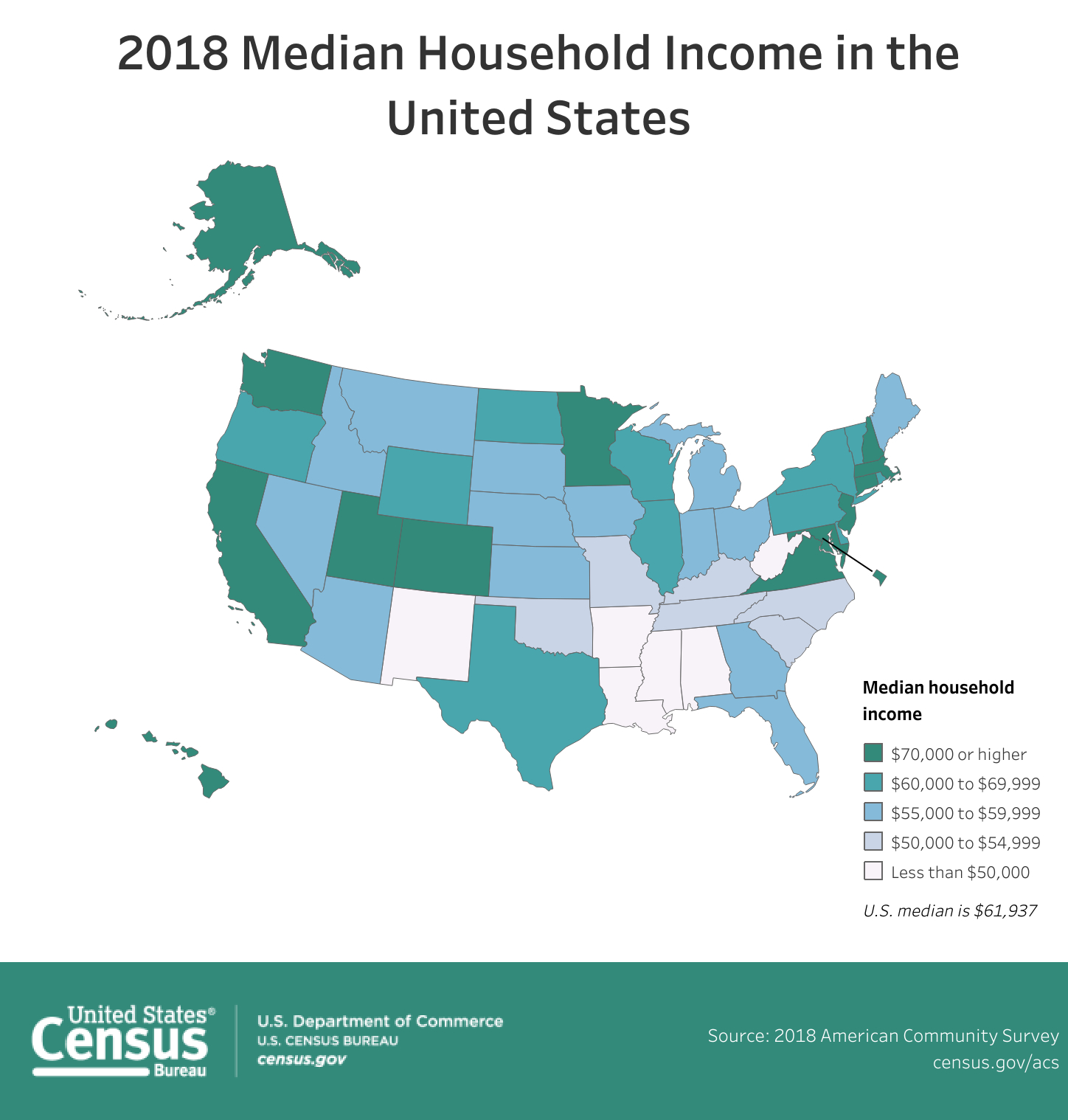
Regional Disparities: State-by-State Variations
The notion of a single “US median income” masks significant variations across different states and metropolitan areas. The cost of living varies dramatically from one region to another, as do economic opportunities, industry concentrations, and labor market dynamics.
States with high costs of living, such as California, Massachusetts, New York, and Hawaii, often report higher median incomes to compensate for expenses like housing and transportation. Conversely, states in the Midwest and South, while having lower median incomes, may also offer a lower cost of living, meaning that a smaller income can still afford a comparable standard of living. However, these regional differences are not always perfectly balanced by cost of living. Some states may have both lower incomes and disproportionately high costs of essential services, putting greater financial pressure on their residents. Understanding these regional disparities is vital for individuals considering relocation and for policymakers addressing localized economic challenges.
Demographic Factors: Age, Education, and Household Composition
Median income is also heavily influenced by demographic characteristics. These factors paint a detailed picture of which segments of the population tend to earn more or less.
- Age: Income typically follows a lifecycle pattern. Young adults starting their careers generally have lower incomes, which tend to rise through their prime working years (ages 35-54), before potentially leveling off or declining slightly in retirement.
- Education: Higher levels of educational attainment are strongly correlated with higher median incomes. Individuals with professional or doctoral degrees consistently earn significantly more than those with only a high school diploma, reflecting the premium placed on specialized skills and knowledge in the modern economy.
- Household Composition: Median household income varies significantly depending on whether the household includes a single earner, multiple earners, or is a single-person household. Married-couple households, particularly those with two earners, typically report the highest median incomes. This highlights the combined economic power of multiple contributors to household income.
- Race and Ethnicity: Persistent income gaps exist across racial and ethnic lines in the US, reflecting historical and ongoing systemic inequalities. White and Asian households consistently report higher median incomes than Black and Hispanic households, underscoring the need for targeted policies to address these disparities.
Impact on Personal Finance and Economic Policy
Median income is not merely a statistical curiosity; it has profound implications for how individuals manage their finances and how governments shape economic policy.
Budgeting and Financial Planning in the Context of Median Income
For personal finance, median income serves as a critical benchmark. Individuals and households can use it to assess their relative financial position. If a household’s income falls significantly below the median for their demographic and region, it signals potential financial vulnerability and may prompt a re-evaluation of budgeting strategies, career development, or expense management.
Understanding the median income helps in setting realistic financial goals. For example, if the median income indicates that the typical household is struggling with housing affordability, individuals in that income bracket might need to prioritize aggressive saving or explore alternative housing options. It also informs decisions about debt management, retirement planning, and emergency savings. Financial advisors often use median income data to help clients contextualize their financial goals and develop strategies that are both ambitious and attainable given broader economic realities.
Affordability Challenges: Housing, Healthcare, and Education
One of the most pressing concerns tied to median income is the affordability of essential goods and services. When the cost of housing, healthcare, and higher education rises faster than median income, a significant portion of the population experiences a decline in their real standard of living.
- Housing: In many urban and suburban areas, median housing prices far outstrip what a median-income household can comfortably afford, leading to housing insecurity, long commutes, and reduced disposable income.
- Healthcare: Even with employer-sponsored plans, healthcare costs, including premiums, deductibles, and out-of-pocket expenses, can consume a substantial portion of a median-income budget, particularly for families or those with chronic conditions.
- Education: The soaring cost of college tuition and the burden of student loan debt are increasingly pressing issues for median-income families, impacting intergenerational wealth transfer and economic mobility.
These affordability crises underscore the real-world impact of stagnant median income growth and highlight the need for systemic solutions.
Government Policies and Income Inequality
Median income data is indispensable for policymakers. It guides discussions on minimum wage adjustments, social safety nets, tax policy, and wealth redistribution. When median income growth lags behind overall economic growth or when income inequality (the gap between high and low earners) widens, it often signals a need for policy intervention.
Policies aimed at strengthening the middle class, such as investments in education and job training, progressive tax reforms, affordable housing initiatives, and robust social security programs, are often evaluated based on their potential to boost median incomes and reduce income disparities. Understanding the median income helps governments identify which segments of the population are most vulnerable and design programs that effectively address their financial challenges, fostering a more equitable and stable economy.
Strategies for Improving Your Financial Standing
While broad economic factors influence median income, individuals are not powerless. There are actionable strategies one can employ to improve their personal financial standing, potentially moving above the median.
Education and Skill Development
Investing in human capital is one of the most effective ways to increase earning potential. Higher education, vocational training, and continuous skill development directly correlate with higher median incomes. Acquiring in-demand skills, especially in growing sectors like technology, healthcare, and specialized trades, can significantly boost marketability and command higher wages. Lifelong learning, adapting to new technologies, and pursuing certifications relevant to one’s field are crucial for staying competitive in a rapidly evolving job market. This isn’t just about obtaining a degree; it’s about continuously enhancing your value proposition to employers.
Income Diversification and Side Hustles
Relying on a single income source can be risky. Diversifying income through side hustles, freelance work, or part-time ventures can provide additional financial stability and accelerate wealth building. The digital economy has lowered the barrier to entry for many side hustles, from online tutoring and content creation to gig economy services and e-commerce. These additional income streams can supplement primary wages, help pay down debt, build savings, or fund investments, ultimately contributing to a higher overall household income and greater financial resilience.
Strategic Saving and Investing
Earning more is only one part of the financial equation; managing what you earn is equally critical. Strategic saving and investing are essential for long-term financial growth, regardless of one’s current income level.
- Saving: Establishing an emergency fund (3-6 months of living expenses) is paramount. Automating savings can make this process more consistent.
- Investing: For long-term wealth accumulation, investing is key. This includes contributing to retirement accounts (401(k)s, IRAs), exploring diversified portfolios of stocks and bonds, or investing in real estate. The power of compounding means that even modest, consistent investments over time can lead to substantial wealth. Financial literacy and professional guidance can help individuals make informed investment decisions tailored to their risk tolerance and financial goals.
The Future of Median Income in a Changing Economy
The economic landscape is in constant flux, shaped by technological advancements, global forces, and demographic shifts. Understanding these dynamics is crucial for anticipating the future trajectory of median income in the US.
Automation, AI, and the Job Market
The rapid advancements in automation and artificial intelligence (AI) are poised to reshape the job market profoundly. While these technologies promise increased productivity and new job creation, they also pose challenges to certain segments of the workforce. Routine, repetitive tasks are most susceptible to automation, potentially impacting jobs traditionally held by middle-income workers. The future of median income will heavily depend on the ability of the workforce to adapt, retrain, and transition into roles that complement AI and automation, rather than being replaced by them. Investments in education and retraining programs will be vital to ensure that the benefits of these technologies are broadly shared and do not exacerbate income inequality.
The Role of Economic Growth and Inflation
Sustained, inclusive economic growth is fundamental to increasing median income. When the economy expands, businesses often grow, creating more jobs and allowing for wage increases. However, the nature of this growth matters. If growth primarily benefits capital owners or highly skilled workers, median income may stagnate even as GDP rises.
Inflation also plays a critical role. High inflation, if not matched by proportional wage increases, erodes purchasing power and effectively reduces real median income. Central bank policies, fiscal spending, and global supply chain dynamics all influence inflation. Managing inflation while fostering robust economic growth will be a perpetual challenge for policymakers aiming to improve the financial well-being of the typical American household.

Navigating a Dynamic Financial Landscape
For individuals, navigating this dynamic financial landscape requires adaptability, foresight, and continuous learning. The traditional career path may become less common, with more individuals potentially engaging in portfolio careers, gig work, or starting their own ventures. Financial literacy, strong budgeting skills, and a proactive approach to saving and investing will be more important than ever. The ability to pivot careers, embrace new technologies, and build multiple income streams will be key to not just maintaining, but improving, one’s financial standing in an ever-evolving economy.
In conclusion, median income in the US is a powerful barometer of national economic health and individual financial well-being. It reflects not just the numbers on a pay slip, but the capacity of typical Americans to afford a decent standard of living, build wealth, and pursue opportunities. By understanding its nuances, recognizing its trends, and proactively strategizing, individuals and policymakers alike can work towards a more prosperous and equitable financial future.
aViewFromTheCave is a participant in the Amazon Services LLC Associates Program, an affiliate advertising program designed to provide a means for sites to earn advertising fees by advertising and linking to Amazon.com. Amazon, the Amazon logo, AmazonSupply, and the AmazonSupply logo are trademarks of Amazon.com, Inc. or its affiliates. As an Amazon Associate we earn affiliate commissions from qualifying purchases.