
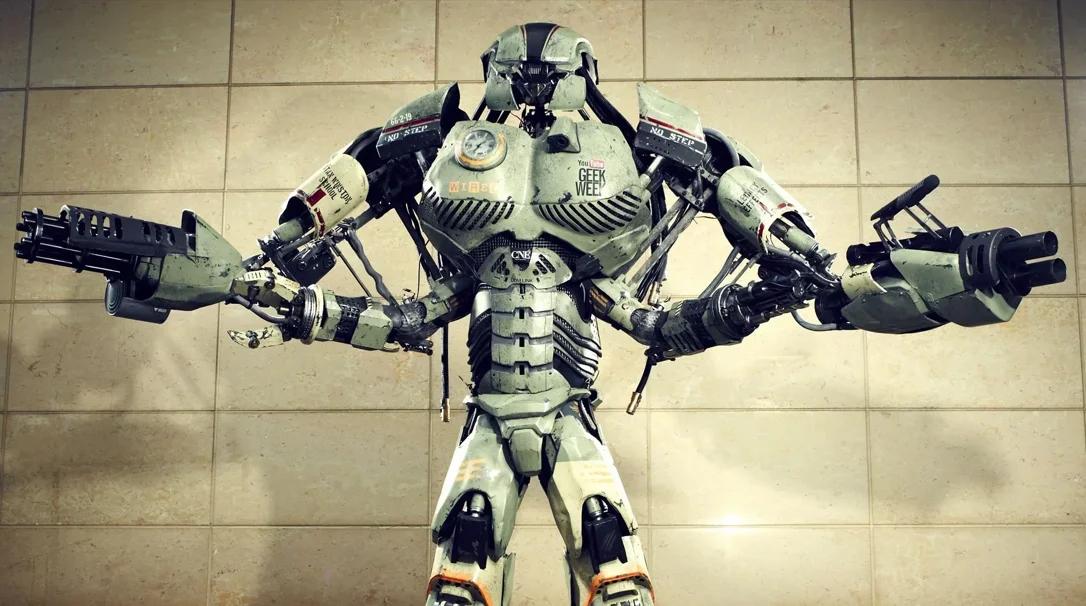
In the vast and ever-evolving lexicon of technology, the term “mech” frequently surfaces, often sparking curiosity regarding its precise meaning and implications. While context can sometimes hint at its usage, from fictional combat machines to industrial components, at its core, “mech” typically refers to the multidisciplinary field of mechatronics, or more broadly, the sophisticated interplay of mechanical engineering with electronics and computer control systems. It represents a paradigm shift from purely mechanical design to integrated systems that possess intelligence, adaptability, and enhanced functionality. Understanding “mech” is crucial for anyone looking to grasp the fundamental technologies underpinning modern automation, robotics, and smart devices.
Defining “Mech”: A Multidisciplinary Foundation
The essence of “mech” lies in its inherent interdisciplinarity. It’s not just about gears and levers; it’s about making those gears and levers smart, responsive, and autonomous through the strategic integration of diverse engineering disciplines. This fusion has been pivotal in advancing technological capabilities far beyond what individual fields could achieve in isolation.
From Mechanical to Mechatronics: An Evolution
Historically, mechanical engineering focused on the design, analysis, manufacturing, and maintenance of mechanical systems. Think of engines, machines, and structural components. With the advent of advanced electronics and computing, a new imperative emerged: to imbue these mechanical systems with control and intelligence. This gave birth to mechatronics – a portmanteau of “mechanics” and “electronics.” George Devol’s Unimate, the first industrial robot in the 1960s, serves as an early, albeit rudimentary, example of mechatronics in action, combining mechanical arms with electronic controls for repetitive tasks. Today, mechatronics is the framework for designing systems that seamlessly integrate sensors, actuators, control algorithms, and sophisticated mechanical structures to perform complex functions with precision and autonomy.
The Core Pillars: Mechanics, Electronics, Computing
At its heart, “mech” (as mechatronics) stands on three fundamental pillars:
- Mechanical Engineering: This forms the physical backbone, involving the design of the structure, components, and kinematics. It addresses aspects like material selection, stress analysis, friction, vibration, and ensuring the physical robustness and movement capabilities of the system. Without sound mechanical design, even the smartest electronic controls would be rendered ineffective.
- Electronics Engineering: This pillar provides the nervous system and sensory input for the mechanical structure. It encompasses the design of circuits, sensors (for input like position, temperature, force), actuators (for output like motors, solenoids, pneumatic cylinders), and power supplies. Electronic components enable the system to perceive its environment and execute commands.
- Computer Science and Control Systems: This is the brain of the “mech” system, providing intelligence and decision-making capabilities. It involves programming microcontrollers or industrial PCs, developing algorithms for control, data processing, and communication. Control systems ensure that the mechanical and electronic components work harmoniously to achieve desired outcomes, from simple feedback loops to complex AI-driven decision engines. The integration of software allows for adaptability, learning, and sophisticated automation.
The Expanding Landscape of Mech Applications
The principles of “mech” are not confined to a single industry; rather, they permeate almost every facet of modern technology, driving innovation across various sectors. The ability to create intelligent, responsive physical systems has revolutionized industries and redefined human-machine interaction.
Industrial Automation and Manufacturing
Perhaps one of the most visible and impactful applications of “mech” is in industrial automation. Modern factories are teeming with robotic arms, automated guided vehicles (AGVs), and smart production lines, all built on mechatronic principles. These systems perform tasks with unparalleled precision, speed, and consistency, ranging from assembly and welding to packaging and quality inspection. The integration of sensors allows these machines to adapt to variations in materials or processes, while sophisticated control systems ensure optimal performance and safety, significantly boosting productivity and reducing human error. Collaborative robots (cobots), designed to work safely alongside human operators, represent a new frontier in manufacturing, embodying advanced mechatronic design for flexible and human-centric production environments.
Robotics: From Exploration to Healthcare
Robotics is a direct outgrowth and a prime embodiment of “mech.” From deep-sea exploration robots and planetary rovers to surgical robots and service robots in smart homes, these autonomous or semi-autonomous machines leverage complex mechatronic systems. They integrate advanced mechanical designs for mobility and manipulation, sophisticated sensors for perception (e.g., cameras, lidar, ultrasonic), and powerful computing for navigation, decision-making, and interaction. In healthcare, surgical robots enhance precision and minimize invasiveness, while exoskeletons, another mechatronic marvel, assist in rehabilitation and provide mobility for individuals with disabilities.
Consumer Electronics and Smart Devices
The ubiquity of “mech” extends into our daily lives through consumer electronics and smart devices. Every smartphone, with its haptic feedback, camera stabilization, and touch-screen responsiveness, relies on miniature mechatronic components. Wearable technologies like smartwatches incorporate accelerometers, gyroscopes, and heart rate sensors, all integrated into a compact mechanical design controlled by embedded software. Smart home devices, from robotic vacuum cleaners to automated blinds and smart locks, are sophisticated mechatronic systems designed to enhance convenience and efficiency within residential environments, demonstrating the blend of mechanical execution with electronic intelligence.
Automotive and Aerospace Innovations
The automotive and aerospace industries are at the forefront of “mech” integration. Modern vehicles are essentially mechatronic systems on wheels, featuring electronic stability control, anti-lock braking systems (ABS), adaptive cruise control, and advanced driver-assistance systems (ADAS). The push towards electric and autonomous vehicles further accelerates the reliance on complex mechatronic architectures for powertrain management, steering, braking, and perception systems. Similarly, in aerospace, aircraft rely on fly-by-wire systems, advanced landing gear mechanisms, and sophisticated control surfaces—all highly integrated mechatronic designs that ensure safety, efficiency, and performance in demanding environments.

Key Technologies Driving Mech Innovation
The ongoing evolution of “mech” is fueled by continuous advancements in a multitude of underlying technologies. These innovations enhance the capabilities, efficiency, and intelligence of mechatronic systems, pushing the boundaries of what’s possible.
Artificial Intelligence and Machine Learning
The integration of Artificial Intelligence (AI) and Machine Learning (ML) has profoundly transformed “mech” systems, endowing them with unprecedented levels of autonomy, adaptability, and learning capabilities. AI algorithms enable robots to process complex sensory data, make intelligent decisions in unstructured environments, and learn from experience. For example, in industrial settings, ML models can optimize robot paths for efficiency, predict equipment failures for preventative maintenance, or improve quality control through visual inspection. In autonomous vehicles, AI drives perception (identifying objects, lanes, pedestrians), planning (route optimization, obstacle avoidance), and control (steering, acceleration, braking), making real-time, complex decisions possible.
Sensor Technologies and Actuator Systems
The ability of “mech” systems to interact intelligently with their environment hinges on sophisticated sensor technologies and powerful, precise actuator systems. Advances in miniaturization, sensitivity, and data processing capabilities of sensors—such as LiDAR, radar, high-resolution cameras, ultrasonic sensors, and tactile sensors—provide a richer, more accurate understanding of the operating environment. Concurrently, developments in actuators, including advanced servo motors, pneumatic and hydraulic systems, and piezoelectric actuators, offer greater precision, force, and energy efficiency. These advancements allow “mech” systems to perform delicate manipulations, exert controlled forces, and execute complex movements with high fidelity, crucial for tasks ranging from robotic surgery to precision manufacturing.
Advanced Materials and Manufacturing Processes
The physical realization of “mech” systems benefits immensely from breakthroughs in material science and manufacturing. Lightweight composites, smart materials (e.g., shape memory alloys, electroactive polymers), and nanomaterials enable the creation of more robust, lighter, and more efficient components. Additive manufacturing (3D printing) has revolutionized prototyping and production, allowing for the rapid creation of complex geometries and customized parts that were previously impossible or cost-prohibitive. This directly impacts the design freedom and functional integration within mechatronic systems, facilitating the development of intricate structures and highly integrated components that reduce assembly complexity and improve performance.
Software and Control Systems
The intelligence and operational effectiveness of any “mech” system are ultimately governed by its software and control algorithms. Modern mechatronic systems rely on real-time operating systems (RTOS), sophisticated programming languages, and advanced control theory. Developments in robust, distributed control architectures, cyber-physical systems (CPS), and digital twin technology enable more precise control, better fault tolerance, and predictive maintenance. Software allows for complex motion planning, kinematic and dynamic modeling, sensor data fusion, and seamless communication between various components, both internal and external to the system, enabling complex behaviors and networked operations.
The Future of Mech: Trends and Challenges
The trajectory of “mech” is one of continuous innovation, driven by evolving societal needs and technological breakthroughs. The coming decades promise systems that are more autonomous, intelligent, and deeply integrated into our daily lives and industrial processes.
Human-Robot Collaboration (Cobots)
A significant trend is the rise of human-robot collaboration, exemplified by cobots. Unlike traditional industrial robots isolated for safety, cobots are designed to work alongside humans, augmenting their capabilities. This requires advanced safety features, intuitive programming interfaces, and sophisticated perception systems that allow cobots to understand and respond to human presence and intentions. The development of more agile, intelligent, and safely interacting cobots will redefine workspaces, combining human dexterity and problem-solving with robotic precision and endurance, leading to more flexible and efficient manufacturing paradigms.
Miniaturization and Bio-Inspired Design
The quest for miniaturization continues to push “mech” into new domains, from micro-robots for medical diagnostics and targeted drug delivery to nanotechnology-enabled sensors. These tiny systems require incredibly precise mechanical components, highly integrated electronics, and sophisticated control at micro and nano scales. Concurrently, bio-inspired design—drawing lessons from nature’s efficient and robust systems—is leading to innovations in soft robotics, flexible actuators, and more adaptive locomotion systems. Robots that can mimic the movement of insects, the manipulation of an octopus, or the resilience of biological tissues open up possibilities for operations in delicate, unstructured, or hazardous environments.

Ethical Considerations and Societal Impact
As “mech” systems become more pervasive, intelligent, and autonomous, significant ethical considerations and societal impacts come to the forefront. Questions surrounding job displacement due to automation, the safety and accountability of autonomous systems (e.g., self-driving cars), data privacy in connected devices, and the potential for misuse of advanced robotic technologies require careful thought and proactive policy-making. Ensuring that the development and deployment of “mech” technologies align with human values, promote societal well-being, and address potential inequities will be paramount. The future of “mech” is not just about technological advancement, but also about responsible innovation that benefits humanity.
aViewFromTheCave is a participant in the Amazon Services LLC Associates Program, an affiliate advertising program designed to provide a means for sites to earn advertising fees by advertising and linking to Amazon.com. Amazon, the Amazon logo, AmazonSupply, and the AmazonSupply logo are trademarks of Amazon.com, Inc. or its affiliates. As an Amazon Associate we earn affiliate commissions from qualifying purchases.