
In the rapidly evolving landscape of national security, the role of the Secretary of Homeland Security has transitioned from traditional border management to a high-stakes oversight of the nation’s digital and technological frontiers. Alejandro Mayorkas, the current Secretary, is currently spearheading a massive technological pivot within the Department of Homeland Security (DHS). While headline news often focuses on the political dimensions of his role, the “now” for Mayorkas is defined by a rigorous focus on Artificial Intelligence (AI) safety, the modernization of cybersecurity infrastructure, and the integration of advanced data analytics into national defense.

The Strategic Implementation of the DHS Artificial Intelligence Task Force
One of the most significant moves Alejandro Mayorkas is making right now is the institutionalization of the DHS Artificial Intelligence Task Force. Recognizing that AI is a dual-use technology—capable of both enhancing security and providing new tools for adversaries—Mayorkas has positioned DHS as a lead agency in the federal government’s AI governance strategy.
Establishing Ethical AI Frameworks and Safety Boards
Mayorkas recently announced the formation of the Artificial Intelligence Safety and Security Board. This group, composed of leaders from Silicon Valley (including CEOs from OpenAI, NVIDIA, and Microsoft) and civil rights advocates, is tasked with advising the government on the secure development of AI. The focus here is not just on theoretical risks, but on the practical protection of critical infrastructure. Mayorkas is currently driving the initiative to ensure that AI-driven power grids, water systems, and transportation networks are resilient against AI-generated cyberattacks.
AI in Law Enforcement and Counter-Terrorism
Beyond high-level policy, Mayorkas is overseeing the practical deployment of AI tools within the various agencies under his purview. This includes the use of machine learning algorithms to detect illicit substances, such as fentanyl, at ports of entry. By utilizing non-intrusive inspection (NII) technology powered by AI, DHS can scan massive quantities of cargo with a precision that human inspectors cannot match. This tech-first approach is a cornerstone of Mayorkas’s current operational strategy, shifting the department from reactive measures to predictive analytics.
The 2024 AI Roadmap
To provide a clear path forward, Mayorkas released the DHS AI Roadmap, a comprehensive document detailing three pilot programs: using AI to enhance immigration officer training, utilizing large language models (LLMs) to streamline the asylum process, and employing predictive tools for disaster response via FEMA. This move signals a shift toward a “tech-native” department that prioritizes efficiency through software automation.
Strengthening National Cyber Resilience via CISA
While the border often takes center stage, Mayorkas’s current focus is heavily weighted toward the Cybersecurity and Infrastructure Security Agency (CISA). Under his leadership, CISA has moved from a support role to the central nervous system of federal cybersecurity.
The Shift to Zero Trust Architecture
Mayorkas is currently overseeing the federal government’s transition to a “Zero Trust” security model. This architectural shift assumes that threats can exist both outside and inside the network. By mandating strict identity verification and micro-segmentation of data, Mayorkas is attempting to modernize the aging digital infrastructure of the U.S. government. This initiative is critical as state-sponsored actors increasingly target federal databases and sensitive intellectual property.
Enhancing Public-Private Cyber Collaboration
A recurring theme in Mayorkas’s current agenda is the “Shields Up” campaign. This is a collaborative tech framework where DHS shares real-time threat intelligence with private sector corporations. Mayorkas has emphasized that since the majority of the nation’s critical infrastructure is privately owned, the technology used to defend it must be synchronized between the government and the tech industry. This involves deploying advanced sensor technologies across private networks to detect the early stages of a ransomware attack or a coordinated digital intrusion.
Defending Against Quantum Computing Threats
Looking toward the future, Mayorkas is currently initiating “Post-Quantum Cryptography” (PQC) standards. As quantum computing advances, traditional encryption methods will become obsolete. Mayorkas is pushing for the rapid adoption of new cryptographic algorithms that can withstand the processing power of quantum computers, ensuring that national secrets remain encrypted even in a post-quantum world.
Modernizing Border Tech and Biometric Systems
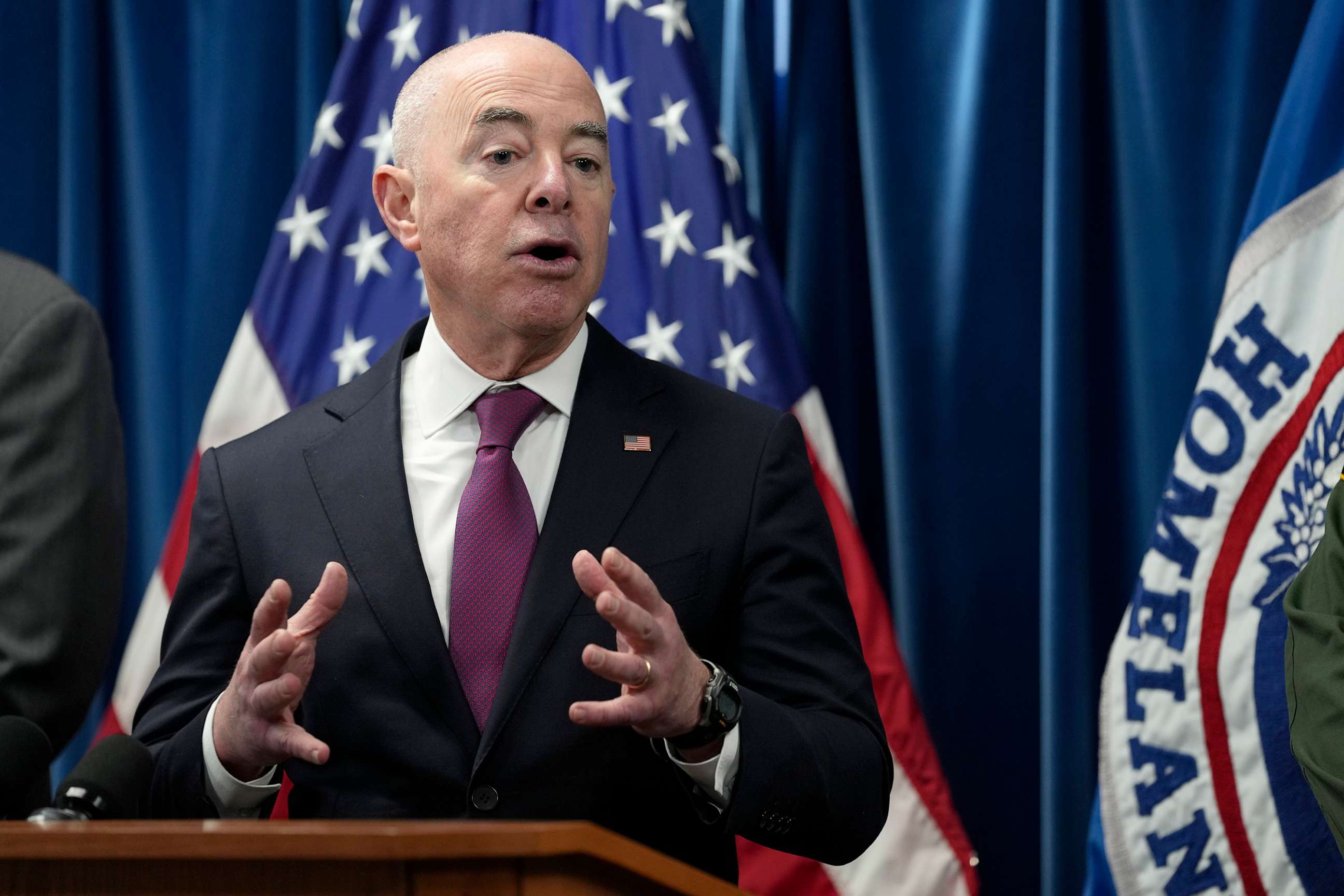
Technology is the primary lens through which Mayorkas is currently addressing the complexities of the U.S. border. Moving away from purely physical barriers, the department is investing heavily in “smart border” technologies.
The Expansion of Biometric Entry-Exit Systems
Under Mayorkas, the expansion of biometric technology—specifically facial recognition and iris scanning—has become a priority. These tools are being integrated at airports and land crossings to verify identities with high speed and accuracy. The goal is a “frictionless” border for legitimate travelers, using high-end software to flag anomalies and potential security risks in real-time. This tech push also includes mobile applications like CBP One, which digitizes the entry request process, representing a significant shift toward a digital-first immigration system.
Drones and Autonomous Surveillance Sensors
The deployment of Autonomous Surveillance Towers (ASTs) is another key tech initiative. These towers use AI-driven sensors and thermal imaging to monitor remote areas of the border without requiring constant human intervention. Mayorkas is currently scaling these technologies to create a “digital wall” that provides 24/7 situational awareness, allowing for more efficient resource allocation for Border Patrol agents.
Balancing Technology with Privacy Rights
A major challenge Mayorkas is currently navigating is the ethical implementation of these technologies. As DHS adopts more invasive tech, like high-resolution drone surveillance and biometric tracking, the department is under pressure to maintain privacy standards. Mayorkas is currently working with the DHS Privacy Office to establish “Privacy-by-Design” protocols, ensuring that the tech used for security does not infringe upon the constitutional rights of citizens.
Securing the Global Supply Chain through Data Analytics
In an era of global interconnectedness, Mayorkas has identified the supply chain as a critical vulnerability. He is currently leveraging big data to secure the flow of goods into the United States.
Blockchain and Traceability for Enforcement
One of the more innovative tech applications under Mayorkas’s direction is the investigation into blockchain technology for supply chain traceability. Specifically, in the enforcement of the Uyghur Forced Labor Prevention Act (UFLPA), DHS is looking at ways to use digital ledgers to track the origin of raw materials. By using data analytics to map complex global supply chains, DHS can identify and block goods produced with forced labor before they ever reach U.S. ports.
Modernizing Port Security with IoT
The “Internet of Things” (IoT) is being integrated into port security under Mayorkas’s tenure. Smart sensors on shipping containers can now detect radiation, chemical signatures, or unauthorized breaches. Mayorkas is advocating for a fully networked port environment where every container is a data point, feeding into a centralized command center that uses AI to flag high-risk shipments.
The Future of Digital Security under DHS Leadership
Alejandro Mayorkas is currently positioning the DHS not just as a defensive agency, but as a proactive tech leader. The focus is no longer just on boots on the ground; it is on code in the cloud.
Preparing for the Rise of Generative AI Threats
As generative AI becomes more accessible, Mayorkas is sounding the alarm on “deepfakes” and AI-driven misinformation. He is currently spearheading a cross-agency effort to develop detection tools that can identify synthetic media designed to destabilize public trust or interfere with democratic processes. This involves deep collaboration with tech companies to embed watermarking and provenance metadata into AI-generated content.

Investment in the Cyber Workforce
Finally, Mayorkas is currently focusing on the “human hardware” of the tech ecosystem. He has launched the DHS Cybersecurity Service, a new personnel system designed to recruit and retain top-tier tech talent by offering competitive salaries that rival the private sector. By building a workforce of coders, data scientists, and ethical hackers, Mayorkas is ensuring that the department has the internal expertise to manage the sophisticated technologies they are deploying.
In conclusion, when asking “What is Mayorkas doing now?” the answer lies in the intersection of national security and advanced technology. From AI safety boards to quantum-resistant encryption and smart border sensors, Mayorkas is overseeing a department in the midst of a digital revolution. His current legacy is being built on the premise that the future of homeland security is inextricably linked to the mastery of the technological landscape.
aViewFromTheCave is a participant in the Amazon Services LLC Associates Program, an affiliate advertising program designed to provide a means for sites to earn advertising fees by advertising and linking to Amazon.com. Amazon, the Amazon logo, AmazonSupply, and the AmazonSupply logo are trademarks of Amazon.com, Inc. or its affiliates. As an Amazon Associate we earn affiliate commissions from qualifying purchases.