
Materials management stands as a cornerstone of efficient business operations, a discipline often perceived as purely operational but, in reality, profoundly financial. At its core, it is the strategic planning, organizing, and controlling of the flow of materials from their initial acquisition through internal processing to final consumption or delivery. For any enterprise, particularly those in manufacturing, retail, or distribution, the effective management of materials directly impacts profitability, cash flow, working capital, and ultimately, shareholder value. It’s a relentless pursuit of cost reduction, efficiency gains, and risk mitigation, all of which resonate directly with a company’s financial health.
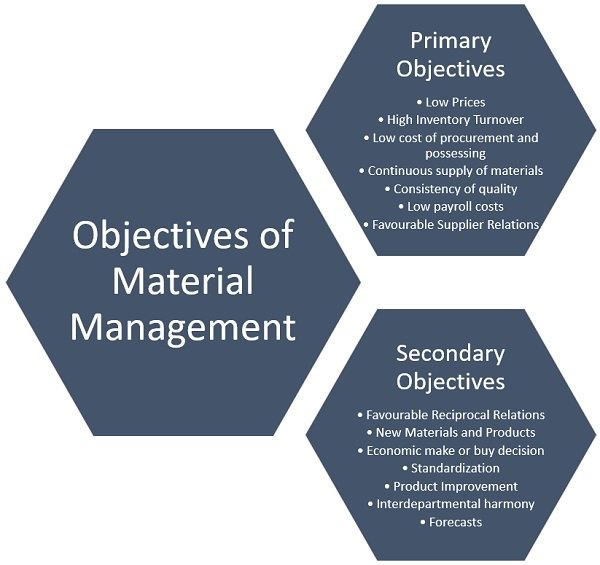
The Financial Core of Materials Management
Materials management is not merely about moving goods from point A to point B; it’s about optimizing the financial resources tied up in those goods. Every decision, from the choice of a supplier to the quantity of inventory held in a warehouse, has a tangible financial implication. In an increasingly competitive global economy, companies that excel in materials management gain a significant financial edge by minimizing operational costs, maximizing asset utilization, and accelerating their cash conversion cycle.
Consider the substantial capital often locked in raw materials, work-in-progress, and finished goods inventory. This capital represents an opportunity cost—money that could otherwise be invested, used to pay down debt, or distributed to shareholders. Materials management aims to strike a delicate balance: ensuring an uninterrupted supply to meet production and customer demand, while simultaneously minimizing the financial burden of carrying excess inventory.
Furthermore, operational inefficiencies within the materials flow—such as excessive waste, expedited shipping costs, or obsolete stock—directly erode profit margins. Conversely, streamlined processes, strategic sourcing, and robust inventory control contribute directly to the bottom line, enhancing a company’s financial performance and resilience. This discipline thus serves as a critical financial lever, influencing key financial metrics from gross profit to return on assets.
Key Financial Levers of Materials Management
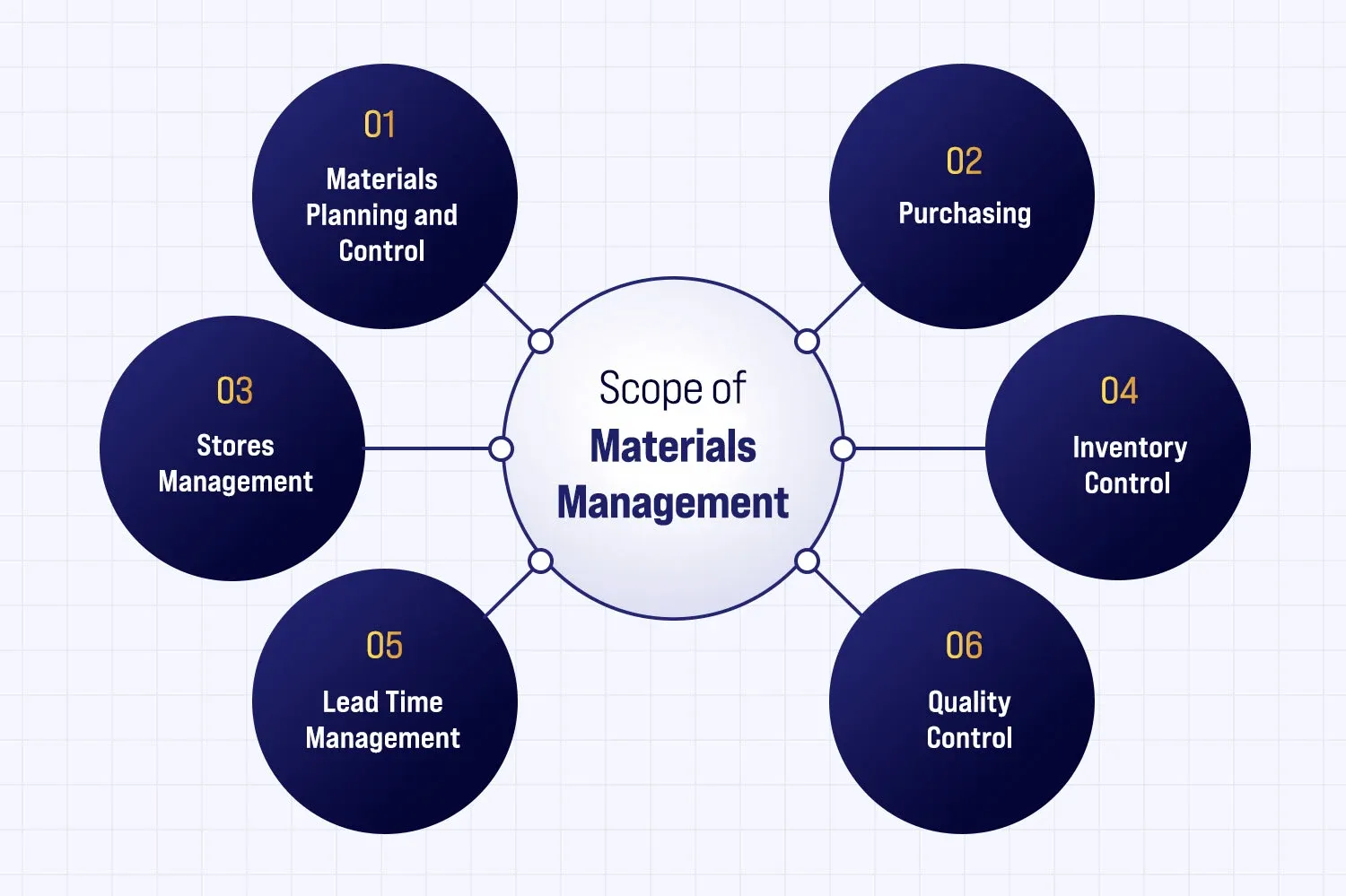
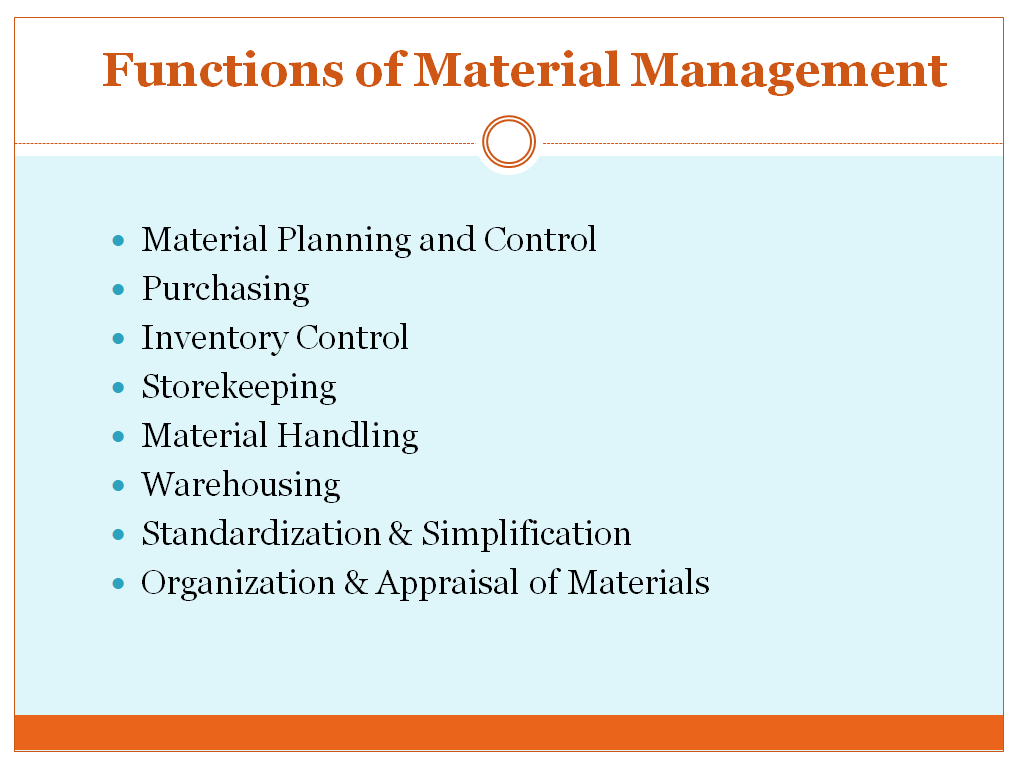
Effective materials management is a composite of several interconnected functions, each presenting unique opportunities for financial optimization. Understanding these components reveals how deeply intertwined operational efficiency is with financial outcomes.
Demand Planning & Forecasting
Accurate demand planning is the financial bedrock of materials management. Overestimating demand leads to overstocking, tying up significant working capital in inventory, incurring higher carrying costs (storage, insurance, obsolescence), and potentially leading to write-offs. Underestimating demand, conversely, can result in stock-outs, leading to lost sales, expedited shipping costs, and damage to customer relationships—all of which have direct negative financial consequences. Sophisticated forecasting techniques, often leveraging data analytics and AI, allow businesses to predict material needs more precisely, optimizing inventory levels and mitigating financial risks associated with either surplus or deficit.
Procurement & Sourcing
The procurement function is where a significant portion of a company’s operational budget is spent. Strategic procurement goes beyond simply buying materials; it involves identifying the best suppliers, negotiating favorable pricing and payment terms, and establishing robust supply agreements. Cost savings achieved in procurement directly translate to higher gross margins. Factors like bulk purchasing discounts, early payment discounts, and extended credit terms directly impact cash flow and working capital. Moreover, prudent supplier relationship management helps mitigate risks such as price volatility, quality issues, and supply chain disruptions, all of which can have severe financial repercussions.
Inventory Control
Inventory is often a company’s largest current asset, making its control paramount from a financial perspective. Inefficient inventory management can be a financial drain, incurring substantial carrying costs. These costs include the capital cost (the opportunity cost of money tied up), storage costs (warehousing, utilities, labor), service costs (insurance, taxes), and risk costs (obsolescence, spoilage, theft). The objective of inventory control is to maintain optimal inventory levels—enough to meet demand without incurring excessive costs. Techniques such as Just-In-Time (JIT) inventory, Economic Order Quantity (EOQ), and ABC analysis are applied to reduce inventory holdings, free up capital, and enhance financial liquidity.
Warehousing & Storage
The physical storage of materials also carries significant financial implications. Warehousing costs encompass rent or mortgage, utilities, labor for handling and management, and equipment maintenance. Efficient warehouse layout, optimized storage practices, and effective material handling reduce operational expenses. Furthermore, minimizing damage and loss within the warehouse directly reduces financial write-offs and ensures product availability, safeguarding potential revenue. Investments in automation and modern warehouse management systems (WMS) often yield substantial returns through reduced labor costs, increased throughput, and improved inventory accuracy.
Logistics & Transportation
The movement of materials, both inbound from suppliers and outbound to customers, represents a substantial expenditure. Transportation costs include freight, fuel, tolls, and labor. Efficient logistics involves optimizing routes, selecting the most cost-effective carriers, consolidating shipments, and choosing appropriate modes of transport. Poor logistics planning can lead to expedited shipping, delays, and damage, all of which add to costs and can negatively impact customer satisfaction and future revenue. Strategic logistics management is key to reducing operational expenses and enhancing the overall profitability of the supply chain.
Optimizing Capital Through Inventory Control
Inventory management is perhaps the most direct financial interface within materials management. Inventory represents capital, and how effectively this capital is managed profoundly influences a company’s financial standing. The goal is to maximize inventory turnover while minimizing the associated carrying costs.
The “carrying costs” of inventory are a critical financial metric that many businesses underestimate. These are not merely the cost of the goods themselves but the ongoing expenses incurred by holding them.
- Capital Cost: This is the opportunity cost of the money tied up in inventory. If $1 million is locked in inventory, that $1 million cannot be used for other productive investments, debt repayment, or to generate interest. This represents a lost financial opportunity.
- Storage Costs: These include the expenses for warehousing space (rent, utilities, depreciation of owned facilities), shelving, material handling equipment, and the labor required to manage and move inventory.
- Service Costs: Insurance against theft, damage, or natural disasters, and property taxes levied on inventory.
- Risk Costs: This category is often the most impactful. It includes obsolescence (when inventory becomes outdated or unsellable), spoilage (perishable goods), damage, and theft. These can lead to significant write-downs and direct financial losses.
Effective inventory control strategies are designed to mitigate these costs. Just-In-Time (JIT) methodologies aim to reduce inventory to the bare minimum, receiving materials only as they are needed for production. This dramatically cuts carrying costs and improves cash flow, but requires highly reliable supply chains. Economic Order Quantity (EOQ) models help determine the ideal order size to minimize the sum of ordering costs and carrying costs. ABC analysis categorizes inventory items by their value and impact, allowing managers to focus control efforts on the most financially significant items.
By reducing excess inventory, a company frees up working capital, improving its liquidity and ability to invest in growth or weather financial shocks. Key financial ratios like the inventory turnover ratio (Cost of Goods Sold / Average Inventory) become crucial performance indicators, demonstrating how efficiently a company converts its inventory into sales. A higher turnover generally signifies better financial management and lower carrying costs, while a low turnover can signal financial distress or inefficient operations.
Strategic Procurement and Cost Savings
Procurement is not just an administrative function; it is a strategic driver of cost savings and financial performance. Every dollar saved in procurement directly translates to a dollar added to the profit margin, often with a greater impact than an equivalent increase in sales revenue—a phenomenon known as the “profit leverage effect.”
Supplier Relationship Management (SRM)
Building strong, long-term relationships with suppliers is financially advantageous. Preferred suppliers may offer better pricing, extended credit terms, volume discounts, and improved quality or delivery reliability. Negotiating favorable payment terms, such as 60 or 90 days instead of 30, significantly improves a company’s cash conversion cycle by allowing it to sell its products before paying for the raw materials, thereby enhancing cash flow.
Value Analysis/Value Engineering (VA/VE)
VA/VE involves systematically analyzing the design, materials, and processes of a product or service to achieve the necessary functions at the lowest possible cost without sacrificing quality or performance. By identifying lower-cost alternative materials or more efficient production methods, companies can achieve substantial savings in direct material costs, which flow straight to the bottom line.
Global Sourcing
While global sourcing can offer lower material costs due to differences in labor, production, or raw material prices, it also introduces financial complexities and risks. These include currency exchange rate fluctuations, import duties and tariffs, longer lead times requiring higher safety stock, and geopolitical instability. A comprehensive financial analysis is essential to weigh the potential cost savings against these inherent risks.
E-Procurement & Automation
Leveraging technology through e-procurement platforms and automation can significantly reduce administrative costs associated with purchasing, improve transparency, and enable better spend analysis. Automated requisitioning, purchase order generation, and invoice processing streamline operations, reduce human error, and free up procurement staff to focus on strategic sourcing activities rather than transactional tasks, leading to further financial efficiencies.
The ROI of Efficient Materials Flow
The return on investment (ROI) of a well-executed materials management strategy is multifaceted and profound, impacting a company’s financial statements in numerous ways.
Improved Cash Flow: By optimizing inventory levels, companies reduce the amount of cash tied up in idle assets. Coupled with favorable payment terms from suppliers, this frees up significant capital, improving liquidity and allowing the company to invest in growth initiatives, pay down debt, or distribute profits. A faster cash conversion cycle—the time it takes for cash invested in inventory to convert back into cash from sales—is a direct benefit.
Increased Profitability: Efficient materials management directly lowers the cost of goods sold (COGS) by reducing direct material costs through strategic procurement, minimizing waste, and decreasing inventory carrying costs. It also reduces operational expenses related to warehousing and logistics. These combined savings directly translate into higher gross and net profit margins.
Enhanced Working Capital Management: By bringing greater control and predictability to the flow of materials, companies can manage their current assets (inventory) and current liabilities (accounts payable) more effectively. This leads to a healthier working capital position, a key indicator of a company’s short-term financial health and operational efficiency.
Risk Mitigation: A diversified supplier base and robust demand planning reduce a company’s exposure to supply chain disruptions, material price volatility, and stock-out situations, all of which can have significant financial consequences. Proactive materials management builds resilience, protecting financial stability.
Competitive Advantage: Cost leadership achieved through superior materials management allows a company to offer more competitive pricing or enjoy higher profit margins than its rivals. Reliability in product availability and faster delivery times enhance customer satisfaction and loyalty, indirectly leading to increased market share and sustained revenue growth—a crucial long-term financial benefit.
Measuring the success of materials management often involves tracking key performance indicators (KPIs) such as inventory turnover ratio, stock-to-sales ratio, carrying cost of inventory, purchase price variance, and supplier on-time delivery rates. These financial metrics provide insights into the efficiency and effectiveness of materials management efforts, ensuring that operational excellence translates directly into superior financial performance. In essence, materials management is not merely an operational necessity but a strategic financial imperative, driving efficiency, profitability, and sustainable growth for any enterprise.
aViewFromTheCave is a participant in the Amazon Services LLC Associates Program, an affiliate advertising program designed to provide a means for sites to earn advertising fees by advertising and linking to Amazon.com. Amazon, the Amazon logo, AmazonSupply, and the AmazonSupply logo are trademarks of Amazon.com, Inc. or its affiliates. As an Amazon Associate we earn affiliate commissions from qualifying purchases.