
For millions of Americans, health insurance purchased through the Affordable Care Act (ACA) marketplaces is a cornerstone of their healthcare strategy. However, the intersection of this vital coverage with an individual’s annual tax filing can often be a source of confusion and unexpected financial adjustments. Understanding “marketplace insurance on taxes” isn’t merely about filing paperwork; it’s about comprehending how government subsidies impact your financial well-being, both throughout the year and come tax season. This article will demystify the relationship between your marketplace health plan and your tax obligations, empowering you to navigate the complexities with greater confidence and foresight. We’ll delve into the mechanisms of premium tax credits, the crucial documents you’ll need, and strategies to avoid unwelcome financial surprises.
Understanding Marketplace Health Insurance and Subsidies
At the heart of marketplace insurance on taxes is a fundamental concept: financial assistance designed to make health coverage more affordable. Without understanding how these subsidies work, their tax implications remain opaque.
The Affordable Care Act (ACA) and Health Insurance Marketplaces
The Affordable Care Act, signed into law in 2010, established state and federal health insurance marketplaces (such as Healthcare.gov). These marketplaces serve as online platforms where individuals and families can shop for and enroll in qualified health plans (QHPs). These plans are offered by private insurance companies but must meet certain standards set by the ACA, including covering a set of essential health benefits.
Eligibility to purchase through the marketplace is broad, generally requiring U.S. residency, non-incarceration, and not having Medicare. A key feature of these marketplaces is the ability for eligible individuals to receive financial help to lower their monthly insurance premiums and out-of-pocket costs. This financial assistance is crucial for making health insurance accessible, and its calculation is directly tied to your household income and family size relative to the Federal Poverty Level (FPL).
Premium Tax Credits (PTC) Explained
The primary form of financial assistance available through the marketplaces is the Premium Tax Credit (PTC). This credit is designed to reduce the cost of monthly health insurance premiums, making coverage more affordable for individuals and families with incomes between 100% and 400% (and temporarily, above 400%) of the FPL.
Here’s how it generally works: When you apply for coverage through the marketplace, you provide an estimate of your household income for the upcoming year. Based on this estimate, the marketplace determines if you’re eligible for a PTC and calculates an estimated amount. You then have a choice:
- Advance Premium Tax Credits (APTC): Most people opt to have their estimated PTC paid directly to their insurance company each month. This immediately lowers their monthly premium payment. This upfront payment is what’s known as an Advance Premium Tax Credit.
- Claiming the full credit at tax time: Alternatively, you can choose to pay the full premium yourself each month and claim the entire PTC when you file your federal income tax return.
The amount of your PTC is primarily determined by your household income, the number of people in your tax household, and the cost of the benchmark “second-lowest cost Silver plan” available in your area. This benchmark plan helps standardize the subsidy calculation, ensuring the credit accurately reflects local healthcare costs.
The Tax Implications of Marketplace Insurance
The “on taxes” part of marketplace insurance comes into sharp focus during tax season. If you received APTC, you must reconcile it with your actual income when you file your federal tax return. This reconciliation process is where many individuals encounter unexpected financial adjustments.
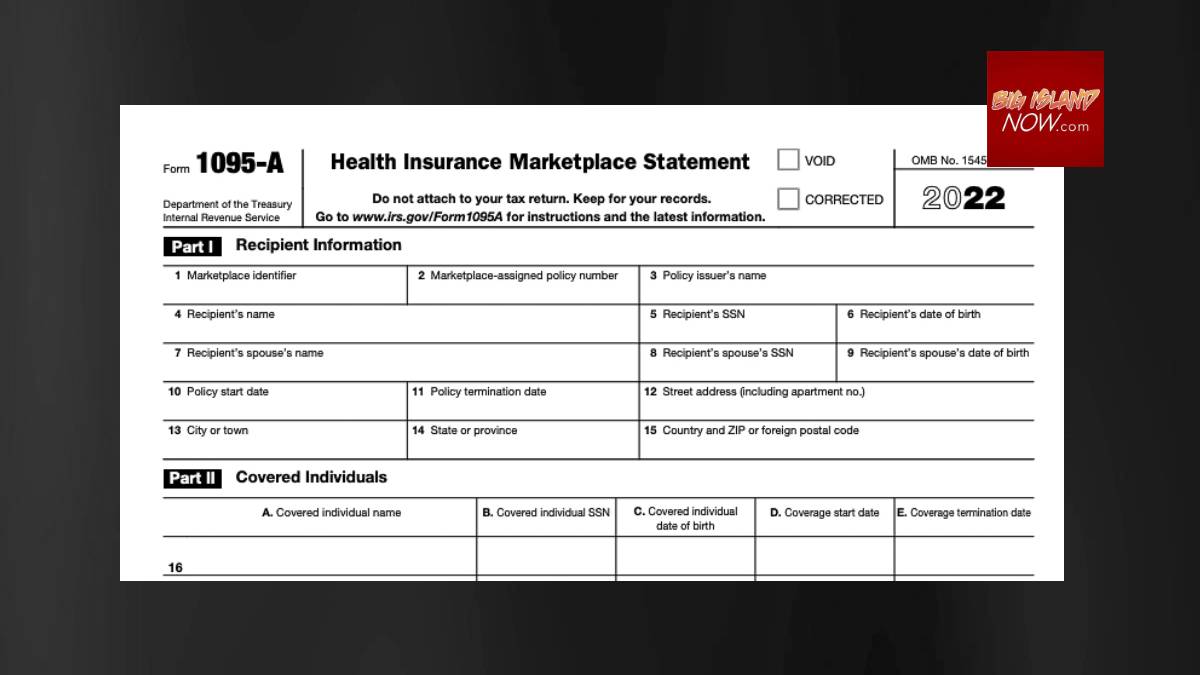
Form 1095-A: Your Essential Tax Document
If you or anyone in your household had marketplace insurance coverage and received APTC during the year, you will receive Form 1095-A, Health Insurance Marketplace Statement, from the marketplace. This document is absolutely critical for filing your taxes. You cannot complete your tax return accurately without it if you received APTC.
Form 1095-A provides a detailed monthly breakdown of:
- The individuals covered by your plan.
- The total monthly premium for your plan.
- The amount of Advance Premium Tax Credit (APTC) paid on your behalf.
- The monthly premium of the benchmark second-lowest cost Silver plan in your area, which is essential for calculating your final PTC.
It’s vital to ensure that the information on your Form 1095-A is correct. If you find errors, contact the marketplace immediately to request a corrected form.
Reconciling Advance Premium Tax Credits (APTC) on Form 8962
The reconciliation of your APTC takes place on Form 8962, Premium Tax Credit (PTC). This form is filed with your federal income tax return (Form 1040). The process involves comparing the APTC you received throughout the year (based on your estimated income) with the actual PTC you were eligible for (based on your actual household income for the year).
- If your actual income was lower than your estimated income: This means you likely received less APTC than you were entitled to. In this scenario, the difference will increase your tax refund or reduce the amount of tax you owe.
- If your actual income was higher than your estimated income: This means you likely received more APTC than you were entitled to. You will then have to repay some or all of the excess APTC. There are repayment limits for certain income levels, designed to protect lower-income households from excessive repayment burdens. For higher incomes, the full excess APTC generally must be repaid.
Accurate income estimation is key to minimizing these tax-time adjustments. Life changes that affect income or household size should be reported to the marketplace promptly to adjust APTC amounts in real-time.
Special Enrollment Periods and Life Changes

Life is unpredictable, and significant life events can directly impact your marketplace insurance and tax situation. Events such as marriage, divorce, the birth or adoption of a child, a change in income, or moving to a new area often qualify you for a Special Enrollment Period (SEP). During an SEP, you can enroll in or change your health plan outside of the annual Open Enrollment Period.
Crucially, these life changes can also alter your eligibility for PTC and the amount you qualify for. For example, a significant increase in income might reduce your PTC eligibility, while a decrease might increase it. Failing to report these changes to the marketplace in a timely manner can lead to substantial discrepancies between the APTC you received and the APTC you were actually eligible for, potentially resulting in a large repayment obligation at tax time. Proactive communication with the marketplace is a vital financial safeguard.
Navigating Common Tax Scenarios and Pitfalls
Understanding the general mechanics is one thing; anticipating common financial pitfalls is another. Being aware of these scenarios can help you manage your finances more effectively.
Underestimating Income
One of the most frequent reasons for an unpleasant tax surprise related to marketplace insurance is underestimating your annual household income when you apply or re-enroll for coverage. If your actual income turns out to be significantly higher than what you estimated, you will have received more APTC than you were eligible for. As discussed, this difference will need to be repaid on your tax return, potentially reducing your refund or increasing your tax bill.
To avoid this, it’s generally wiser to be conservative with your income estimates. If your income fluctuates, consider using an estimate that is slightly higher than you anticipate, or immediately update the marketplace if your income trajectory changes.
Overestimating Income
While less common to cause a surprise repayment, overestimating your income also has financial consequences. If you estimate your income to be higher than it actually turns out to be, you might receive less APTC than you’re entitled to. This means you would pay higher monthly premiums throughout the year than necessary. While you would receive the additional PTC as a refund or reduced tax liability when you file your return, you would have effectively lent the government money interest-free. Proactive income reporting can help you maximize your upfront savings.
The Household Income Definition for ACA
When determining eligibility for marketplace subsidies, the ACA uses a specific definition of household income: Modified Adjusted Gross Income (MAGI). This is not the same as the MAGI used for some other tax purposes. For ACA purposes, your household MAGI typically includes your Adjusted Gross Income (AGI) plus untaxed foreign income, non-taxable Social Security benefits, and tax-exempt interest. It’s also crucial to understand who counts in your tax household, which usually includes you, your spouse (if filing jointly), and anyone you claim as a dependent. The accuracy of this MAGI calculation is paramount for correct subsidy determination.
Uninsured Penalties (Historical Context and Current State)
It’s worth noting the historical context of the individual mandate and penalties. From 2014 through 2018, individuals who could afford health insurance but chose not to purchase it faced a federal tax penalty. However, for tax years beginning in 2019 and beyond, the federal penalty for not having health insurance was eliminated. It’s important to be aware that a few states (e.g., California, Massachusetts, New Jersey, Rhode Island, Vermont, and the District of Columbia) have since implemented their own individual mandates and may impose state-level penalties for not having qualifying health coverage. Always check your state’s specific regulations.
Maximizing Your Financial Benefits and Avoiding Surprises
Proactive financial management is the best defense against tax-time surprises when it comes to marketplace insurance.
Proactive Income Reporting
The single most impactful action you can take is to proactively report any significant changes in your income or household size to the marketplace as soon as they occur. Whether you get a new job, start a side hustle, receive a raise, experience a job loss, get married, have a child, or experience any other change that impacts your MAGI or household size, update your marketplace application. The marketplace will then adjust your APTC, ensuring that the amount paid on your behalf each month is as close as possible to your actual eligibility, minimizing the reconciliation adjustment at tax time. Most marketplaces offer online tools or phone support for these updates.
Seeking Professional Tax Advice
While this guide provides a comprehensive overview, individual financial situations can be complex. If you have multiple income sources, significant investments, are self-employed, or experience particularly complex life changes, consulting a qualified tax professional is highly recommended. A tax advisor can help you accurately estimate your MAGI, understand the nuances of Form 8962, and strategize to maximize your tax credits or minimize repayment obligations. Their expertise can be invaluable in ensuring compliance and optimizing your financial outcomes related to marketplace insurance.
Understanding Your Options During Open Enrollment
Finally, don’t overlook the annual Open Enrollment Period. This is your opportunity to review your health plan options, compare premiums, deductibles, and out-of-pocket maximums, and assess how these choices align with your financial situation for the upcoming year. Changes in the benchmark plan or your income could mean that a different plan might offer better value or more suitable coverage. Annually reviewing your options and updating your income estimate ensures you’re making the most financially advantageous decisions for your health insurance needs.
Conclusion
The relationship between marketplace insurance and your taxes is a critical aspect of personal finance that demands attention and understanding. Far from being a mere administrative hurdle, the reconciliation of premium tax credits directly impacts your take-home pay, potential refunds, or tax liabilities. By understanding the role of Form 1095-A, diligently reconciling APTC on Form 8962, and proactively communicating income and household changes to the marketplace, you can transform a potential source of confusion into an opportunity for savvy financial management. Empowering yourself with this knowledge ensures that your marketplace health coverage not only provides essential protection but also aligns seamlessly with your broader financial health goals.
aViewFromTheCave is a participant in the Amazon Services LLC Associates Program, an affiliate advertising program designed to provide a means for sites to earn advertising fees by advertising and linking to Amazon.com. Amazon, the Amazon logo, AmazonSupply, and the AmazonSupply logo are trademarks of Amazon.com, Inc. or its affiliates. As an Amazon Associate we earn affiliate commissions from qualifying purchases.