
The term “market” in the context of stocks is far more profound and intricate than a mere physical location. It represents the vibrant, dynamic ecosystem where shares of publicly traded companies are bought and sold, serving as a critical engine for global capital formation, economic growth, and individual wealth creation. For anyone looking to understand finance, invest their savings, or even simply comprehend economic news, grasping the multi-faceted nature of the stock market is foundational. It is not just an arena for transactions; it is a complex barometer of economic health, a reflection of collective investor sentiment, and a vital mechanism that connects businesses seeking capital with individuals and institutions looking to deploy it.
The Core Concept: What “The Market” Represents
At its essence, “the market in stocks” refers to the collective sum of all activities related to the trading of corporate equities. It’s a conceptual umbrella covering everything from the grand stock exchanges to the subtle shifts in investor psychology. Understanding this core concept is the first step towards navigating the financial world with confidence.
A Meeting Place for Buyers and Sellers
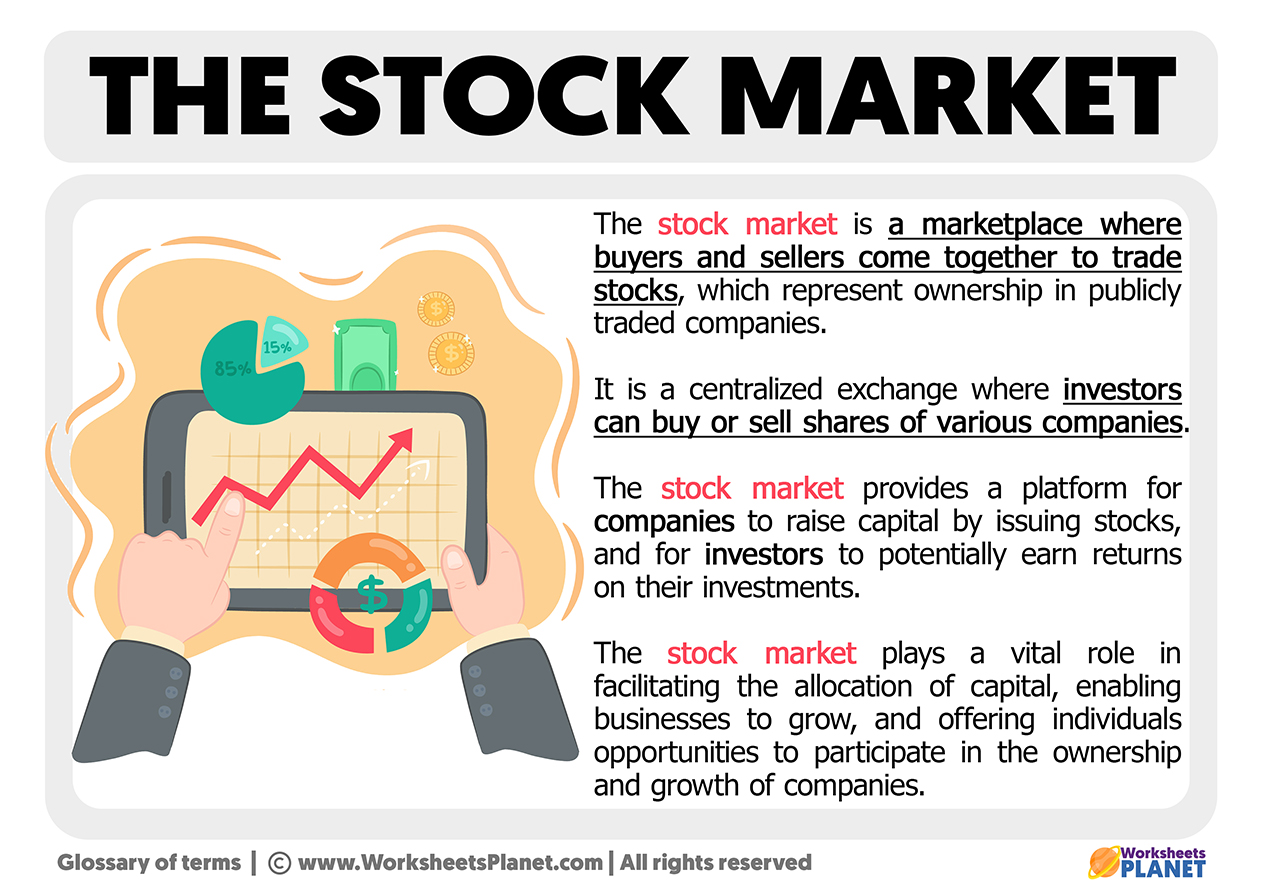
Fundamentally, the stock market is a sophisticated marketplace designed to facilitate the exchange of ownership stakes (shares) in companies. Imagine a vast, global bazaar where millions of participants—individual investors, institutional funds, pension plans, hedge funds, and more—converge with the singular purpose of buying or selling company shares. This interaction of supply and demand determines the price of each stock at any given moment. Companies initially issue shares to the public in what is known as the primary market (e.g., through an Initial Public Offering or IPO) to raise capital for growth, expansion, or debt repayment. Once these shares are issued, they are then traded among investors in the secondary market, which is what most people refer to when they talk about “the stock market.” This secondary market provides liquidity, allowing investors to buy and sell existing shares, making investment in companies an attractive and accessible option. Without a robust secondary market, fewer people would be willing to invest in IPOs, as they would have no easy way to exit their positions.
Reflecting Economic Health and Sentiment
Beyond its transactional role, the stock market acts as a highly sensitive economic indicator. Its performance often mirrors the broader economic landscape. A booming stock market, characterized by rising share prices and high trading volumes, typically reflects investor optimism about corporate earnings, economic growth, and future prosperity. Conversely, a declining market, often called a bear market, can signal underlying economic weaknesses, impending recessions, or a general lack of confidence among investors. However, it’s crucial to remember that the market is also forward-looking, often anticipating economic shifts months in advance. It’s a dynamic interplay between tangible economic data (like GDP, unemployment rates, inflation) and intangible elements like investor sentiment, fear, and greed. This collective psychological state can sometimes lead to market movements that seem disconnected from immediate economic realities, creating periods of irrational exuberance or undue pessimism.
A Mechanism for Capital Formation and Wealth Creation
The stock market serves two profoundly important functions for capitalism: capital formation for businesses and wealth creation for investors. For companies, especially those with ambitious growth plans, the stock market is an unparalleled source of capital. By selling ownership stakes (shares), companies can raise billions of dollars without incurring debt, funding innovation, research, development, and expansion. This ability to access public capital markets is a cornerstone of modern corporate finance, enabling job creation and technological advancement. For individuals and institutions, the stock market offers a powerful avenue for wealth creation. Through stock appreciation (when a stock’s price increases) and dividends (portions of company profits distributed to shareholders), investors can grow their capital over time. This makes the stock market a vital tool for retirement planning, long-term savings, and building intergenerational wealth, albeit with inherent risks.
Key Components and Types of Stock Markets
To fully appreciate what “the market in stocks” entails, it’s essential to understand its structural components, how different market segments are categorized, and the regulatory frameworks that govern them.
Exchanges and Trading Platforms
The heart of the stock market lies in its exchanges and trading platforms. These are the organized venues where stocks are listed and traded. Historically, exchanges were physical trading floors where brokers shouted orders, but today, most trading is electronic, executed at lightning speed by sophisticated algorithms and computer networks. The world’s largest and most influential exchanges include the New York Stock Exchange (NYSE) and NASDAQ in the U.S., the London Stock Exchange (LSE) in the UK, the Tokyo Stock Exchange (TSE) in Japan, and the Shanghai Stock Exchange (SSE) in China, among many others. Each exchange has its own listing requirements, rules, and operating hours. Beyond these major exchanges, there are also various alternative trading systems (ATS) and over-the-counter (OTC) markets, which facilitate trading in securities not listed on major exchanges or for less liquid assets. Brokers act as intermediaries, connecting individual investors to these vast networks, executing buy and sell orders on their behalf.
Market Capitalization and Indices
Stocks are often categorized by their “market capitalization,” which is the total value of a company’s outstanding shares (share price multiplied by the number of shares). Companies are generally classified as:
-
Large-cap: Companies with market caps typically above $10 billion (e.g., Apple, Microsoft). These are generally mature, stable companies.
-
Mid-cap: Companies with market caps between $2 billion and $10 billion. They often offer a balance of growth potential and stability.
-
Small-cap: Companies with market caps below $2 billion. These tend to be younger, growing companies with higher risk but also higher potential returns.
-
Micro-cap/Nano-cap: Even smaller companies, often highly speculative.
Stock market indices are crucial barometers that track the performance of a specific segment of the market or the market as a whole. They are portfolios of selected stocks that represent a particular market or economy. Iconic examples include:
-
S&P 500: Represents 500 large U.S. companies, widely considered the best gauge of large-cap U.S. equities.
-
Dow Jones Industrial Average (DJIA): Tracks 30 prominent U.S. industrial companies.
-
NASDAQ Composite: Heavily weighted towards technology and growth companies, often seen as an indicator for the tech sector.
-
FTSE 100: Represents the 100 largest companies listed on the London Stock Exchange.
These indices provide a quick snapshot of market health and are essential tools for investors and analysts to measure performance.
Regulators and Market Integrity

For “the market in stocks” to function efficiently and fairly, a robust regulatory framework is indispensable. Government bodies and self-regulatory organizations are tasked with overseeing the market to protect investors, maintain fair and orderly trading, and facilitate capital formation. In the United States, the Securities and Exchange Commission (SEC) is the primary federal agency responsible for enforcing federal securities laws, proposing new rules, and regulating the securities industry. Similar bodies exist globally, such as the Financial Conduct Authority (FCA) in the UK or the China Securities Regulatory Commission (CSRC). Their responsibilities include preventing fraud, insider trading, and market manipulation; ensuring transparency in corporate reporting; and setting standards for broker-dealers and exchanges. Without strong regulation, investor confidence would erode, leading to instability and a breakdown of the market’s fundamental purpose.
Dynamics of Market Movement
The stock market is a ceaselessly moving entity, with prices fluctuating constantly. Understanding the forces that drive these movements is key to appreciating its complexity and potential.
Supply and Demand Principles
At the most fundamental level, stock prices are governed by the classic economic principles of supply and demand. When there are more buyers than sellers for a particular stock, demand outstrips supply, pushing the price up. Conversely, when more investors want to sell a stock than buy it, supply exceeds demand, causing the price to fall. This dynamic is influenced by a myriad of factors, including:
-
Company-specific news: Earnings reports (better or worse than expected), product launches, mergers, acquisitions, management changes, and scandal.
-
Industry trends: Sector-wide shifts, technological advancements, or regulatory changes affecting an entire industry.
-
Economic data: GDP growth, inflation rates, interest rate decisions by central banks, employment figures, consumer confidence.
-
Analyst ratings: Changes in recommendations from financial analysts can sway sentiment.
Economic and Geopolitical Factors
Beyond company-specific and industry news, broader macroeconomic and geopolitical events exert significant influence on the overall stock market.
-
Interest Rates: Central bank decisions on interest rates are paramount. Higher rates can make borrowing more expensive for companies, potentially slowing growth, and also make fixed-income investments more attractive, diverting money away from stocks.
-
Inflation: High inflation erodes purchasing power and can increase operating costs for businesses, impacting profitability.
-
GDP Growth: A strong, growing economy generally supports corporate earnings and investor confidence, leading to a bullish market.
-
Geopolitical Events: Wars, political instability, trade disputes, and natural disasters can introduce significant uncertainty, leading to market volatility and downturns as investors seek safer assets.
-
Currency Fluctuations: For multinational corporations, exchange rate movements can impact their earnings when repatriated.
Investor Behavior and Psychology
While economic fundamentals are critical, the collective psychology of investors plays an equally powerful, and sometimes irrational, role in market movements.
-
Fear and Greed: These two primal emotions often drive significant market swings. Greed can fuel speculative bubbles, where asset prices detach from their intrinsic value, while fear can trigger panic selling, leading to sharp market corrections or crashes.
-
Herd Mentality: Investors often follow the crowd, buying into popular trends or selling during downturns, even if individual analysis suggests otherwise. This can amplify market movements.
-
Confirmation Bias: Investors tend to seek out information that confirms their existing beliefs, which can lead to overconfidence or an inability to adapt to changing market conditions.
-
Speculative Bubbles: Periods where asset prices rise rapidly and unsustainably, often driven by excessive speculation rather than fundamentals, eventually leading to a dramatic collapse. Understanding these behavioral biases can help investors make more rational decisions, especially during periods of high volatility.
Why Understanding “The Market” Matters for Investors
For any individual or institution looking to build wealth through investments, a thorough understanding of “the market in stocks” is not just beneficial—it’s essential. It underpins informed decision-making, effective risk management, and the ability to capitalize on opportunities.
Informed Decision-Making
Knowing how the stock market functions provides investors with the context necessary to make informed decisions. It allows them to differentiate between short-term noise and long-term trends, to evaluate investment opportunities more critically, and to align their portfolio with their personal financial goals and risk tolerance. An investor who understands market cycles, for instance, might avoid panic selling during a downturn, recognizing it as a temporary phase, or might even see it as an opportunity to buy undervalued assets. Conversely, an understanding of market exuberance can prompt an investor to take profits or rebalance a portfolio to reduce exposure to overvalued assets. This knowledge empowers investors to move beyond mere speculation and adopt a strategic, data-driven approach to their investments.
Risk Management
Investing in stocks inherently involves risk, but a deep understanding of the market allows investors to manage these risks more effectively. It helps distinguish between systemic risk (market-wide risk that cannot be diversified away, like economic recessions) and specific risk (risk related to a particular company or industry). With this knowledge, investors can construct diversified portfolios, spreading their investments across different industries, geographies, and asset classes to mitigate the impact of adverse events affecting any single holding. Furthermore, understanding market dynamics helps in setting realistic expectations for returns and potential drawdowns. It cultivates the discipline required to stick to an investment plan, avoiding emotional decisions that often lead to poor outcomes during volatile periods.
Identifying Opportunities
The stock market, with its constant fluctuations and evolving landscape, consistently presents opportunities for astute investors. An investor with a solid grasp of market fundamentals can identify undervalued companies, recognize emerging industry trends, or spot sectors poised for growth. For example, understanding the impact of technological disruption might lead an investor to allocate capital to innovative companies, while an awareness of demographic shifts could point towards opportunities in healthcare or consumer goods for aging populations. This knowledge also enables investors to adapt their strategies to changing market conditions—shifting from growth stocks to value stocks, or from domestic to international markets, depending on where the most compelling opportunities lie. It’s about being proactive and strategic, rather than reactive and emotional.

Conclusion
The “market in stocks” is a multifaceted and indispensable pillar of the global financial system. It is a powerful engine for capital formation, a sophisticated barometer of economic health, and a dynamic arena for wealth creation. From the complex interplay of supply and demand to the profound impact of global economics and human psychology, understanding this market requires continuous learning and a comprehensive perspective. For investors, grasping its core concepts, components, dynamics, and the rationale behind its movements is paramount for making informed decisions, managing risks effectively, and identifying genuine opportunities. Far from being a mere collection of companies or an abstract financial concept, the stock market is a living, breathing entity that reflects our collective economic aspirations, fears, and innovative spirit. Engaging with it thoughtfully and strategically is key to navigating the path to financial growth and security.
aViewFromTheCave is a participant in the Amazon Services LLC Associates Program, an affiliate advertising program designed to provide a means for sites to earn advertising fees by advertising and linking to Amazon.com. Amazon, the Amazon logo, AmazonSupply, and the AmazonSupply logo are trademarks of Amazon.com, Inc. or its affiliates. As an Amazon Associate we earn affiliate commissions from qualifying purchases.