
In the world of finance, few concepts are as foundational as market equilibrium. Whether you are a retail investor navigating the stock market, a business owner setting prices for a new product, or an individual trying to understand the fluctuations in the housing market, equilibrium is the invisible force that governs the movement of money.
At its simplest, market equilibrium is a state where the supply of a particular good or service matches the demand for it. When these two forces are in balance, the price remains stable. However, the financial world is rarely static. Markets are constantly shifting, reacting to new information, consumer preferences, and economic shocks. For anyone looking to master their personal finances or grow a business, understanding the mechanics of equilibrium is not just an academic exercise—it is a vital tool for making informed financial decisions.
1. The Core Mechanics: Demand, Supply, and the Price Discovery Process
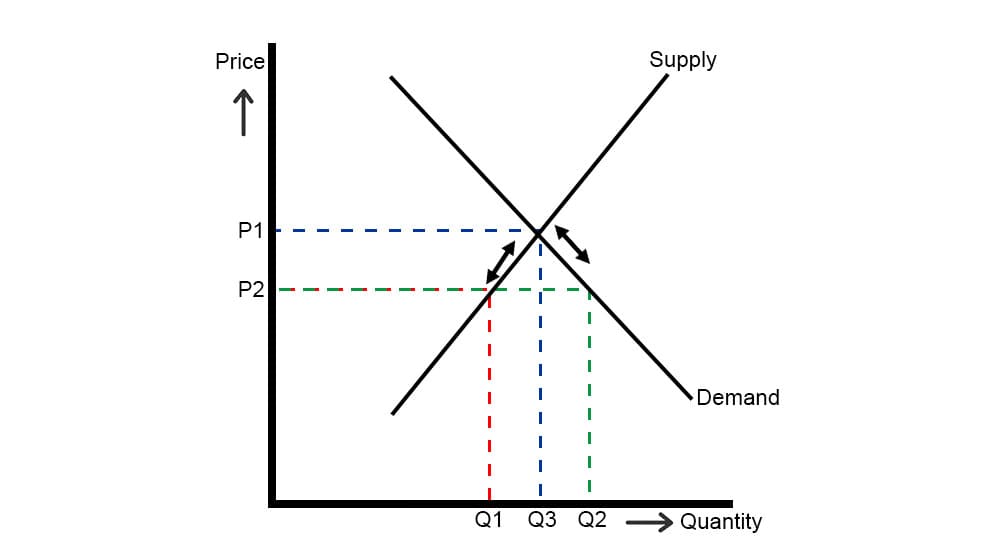
To understand market equilibrium, one must first understand the two pillars of economic activity: the Law of Demand and the Law of Supply. These two forces act as the “scissors” that cut the price of every asset in the financial world.
The Law of Demand and Consumer Behavior
In the context of money and finance, demand represents how much of a product or financial asset buyers are willing to purchase at various price points. Generally, as the price of an asset decreases, the quantity demanded increases. This is known as an inverse relationship. For an investor, this might mean buying more shares of a company when the price dips, or for a consumer, it might mean purchasing more of a product when it goes on sale.
The Law of Supply and Producer Incentives
On the other side of the equation is supply. Supply represents the amount of a good or service that producers or sellers are willing to offer at various prices. Unlike demand, supply has a direct relationship with price: as the price rises, producers are incentivized to supply more to the market to maximize profit. In the financial markets, this can be seen when high stock valuations encourage companies to issue more shares (secondary offerings) or when high interest rates encourage banks to offer more loans.
Finding the Equilibrium Point
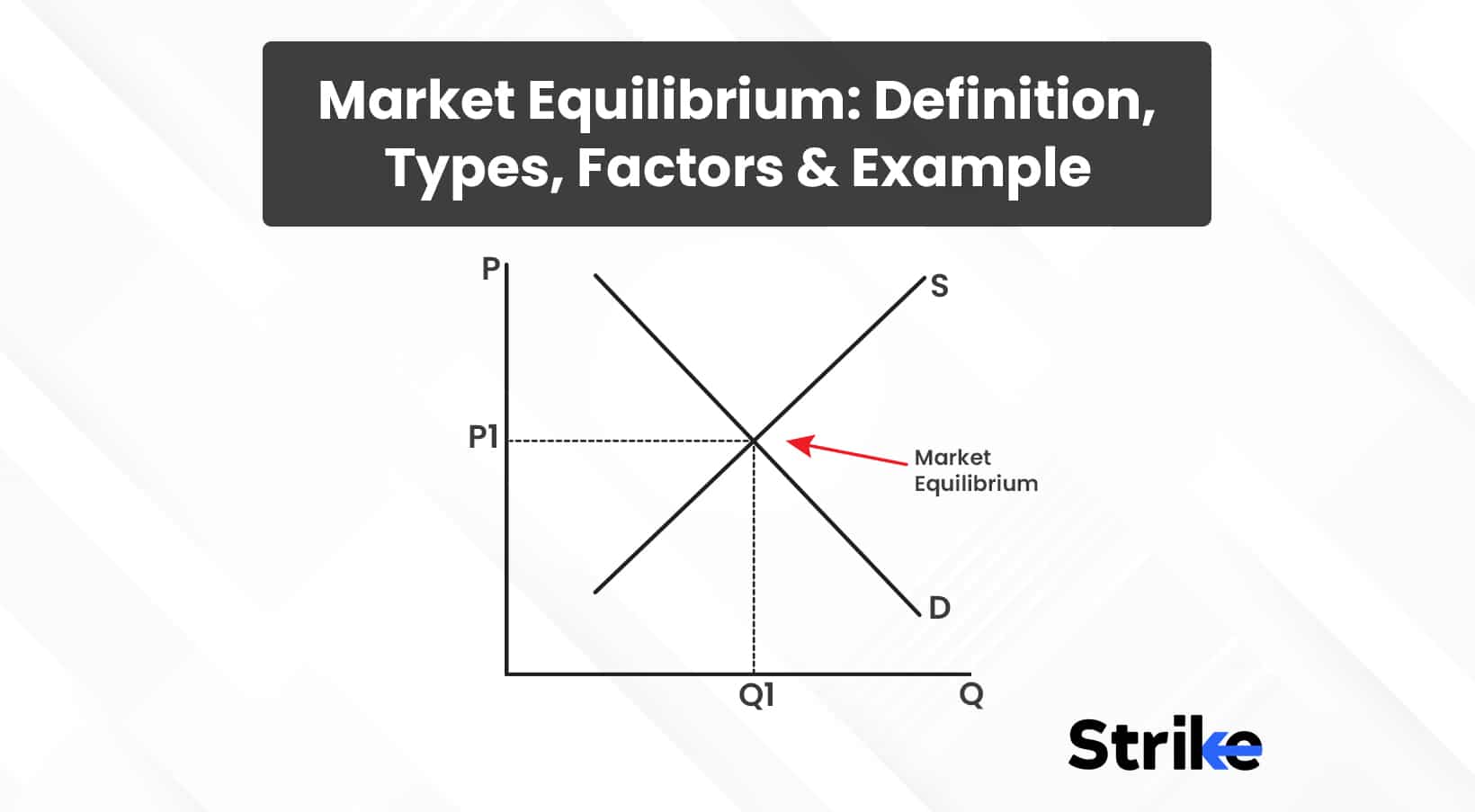
Market equilibrium occurs at the intersection of the demand and supply curves. At this specific point, the “Equilibrium Price” is established, and the “Equilibrium Quantity” is exchanged. There is no excess supply (surplus) and no unsatisfied demand (shortage). For a business finance professional, reaching this point is the goal of efficient pricing—ensuring that every unit produced is sold at the highest possible price the market will bear without leaving customers empty-handed.
2. Market Equilibrium in Investing and the Stock Market
In the realm of investing, market equilibrium takes on a more dynamic and high-stakes form. The stock market is perhaps the most visible example of a real-time “price discovery” engine, where millions of participants seek equilibrium every second.
The Bid-Ask Spread and Real-Time Balance
Every time you look at a stock quote, you are seeing the market’s attempt to find equilibrium. The “bid” represents the demand (the highest price buyers are willing to pay), and the “ask” represents the supply (the lowest price sellers are willing to accept). The actual trade price is the equilibrium point where a buyer and seller agree. In highly liquid markets, this spread is narrow, indicating that the market is efficient at finding equilibrium.
The Efficient Market Hypothesis (EMH)
A core theory in business finance is the Efficient Market Hypothesis, which suggests that stock prices always reflect all available information. In a perfectly efficient market, the price is always at equilibrium because any new information (like an earnings report or a geopolitical event) is instantly priced in by investors. If you are an investor who believes in EMH, you recognize that finding “undervalued” stocks is difficult because the market is constantly correcting itself toward a new equilibrium.
Arbitrage: Exploiting Temporary Disequilibrium
In the world of professional trading and hedge funds, “arbitrage” is the practice of profiting from temporary moments of disequilibrium. If a stock is trading for $100 on the New York Stock Exchange but $100.05 on the London Stock Exchange, a trader will buy in New York and sell in London. This action increases demand in New York and increases supply in London, quickly pushing both markets back toward a unified equilibrium price.
3. Forces of Change: Navigating Shifts and Disequilibrium
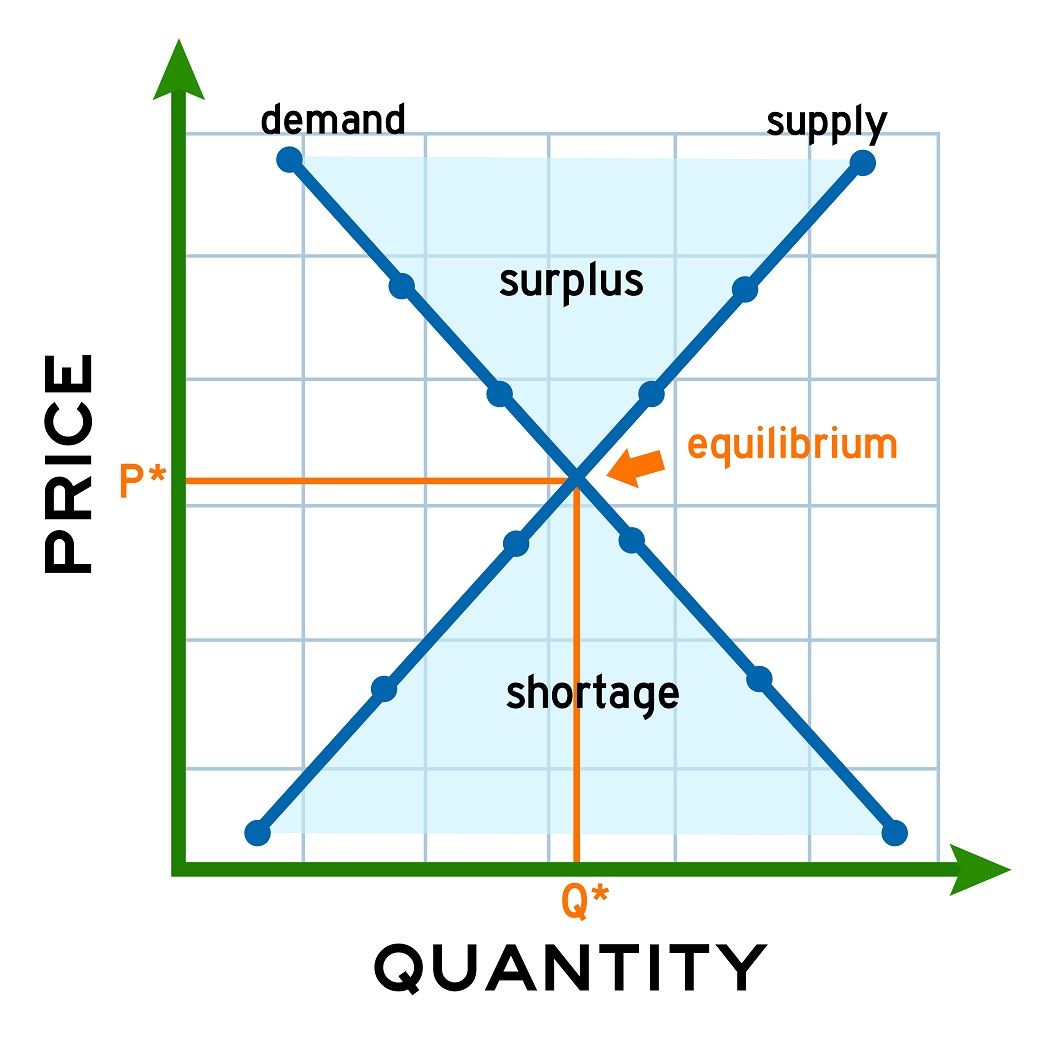
Market equilibrium is rarely a permanent state. It is a “moving target” that shifts based on external factors. Understanding these shifts is essential for managing personal wealth and predicting business trends.
The Impact of Surpluses and Shortages
When the current price is above the equilibrium level, a surplus occurs. In business finance, this leads to bloated inventories and forced markdowns, which can hurt a company’s bottom line. Conversely, when the price is below equilibrium, a shortage occurs. We saw this vividly during the post-pandemic era with semiconductor chips and automobiles; demand skyrocketed while supply plummeted, leading to massive price spikes as the market struggled to find a new equilibrium.
Exogenous Shocks and Market Sentiment
Market equilibrium can be disrupted by “exogenous shocks”—events that come from outside the immediate market. Examples include:
- Interest Rate Changes: When the Federal Reserve raises rates, the cost of borrowing increases. This shifts the demand for home loans downward, forcing the real estate market to find a lower equilibrium price.
- Technological Disruptions: A new, cheaper way to produce energy can shift the supply curve for electricity outward, leading to a lower equilibrium price for consumers.
- Consumer Sentiment: If investors suddenly become fearful (as seen during a market crash), demand for risky assets drops, and the equilibrium price of stocks can fall precipitously until buyers feel the price is “fair” again.
Elasticity and Price Sensitivity
For a business owner, understanding “elasticity” is crucial when navigating equilibrium. If your product is “inelastic” (like insulin or gasoline), consumers will still demand it even if the price rises. This gives the seller more power to set a higher equilibrium price. If a product is “elastic” (like a specific brand of luxury clothing), a small price increase might cause demand to vanish, forcing the equilibrium price back down.
4. Practical Applications for Business Finance and Strategy
For entrepreneurs and corporate executives, market equilibrium is the North Star for strategic planning. It informs everything from product launches to long-term capital investments.
Optimization of Pricing Strategies
Business finance isn’t just about accounting; it’s about positioning. A company must decide if they want to operate at a high-volume, low-price equilibrium (like Walmart) or a low-volume, high-price equilibrium (like Ferrari). By analyzing the equilibrium point of their specific niche, businesses can determine their “Price Ceiling” (the maximum consumers will pay) and their “Price Floor” (the minimum price needed to cover costs).
Scaling and Capacity Planning
When a business sees persistent shortages of its product, it is a signal that the market is in disequilibrium and that there is “money left on the table.” This signals a need for capital investment to increase supply. By expanding production capacity to meet the equilibrium quantity, a business can capture more market share and increase its total revenue.
Competitive Analysis and Market Entry
Before entering a new market or starting a side hustle, a savvy individual should analyze the existing equilibrium. Is the market oversaturated (excess supply)? If so, prices will be low, and profit margins will be thin. Is the market underserved (excess demand)? This represents a lucrative opportunity to enter the market, provide supply, and help the market reach a new equilibrium while pocketing the difference.
5. Why Market Equilibrium Matters for Your Personal Wealth Strategy
Finally, the concept of equilibrium is deeply personal. It affects how you save, how you spend, and how you build your long-term wealth.
Real Estate and the “Fair” Market Value
For most people, their home is their largest asset. The housing market is a classic study in equilibrium. When interest rates are low, demand increases, pushing the equilibrium price up. When a new housing development is built, supply increases, potentially stabilizing prices. Understanding whether your local market is in a state of “buyer’s equilibrium” or “seller’s equilibrium” can save you tens of thousands of dollars on a mortgage.
Labor Markets and Career Growth
Your salary is the equilibrium price of your labor. In the “Money” niche, we often talk about side hustles and income growth. If you have a skill that is in high demand but low supply (like specialized financial auditing or AI-driven data analysis), your “equilibrium wage” will be very high. If you want to increase your income, you must either find a market where demand is higher or acquire skills that make your personal “supply” more unique.
Rational Investing in a Volatile World
Understanding equilibrium helps prevent emotional investing. During a “market bubble,” prices are driven far above their fundamental equilibrium by speculation. Eventually, the “rubber band” snaps, and the price crashes back toward equilibrium. By focusing on the intrinsic value and the long-term balance of supply and demand, investors can avoid buying at the peak of disequilibrium and instead build a portfolio based on sustainable financial principles.
In conclusion, market equilibrium is the heartbeat of the financial system. It is the point where the desires of the buyer and the capabilities of the seller meet in a fair exchange. By mastering this concept, you gain a clearer lens through which to view the complexities of business finance, the volatility of the stock market, and the trajectory of your personal financial future. Knowledge of equilibrium is, in itself, a valuable asset in the pursuit of wealth and stability.
aViewFromTheCave is a participant in the Amazon Services LLC Associates Program, an affiliate advertising program designed to provide a means for sites to earn advertising fees by advertising and linking to Amazon.com. Amazon, the Amazon logo, AmazonSupply, and the AmazonSupply logo are trademarks of Amazon.com, Inc. or its affiliates. As an Amazon Associate we earn affiliate commissions from qualifying purchases.