
In the contemporary technological landscape, the question “what is mapped” has evolved far beyond the boundaries of physical geography and paper charts. In the digital realm, mapping represents the foundational process of organizing, connecting, and visualizing complex data structures to create meaning. Whether it is the billions of data points flowing through an API, the spatial coordinates guiding an autonomous vehicle, or the neural connections within a Large Language Model (LLM), mapping is the silent engine of the information age.
To understand what is being mapped today is to understand the very architecture of modern software, artificial intelligence, and global connectivity. Mapping is no longer just about where things are; it is about how things relate to one another in an increasingly interconnected ecosystem.

1. Data Mapping: The Invisible Infrastructure of Software
At its most fundamental level in technology, mapping refers to the process of creating data element linkages between two distinct data models. As businesses transition to cloud-based environments and multi-app ecosystems, data mapping has become the “Rosetta Stone” of the digital world.
Understanding Schema Mapping and Transformation
Data mapping begins with the schema—the blueprint of how information is organized within a database. When two systems need to talk to each other, they rarely speak the same language. For example, a customer’s name might be stored as “CustName” in a CRM but as “ClientFull_Name” in an accounting tool. “What is mapped” in this context is the logical connection that tells the software these two different labels represent the same human entity. Without precise schema mapping, data becomes siloed, leading to “dirty data” and systemic errors.
The Role of ETL in Modern Data Warehousing
The concept of mapping is central to ETL (Extract, Transform, Load) processes. In data warehousing, mapping defines the rules of transformation. It dictates how raw data from disparate sources—such as social media metrics, point-of-sale transactions, and website logs—is cleaned, formatted, and consolidated. By mapping these inputs into a unified warehouse, organizations can derive actionable insights that were previously hidden in the noise of fragmented data.
API Mapping: Connecting the Modern Web
Modern software is rarely a monolith; it is a collection of microservices connected via Application Programming Interfaces (APIs). API mapping involves defining how requests and responses are translated between different services. When you use a travel app to book a flight, a map is created between the app’s interface and the airline’s internal database. This real-time mapping ensures that a seat selection on your phone translates perfectly into a reserved coordinate in the airline’s server.
2. Geospatial Intelligence: Mapping the Physical World in High Definition
While data mapping handles the abstract, geospatial mapping handles the tangible. However, the tech industry has moved far beyond simple GPS coordinates. We are currently in the midst of a “Spatial Computing” revolution where the physical world is being digitized in three dimensions.
The Evolution of GIS (Geographic Information Systems)
GIS technology has transformed from static digital maps into dynamic, multi-layered information systems. Today, what is mapped includes everything from underground fiber-optic cables to real-time weather patterns and population density. Modern GIS uses “thematic mapping” to overlay data onto physical locations, allowing urban planners to simulate how a new skyscraper might affect wind patterns or how a flood might impact local infrastructure.
LiDAR and High-Definition Mapping for Autonomous Vehicles
One of the most intense areas of technological mapping today is in the development of autonomous vehicles (AVs). Standard GPS is accurate to a few meters, but a self-driving car needs accuracy to a few centimeters. This is achieved through LiDAR (Light Detection and Ranging) and HD Mapping. These maps are not just images; they are “point clouds”—millions of laser-pulsed dots that map the 3D geometry of every curb, lane marking, and traffic sign. In this niche, “what is mapped” is a permanent, high-fidelity digital twin of the road that the car uses to cross-reference its real-time sensor data.
Real-Time Spatial Data and the IoT
The Internet of Things (IoT) has added a temporal dimension to mapping. With billions of connected sensors, we are now mapping “flows.” We map the flow of traffic in smart cities, the movement of cargo in global supply chains, and even the occupancy levels of office buildings. This real-time mapping allows for “edge computing,” where data is processed locally at the sensor level to provide immediate feedback, such as rerouting a delivery truck before it hits a traffic jam.

3. Semantic Mapping and Knowledge Graphs in AI
In the realm of Artificial Intelligence, mapping takes on a cognitive dimension. As we move toward more sophisticated AI, the focus has shifted from simple data processing to “semantic mapping”—understanding the meaning and relationships between concepts.
How LLMs Use Vector Mapping
Large Language Models, such as GPT-4 or Claude, do not understand words in the way humans do. Instead, they use “word embeddings” or “vector mapping.” Every word or phrase is mapped to a high-dimensional mathematical space. Words with similar meanings are mapped closer together. When an AI generates a response, it is essentially navigating this multi-dimensional map to find the most logical “next point” in the conversation. This mathematical mapping of language is what allows AI to grasp nuance, tone, and context.
Knowledge Graphs: Structuring Unstructured Data
While LLMs are great at probability, they can struggle with factual consistency. This is where Knowledge Graphs come in. A Knowledge Graph maps entities (people, places, things) and the relationships between them (e.g., “Paris” is the “capital” of “France”). By mapping data in this “triplet” format (Subject-Predicate-Object), tech companies like Google and Microsoft create a web of facts. This allows search engines to provide direct answers rather than just a list of links, as the system “maps” your query to a specific node in its vast web of knowledge.
The Intersection of Ontologies and Machine Learning
In specialized fields like medicine or legal tech, mapping involves “ontologies”—formalized frameworks of categories and properties. In medical tech, mapping a patient’s symptoms to a massive ontology of diseases and genomic data can help doctors identify rare conditions. Here, what is mapped is the relationship between biological markers and clinical outcomes, powered by machine learning algorithms that can see patterns in the map that the human eye might miss.
4. Digital Twins and the Mapping of Reality
The pinnacle of modern mapping technology is the “Digital Twin.” This is a virtual representation that serves as the real-time digital counterpart of a physical object or process.
Industrial IoT and Predictive Maintenance
In manufacturing, engineers map every component of a jet engine or a wind turbine into a digital twin. Sensors on the physical object feed data to the digital map in real-time. By mapping the stresses, temperatures, and vibrations, companies can predict when a part will fail before it actually does. This “predictive mapping” saves billions in maintenance costs and prevents catastrophic failures by identifying the exact point on the map where wear and tear are occurring.
Urban Planning and the Metaverse
The concept of mapping is also the bedrock of the “Metaverse” and virtual reality. To create immersive environments, developers must map physical laws (gravity, light reflection) onto digital spaces. On a larger scale, cities like Singapore have created complete digital twins of their entire territory. This allows them to map the potential impact of rising sea levels or to test the efficiency of a new public transit route in a risk-free virtual environment before a single brick is laid.
Security Mapping: Visualizing the Attack Surface
In digital security, mapping is a defensive tool. Cybersecurity professionals use “attack surface mapping” to identify every entry point into a network—every device, every open port, and every user account. By mapping the network’s topology, security teams can visualize how a potential intruder might move through the system (lateral movement). This allows for proactive “threat mapping,” where vulnerabilities are patched based on their strategic importance within the network map.
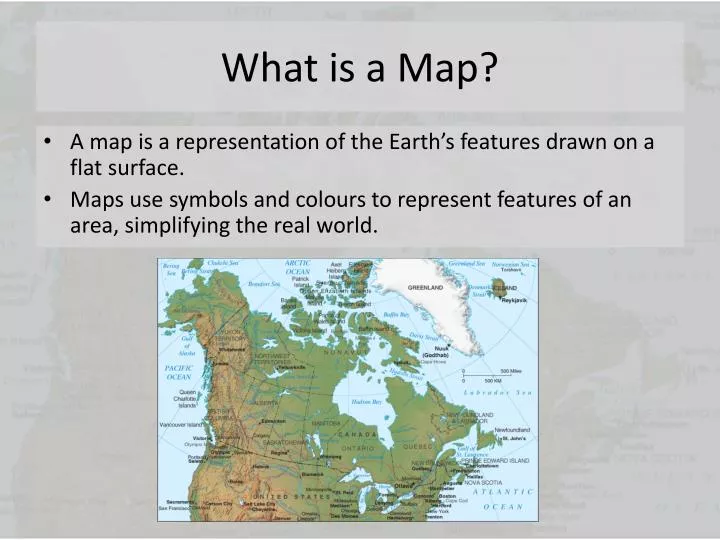
The Future of “What is Mapped”
As we look toward the future, the scope of what is mapped will continue to expand into increasingly abstract and microscopic domains. We are currently seeing the rise of “Brain Mapping” in neurotechnology, where startups are attempting to map the electrical impulses of the human brain to software interfaces. We are seeing “Quantum Mapping,” where the probabilistic states of qubits are mapped to solve problems in chemistry and physics that are currently unsolvable.
Ultimately, mapping is the process of turning the unknown into the known. In the tech industry, to map something is to gain the ability to analyze, manipulate, and optimize it. From the smallest line of code to the largest satellite array, the act of mapping is what allows us to navigate the complexity of the 21st century. As our tools for mapping become more precise—moving from 2D to 3D, and from static to real-time—our digital and physical realities will continue to merge, creating a world where every object, every thought, and every movement is part of a grand, interconnected map.
aViewFromTheCave is a participant in the Amazon Services LLC Associates Program, an affiliate advertising program designed to provide a means for sites to earn advertising fees by advertising and linking to Amazon.com. Amazon, the Amazon logo, AmazonSupply, and the AmazonSupply logo are trademarks of Amazon.com, Inc. or its affiliates. As an Amazon Associate we earn affiliate commissions from qualifying purchases.