
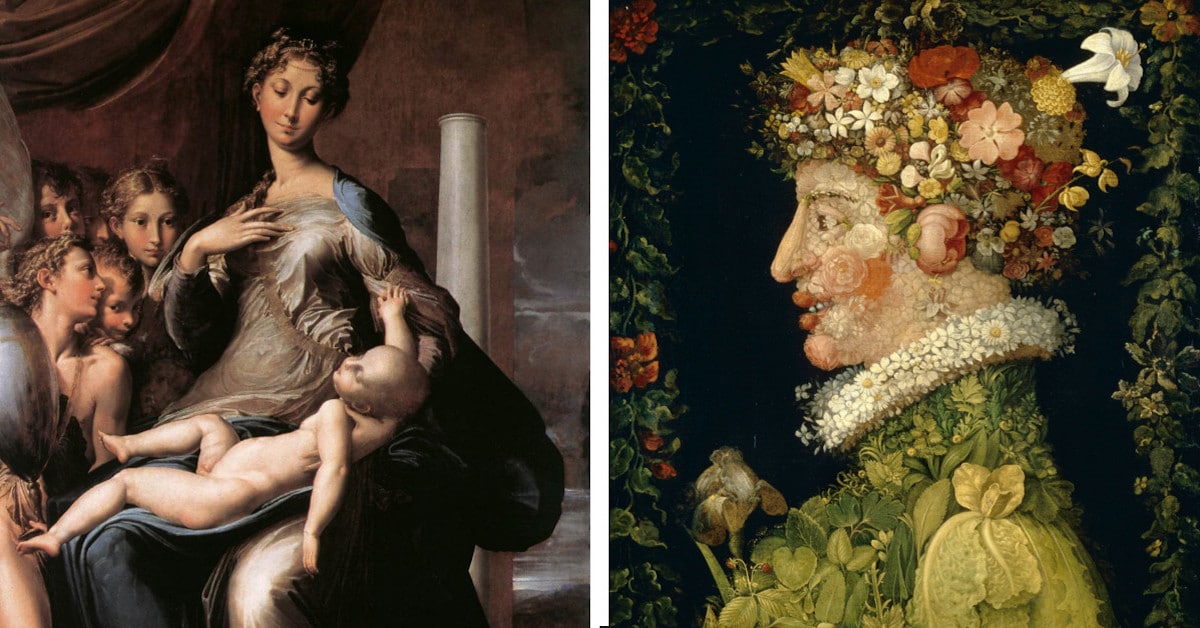
In the world of art history, Mannerism emerged in the late Renaissance as a reaction against the harmonious ideals of Leonardo da Vinci and Raphael. It favored artifice over nature, elongated forms over realistic proportions, and complex compositions over clarity. Today, this concept has transcended the galleries of the 16th century and found a provocative new home in the world of brand strategy and corporate identity.
As global markets become saturated with “blanded” identities—characterized by minimalist sans-serif fonts and predictable flat design—a new wave of “Brand Mannerism” is emerging. This style prioritizes a highly stylized, intentional, and often unconventional approach to branding that values “the way things are done” as much as “what is being done.” Understanding Mannerist style in a brand context is essential for strategists looking to differentiate their clients in an era where simplicity no longer guarantees attention.

The Evolution from Minimalism to Brand Mannerism
The last decade of branding was dominated by the cult of minimalism. Driven by the need for digital legibility and the rise of mobile-first interfaces, brands across every sector—from tech giants like Google to luxury houses like Burberry—stripped away their unique ornaments in favor of a clean, uniform aesthetic. While functional, this led to a phenomenon known as “blanding,” where distinct personalities were sacrificed for universal accessibility.
Moving Beyond the “Blanding” Era
Mannerist style in branding serves as the antithesis to this homogeneity. Just as the original Mannerist painters felt that the “perfection” of the High Renaissance left nowhere to go but toward exaggeration, modern designers are finding that minimalism has reached its logical conclusion. Brand Mannerism is a deliberate move back toward complexity. It is not about making things “easy” for the consumer; it is about making them “interesting.” It shifts the focus from efficiency to experience, signaling to the consumer that the brand is sophisticated enough to play with the rules rather than just follow them.
The Core Tenets of the Mannerist Approach
At its heart, Mannerist branding is defined by three core pillars: intentional artifice, sophisticated tension, and stylistic virtuosity. Unlike the minimalist approach, which seeks to disappear into the background to highlight a product’s utility, the Mannerist approach makes the brand identity itself a centerpiece. It uses “style” as a strategic moat. In this niche, the brand does not claim to be “natural” or “authentic” in a grassroots way; instead, it embraces its role as a carefully curated, highly engineered entity. This transparency about its own artifice creates a unique form of trust with a modern, media-savvy audience.
Key Characteristics of a Mannerist Brand Identity
Identifying a Mannerist brand requires looking beyond the surface level of a logo. It is found in the “manner” in which the brand expresses its values through visual and verbal language. This style is often polarizing, which is exactly why it works as a differentiation strategy.
Elongated Narratives and Complex Visuals
In art, Mannerism is famous for the “serpentine figure”—the unnatural, elongated twisting of the human body. In branding, this translates to elongated narratives. These brands don’t just tell you what they sell; they take you on a labyrinthine journey through their heritage, their philosophy, and their aesthetic world. Visually, this is manifested through complex typography that might challenge legibility, clashing color palettes that create “vibrancy tension,” and layouts that defy the traditional “F-pattern” of web reading. The goal is to slow the viewer down, demanding their full cognitive engagement.
Embracing Artificiality and Deliberate Stylization
While the modern marketing mantra is often “authenticity,” Mannerist branding leans into “hyper-reality.” It uses high-fashion photography, surrealist digital art, and overly formal copy to create a world that feels distinct from everyday life. This is particularly prevalent in the luxury and high-tech sectors. By leaning into artifice, a brand positions itself as a creator of culture rather than a mere participant. This stylization acts as a gatekeeper, attracting those who “get” the aesthetic and creating a sense of exclusive belonging among the brand’s community.

Strategic Implementation: When to Adopt a Mannerist Aesthetic
Choosing to adopt a Mannerist style is a high-stakes strategic decision. It is not a “one-size-fits-all” solution like minimalism. Because Mannerism is inherently divisive, it must be deployed with a clear understanding of the market landscape and the target demographic.
Target Audience and Psychographics
Mannerist branding is most effective when targeting “cultural pioneers” or “highly discerning specialists.” These are consumers who have grown weary of the mainstream and are looking for signals of high-level craftsmanship and intellectual depth. If your target audience values efficiency above all else (e.g., a discount grocery app), Mannerism will likely frustrate them. However, if your audience views their purchases as an extension of their curated identity (e.g., boutique skincare, high-end fintech, or artisanal hardware), a Mannerist approach signals that your brand operates on their level of sophistication.
Differentiating in Overcrowded Markets
In a “Red Ocean” market where every competitor looks and sounds the same, Mannerism is the ultimate disruptor. By intentionally breaking the industry’s established design codes, a brand can claim a “Category of One” status. For example, if every fintech brand uses “trust-building blue” and rounded corners, a Mannerist fintech brand might use “acid green,” sharp angles, and Victorian-inspired typography. This visual “incorrectness” serves a functional purpose: it forces the market to look. Once the brand has captured that attention, it can then use its sophisticated narrative to justify its unconventional choices.
Case Studies in High-Fashion and Digital-First Mannerism
To see Mannerism in action, we can look at brands that have successfully moved away from the middle ground to embrace a more distorted, stylized reality. These brands prove that complexity can be a powerful driver of brand equity.
Luxury Markets and the Return to Ornamentation
Gucci, particularly under the creative direction of Alessandro Michele, provided a masterclass in Brand Mannerism. While other luxury brands were stripping back their logos, Gucci leaned into maximalism, historical references, and “clashing” aesthetics. They replaced the “perfection” of traditional luxury with a sophisticated, intellectual messiness. This wasn’t accidental; it was a deliberate “manner” of presenting the brand as a living, breathing archive of culture. The result was a massive surge in brand relevance among younger, fashion-forward demographics who felt that minimalism had become a corporate uniform.
Modern Tech Brands Breaking the Grid
In the B2B tech space, we are seeing Mannerist style emerge in the form of “New Brutalism” and “Experimental UI.” Companies like MSCHF or certain Web3 startups reject the standard SaaS website template (headline on the left, image on the right). Instead, they use interactive elements that feel almost “broken” or glitchy, forcing the user to explore the site like a digital art gallery. This style signals that the company is at the bleeding edge of technology—so far ahead that they no longer need to adhere to the usability standards of the “Web 2.0” era. It is a flex of technical and creative virtuosity.
The Risks and Rewards of Mannerist Branding
While Mannerist style offers significant rewards in terms of differentiation and brand loyalty, it is not without its dangers. It is a “high-wire act” of branding that requires constant maintenance and a deep understanding of the line between “sophisticated” and “confusing.”
Balancing Complexity with Accessibility
The biggest risk of Mannerist style is total alienation. If a brand becomes too self-indulgent or too complex, it loses its ability to communicate its core value proposition. To avoid this, successful Mannerist brands often use a “Core and Crust” strategy. The “Crust” (the visual identity, the marketing campaigns, the social media presence) is highly Mannerist and experimental, designed to capture attention and build an aura. The “Core” (the product itself, the checkout process, the customer service), however, remains intuitive and functional. This ensures that the style attracts the customer without creating friction in the actual transaction.
Future-Proofing Your Brand’s Mannerist Expression
Style, by definition, is cyclical. The Mannerists of the 16th century eventually gave way to the Baroque, which favored even more drama and movement. Similarly, Brand Mannerism must evolve to stay relevant. To future-proof a Mannerist identity, a brand must ensure that its complexity is rooted in a deeper brand purpose rather than just following a visual trend. When the “manner” of the brand is a direct reflection of its internal “spirit,” the style feels earned rather than forced. As we move further into an AI-driven world where “perfect” design can be generated in seconds, the human-led, intentional “imperfections” of Mannerist style will likely become even more valuable as a hallmark of true brand craftsmanship.
aViewFromTheCave is a participant in the Amazon Services LLC Associates Program, an affiliate advertising program designed to provide a means for sites to earn advertising fees by advertising and linking to Amazon.com. Amazon, the Amazon logo, AmazonSupply, and the AmazonSupply logo are trademarks of Amazon.com, Inc. or its affiliates. As an Amazon Associate we earn affiliate commissions from qualifying purchases.