
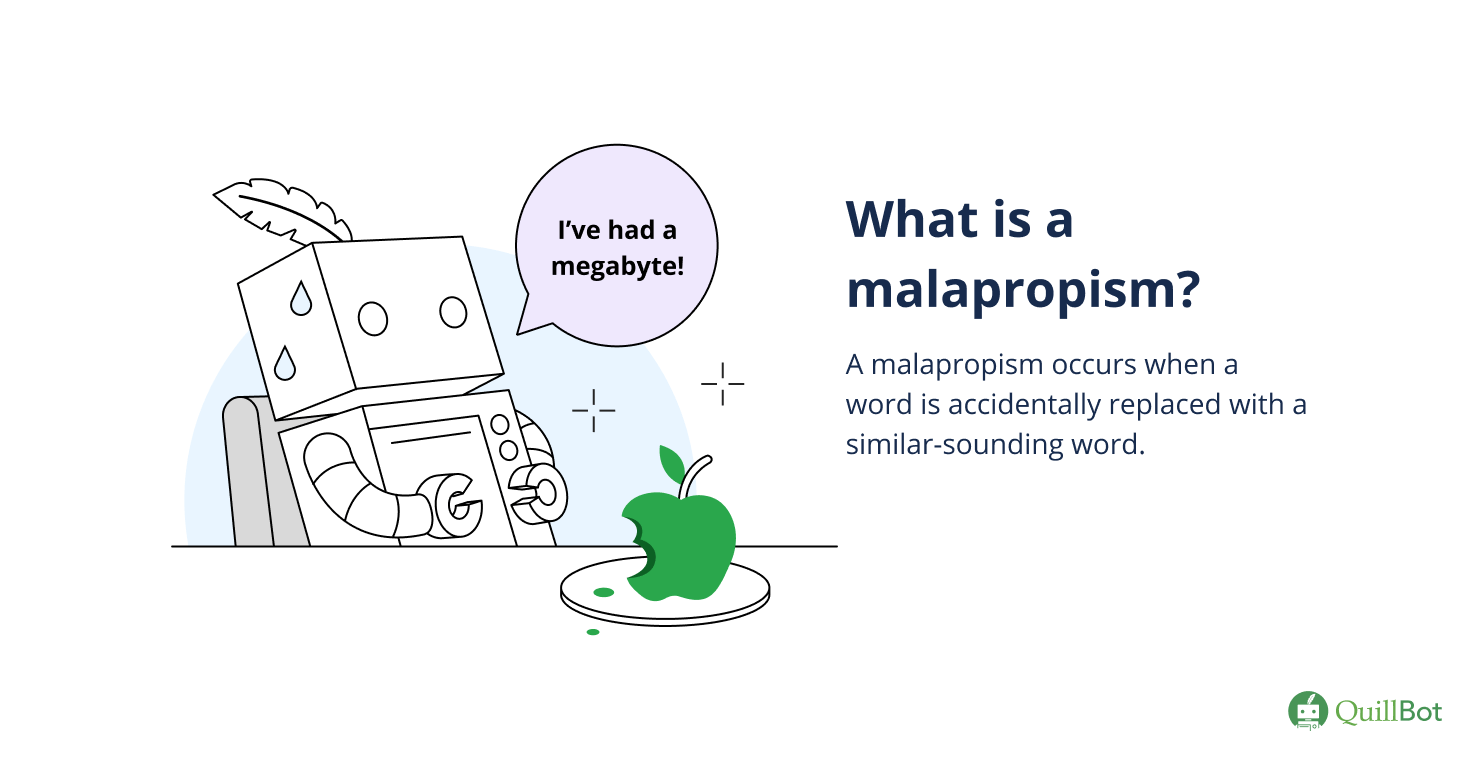
In the intricate world of brand communication, every word carries weight. From crafting compelling marketing copy to delivering confident corporate presentations, precision in language is paramount. Yet, an often-overlooked linguistic pitfall, the malapropism, has the potential to subtly, or dramatically, undermine a brand’s carefully constructed image. A malapropism occurs when an incorrect word is used in place of a word with a similar sound, resulting in a nonsensical, sometimes humorous, utterance that unintentionally distorts the intended meaning. While seemingly innocuous, the implications for personal and corporate branding, marketing integrity, and public perception can be significant. Understanding this linguistic phenomenon is not merely an academic exercise; it’s a critical component of robust brand strategy and effective communication management.
The Anatomy of a Malapropism
At its core, a malapropism is an error in word choice driven by phonetic similarity rather than semantic accuracy. Named after Mrs. Malaprop, a character from Richard Brinsley Sheridan’s 1775 play The Rivals, who frequently misused words to humorous effect, these blunders can arise from a speaker’s unfamiliarity with a word, nervousness, or simply a slip of the tongue. The humor often derived from malapropisms stems from the stark contrast between the speaker’s apparent confidence and the absurdity of their statement.
Sound-Alike Words, Different Meanings
The hallmark of a malapropism lies in the near-miss between the intended word and the actual word used. For instance, confusing “allegory” with “alligator,” or “deranged” with “arranged.” The speaker genuinely believes they are using the correct term, which adds to the comedic or confusing effect. This isn’t merely using the wrong word; it’s using a word that sounds like the right word but carries an entirely different, often incongruous, meaning. In a brand context, imagine a spokesperson describing a new product launch as an “historical detriment” instead of an “historical event,” or praising a team’s “unflappable derangement” when they mean “unflappable arrangement.” Such slips, even minor ones, can sow seeds of doubt, amusement, or outright confusion among an audience.
Unintentional Humor, Potentially Serious Consequences
While malapropisms often evoke laughter, particularly in casual settings, their impact on professional communication can range from mildly embarrassing to profoundly damaging. For a brand, humor that arises unintentionally at its expense undermines authority and credibility. A CEO who consistently misuses words might be perceived as less intelligent, less prepared, or less articulate, directly impacting investor confidence or public trust. In marketing, a malapropism in an advertisement or campaign slogan could lead to misinterpretation, ridicule, or even accusations of incompetence, diluting the message and weakening the brand’s standing. The humor generated by a malapropism in a professional setting is rarely beneficial; instead, it often serves as a distraction from the core message and the brand’s intended persona.
Malapropisms in the Brand Landscape
The repercussions of malapropisms extend far beyond simple linguistic errors, penetrating the very fabric of a brand’s identity and market perception. In an era where communication is instantaneous and often permanent through digital records, a single malapropism can echo across social media, be picked up by news outlets, and indelibly stain a brand’s reputation.
Eroding Professionalism and Credibility
A brand’s professionalism is built on consistency, clarity, and competence in all its communications. When a key representative – a CEO, a marketing director, or a public relations specialist – commits a malapropism, it can instantly erode the perception of professionalism. Imagine a financial advisor discussing “liquid assaults” instead of “liquid assets,” or a tech company CEO touting their product’s “irreconcilable incompatibility” instead of “irreproachable compatibility.” These errors, however unintentional, suggest a lack of attention to detail, a superficial understanding of language, or even a deficiency in command over the subject matter. Such perceptions directly impact credibility, making it harder for the brand to gain trust, influence decisions, or maintain its authoritative voice in its respective industry. Clients and stakeholders expect a certain level of linguistic precision and sophistication from reputable brands, and malapropisms can violate that expectation.
Distorting Marketing Messages
Marketing is fundamentally about crafting and disseminating clear, persuasive messages. A malapropism can sabotage this effort entirely. If an advertisement, a press release, or a social media post contains a word error, the intended message can be lost, misunderstood, or even turned into something contradictory. A campaign designed to convey innovation might inadvertently communicate confusion if a key phrase contains a malapropism. For example, a company promising to “reconstruct your past” when they mean “re-construct your future” could face legal challenges or consumer backlash for misleading claims. Beyond direct misinterpretation, a malapropism can also make a brand’s communication appear amateurish or rushed, undermining the effort and investment put into strategic marketing. It can become the focal point of discussion, overshadowing the actual product or service being promoted, and drawing negative attention that distracts from the brand’s value proposition.
Impact on Personal Branding

For individuals operating within a corporate structure, especially those in leadership or public-facing roles, personal branding is intrinsically linked to the overall corporate identity. A professional’s ability to articulate ideas clearly and accurately directly contributes to their personal brand as an expert, thought leader, or reliable figure. A recurring pattern of malapropisms can damage this personal brand, casting doubt on their intellectual rigor or communication prowess. This, in turn, reflects poorly on the organizations they represent. A sales executive known for their malapropisms might struggle to close deals, as clients may subconsciously question their attention to detail or understanding of complex terms. For entrepreneurs and small business owners, whose personal brand is often synonymous with their company’s brand, such linguistic slips can have an even more immediate and profound negative impact on their ability to attract investors, customers, or talent.
Safeguarding Your Brand Against Malapropisms
Given the potential damage, proactive measures are essential for any brand committed to maintaining a polished, credible image. Preventing malapropisms is not about stifling creativity; it’s about ensuring clarity and precision in all external and internal communications.
The Role of Clear Communication Guidelines
Establishing comprehensive communication guidelines is a foundational step. These guidelines should go beyond simple grammar and spelling rules, delving into brand voice, approved terminology, and common pitfalls. For example, a company might identify a list of frequently confused words pertinent to its industry (e.g., “affect” vs. “effect,” “compliment” vs. “complement”) and provide clear examples of their correct usage. Regular reviews of internal and external communications against these guidelines can catch errors before they go public. Incorporating a mandatory review process for all public-facing content, involving multiple sets of eyes, especially those with strong editorial skills, can significantly reduce the risk of linguistic blunders.
Training and Media Preparedness
For spokespersons, executives, and anyone representing the brand publicly, media training is invaluable. This training should not only focus on message delivery and body language but also specifically address linguistic accuracy. Practicing speeches, presentations, and Q&A sessions can help identify areas where word choice might be problematic. Role-playing scenarios, where participants are intentionally thrown off-script, can build resilience and ensure that even under pressure, clear and correct language is used. Furthermore, encouraging a culture of continuous learning and providing resources for improving vocabulary and communication skills within the organization can empower employees to be better brand ambassadors. This includes promoting the use of dictionaries and thesauruses and fostering an environment where asking for clarification on word usage is encouraged.
Leveraging Editorial Oversight
No piece of brand communication, whether a press release, an advertising script, a website update, or a social media post, should ever go live without thorough editorial oversight. This involves professional proofreaders and editors who are trained to spot not just grammatical errors and typos, but also subtle malapropisms that spell-checkers might miss. An AI-powered grammar tool can catch some obvious mistakes, but human editors possess the nuanced understanding of context and meaning required to identify a malapropism (which is technically a correctly spelled word used in the wrong context). Investing in dedicated editorial resources or outsourcing to professional copy editors ensures that every public-facing message is meticulously vetted for clarity, accuracy, and adherence to brand standards, providing a crucial last line of defense against linguistic missteps.
The Strategic Use (and Misuse) of Wordplay
While accidental malapropisms are detrimental, wordplay, when executed intentionally and skillfully, can be a powerful tool in branding and marketing. The key distinction lies in intent and audience reception.
Intentional Humor vs. Accidental Blunders
Some brands successfully integrate playful language, puns, or even subtle misuses of words for comedic effect. This is a deliberate creative choice, designed to resonate with a specific audience and reinforce a particular brand personality – perhaps quirky, witty, or irreverent. When humor is intentional, it fosters engagement and memorability. For instance, a fast-food chain might use a pun in their slogan to make their brand more approachable. However, there’s a fine line between clever wordplay and an accidental malapropism. The former enhances the brand; the latter detracts from it. Intentional wordplay requires a deep understanding of language, cultural context, and target audience to ensure the humor lands correctly and doesn’t inadvertently cause confusion or offense. It should be consistent with the brand’s overall tone and identity, and never at the expense of clarity about the product or service.

Case Studies: When Words Go Wrong (or Right)
Historically, various public figures have become known for their malapropisms, often to their detriment. Yogi Berra’s famous “It’s déjà vu all over again” is a celebrated malapropism that, while grammatically redundant, has become endearing due to his folksy persona and athletic achievements, often used as an example of charming eccentricity rather than a communication failure. However, in corporate settings, such leeway is rarely granted. A classic example of words “going wrong” might involve a political candidate proclaiming their “fidelity” to their constituents while meaning “fiduciary” responsibility, potentially creating distrust.
Conversely, brands that excel use words with precision. Consider Apple’s marketing – clean, concise, and intentional language that leaves no room for misinterpretation. Their brand identity is built on clarity, elegance, and innovation, all reflected in their communication style. Any malapropism from Apple’s executives would be starkly out of character and could seriously undermine their carefully cultivated image. This demonstrates that a commitment to linguistic accuracy is not merely about avoiding mistakes, but about reinforcing core brand values and maintaining a reputation for excellence and thoughtfulness in every interaction.
aViewFromTheCave is a participant in the Amazon Services LLC Associates Program, an affiliate advertising program designed to provide a means for sites to earn advertising fees by advertising and linking to Amazon.com. Amazon, the Amazon logo, AmazonSupply, and the AmazonSupply logo are trademarks of Amazon.com, Inc. or its affiliates. As an Amazon Associate we earn affiliate commissions from qualifying purchases.