
The concept of force is fundamental to our understanding of the physical world. From the gentle push of a hand to the immense power of a supernova, forces are ubiquitous. However, when we discuss forces, it’s crucial to understand not just their existence but also their magnitude. Magnitude, in the context of force, refers to the strength or intensity of that force. It quantifies how much of a push or pull is being exerted. Without a defined magnitude, a force is an incomplete description, leaving us unable to predict its effects or compare it to other forces. This article delves into the essence of force magnitude, exploring its definition, its measurement, and its profound implications across various scientific and engineering disciplines.

The Scalar Nature of Magnitude
While force is fundamentally a vector quantity, possessing both direction and magnitude, it is the magnitude that often receives primary attention when initially understanding its impact. Understanding magnitude in isolation allows for a foundational grasp before introducing the complexities of directionality.
Defining Magnitude: More Than Just a Number
At its core, magnitude is the numerical value assigned to a force. It tells us how much force is acting. For instance, when you lift a box, the force you exert has a magnitude. This magnitude is directly related to the effort required. A heavier box demands a greater magnitude of force to lift than a lighter one. Similarly, the force that propels a rocket into space has an astronomically higher magnitude than the force of gravity pulling you to your chair.
Magnitude is a scalar quantity. This means it is described solely by a number and a unit, without any directional component. While the direction of a force dictates where the effect will be felt (e.g., pushing a door open versus pulling it shut), the magnitude dictates how strongly that effect will manifest. A force of 10 Newtons (N) pushing a car eastward is stronger than a force of 5 N pushing the same car eastward. The direction is the same, but the magnitudes differ, leading to different accelerations and outcomes.
Units of Measurement: Quantifying Force
To quantify force magnitude, we rely on standardized units. The most widely accepted unit in the International System of Units (SI) is the Newton (N). One Newton is defined as the force required to accelerate a mass of one kilogram by one meter per second squared (1 kg⋅m/s²). This definition itself highlights the direct relationship between force, mass, and acceleration, all interconnected concepts where magnitude plays a pivotal role.
Other units of force magnitude exist, though they are less common in scientific contexts. In the imperial system, the pound-force (lbf) is often used. One pound-force is approximately equal to 4.448 Newtons. Understanding these different units is important for working with data from various sources and ensuring consistent calculations.
Measuring Force Magnitude: Tools and Techniques
The ability to accurately measure force magnitude is critical for scientific research, engineering design, and everyday applications. Various instruments have been developed to achieve this, each suited for different scales and precision requirements.
Force Sensors and Transducers
At the heart of force measurement lie force sensors and transducers. These devices convert mechanical force into an electrical signal, which can then be measured and interpreted.

- Strain Gauges: These are perhaps the most common type of force sensor. A strain gauge is a thin, flexible strip of material that changes its electrical resistance when stretched or compressed. When a force is applied to a structure containing strain gauges, it deforms slightly. This deformation changes the resistance of the strain gauge, and by measuring this change, the applied force can be calculated. They are highly versatile and can be incorporated into various load cells and force plates.
- Piezoelectric Sensors: These sensors utilize materials that generate an electrical charge when subjected to mechanical stress. The magnitude of the charge produced is directly proportional to the applied force. Piezoelectric sensors are known for their fast response times and are often used in applications requiring the measurement of dynamic forces, such as impacts or vibrations.
- Hydraulic and Pneumatic Load Cells: These systems use fluid pressure to measure force. A hydraulic load cell uses a fluid (like oil) trapped in a cylinder. When a force is applied, it compresses the fluid, and the resulting pressure can be measured and related to the force. Pneumatic systems work similarly but use compressed air. These are robust and can handle very large forces.
- Electromagnetic Force Sensors: These sensors use magnetic principles. For instance, a force can be applied to a coil within a magnetic field, generating a counteracting magnetic force. By measuring the current required to balance the applied force, its magnitude can be determined.
Applications in Diverse Fields
The accurate measurement of force magnitude is not an academic exercise; it has tangible and critical applications across numerous fields.
- Engineering and Construction: When designing bridges, buildings, or aircraft, engineers must precisely calculate the magnitude of forces the structures will encounter. This includes static forces (like the weight of the structure itself and its occupants) and dynamic forces (like wind loads, seismic activity, or the forces generated during flight). Overestimating or underestimating these magnitudes can have catastrophic consequences. Load cells are routinely used in material testing to determine the tensile strength and compressive strength of materials.
- Automotive Industry: The development of airbags, anti-lock braking systems (ABS), and electronic stability control relies heavily on understanding the magnitude of forces involved in vehicle dynamics, crashes, and braking maneuvers. Force sensors are integral to crash test dummies, providing vital data on occupant safety.
- Sports Science: In athletics, understanding the magnitude of forces exerted by athletes is crucial for training, performance analysis, and injury prevention. Force plates are used to measure the impact forces during running, jumping, and landing, helping coaches optimize techniques and athletes minimize stress on their bodies.
- Medical Devices: The precise application of force is vital in many medical devices, such as prosthetics, surgical robots, and rehabilitation equipment. Force sensors ensure that the correct magnitude of force is applied to avoid tissue damage and achieve therapeutic goals.
- Robotics: For robots to interact safely and effectively with their environment, they need to sense and control the magnitude of the forces they exert. This is particularly important for robots working alongside humans, where precise force control prevents injury.
The Significance of Magnitude in Understanding Force Dynamics
While direction is what tells us how a force will act, magnitude tells us how much of that action will occur. This distinction is fundamental to comprehending the dynamics of how objects move and interact.
Force and Motion: Newton’s Laws
Sir Isaac Newton’s laws of motion are cornerstone principles that describe the relationship between force and motion. The magnitude of force is central to these laws:
- Newton’s First Law (Law of Inertia): An object at rest stays at rest, and an object in motion stays in motion with the same speed and in the same direction unless acted upon by an unbalanced net force. The “unbalanced net force” implies a resultant force with a non-zero magnitude. If the forces acting on an object perfectly cancel each other out (meaning the net force has zero magnitude), its state of motion will not change.
- Newton’s Second Law (Law of Acceleration): This law directly quantifies the relationship between force, mass, and acceleration: F = ma. Here, ‘F’ represents the net force acting on an object, ‘m’ is its mass, and ‘a’ is its acceleration. This equation unequivocally demonstrates that the magnitude of the acceleration produced is directly proportional to the magnitude of the net force applied and inversely proportional to the object’s mass. A larger force magnitude results in a larger acceleration magnitude (assuming constant mass), and vice versa.
- Newton’s Third Law (Law of Action-Reaction): For every action, there is an equal and opposite reaction. The “equal” here refers to the magnitude of the forces. When object A exerts a force on object B, object B exerts a force of the same magnitude back on object A, but in the opposite direction. The magnitudes are identical, reinforcing the importance of this scalar value.
Comparing and Contrasting Forces
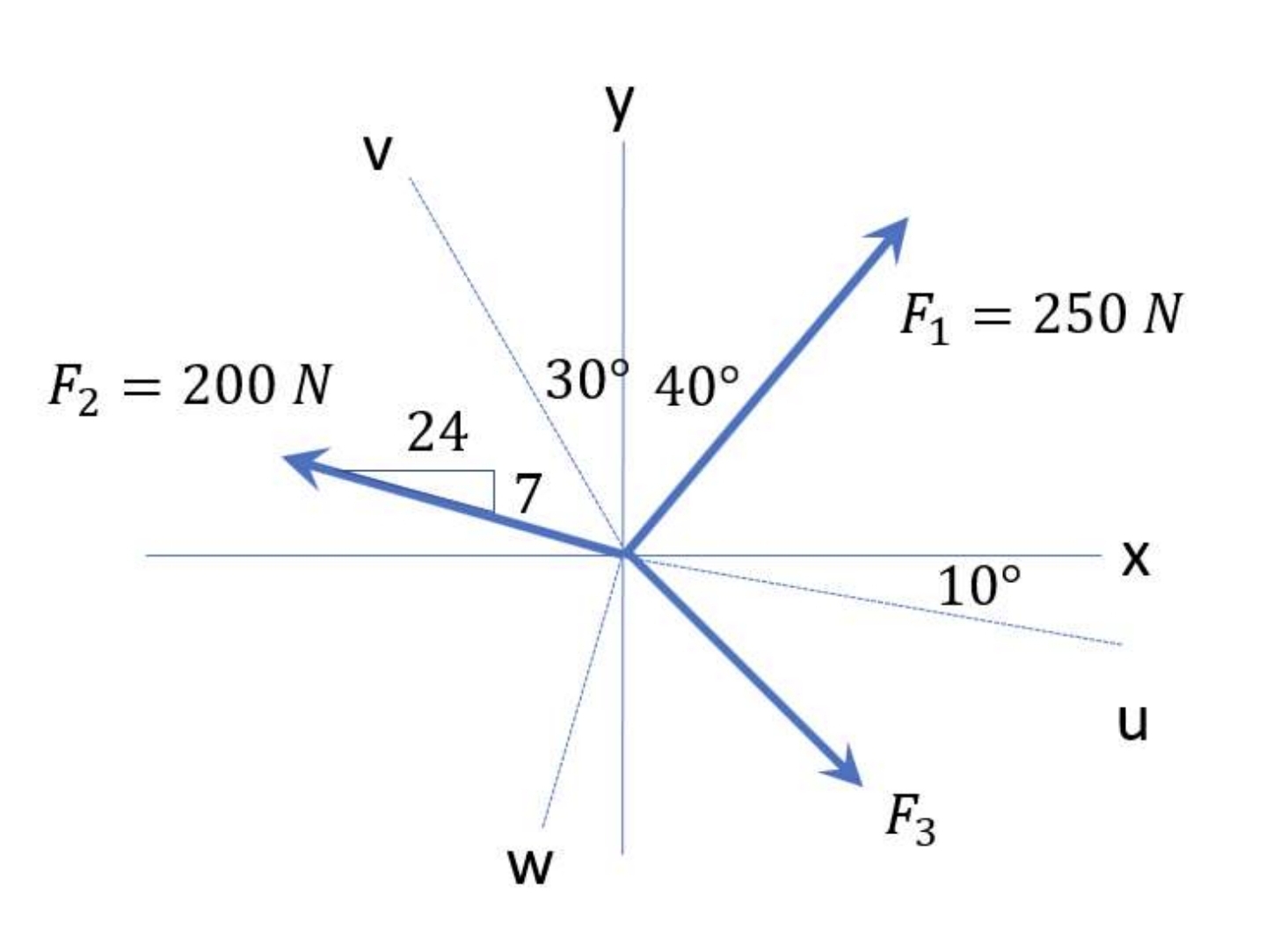
The concept of magnitude allows us to directly compare the strength of different forces. This is essential for predicting outcomes. For instance, if two tug-of-war teams are pulling on a rope, the team exerting a greater magnitude of force will win, assuming all other factors are equal. In physics and engineering problems, we often encounter multiple forces acting on an object. To understand the object’s ultimate motion, we must determine the net force, which is the vector sum of all individual forces. The magnitude of this net force is what determines the object’s acceleration according to Newton’s second law.
Thresholds and Effects
Many physical phenomena are triggered when a force exceeds a certain magnitude threshold. For example:
- Structural Integrity: Materials have specific strength limits. If a force exceeding this limit is applied, the material will deform permanently or fracture. The magnitude of the applied force is directly compared to the material’s yield strength or ultimate tensile strength.
- Friction: The force of static friction, which prevents an object from moving, has a maximum magnitude. Only when the applied force exceeds this maximum static friction magnitude will the object begin to slide. Once sliding, kinetic friction takes over, which also has a specific magnitude.
- Biological Systems: In biology, cells and tissues can only withstand certain magnitudes of pressure or tension before damage occurs. Understanding these force magnitudes is crucial in biomechanics and medical device design.
In conclusion, the magnitude of a force is its quantitative measure of strength. It is a scalar value that, when understood alongside direction, provides a complete picture of a force’s potential impact. From the fundamental laws of physics that govern the universe to the intricate designs of modern technology and the delicate balance of biological systems, the concept of force magnitude is an indispensable element in our scientific and engineering endeavors. Its accurate measurement and comprehension are not merely academic pursuits but are fundamental to innovation, safety, and our ongoing quest to understand and manipulate the physical world.
aViewFromTheCave is a participant in the Amazon Services LLC Associates Program, an affiliate advertising program designed to provide a means for sites to earn advertising fees by advertising and linking to Amazon.com. Amazon, the Amazon logo, AmazonSupply, and the AmazonSupply logo are trademarks of Amazon.com, Inc. or its affiliates. As an Amazon Associate we earn affiliate commissions from qualifying purchases.