
Magnetic nail polish, a seemingly simple beauty product, is a fascinating convergence of art, chemistry, and a touch of everyday magic. While its primary appeal lies in its ability to create stunning, multi-dimensional nail designs with minimal effort, understanding what it is involves delving into the technology behind its unique effect. This isn’t just another shade of polish; it’s a cleverly engineered cosmetic that leverages the principles of magnetism to transform a flat surface into a canvas of captivating patterns. For the discerning consumer interested in the innovations shaping our world, even within the realm of personal care, magnetic nail polish represents a micro-innovation worth exploring.

The Science Behind the Spectacle: Magnetic Particles and Their Behavior
At its core, magnetic nail polish owes its existence to the inclusion of microscopic, ferromagnetic particles suspended within the polish base. These aren’t your everyday pigments. Ferromagnetic materials, such as iron oxide, possess the inherent property of becoming strongly magnetized when exposed to an external magnetic field. In the context of nail polish, these tiny metallic flakes are the key to unlocking the coveted magnetic effects.
Ferromagnetic Pigments: The Tiny Magnets Within
The specific type and size of these ferromagnetic particles are crucial to the performance of the polish. Manufacturers carefully select particles that are small enough to be evenly dispersed within the polish formula, preventing clumping and ensuring a smooth application. Simultaneously, they need to be large enough and possess the right magnetic characteristics to respond effectively to the magnetic tool. Common choices for these pigments include:
- Iron Oxides: These are the most prevalent ferromagnetic materials used in magnetic nail polish. Different forms of iron oxide, like magnetite (Fe₃O₄), are chosen for their strong magnetic properties and their ability to create a variety of color effects when interacting with light.
- Other Metallic Powders: In some formulations, other finely ground metallic powders might be incorporated to enhance specific visual effects or to achieve a wider spectrum of colors. However, the primary magnetic response typically stems from iron-based compounds.
The concentration of these particles within the polish is also a carefully calibrated factor. Too few, and the magnetic effect will be weak or barely perceptible. Too many, and the polish might become too thick, difficult to apply, or the particles could clump together, hindering the formation of distinct patterns. The careful balance achieved by cosmetic chemists is what allows for the creation of consistent and repeatable magnetic designs.
The Role of the Magnetic Wand: An External Force
The magic truly happens when the magnetic nail polish is exposed to an external magnetic field. This is where the accompanying magnetic wand or applicator comes into play. These wands are equipped with strong magnets, often neodymium magnets, which generate a concentrated magnetic field. When held close to the wet nail polish, this external field interacts with the ferromagnetic particles suspended within the polish.
The interaction is governed by fundamental principles of magnetism. The magnetic field from the wand aligns the magnetic moments of the ferromagnetic particles. This alignment causes the particles to be drawn towards the strongest points of the magnetic field, creating intricate patterns as they move and coalesce on the nail surface. The specific design of the magnetic wand, including the shape and strength of its magnet, directly influences the resulting pattern. Some wands have raised ridges or specific shapes designed to create distinct lines, stars, or other geometric designs.
The Application Process: A Tech-Driven Beauty Ritual
The application of magnetic nail polish is where the user interacts directly with the technology. It’s a departure from traditional polish application, introducing an element of deliberate manipulation and prediction. The process, while seemingly straightforward, requires a slight understanding of how to harness the magnetic force to achieve desired outcomes.
Preparing the Canvas: Base Coat and Color Application
The journey begins, as with most manicures, with proper nail preparation. This typically involves cleaning the nails, shaping them, and applying a base coat. The base coat serves to protect the natural nail and provide a smooth surface for the polish.
The first layer of magnetic nail polish is applied as usual. It’s crucial to ensure an even coat, as this forms the foundation for the magnetic effect. Some magnetic polishes require two coats of the magnetic color for optimal vibrancy and opacity, while others are designed to work with a single layer. The key is to apply the polish consistently and avoid thick, uneven patches.
Unleashing the Magnetic Power: The Crucial Step
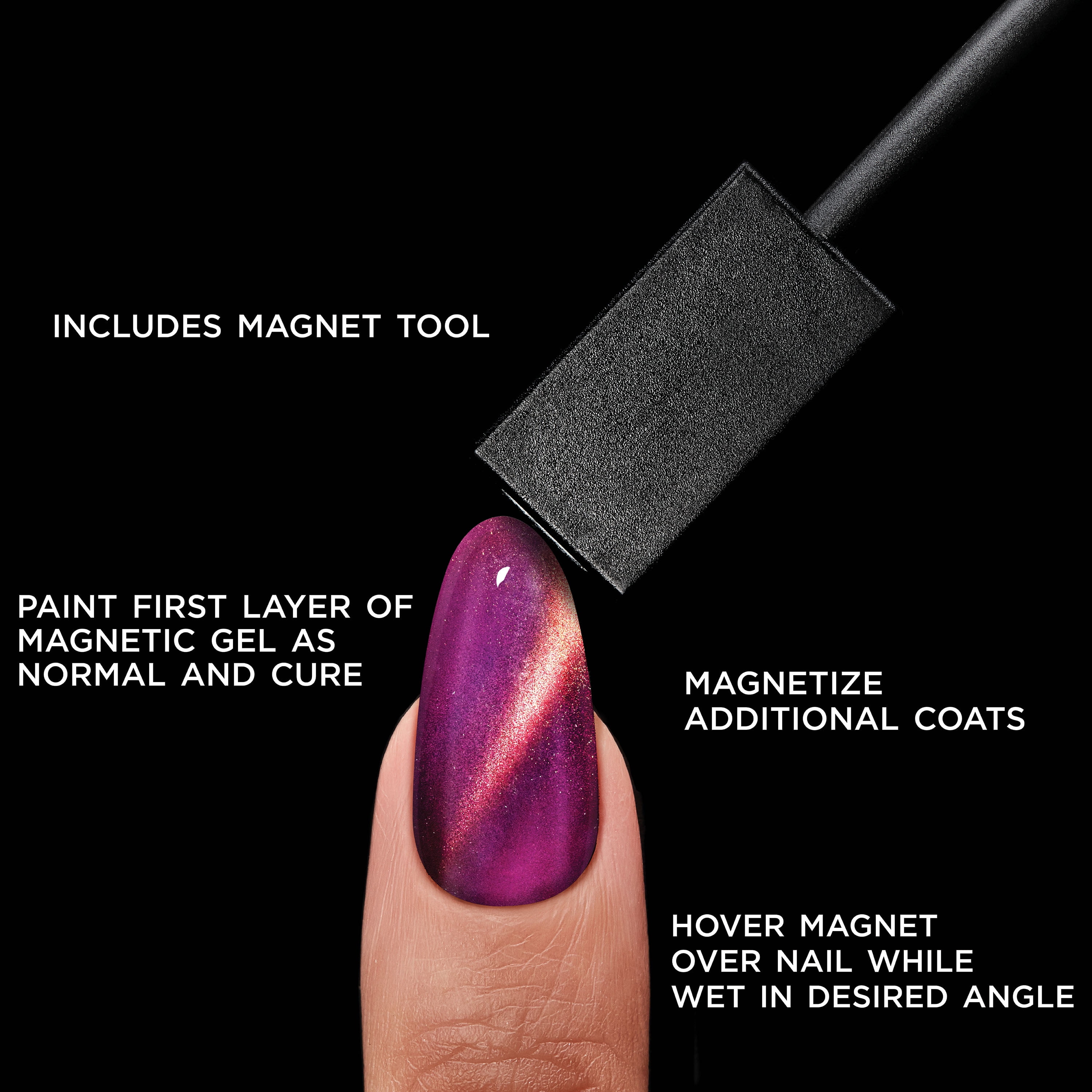
This is the defining moment in the application of magnetic nail polish. Once the final coat of magnetic polish is applied, and while it is still wet and malleable, the magnetic wand is brought into play. The technique here is critical for achieving different effects:
- Pattern Creation: The wand is typically held directly above the nail, a small distance away (usually a few millimeters). The longer the wand is held in place, and the closer it is to the nail, the more pronounced the magnetic effect will be. Different areas of the wand can also be used to create varied designs. For instance, holding the flat side might create a more uniform pull, while using a pointed end could draw the particles into finer lines.
- Directionality: The direction in which the wand is held relative to the nail can also influence the pattern. Holding it parallel to the nail tip versus perpendicular to it will result in different alignments of the magnetic particles.
- Repeatability (with caution): Some users experiment with reapplying the wand multiple times to deepen a pattern. However, it’s important to do this before the polish begins to dry significantly, as overworking a drying polish can lead to an undesirable, muddy effect.
The speed at which the polish dries also plays a role. Faster-drying formulas require a quicker application of the magnetic wand to ensure the particles have enough time to move and set into the desired pattern. Slower-drying formulas offer more flexibility but may require the wand to be held for a slightly longer duration.
Sealing the Design: Top Coat Application
Once the magnetic pattern has been achieved and the polish has begun to set, a top coat is applied. This is a standard step in most manicures, but in the case of magnetic polish, it serves a dual purpose. Firstly, it protects the intricate magnetic design, preventing it from smudging or being disturbed. Secondly, it adds a glossy finish, enhancing the visual depth and brilliance of the patterns created by the magnetic particles.
It is crucial to apply the top coat smoothly and without dragging it across the nail, as this could disrupt the delicate magnetic arrangement. A gentle, flowing application is key to preserving the artistry.
Beyond the Basic Effect: Exploring the Technological Nuances and Variations
The technology behind magnetic nail polish extends beyond the fundamental principle of particle alignment. Manufacturers are continuously innovating, exploring different particle types, magnetic field configurations, and polish formulations to offer a wider range of aesthetic possibilities and user experiences.
Cat-Eye Effects and Holographic Magics
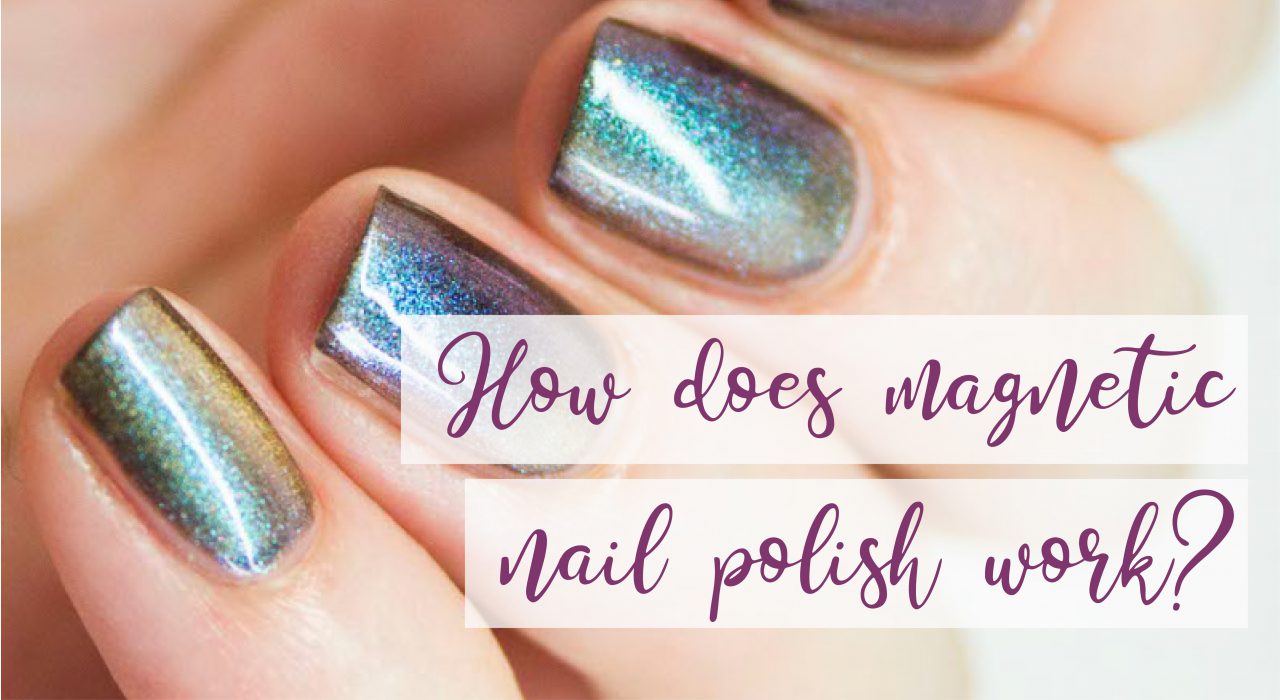
One of the most popular and recognizable magnetic nail polish effects is the “cat-eye” look. This phenomenon, named after the distinctive vertical band of light seen in a cat’s eye, is achieved by aligning the magnetic particles in a specific, linear fashion. The way light reflects off these aligned particles creates a shimmering, dimensional effect that mimics the iridescent qualities of precious stones like.
Beyond the cat-eye, advancements in pigment technology have led to magnetic polishes that produce even more complex and captivating visuals. Some polishes incorporate holographic particles alongside ferromagnetic ones, resulting in a dual effect where the magnetic pattern is overlaid with a dazzling, rainbow-like shimmer that shifts with light.
Specialized Magnetic Wands and Tools
The innovation isn’t limited to the polish itself; magnetic wands have also evolved. While basic wands with single magnets are common, more advanced tools have emerged to facilitate the creation of more intricate designs. These can include:
- Multi-Magnet Wands: Wands with multiple magnets strategically placed to create more complex linear or geometric patterns.
- Shaped Applicators: Tools with ridged, pointed, or curved magnetic surfaces designed to draw the particles into specific shapes like stars, waves, or checkerboards.
- Dual-Ended Tools: Some applicators offer different magnetic strengths or configurations on each end, providing versatility for various design aspirations.
The development of these specialized tools signifies a growing interest in treating magnetic nail polish not just as a cosmetic but as a medium for creative expression, akin to using specialized brushes or tools in other art forms.
Formulations and Longevity: The Chemistry of Performance
The base formula of magnetic nail polish is also a subject of ongoing technological refinement. Cosmetic chemists are working to improve:
- Pigment Dispersion: Ensuring the ferromagnetic particles remain evenly suspended for a longer shelf life and consistent application.
- Drying Time: Balancing the need for quick pattern creation with a reasonable drying time for the user.
- Durability: Enhancing the overall chip resistance and longevity of the manicure, especially considering the added complexity of the magnetic effect.
- Ingredient Safety and Sustainability: As with all cosmetics, there’s a continuous drive towards safer, more environmentally friendly ingredients and production methods.
These advancements ensure that magnetic nail polish not only provides a visually appealing effect but also functions as a high-quality nail coating, offering a desirable balance of aesthetics and wearability.
Conclusion: Magnetic Nail Polish – A Micro-Innovation with Macro Appeal
Magnetic nail polish stands as a testament to how simple scientific principles can be ingeniously applied to everyday products, transforming them into something extraordinary. It’s a fascinating intersection of chemistry and artistry, offering a unique way to express personal style. The technology, though subtle, is the driving force behind its captivating allure, from the precisely engineered ferromagnetic particles to the cleverly designed magnetic applicators. For those who appreciate the ingenuity behind innovative products, magnetic nail polish offers a glimpse into the continuous evolution of the beauty industry, where technology and creativity converge to create delightful and unexpected results. It’s more than just polish; it’s a miniature marvel of applied science for your fingertips.
aViewFromTheCave is a participant in the Amazon Services LLC Associates Program, an affiliate advertising program designed to provide a means for sites to earn advertising fees by advertising and linking to Amazon.com. Amazon, the Amazon logo, AmazonSupply, and the AmazonSupply logo are trademarks of Amazon.com, Inc. or its affiliates. As an Amazon Associate we earn affiliate commissions from qualifying purchases.