
The relentless march of technology brings us ever-faster, ever-smaller, and ever-more-efficient devices. From the smartphones in our pockets to the powerful workstations on our desks, storage is a fundamental component that dictates how quickly we can access data, launch applications, and complete tasks. For a long time, the spinning platters of Hard Disk Drives (HDDs) dominated the storage landscape. However, the advent of Solid State Drives (SSDs) marked a seismic shift, and within the SSD realm, the M.2 form factor has emerged as a dominant force. But what exactly is an M.2 SSD, and why has it become so prevalent in modern computing?

This article delves into the world of M.2 SSDs, exploring their technological underpinnings, their advantages over older storage solutions, and how they contribute to the broader landscape of tech innovation, brand perception, and even financial considerations.
The Evolution of Storage: From Clunky to Compact
To truly appreciate the significance of M.2 SSDs, we need to understand the historical progression of computer storage. For decades, the Hard Disk Drive (HDD) was the standard. These mechanical devices use magnetic spinning platters to store data, with a read/write head that moves across the platters to access information. While they offered high capacities at relatively low costs, their mechanical nature made them slow, susceptible to physical shock, and power-hungry.
The introduction of Solid State Drives (SSDs) revolutionized performance. Unlike HDDs, SSDs use flash memory chips – similar to those found in USB drives and smartphones – to store data. This lack of moving parts means SSDs are significantly faster, more durable, and consume less power. Early SSDs often adopted the same form factors as HDDs, such as the 2.5-inch drive, making the transition somewhat straightforward.
However, as computers became thinner and lighter, and the demand for even greater speeds intensified, the limitations of these larger form factors became apparent. This paved the way for a more streamlined and efficient storage solution: the M.2 interface.
Unpacking the M.2 Interface: A Design Revolution
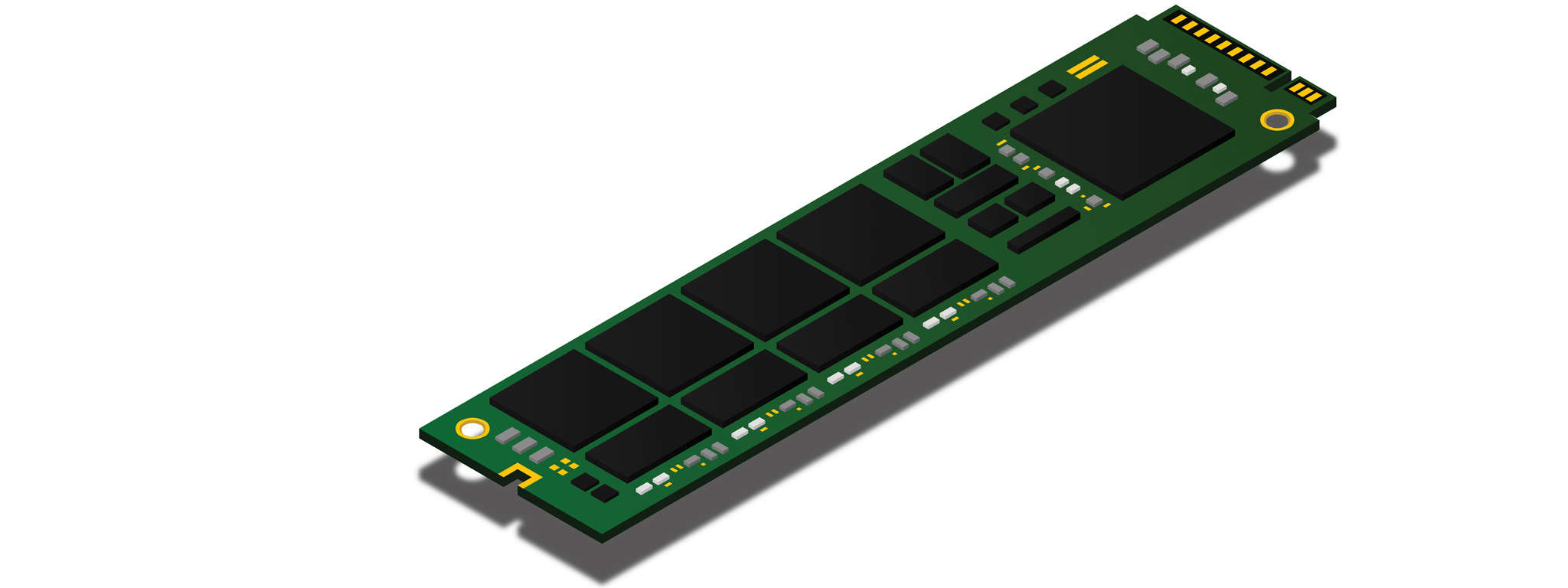
The term “M.2” refers to a physical connector and form factor specification developed by the PCI-SIG. It’s a small, slender module designed to connect directly to the motherboard, eliminating the need for cumbersome cables that were characteristic of SATA drives. This direct connection is a key factor in the speed and efficiency of M.2 SSDs.
The M.2 Connector: More Than Just Size
The M.2 connector itself is not just about making drives smaller; it’s also about its versatility. M.2 slots on motherboards can support different “keys,” which dictate the type of interface the drive can utilize. The most common keys are:
- B Key: Typically associated with SATA or PCIe x2 interfaces.
- M Key: Typically associated with PCIe x4 interfaces.
- B+M Key: Can support both SATA and PCIe x2 interfaces.
This flexibility allows manufacturers to design M.2 SSDs that can leverage different communication protocols, leading to varying performance levels.
Form Factors: Fitting into the Modern Ecosystem
M.2 SSDs come in various lengths and widths, specified by numbers like 2242, 2260, 2280, and 22110. The first two digits represent the width in millimeters (typically 22mm), and the subsequent digits represent the length (e.g., 42mm, 60mm, 80mm, 110mm). The most common form factor for consumer-grade M.2 SSDs is 2280, striking a balance between capacity, performance, and physical space. This compact size is crucial for modern laptops, ultrabooks, and small form factor PCs, where internal space is at a premium.
The Performance Paradigm Shift: SATA vs. NVMe
The true magic of M.2 SSDs lies in the underlying technologies they can utilize to communicate with the rest of the system. While M.2 can support the older SATA (Serial ATA) interface, its real power is unlocked when paired with the NVMe (Non-Volatile Memory Express) protocol.
SATA M.2 SSDs: A Transitional Step
Some M.2 SSDs still utilize the SATA interface. These drives offer the same performance as traditional 2.5-inch SATA SSDs but benefit from the compact M.2 form factor. They are a good option for upgrading older systems that may not support NVMe or for users who don’t require the absolute bleeding edge of storage speeds. However, they are still bottlenecked by the SATA III interface, which has a theoretical maximum throughput of around 600 MB/s.
NVMe M.2 SSDs: The Speed Demons
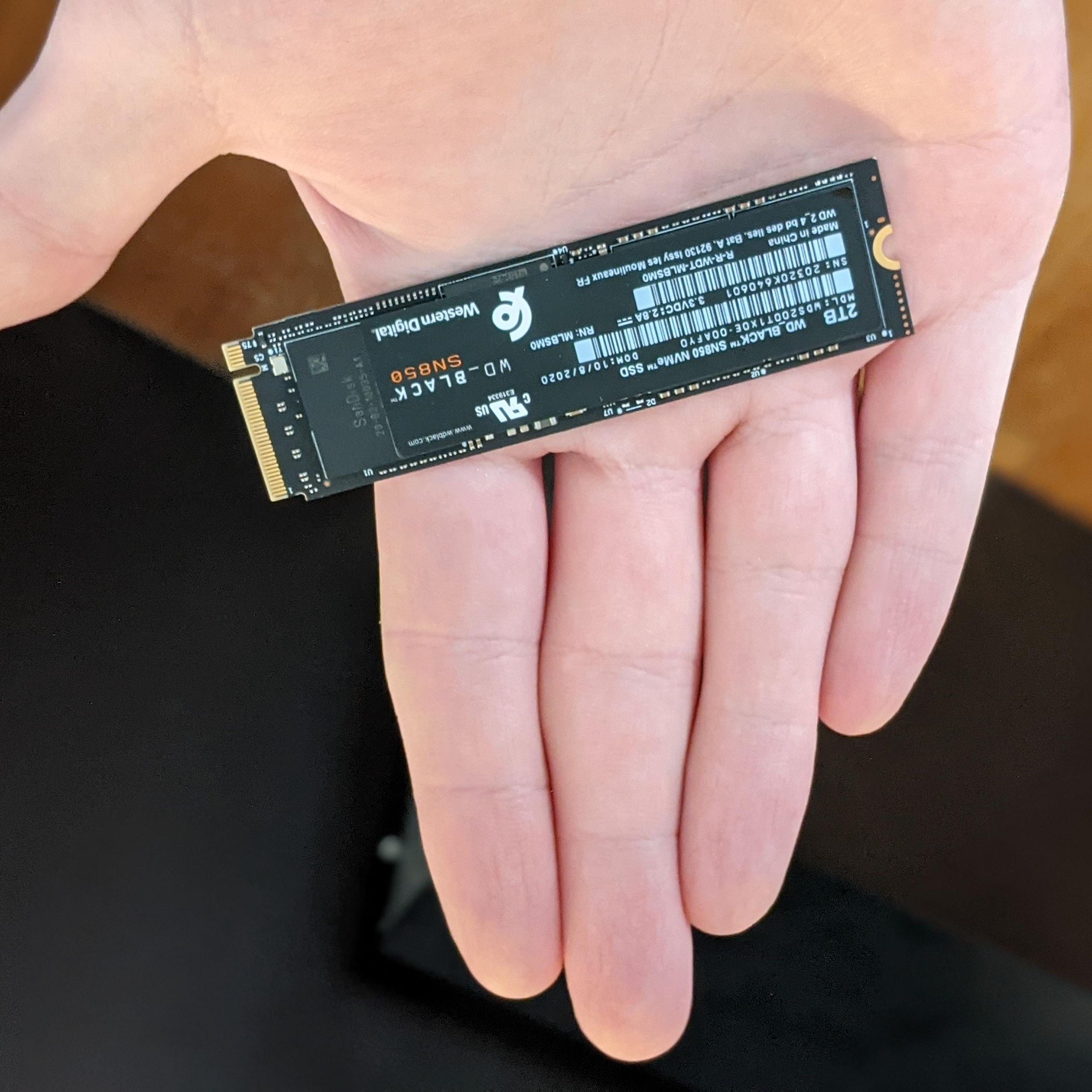
This is where M.2 truly shines. NVMe is a communication protocol designed specifically for SSDs that connects directly to the CPU via the PCIe (Peripheral Component Interconnect Express) bus. PCIe lanes offer significantly higher bandwidth than SATA.
- PCIe Generation and Lanes: The performance of an NVMe M.2 SSD is directly related to the generation of PCIe it supports (e.g., PCIe Gen3, Gen4, Gen5) and the number of lanes it utilizes. PCIe Gen4, for instance, offers double the bandwidth of Gen3, and Gen5 doubles it again. An SSD using four PCIe lanes (x4) will be significantly faster than one using two lanes (x2).
The result is dramatically improved performance:
- Sequential Read/Write Speeds: NVMe SSDs can achieve sequential read and write speeds that are many times faster than SATA SSDs. This translates to quicker boot times, faster file transfers, and more responsive application loading.
- IOPS (Input/Output Operations Per Second): NVMe excels in handling a high volume of small, random read/write operations, which are common for operating systems and demanding applications. This leads to a much snappier and more fluid user experience.
In essence, an M.2 SSD can be either SATA or NVMe, and the NVMe variant is the one that delivers the revolutionary performance gains. When people refer to the speed benefits of M.2, they are almost always talking about NVMe M.2 SSDs.
The Impact of M.2 SSDs: Beyond Raw Speed
The adoption of M.2 SSDs has far-reaching implications across various facets of technology and business.
Tech: Fueling Innovation and User Experience
From a Tech perspective, M.2 SSDs are a cornerstone of modern computing.
- Laptops and Ultrabooks: Their compact size is essential for the sleek designs and portability of modern laptops. Without M.2, achieving such thin profiles while maintaining fast storage would be challenging.
- Gaming: Gamers benefit immensely from faster load times, reducing the time spent waiting and increasing immersion. Games are becoming increasingly complex and data-intensive, making fast storage a critical component of the gaming experience.
- Content Creation: Video editors, graphic designers, and other creative professionals can dramatically reduce render times and improve workflow efficiency with the accelerated data access provided by NVMe M.2 SSDs.
- AI and Machine Learning: Training complex AI models requires massive datasets and rapid data processing. M.2 NVMe SSDs are crucial for speeding up these computationally intensive tasks.
- Operating Systems and Applications: The responsiveness of your computer is directly impacted by storage speed. M.2 NVMe SSDs make everyday tasks feel instantaneous, from booting up your PC to launching your favorite applications.
- Digital Security: While not directly related to speed, the reliability and durability of SSDs, including M.2 form factors, contribute to overall system stability, which is indirectly linked to digital security by reducing the likelihood of data corruption due to drive failure.
Brand: Perception and Competitive Advantage
For Brand strategists and manufacturers, M.2 SSDs represent a tangible differentiator and a signal of technological advancement.
- Premium Features: Offering M.2 NVMe SSDs as standard or as an upgrade option allows brands to position their products as premium and cutting-edge. This can attract discerning consumers who prioritize performance.
- Marketing the Speed: The dramatic speed improvements offered by NVMe M.2 SSDs are easily quantifiable and marketable. Phrases like “lightning-fast” and “instantaneous load times” resonate with consumers.
- Case Studies in Performance: Companies that leverage M.2 SSDs in their products can showcase compelling case studies demonstrating improved user experience and productivity, strengthening their brand narrative.
- Design Aesthetics: The minimalist nature of M.2 drives aligns with modern industrial design trends, allowing for sleeker and more aesthetically pleasing product designs.
- Reputation for Innovation: Consistently adopting and integrating the latest storage technologies, like high-speed M.2 NVMe SSDs, builds a brand’s reputation for innovation and staying ahead of the curve.
Money: Investment in Productivity and Value
From a Money perspective, understanding M.2 SSDs can lead to better purchasing decisions and even unlock new opportunities.
- Personal Finance: When purchasing a new computer or upgrading an existing one, investing in an M.2 NVMe SSD can significantly enhance the overall user experience. This increased productivity can translate into saved time, which is a valuable commodity. While M.2 NVMe SSDs are generally more expensive per gigabyte than HDDs, the performance gains often justify the cost for many users.
- Investing in Your Workflow: For professionals and enthusiasts, the time saved by faster storage can be considered an investment. If you’re a content creator, faster rendering times mean you can take on more projects or deliver them faster, directly impacting your income.
- Online Income and Side Hustles: For those running online businesses, managing e-commerce platforms, or working on side hustles that involve large file transfers or data processing, a faster storage solution can directly improve efficiency and, consequently, earning potential.
- Business Finance: Businesses investing in workstations for their employees will see tangible benefits in productivity by equipping them with systems that feature M.2 NVMe SSDs. This can lead to increased output and better resource utilization.
- Financial Tools and Future-Proofing: Understanding the evolution of storage technology, like the rise of M.2 NVMe, helps consumers make informed decisions about their technology purchases. It’s about choosing components that will remain relevant and performant for the foreseeable future, maximizing the return on investment of a new device. While the initial cost might be higher, the extended lifespan of a system with fast storage can save money in the long run by delaying the need for a full system upgrade.
Conclusion: The M.2 SSD is Here to Stay
The M.2 SSD has moved beyond being a niche component to become a standard feature in modern computing. Its compact form factor, combined with the blistering speeds of the NVMe protocol, has redefined what’s possible in terms of device performance and design. Whether you’re a gamer seeking faster load times, a creative professional demanding accelerated workflows, or simply a user who values a responsive and efficient computing experience, an M.2 NVMe SSD is a critical component to consider.
As technology continues to evolve, the M.2 interface is likely to remain a dominant force, with future iterations promising even greater speeds and capabilities. Understanding what an M.2 SSD is, and more importantly, the difference between SATA and NVMe within that form factor, empowers you to make informed decisions that impact your technology, your brand, and your finances. It’s a testament to how innovation in one area of technology can ripple outwards, enhancing countless aspects of our digital lives.
aViewFromTheCave is a participant in the Amazon Services LLC Associates Program, an affiliate advertising program designed to provide a means for sites to earn advertising fees by advertising and linking to Amazon.com. Amazon, the Amazon logo, AmazonSupply, and the AmazonSupply logo are trademarks of Amazon.com, Inc. or its affiliates. As an Amazon Associate we earn affiliate commissions from qualifying purchases.