
The phrase “I love you” is perhaps the most translated sequence of words in human history. Yet, when a user types “What is love you in Korean” into a search engine or a translation app, they are not merely requesting a literal linguistic conversion. They are engaging with a complex technological ecosystem designed to bridge the gap between two vastly different linguistic structures. In the realm of technology, translating an emotional sentiment from English—a low-context, Germanic language—to Korean—a high-context, agglutinative language—represents one of the most significant challenges for Natural Language Processing (NLP) and Artificial Intelligence.

The technical answer to “What is love you in Korean” is not a single string of text, but a variable output dependent on social hierarchy, degree of intimacy, and digital context. Understanding how modern software handles this nuance provides a window into the current state of machine learning, localization technology, and the future of global communication.
The Mechanics of Modern Translation: How AI Deciphers “Saranghae”
At the core of any digital translation of “I love you” is Neural Machine Translation (NMT). Unlike older rule-based systems that functioned like digital dictionaries, NMT uses deep learning to predict the likelihood of a sequence of words. When a system processes “I love you,” it doesn’t just look for the Korean equivalent of each word; it analyzes the entire sentence structure to produce a coherent output.
Neural Machine Translation (NMT) and Contextual Mapping
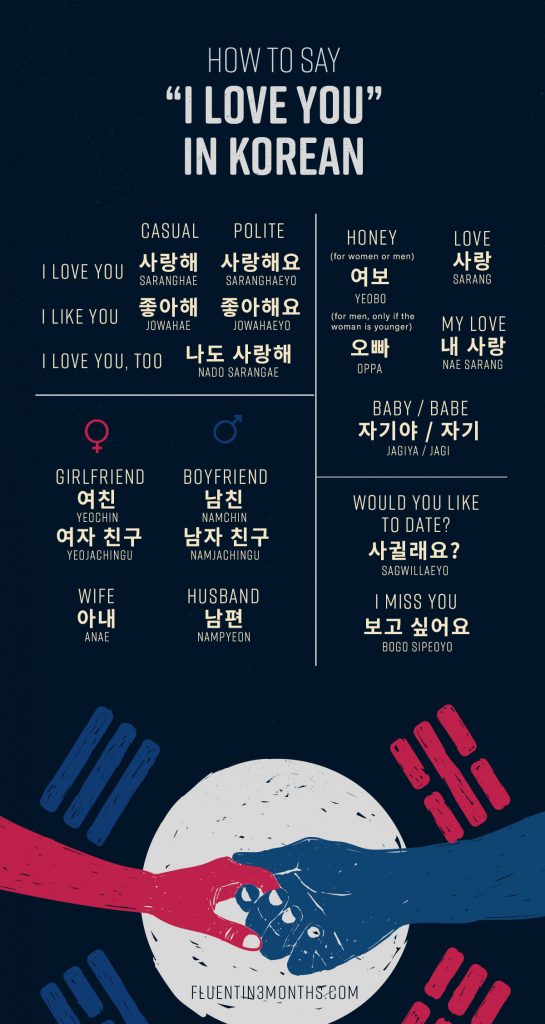
NMT systems, such as those powering Google Translate or DeepL, utilize an encoder-decoder architecture. The encoder converts the English input into a vector—a mathematical representation of the sentence’s meaning in a multi-dimensional space. The decoder then translates this vector into Korean. The difficulty with the phrase “I love you” lies in the fact that the vector for “love” in English must map to several different potential vectors in Korean, such as Saranghae (informal), Saranghaeyo (polite), or Saranghapnida (formal).
Advanced NMT models now employ “Attention Mechanisms.” This technology allows the software to focus on specific parts of the input sentence to determine the correct output. However, because English often omits the social context that Korean requires, the AI must often “guess” the level of formality, usually defaulting to the most common or neutral form.
The Challenge of Honorifics in Algorithmic Logic
Korean is a language defined by its honorific system. Technology must account for “Jondemmal” (formal/polite speech) and “Banmal” (informal speech). For a software developer, this creates a logic branch:
- Is the subject older or higher in status than the speaker?
- Is the setting professional or personal?
- Is the relationship established or new?
Current AI models are being trained on massive datasets of Korean dramas, literature, and social media conversations to better understand these social parameters. By analyzing surrounding text (contextual awareness), an AI can now better predict whether “I love you” should be translated as the intimate Saranghae or the respectful Saranghaeyo.
Top Tech Tools for Mastering Korean Expressions
For users and developers alike, the choice of platform significantly impacts the accuracy of translating sentiment. While global giants dominate the market, regional specialized tools often provide superior technical depth for specific language pairs.
Naver Papago vs. Google Translate: A Technical Comparison
Naver’s Papago is widely considered the gold standard for Korean translation. This is due to Naver’s proprietary NMT technology, which is trained on a more concentrated dataset of Korean linguistic patterns compared to Google’s broader, multi-language approach.
Papago offers a “Formal/Informal” toggle, a crucial UI/UX feature that addresses the linguistic hierarchy of Korean. Technically, this toggle forces the decoder to prioritize specific suffixes (like -yo or -nida) over others. Google Translate has recently integrated similar features, but Papago’s integration of “Word Sense Disambiguation” allows it to distinguish between “love” as a noun and “love” as a verb more effectively in the Korean syntax.
EdTech Innovations in Language Acquisition Apps
Beyond simple translation, educational technology (EdTech) platforms like Duolingo, Memrise, and Talk To Me In Korean use Spaced Repetition Systems (SRS) and AI-driven speech recognition to teach the phrase. These apps use algorithms to track a user’s “forgetting curve,” ensuring that the various forms of “love you” are reinforced at optimal intervals.

Speech recognition technology in these apps has advanced from simple pattern matching to sophisticated phonetic analysis. When a user says Saranghae, the AI compares the audio input against a model of native speakers, providing real-time feedback on pitch and intonation—elements that are vital for being understood in Seoul or Busan.
The Role of Large Language Models (LLMs) in Emotional Localization
The advent of Large Language Models (LLMs) like GPT-4 and Claude 3 has revolutionized how we answer the question “What is love you in Korean.” Unlike standard NMT, LLMs possess a “world model” that understands culture, history, and nuance.
Prompt Engineering for Nuanced Cultural Expressions
With an LLM, a user can provide a prompt such as: “Translate ‘I love you’ into Korean for a wedding proposal to someone older than me.” The technology doesn’t just translate; it localizes. It understands that a proposal requires a specific level of formality (Saranghapnida) and might even suggest culturally appropriate additions.
This process is known as “few-shot prompting” or “contextual steering.” The LLM uses its vast training data to simulate a specific social scenario, ensuring the output is not just grammatically correct, but socially appropriate. This is a massive leap forward from the “word-for-word” replacement of the early 2000s.
Beyond Literal Meaning: Sentiment Analysis in Global Communication
Tech companies are now utilizing sentiment analysis to ensure that the emotional “weight” of a phrase is preserved. In Korean, there are words like Jeong (a deep sense of attachment) that don’t have a direct English equivalent but are closely related to the concept of love.
Advanced AI tools are beginning to offer “transcreation” rather than just translation. This involves rewriting the sentiment to evoke the same emotional response in the target language. If “I love you” feels too direct for a specific digital interface, the AI might suggest a more natural Korean equivalent that conveys the same meaning through different vocabulary.
The Future of Real-Time Communication: Wearables and Beyond
The ultimate goal of language technology is to make the question “What is love you in Korean” obsolete through seamless, real-time integration. We are entering an era where hardware and software converge to provide instant linguistic transparency.
AR and Instant Subtitling Technology
Augmented Reality (AR) glasses are currently in development that can provide real-time subtitles for spoken conversation. Imagine looking at someone who says Saranghae and seeing “I love you” displayed in your field of vision. This requires incredibly low-latency processing, where audio is captured, sent to a cloud-based NMT engine (or processed locally via on-device AI), and rendered as text in milliseconds.
The technical hurdle here is noise cancellation and speaker diarization (distinguishing who is speaking). To accurately translate “love” in a crowded room, the device must isolate the speaker’s voice and use directional microphones to maintain context.
Digital Security and Privacy in Translation Software
As translation tools become more integrated into our personal lives, digital security becomes paramount. When users translate deeply personal phrases like “I love you,” that data is often processed in the cloud.
The tech industry is moving toward “On-Device AI.” By running translation models locally on a smartphone’s NPU (Neural Processing Unit), companies like Apple and Samsung can offer translation services that never leave the device. This ensures that personal expressions of affection remain private, protected by end-to-end encryption and hardware-level security.
Conclusion: The Synthesis of Code and Culture
The question of “What is love you in Korean” is a testament to how far technology has come. It is no longer about a static string of characters. It is about a dynamic, AI-driven understanding of human connection. Through NMT, LLMs, and innovative hardware, technology is not just translating words; it is deciphering the human experience, one “Saranghae” at a time. As we look forward, the refinement of these tools will continue to break down barriers, allowing for a world where language is no longer a hurdle, but a bridge to deeper understanding.
aViewFromTheCave is a participant in the Amazon Services LLC Associates Program, an affiliate advertising program designed to provide a means for sites to earn advertising fees by advertising and linking to Amazon.com. Amazon, the Amazon logo, AmazonSupply, and the AmazonSupply logo are trademarks of Amazon.com, Inc. or its affiliates. As an Amazon Associate we earn affiliate commissions from qualifying purchases.