
In the dynamic world of golf, where precision engineering meets athletic endeavor, few concepts are as fundamental yet often misunderstood as “loft.” Far from a simple number stamped on a clubhead, loft is a critical technological specification that dictates the trajectory, spin, and ultimately, the distance and control of a golf shot. Understanding loft is not merely about knowing an angle; it’s about comprehending the intricate physics and advanced engineering that manufacturers integrate into every club, and how cutting-edge technology helps golfers optimize their equipment for peak performance.
The Engineering of Flight: Defining Loft
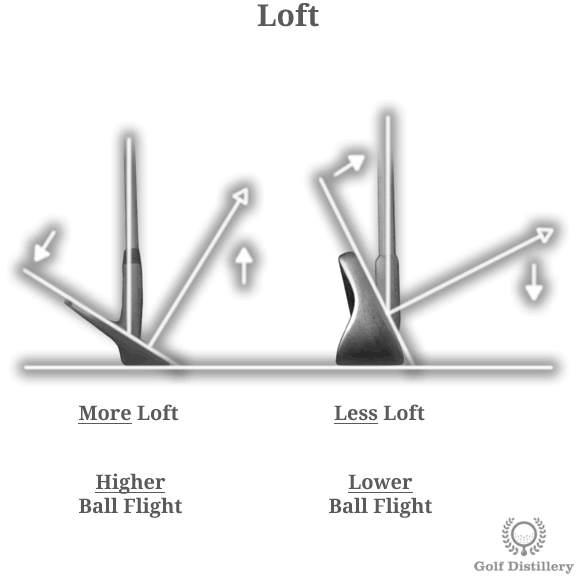
At its core, loft refers to the angle of the clubface relative to the ground at impact, or more precisely, the angle created between the clubface and a vertical line perpendicular to the ground when the club is soled correctly. This angle is engineered with extreme precision, typically measured in degrees, and is the primary factor determining how high or low a golf ball will fly, and how much backspin it will generate.
The Fundamental Angle
Every club in a golfer’s bag possesses a unique loft angle, carefully calibrated for a specific purpose. Drivers typically feature the lowest lofts (ranging from 8 to 12 degrees) to promote a penetrating flight and maximum distance. Fairway woods and hybrids follow, with progressively higher lofts. Irons exhibit a wider range, from the low lofts of long irons (around 18-24 degrees) designed for distance and lower trajectory, to the high lofts of scoring irons and wedges (42-60+ degrees) intended for accuracy, height, and control around the green. Putters, by design, have minimal loft (typically 2-4 degrees) to get the ball rolling smoothly on the putting surface.
How Loft Impacts Ball Flight
The loft angle directly influences three critical aspects of ball flight: launch angle, spin rate, and carry distance. A lower loft generally results in a lower launch angle and less backspin, leading to a flatter trajectory and potentially greater roll. Conversely, a higher loft produces a higher launch angle and more backspin, causing the ball to fly higher, stop quicker upon landing, and offer greater control.
The relationship isn’t always linear; clubhead speed plays a significant role. A golfer with a high swing speed might generate too much backspin with a high-lofted driver, resulting in a “ballooning” shot that sacrifices distance. Conversely, a slower swing speed might struggle to get the ball airborne with a low-lofted driver. Modern club design, underpinned by sophisticated aerodynamic modeling and material science, aims to optimize this delicate balance, ensuring that each club’s loft works in harmony with its other technological features to maximize performance for a range of swing characteristics.
Technology in Club Design: Optimizing Loft
The golf equipment industry is a hotbed of technological innovation, constantly pushing the boundaries of what’s possible to enhance performance. Loft, as a foundational element, has been at the forefront of this evolution, leading to advancements in adjustability, material science, and data-driven design.
Variable Loft and Adjustable Clubs
One of the most significant technological leaps in golf clubs over the past two decades has been the introduction of adjustable loft mechanisms. Drivers, fairway woods, and even some hybrids now feature hosel sleeves or adjustable weights that allow golfers to change the effective loft angle by several degrees, often from -1 to +2 degrees from the stated loft. This engineering marvel provides unprecedented customization, allowing golfers to fine-tune their launch conditions without having to purchase multiple clubs. These systems often employ intricate gear or cam designs, requiring precise manufacturing tolerances to ensure stability and consistent performance throughout the adjustment range. The ability to manipulate loft empowers golfers to optimize their carry, roll, and even shot shape to adapt to different course conditions or swing changes, all within a single gadget.
Material Science and Center of Gravity
Beyond the visible angle, the effective loft at impact is also subtly influenced by the clubhead’s internal architecture, which is a triumph of material science. Engineers utilize advanced materials like lightweight carbon composites, high-strength titanium, and tungsten weighting to manipulate the club’s center of gravity (CG). By strategically placing mass low and deep within the clubhead, designers can increase the club’s moment of inertia (MOI), making it more forgiving on off-center hits. More importantly, a lower and deeper CG can effectively promote a higher launch angle for a given static loft, helping golfers achieve optimal trajectory even with lower-lofted drivers. This intricate interplay between material composition, weight distribution, and static loft is a testament to the sophisticated engineering present in modern golf clubs.
Data-Driven Design and Simulation
The development of new golf clubs is no longer a process of trial and error; it’s a highly scientific endeavor driven by data and computational power. Manufacturers employ advanced simulation software, including Computational Fluid Dynamics (CFD) and Finite Element Analysis (FEA), to model how different loft angles and clubhead geometries interact with the golf ball and airflow at impact. These tools allow engineers to virtually test thousands of design iterations, predicting launch conditions, spin rates, and aerodynamic efficiency long before a physical prototype is ever created. This data-driven approach ensures that the chosen loft specifications, alongside other design elements, are optimized for maximum energy transfer, stability, and control, translating directly into enhanced performance for the golfer.
The Gadget Perspective: Launch Monitors and Fitting Tech
In the realm of modern golf, technology isn’t just about club manufacturing; it’s equally about performance analysis and optimization. Gadgets like launch monitors and sophisticated club fitting systems have revolutionized how golfers understand and interact with their club’s loft.

Understanding Your Numbers with Launch Monitors
Launch monitors, such as TrackMan, Foresight Sports GCQuad, and FlightScope, are indispensable gadgets for understanding the true impact of loft on a golf shot. These devices use advanced radar, camera systems, or photometric technology to capture an enormous array of data points for every swing: clubhead speed, ball speed, launch angle, spin rate, attack angle, dynamic loft, and many more.
“Dynamic loft” is a particularly critical metric provided by these tools. While a club has a static loft stamped on it, dynamic loft is the actual loft presented to the ball at impact. A golfer’s swing path, wrist angles, and attack angle can significantly alter this dynamic loft. For instance, a golfer who delofts the club (presents less loft than static) at impact might benefit from a club with more static loft. Conversely, someone who adds loft might need a lower static loft. Launch monitors provide immediate, objective feedback, allowing golfers and fitters to see precisely how loft contributes to their ball flight and to make data-backed adjustments to equipment or swing mechanics.
The Role of Professional Club Fitting Technology
Professional club fitting is where the technological advancements in club design and performance analysis converge. Using launch monitors, specialized fitting software, and extensive inventories of clubheads and shafts, certified fitters act as technological consultants. They analyze a golfer’s swing data, identify optimal launch conditions (the perfect combination of launch angle and spin rate for maximum distance and accuracy), and then recommend clubs with specific loft configurations that match those conditions.
This process moves beyond traditional guesswork, leveraging precise data to ensure that every club in a golfer’s bag has the ideal loft for their individual swing characteristics. It’s a highly personalized approach, ensuring that the golfer’s equipment acts as a technological extension of their natural ability, rather than a hinderance. Adjustable clubs, with their variable loft settings, become powerful tools in the hands of a skilled fitter, allowing for minute adjustments that can unlock significant performance gains.
Tutorials for Performance: Leveraging Loft for Your Game
Beyond understanding the technology, a golfer must learn how to effectively leverage loft to their advantage. This involves selecting the right equipment and making conscious adjustments during play, turning theoretical knowledge into practical performance.
Choosing the Right Loft for Different Clubs
The first step in leveraging loft is ensuring your set make-up is optimized. For drivers, this means selecting a loft that provides the optimal balance of launch and spin for your swing speed. A common tutorial for golfers with average swing speeds might involve starting with a 10.5-degree driver and adjusting based on launch monitor feedback. For wedges, understanding “gap fitting” is crucial. This involves selecting wedges with appropriate loft gaps (typically 4-6 degrees) between each club to ensure consistent distance gapping, preventing large yardage gaps that can complicate approach shots. Many golfers carry a pitching wedge (around 44-46 degrees), gap wedge (50-52 degrees), sand wedge (54-56 degrees), and lob wedge (58-60 degrees), each chosen for its specific loft and bounce to manage different short-game situations.
Adjusting Your Swing to Maximize Loft Performance
While clubs offer static and adjustable lofts, a golfer’s swing significantly impacts the dynamic loft presented at impact. Understanding how to control this can be a powerful tutorial in itself. For instance, to hit a high-flying shot over an obstacle, a golfer might try to “add loft” by setting up with the ball slightly forward in their stance and ensuring a more level or slightly upward attack angle. Conversely, to hit a lower, more piercing shot, they might “deloft” the club by moving the ball back in their stance and focusing on a slightly downward attack angle, ensuring clean contact without adding excessive spin. Mastering these subtle adjustments allows golfers to manipulate trajectory and control, turning their clubs into more versatile tools.
Future of Loft: Smart Clubs and AI Integration
The evolution of loft in golf technology is far from over. The horizon promises even more sophisticated integration of sensors, data analytics, and artificial intelligence to further personalize and optimize equipment.
Sensor Technology and Real-time Feedback
Imagine clubs embedded with miniature sensors capable of providing real-time feedback on dynamic loft, attack angle, and clubhead speed directly to a connected app or smartwatch. This advanced gadgetry would transform practice, offering instant, actionable insights without the need for external launch monitors. These smart clubs could analyze dozens of swings, identifying patterns in how a golfer presents loft and offering immediate suggestions for swing adjustments or equipment changes. This data would be invaluable for both self-coaching and professional instruction.
AI-Powered Club Recommendations
The future could also see AI-powered fitting systems that go beyond static data analysis. These systems could learn a golfer’s unique swing DNA over time, analyzing hundreds of shots from various course conditions. Based on this vast dataset, AI could predict optimal loft settings for drivers based on fatigue levels, suggest precise loft adjustments for wedges based on specific greenside lies, or even recommend an entirely new club configuration that adapts as a golfer’s game evolves. This level of personalized, adaptive technology, deeply rooted in the nuanced understanding of loft, promises a truly revolutionary approach to golf equipment optimization.
In conclusion, loft is much more than a number; it’s a cornerstone of golf club technology. From its fundamental role in ball flight physics to the cutting-edge engineering of adjustable clubs, the data-rich insights from launch monitors, and the future promise of AI-driven customization, understanding loft is key to unlocking a golfer’s full potential in the modern game.
aViewFromTheCave is a participant in the Amazon Services LLC Associates Program, an affiliate advertising program designed to provide a means for sites to earn advertising fees by advertising and linking to Amazon.com. Amazon, the Amazon logo, AmazonSupply, and the AmazonSupply logo are trademarks of Amazon.com, Inc. or its affiliates. As an Amazon Associate we earn affiliate commissions from qualifying purchases.