
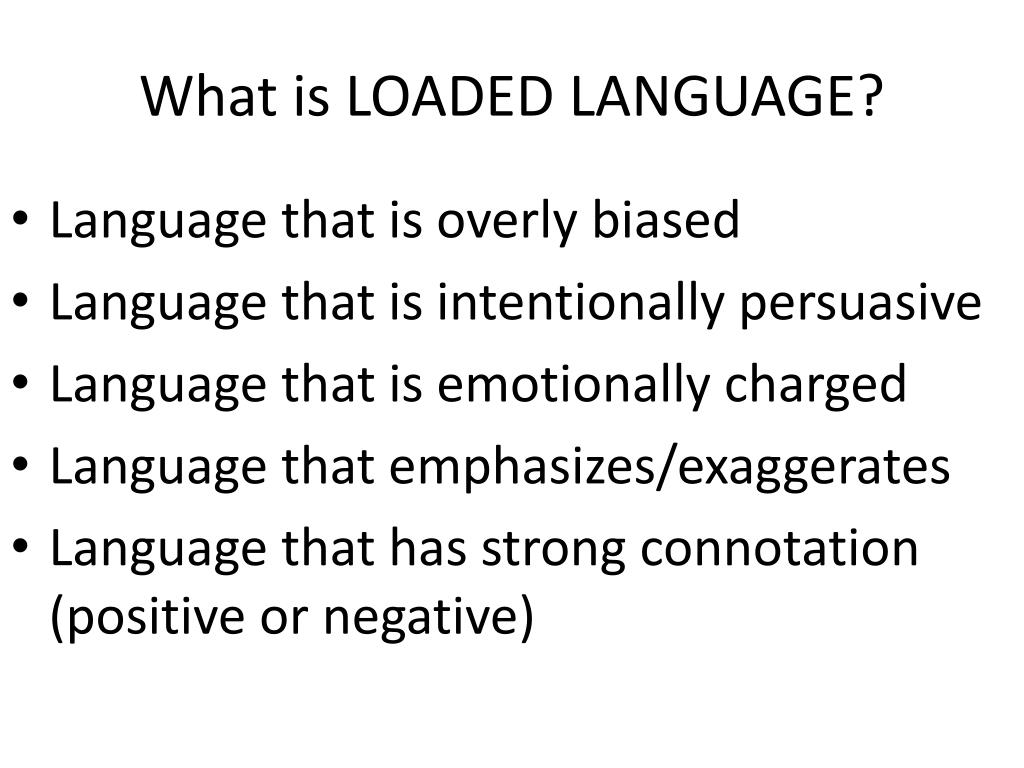
In the high-stakes arena of brand strategy and corporate communications, the words you choose do more than convey information—they define the reality of your brand. Loaded terminology, often referred to as “loaded language,” consists of words or phrases that carry strong emotional implications, societal biases, or subjective connotations beyond their literal definition. For marketers, copywriters, and public relations professionals, understanding how to leverage—or avoid—loaded terminology is a cornerstone of effective brand positioning.
When a brand speaks, it is not merely describing a product or service; it is framing a perspective. Whether you are crafting a mission statement, launching an advertising campaign, or navigating a public relations crisis, the terms you select act as linguistic levers. They can move an audience toward trust, urgency, or disdain. To build a resilient brand identity, you must master the mechanics of these emotionally charged signals.

The Strategic Power of Semantic Framing
At its core, loaded language is a tool for semantic framing. It guides the consumer toward a specific interpretation of your brand without necessarily providing a direct argument. In branding, this is often used to establish differentiation in crowded markets.
The Nuance of Connotation
Words possess two layers of meaning: denotation (the dictionary definition) and connotation (the emotional and cultural weight). A brand that describes its software as “disruptive” is intentionally choosing loaded terminology. While “disruptive” technically means breaking continuity, in the tech and marketing ecosystem, it implies innovation, courage, and a shift in power dynamics. By choosing this term, the brand signals that it is not merely offering an alternative; it is challenging the status quo.
Conversely, describing the same software as “alternative” feels neutral, perhaps even weak. The strategic power of loaded terminology lies in its ability to bypass the consumer’s rational “sales filter” and speak directly to their values or aspirations.
Emotional Anchoring in Marketing
Brand strategy is fundamentally about emotional resonance. Loaded terminology acts as an anchor for these emotions. Luxury fashion brands, for example, rarely use functional language. They do not sell “clothing”; they sell “heritage,” “exclusivity,” or “investment pieces.” These terms are loaded with prestige. When a brand consistently uses these words, it builds an identity that feels impenetrable and high-status. If they were to switch to “affordable apparel,” the brand value—and the perceived quality of the goods—would immediately collapse. The shift from “prestige” to “affordable” isn’t just a vocabulary change; it is a total brand pivot.
The Risks and Ethical Boundaries of Loaded Language
While loaded terminology can be a powerful driver of brand loyalty, it is a double-edged sword. Using highly charged language carries significant risks, particularly in an era where consumers are increasingly hyper-aware of corporate greenwashing and manipulative marketing tactics.
Avoiding the Trap of Inauthenticity
The greatest danger of loaded terminology is the gap between the promise and the reality. If a brand constantly uses words like “authentic,” “revolutionary,” or “sustainable,” but fails to provide the substance to back those claims, they become victims of their own vocabulary. Consumers will inevitably perceive this as a lack of integrity.
When a brand’s language is consistently “loaded,” it can feel like shouting in a conversation where others are speaking normally. Eventually, the audience develops a resistance to the terminology. This phenomenon is known as “semantic satiation”—where the repeated use of emotionally charged words strips them of their power, leaving the brand sounding hollow and corporate.

The Perils of Polarizing Language
There is also a fine line between persuasion and alienation. If a brand uses language that is too politically or culturally loaded, it risks segmenting its audience in a way that is counterproductive. For instance, using language that frames a competitor as “evil” or “corrupt” might energize a core base of die-hard supporters, but it may alienate fence-sitters who prefer a more professional or diplomatic tone. Brand identity must be curated to resonate with the target demographic, but overly aggressive terminology can often signal a lack of maturity or confidence.
Cultivating a Brand Lexicon
Developing a brand voice is an exercise in intentionality. To master the use of loaded terminology, a brand must create a formal “brand lexicon”—a curated dictionary of words that the company will use, and more importantly, the words it will avoid.
Alignment with Core Values
Your loaded terminology should be a direct extension of your core values. If your company’s brand strategy is centered on “Empowerment,” your lexicon should favor active verbs and nouns that suggest agency, such as “ownership,” “catalyst,” “transform,” and “sovereign.” If your strategy is centered on “Security,” your lexicon should prioritize words that suggest stability and protection, such as “fortress,” “integrity,” “validated,” and “foundational.”
This alignment ensures that every piece of communication—from a tweet to a white paper—feels consistent. When the language is consistent, the brand feels more trustworthy. If a brand claiming to be “innovative” suddenly starts using archaic or overly bureaucratic terminology, the dissonance will confuse the consumer and dilute the brand’s equity.
The Role of Contextual Sensitivity
A word that is effective in one context may be disastrous in another. For example, the term “aggressively” can be perceived as positive in a competitive sports brand—suggesting speed and hunger—but can be perceived as threatening or unstable in a financial services firm.
Brands must conduct a linguistic audit. Before adopting a new term as a pillar of your brand strategy, ask yourself:
- What is the primary emotion this word evokes in our specific audience?
- Is this term overused by our competitors?
- Does this term accurately reflect the lived experience of our customers?
- Could this term be misinterpreted in a way that harms our reputation?
Future-Proofing Your Brand Voice
As artificial intelligence and automated content generation become more prevalent, the role of human-curated language becomes even more critical. AI often defaults to bland, generic, or overly “safe” corporate speak. Brands that distinguish themselves will be the ones that use language with precision, intent, and a deep understanding of human psychology.
Standing Out in an AI-Generated Landscape
In a future where marketing content is saturated with AI-generated text, human brands will need to be even more deliberate with their loaded terminology. Using words that are specific, tactile, and emotionally evocative will become a competitive advantage. While a generic AI might describe a product as “high-quality and efficient,” a brand with a strong, human-led strategy will choose terminology that taps into the specific desire of the customer—perhaps by focusing on “peace of mind,” “seamless integration,” or “unrivaled craftsmanship.”
The Evolution of Language
Finally, understand that terminology is not static. Cultural tides shift, and what was once a “loaded” term of prestige may become a cliche, or worse, a pejorative. Your brand strategy must be fluid enough to evolve. Regularly revisit your brand lexicon to ensure it remains relevant to the shifting cultural conversation.
Loaded terminology is the bridge between your brand’s internal identity and the external world. When used with care, it doesn’t just communicate what you do; it communicates who you are and why you matter. By mastering the nuances of the words you choose, you do more than market a product—you build an enduring legacy that resonates deeply with the human experience. Approach your language as you approach your product design: with precision, intention, and an unwavering commitment to your brand’s soul.
aViewFromTheCave is a participant in the Amazon Services LLC Associates Program, an affiliate advertising program designed to provide a means for sites to earn advertising fees by advertising and linking to Amazon.com. Amazon, the Amazon logo, AmazonSupply, and the AmazonSupply logo are trademarks of Amazon.com, Inc. or its affiliates. As an Amazon Associate we earn affiliate commissions from qualifying purchases.