
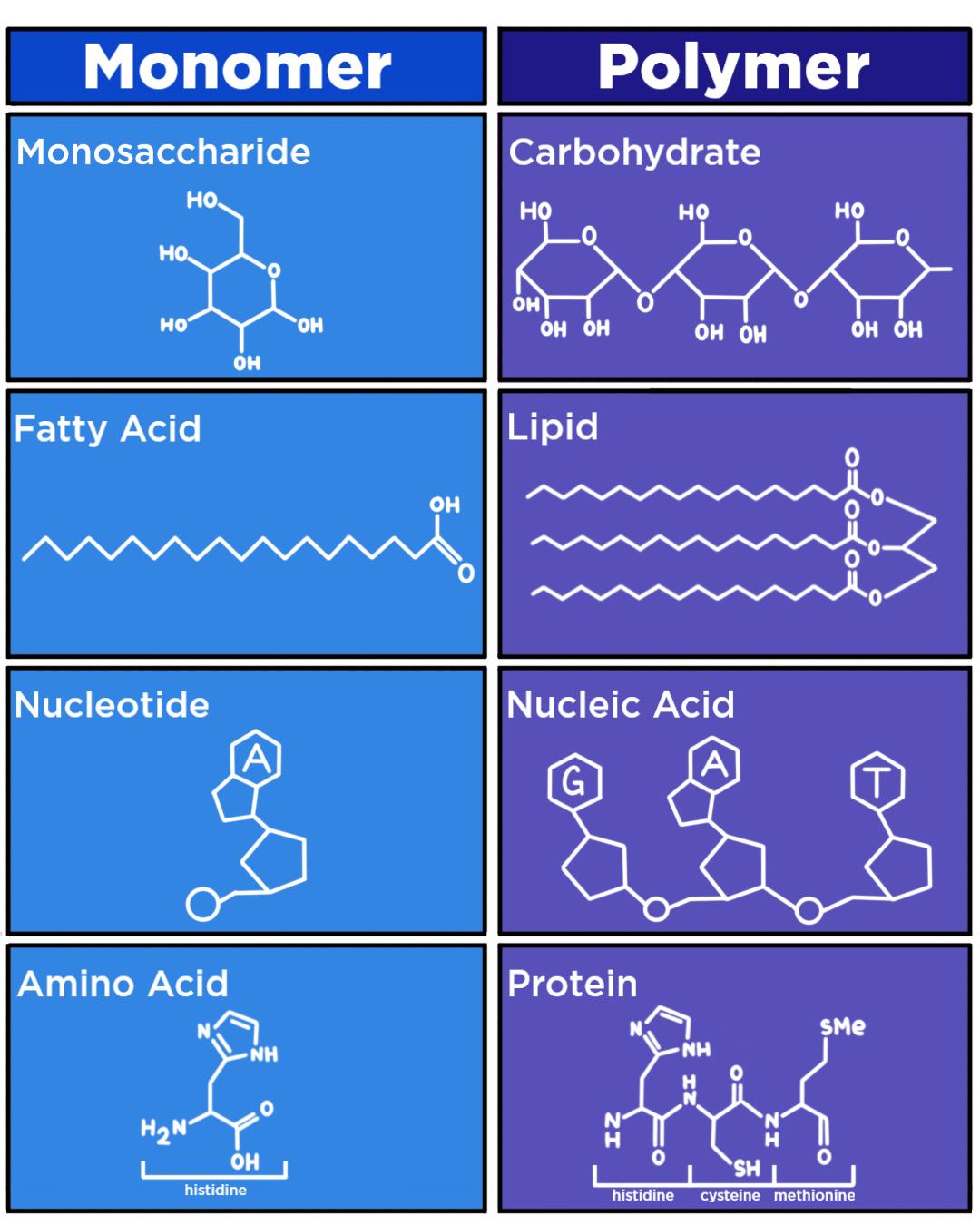
In the landscape of modern biotechnology and computational science, the question “what is lipids monomer?” serves as a gateway to understanding one of the most complex challenges in digital molecular modeling. While proteins have amino acids and nucleic acids have nucleotides, lipids occupy a unique space in bio-tech because they do not conform to the traditional definition of a polymer. From a technical and engineering perspective, lipids are not built from a single, repeating monomeric unit in a linear chain. Instead, they are defined by their structural components—primarily fatty acids and glycerol—which act as the modular “building blocks” in synthetic biology and nanotech applications.

As we move toward an era of personalized medicine and advanced drug delivery systems, the ability to digitize and manipulate these molecular components has become a cornerstone of the tech industry. Understanding the “monomer” of a lipid is no longer just a biological inquiry; it is a fundamental requirement for software engineers designing molecular simulations and biotech firms developing the next generation of lipid nanoparticles.
The Computational Architecture of Lipids: Defining the Building Blocks
In traditional biochemistry, polymers are large molecules made of repeating sub-units. However, lipids are categorized by their solubility and hydrophobic nature rather than a repeating structural motif. When developers and bio-informaticians look to define a “monomer” for lipids in a database or a simulation environment, they focus on two primary structural units: fatty acids and glycerol.
Digitizing the Carbon Chain: Fatty Acids as Data Points
In the context of bioinformatics, a fatty acid is treated as a modular data string. It consists of a long hydrocarbon chain and a carboxyl group. When building software to simulate lipid behavior, the length of this carbon chain and the degree of saturation (the presence of double bonds) serve as variables that dictate the molecule’s physical properties.
Technologically, the “monomer” here is interpreted as the repeating CH2 (methylene) units, but in functional terms, the fatty acid acts as the modular unit. Engineers use these parameters to predict how a lipid will behave under different thermal conditions or how it will interact with digital models of cellular membranes.
Glycerol: The Molecular Chassis
If fatty acids are the modular components, glycerol is the “chassis” or the motherboard upon which they are assembled. In a triglyceride or a phospholipid, the glycerol molecule provides the structural framework that connects the hydrophobic tails. In synthetic biology software, glycerol is often modeled as the central hub of the lipid assembly, allowing for the “plug-and-play” attachment of various fatty acid chains to create specific molecular functions.
AI and Machine Learning in Lipidomics
The study of lipids, or lipidomics, has been transformed by the integration of AI and machine learning. Because lipids do not have a simple, linear monomeric structure, identifying them in complex biological samples requires massive computational power and sophisticated pattern recognition.
Pattern Recognition in Lipid Diversity
Unlike DNA sequencing, which deals with four distinct bases, lipidomics must account for thousands of different combinations of fatty acid chains and head groups. AI tools are now used to analyze mass spectrometry data, identifying specific lipid species based on the fragments of their “monomers.”
Machine learning algorithms are trained on vast datasets to recognize the “fingerprints” of various fatty acids. This allows researchers to map the lipidome of a cell with unprecedented speed, identifying markers for diseases like Alzheimer’s or metabolic disorders before physical symptoms appear. This is a prime example of how digital security and data analysis are merging with biological science.
Software Tools for Molecular Mapping
New software platforms like LipidSearch and MS-DIAL utilize high-throughput processing to categorize lipid structures. These tools treat the constituent parts of a lipid—the glycerol backbone and the fatty acid chains—as distinct modules in a database. By simulating the fragmentation of these “building blocks,” the software can reconstruct the original lipid molecule, effectively “solving” the structure through computational logic rather than manual observation.
Lipid Nanoparticles (LNPs): Engineering at the Nanoscale
One of the most significant technological breakthroughs of the last decade is the development of Lipid Nanoparticles (LNPs). These are essentially engineered “cages” made of lipids used to deliver genetic material, such as mRNA, into cells. Here, the concept of the lipid monomer is pushed into the realm of chemical engineering.
Designing Custom Monomers for Drug Delivery
In the production of LNPs, scientists use “ionizable lipids.” These are synthetic molecules designed in a lab to respond to specific pH levels. By manipulating the “monomer-like” components of these lipids—changing the length of the tail or the charge of the head group—engineers can control exactly where and when a drug is released in the body.
This level of precision is made possible through molecular dynamics (MD) simulations. High-performance computing clusters run millions of iterations to see how different lipid structures will self-assemble into nanoparticles. The goal is to find the perfect “architecture” that protects the delicate cargo from the body’s immune system while ensuring efficient delivery to the target cells.
The Role of Digital Twins in Bio-Manufacturing
The tech industry is increasingly using “digital twins”—virtual replicas of physical systems—to optimize the production of LNPs. By creating a digital twin of a lipid molecule, manufacturers can simulate how changes to the fatty acid “monomers” will affect the stability and shelf-life of a vaccine. This reduces the need for expensive physical trials and accelerates the timeline for bringing life-saving tech to market.
The Quantum Computing Leap in Molecular Simulation
While current supercomputers are capable of modeling small groups of lipids, simulating a complete cellular membrane at the atomic level remains a massive computational hurdle. This is where quantum computing enters the frame.
Breaking the Simulation Bottleneck
Traditional binary computers struggle with the sheer number of variables involved in lipid interactions. Because lipids are non-polar and interact through complex Van der Waals forces, calculating their behavior requires solving equations that grow exponentially with the number of atoms.
Quantum computers, utilizing qubits, are uniquely suited for this task. They can simulate the electronic structure of the lipid “building blocks” with far greater accuracy. This allows tech firms to predict how a new synthetic lipid will behave in a biological environment without ever having to synthesize it in a lab. The “monomer” of the lipid, in this case, is treated as a quantum system, with every electron interaction mapped in high fidelity.
Accelerating Discovery with Quantum Algorithms
As quantum hardware matures, we will see the rise of quantum-assisted lipidomics. These algorithms will be able to sift through trillions of possible lipid configurations to find the most efficient structures for specific tech applications, from biodegradable plastics to advanced biofuels. The focus will shift from “what is a lipid monomer” to “how can we program a lipid-like structure for optimal performance.”
The Future of Digital Health and Programmable Matter
The intersection of lipid science and technology is leading us toward a future of “programmable matter.” By treating the components of lipids as modular units in a vast biological codebase, we are beginning to see the potential for tech that blurs the line between the digital and the physical.
Personalized Nutrition Software
Emerging apps and wearables are beginning to look at lipid profiles as a key metric for health. Future iterations of these tools will likely include software that provides real-time feedback on how specific “monomers”—such as Omega-3 or Omega-6 fatty acids—are being metabolized by the user. This data-driven approach to nutrition treats the body’s lipid levels as a system to be optimized through precise inputs.

Cyber-Biosecurity and Molecular Data
As we gain the ability to engineer lipids and their constituent parts with digital precision, the importance of cyber-biosecurity grows. The blueprints for synthetic lipids used in advanced therapeutics are valuable pieces of intellectual property. Protecting these digital sequences from cyberattacks is a new frontier for the security industry. The “code” that defines a lipid’s structure is just as sensitive as the code that defines a software’s core logic.
In conclusion, while lipids may lack a traditional monomer in the biological sense, the tech world has redefined their constituent parts as the essential building blocks of a new bio-digital era. Through AI, quantum computing, and advanced nanotechnology, our understanding of these molecules is evolving from basic classification to sophisticated engineering. The study of lipids is no longer confined to the petri dish; it is being written in the code that will power the next generation of technological innovation.
aViewFromTheCave is a participant in the Amazon Services LLC Associates Program, an affiliate advertising program designed to provide a means for sites to earn advertising fees by advertising and linking to Amazon.com. Amazon, the Amazon logo, AmazonSupply, and the AmazonSupply logo are trademarks of Amazon.com, Inc. or its affiliates. As an Amazon Associate we earn affiliate commissions from qualifying purchases.