
A property lien is a legal claim or a right against a property, filed by a creditor, that is used to secure a debt or an obligation. In essence, it’s a financial encumbrance that provides a creditor with a legal interest in an asset, typically real estate, until a debt is repaid. This claim effectively makes the property collateral for the outstanding debt, limiting the owner’s ability to sell or refinance the property without first satisfying the lien. Understanding the nuances of property liens is crucial for anyone involved in real estate, from homeowners and investors to lenders and legal professionals, as they profoundly impact property ownership rights and financial transactions.
The Core Concept: Defining a Property Lien
At its heart, a property lien is a mechanism designed to ensure that creditors can recover what they are owed. It acts as a warning to potential buyers or lenders that the property has an outstanding financial obligation attached to it.
What is a Lien?
A lien is not ownership of the property; rather, it’s a claim against the property that grants the lienholder (the creditor) the right to seize or sell the property if the debt is not repaid. This right is typically enforced through a legal process, such as foreclosure. The existence of a lien clouds the property’s title, meaning the ownership is not clear and free of encumbrances. For a property to be sold or refinanced, the title usually needs to be “clear,” which often requires the satisfaction or release of any existing liens.
The Purpose of a Lien
The primary purpose of a lien is to provide security for a debt. Without liens, creditors would have less incentive to lend money, especially for large assets like real estate, as their ability to recover funds in case of default would be significantly hampered. For example, when you take out a mortgage to buy a home, the bank places a lien on your property. This ensures that if you stop making payments, the bank has the legal right to take possession of and sell the home to recover the outstanding loan amount. Liens therefore play a vital role in facilitating credit and enabling significant financial transactions by mitigating risk for lenders.
Parties Involved
Typically, there are two main parties involved in a lien:
- The Lienholder (Creditor): This is the party who is owed money and places the lien on the property. Examples include banks, government entities (for taxes), contractors, or individuals who have won a judgment in court.
- The Property Owner (Debtor): This is the party who owns the property and owes the debt. Their property is subject to the lien until the debt is satisfied.
Diverse Forms: Exploring Different Types of Property Liens
Liens are not monolithic; they come in various forms, each with distinct characteristics regarding how they are created, their scope, and their implications. Categorizing them helps in understanding their origin and potential impact.
Voluntary vs. Involuntary Liens
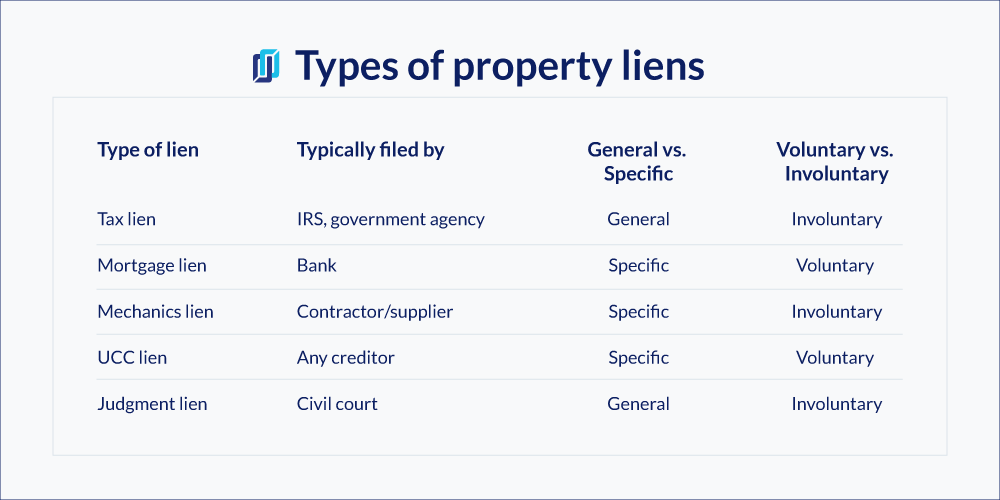
- Voluntary Liens (Consensual Liens): These are liens that the property owner willingly agrees to. The most common example is a mortgage lien, where the homeowner voluntarily pledges their property as collateral for a loan. By signing the mortgage agreement, they consent to the lien being placed on their property.
- Involuntary Liens: These are imposed on a property without the owner’s consent, often due to legal obligations or unpaid debts. They are typically created by law or a court order.
Specific vs. General Liens
- Specific Liens: These attach to a single, specific piece of property. A mortgage lien is a classic example, as it only attaches to the property being financed. A mechanic’s lien (for unpaid construction work on a specific property) is another.
- General Liens: These attach to all properties owned by the debtor within a certain jurisdiction. A judgment lien (resulting from a court judgment) is often a general lien, potentially affecting all real estate owned by the debtor in that county or state. Federal tax liens are also general liens.
Common Examples of Property Liens
Delving into specific examples helps illustrate the practical application and impact of different liens:
- Mortgage Liens: The most prevalent type of voluntary lien. When a financial institution lends money to purchase or refinance real estate, they secure their interest by placing a mortgage lien on the property. This ensures that if the borrower defaults, the lender can foreclose to recover their investment.
- Tax Liens: These are involuntary liens placed on property by government entities for unpaid taxes. This can include property tax liens (for unpaid local real estate taxes), federal tax liens (imposed by the IRS for unpaid federal income taxes), or state income tax liens. Tax liens often take priority over other types of liens.
- Mechanic’s Liens (Construction Liens): These involuntary liens are filed by contractors, subcontractors, or material suppliers who haven’t been paid for work or materials supplied to improve a property. They secure the right to be paid for their services and can lead to foreclosure if not satisfied.
- Judgment Liens: If a person loses a lawsuit and is ordered to pay a sum of money (a judgment) that they fail to pay, the winning party (the judgment creditor) can often file a judgment lien against the debtor’s real property. This is an involuntary, often general, lien.
- HOA/Condo Association Liens: Homeowners’ associations (HOAs) and condominium associations can place liens on properties within their jurisdiction for unpaid dues, assessments, or fines. These are involuntary liens, often statutory or arising from the association’s governing documents.
- IRS Liens: These are federal tax liens imposed by the Internal Revenue Service against all of a taxpayer’s property (real and personal) when federal taxes are unpaid after demand. These are general, involuntary liens and can significantly impact a taxpayer’s financial standing.
Impact and Implications: How Liens Affect Property Owners
The presence of a lien has significant ramifications for property owners, affecting their financial flexibility and property rights.
Restrictions on Sale or Transfer
Perhaps the most immediate impact of a lien is its effect on the property’s marketability. A property with an outstanding lien cannot typically be sold with a clear title. During a property sale, a title search will reveal any existing liens. To complete the transaction, these liens generally must be satisfied (paid off) at or before closing, with the funds often coming directly from the sale proceeds. If a lien is not disclosed or satisfied, the new owner could inherit the debt, though robust title insurance protects against this.
Challenges with Refinancing
Similarly, refinancing a property with existing liens can be challenging. Lenders are often reluctant to provide new financing when there are other claims against the property, as it complicates their ability to take a primary position. Any existing liens would need to be paid off or subordinated (moved to a lower priority) for the new loan to proceed.
Lien Priority and Its Significance
A critical concept related to liens is their priority. When multiple liens exist on a single property, their priority determines the order in which they will be paid off if the property is sold, especially during a foreclosure. Generally, the rule “first in time, first in right” applies, meaning the lien recorded first typically has higher priority. However, there are exceptions:
- Super-priority Liens: Certain liens, like property tax liens, often have super-priority status, meaning they take precedence over almost all other liens, regardless of when they were recorded.
- Subordination Agreements: Lienholders can agree to subordinate their lien to another, meaning they voluntarily agree to move to a lower priority. This is common when a lender wants to refinance a first mortgage, and the second mortgage holder agrees to remain in the second position.
Understanding lien priority is vital because junior lienholders (those with lower priority) may not recover their full debt if the property’s sale price during foreclosure is insufficient to cover all senior liens.
Foreclosure Proceedings
The most severe consequence of an unresolved lien is foreclosure. If a debt secured by a lien is not paid, the lienholder can initiate legal proceedings to force the sale of the property. The proceeds from this sale are then used to satisfy the outstanding debt. Foreclosure results in the loss of the property for the owner and can have devastating financial and credit implications.
Proactive Management: Discovering and Resolving Property Liens
Given the significant impact of liens, property owners and prospective buyers must be proactive in discovering and addressing them.
How to Discover Existing Liens
- Title Search: This is the most comprehensive method. A title company or attorney researches public records (county recorder’s office, court records) to identify any claims, encumbrances, or liens against a property’s title. This is a standard part of any real estate transaction.
- Credit Report: While not exhaustive for property-specific liens, some judgment liens or federal tax liens might appear on an individual’s credit report, indicating broader financial distress that could affect property.
- Direct Inquiry: For properties, one can often inquire directly with county recorder’s offices or tax assessors for information on recorded liens.
Strategies for Lien Resolution and Removal
Once a lien is discovered, several strategies can be employed to resolve and remove it:
- Paying the Debt: The most straightforward way to remove a lien is to pay the underlying debt in full. Once paid, the lienholder is legally obligated to file a “lien release” or “satisfaction of lien” document with the appropriate public office, clearing the property’s title.
- Negotiation and Settlement: If paying the full amount is not feasible, debtors can often negotiate with the lienholder for a reduced settlement amount. This is common with judgment liens or overdue HOA assessments.
- Contesting the Lien: If a lien is believed to be invalid or improperly filed, the property owner can legally challenge it in court. This requires legal representation and evidence to prove the lien is without merit.
- Legal Action (e.g., Quiet Title Action): In complex situations where a lien’s validity or priority is unclear, an owner might file a “quiet title” lawsuit to resolve all claims against the property and establish clear ownership.
- Bankruptcy: While a drastic measure, filing for bankruptcy can sometimes discharge certain types of liens or significantly alter their terms, though secured liens like mortgages typically remain attached to the property.
Strategic Financial Planning in the Shadow of Liens
Understanding liens is not just about reacting to problems; it’s about incorporating this knowledge into sound financial planning and asset protection strategies.
Impact on Creditworthiness
Involuntary liens, particularly judgment liens and tax liens, are public records and can severely damage an individual’s credit score. This makes it harder to secure future loans, credit cards, or even certain types of employment. Resolving these liens and ensuring their removal from credit reports is essential for financial recovery.
Importance of Due Diligence in Property Transactions
For potential homebuyers, thorough due diligence, including a comprehensive title search, is non-negotiable. It protects against unknowingly acquiring a property with hidden debts attached, which could become the new owner’s responsibility or at least a significant headache to resolve. For sellers, ensuring all liens are cleared before listing a property can streamline the sale process and prevent last-minute complications.

Protecting Your Assets
Proactive financial management, such as maintaining good credit, paying taxes on time, and addressing debts promptly, is the best defense against involuntary liens. For businesses and real estate investors, understanding the nuances of construction law, contract agreements, and partnership liabilities can prevent mechanic’s liens or judgment liens from arising. Protecting one’s assets means not only acquiring them but also diligently safeguarding them from unforeseen encumbrances that could undermine their value and your ownership rights.
aViewFromTheCave is a participant in the Amazon Services LLC Associates Program, an affiliate advertising program designed to provide a means for sites to earn advertising fees by advertising and linking to Amazon.com. Amazon, the Amazon logo, AmazonSupply, and the AmazonSupply logo are trademarks of Amazon.com, Inc. or its affiliates. As an Amazon Associate we earn affiliate commissions from qualifying purchases.