
In the dynamic world of personal and business finance, acquiring a vehicle often represents one of the most substantial financial commitments. While outright purchase or financing through a loan are traditional routes, vehicle leasing has emerged as a widely adopted alternative, offering a distinct set of financial advantages and considerations. At its core, vehicle leasing is a long-term rental agreement that allows an individual or business to use a new car, truck, or SUV for a set period, typically 2 to 4 years, in exchange for regular monthly payments. Unlike purchasing, leasing does not confer ownership of the vehicle, but rather provides the lessee with exclusive usage rights for the duration of the agreement.
Understanding the intricacies of vehicle leasing is crucial for anyone evaluating their options for acquiring transportation. It involves delving into financial terms, understanding contractual obligations, and assessing the long-term monetary implications against personal or business financial goals. This article will demystify vehicle leasing, breaking down its fundamental components, comparing it to traditional purchasing, exploring the underlying financial mechanics, and guiding you through the critical considerations to determine if it aligns with your financial strategy.
The Fundamentals of Vehicle Leasing
To appreciate the financial nuances of vehicle leasing, it’s essential to first grasp its foundational concepts. Leasing is a specialized form of financing that differs significantly from a conventional auto loan, primarily because it’s based on the vehicle’s depreciation during the lease term, rather than its full purchase price.
Defining Vehicle Leasing
A vehicle lease is essentially a contractual agreement between a lessee (the person or entity leasing the vehicle) and a lessor (the financing company, often a captive finance arm of the manufacturer, or a bank). Under this agreement, the lessee pays for the right to use the vehicle for a predetermined period and mileage allowance. The monthly payments are calculated based on the difference between the vehicle’s initial value (or capitalized cost) and its estimated value at the end of the lease term (the residual value), plus interest (known as the money factor), taxes, and fees. At the end of the lease, the lessee typically has options: return the vehicle, purchase it, or lease a new one.
Key Parties Involved
Understanding the roles of the parties involved illuminates the financial flow and responsibilities:
- Lessee: The individual or business using the vehicle. They are responsible for making timely payments, adhering to mileage limits, maintaining the vehicle, and returning it in good condition.
- Lessor: The financial institution that owns the vehicle and provides the lease financing. They determine the lease terms, including the capitalized cost, residual value, and money factor.
- Dealership: While often the point of contact for the lessee, the dealership typically acts as an intermediary, facilitating the lease agreement between the lessee and the lessor. They are compensated for the sale (or lease initiation) of the vehicle.
Understanding the Lease Agreement
The lease agreement is a legally binding contract detailing all financial terms and conditions. Key elements include:
- Lease Term: The duration of the lease, usually expressed in months (e.g., 24, 36, 48 months).
- Mileage Allowance: The maximum number of miles allowed over the lease term without incurring excess mileage charges (e.g., 10,000, 12,000, or 15,000 miles per year).
- Monthly Payment: The fixed amount paid by the lessee each month.
- Capitalized Cost (Cap Cost): The agreed-upon selling price of the vehicle, equivalent to the purchase price in a finance deal. This can be negotiated.
- Residual Value: The estimated value of the vehicle at the end of the lease term, determined by the lessor. This value is crucial as it dictates a significant portion of the lease payment.
- Money Factor: The lease equivalent of an interest rate, expressed as a small decimal (e.g., 0.00250). To get an approximate APR, multiply by 2400.
- Down Payment/Cap Cost Reduction: Any upfront payment made to lower the capitalized cost, thereby reducing monthly payments.
- Acquisition Fee: An administrative fee charged by the lessor at the beginning of the lease.
- Disposition Fee: A fee charged at the end of the lease if the lessee returns the vehicle.
Leasing vs. Buying: A Comprehensive Financial Comparison
The fundamental decision for vehicle acquisition often boils down to leasing versus buying. Each path presents distinct financial implications that must be weighed against an individual’s or business’s financial health, goals, and usage patterns.
Monthly Payments and Upfront Costs
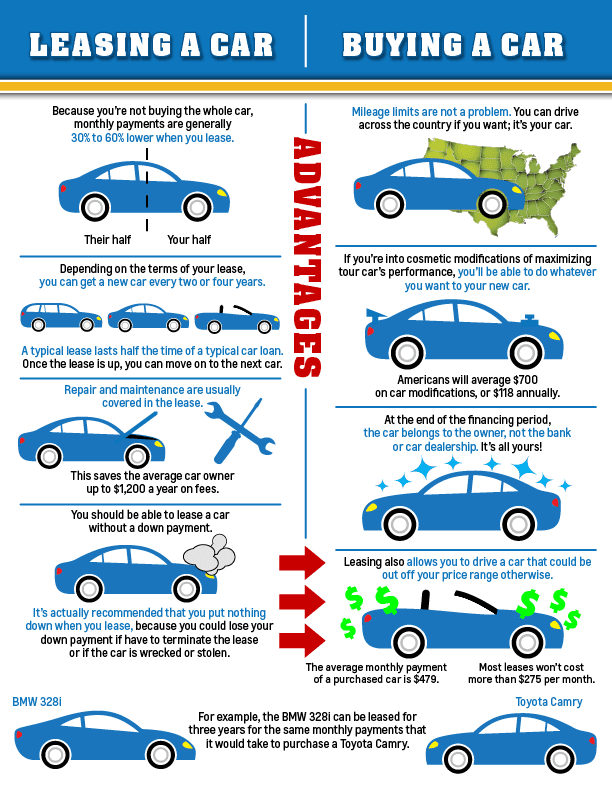
- Leasing: Typically boasts lower monthly payments compared to financing the same vehicle for the same term. This is because you are only paying for the depreciation of the vehicle during your use, plus a money factor, rather than its entire purchase price. Upfront costs can include an acquisition fee, first month’s payment, security deposit, and potentially a “cap cost reduction” (similar to a down payment). While a lower cap cost reduction can mean higher monthly payments, it frees up cash flow.
- Buying (Financing): Monthly loan payments are generally higher because you are paying off the full purchase price of the vehicle, plus interest. Upfront costs typically include a down payment, sales tax, and registration fees. A larger down payment reduces the total amount financed and thus the monthly payment and total interest paid.
Ownership and Equity Considerations
- Leasing: You do not own the vehicle. You are essentially renting it for a fixed term. Consequently, you do not build equity in the vehicle. This can be a disadvantage if you value asset accumulation. However, it means you avoid the risk of depreciation, as the residual value is set at the outset.
- Buying (Financing): You own the vehicle once the loan is paid off. From day one, you begin to build equity as you pay down the principal balance of the loan, assuming the vehicle’s market value doesn’t plummet faster than your payments. Ownership provides the freedom to modify the vehicle, drive unlimited miles, and sell it at any time.
Long-term Financial Impact
- Leasing: Offers predictability with fixed monthly payments and predictable end-of-lease options. For businesses, lease payments can often be deducted as an operating expense, offering tax advantages. For individuals, leasing allows for a new car every few years with the latest technology and safety features, often under warranty, minimizing unexpected repair costs. However, continuous leasing means perpetual car payments without ever owning an asset. The total cost of continuously leasing over many years can exceed the cost of buying and maintaining a vehicle for a longer period.
- Buying (Financing): After the loan is paid off, you have a period of no car payments, which can free up significant cash flow. While maintenance costs increase as the vehicle ages, the absence of loan payments can offset these expenses. For individuals, owning a vehicle outright provides a tangible asset that can be traded in or sold. The overall financial picture depends heavily on how long the vehicle is kept after the loan is paid off.
Maintenance and Depreciation
- Leasing: Since leases typically cover the vehicle’s early life (3-4 years), it’s often covered by the manufacturer’s warranty, minimizing out-of-pocket repair expenses. You are responsible for routine maintenance, but major repair costs are usually avoided. Depreciation risk is absorbed by the lessor, as the residual value is fixed.
- Buying (Financing): While under warranty initially, as the vehicle ages, the owner becomes fully responsible for all maintenance and repairs, which can become substantial. The owner also bears the full burden of depreciation, which is steepest in the first few years of ownership.
The Financial Mechanics of a Vehicle Lease
Deconstructing the lease payment calculation is key to understanding the financial product you are entering into. Unlike a simple loan interest calculation, a lease payment involves several distinct financial components.
Capitalized Cost
The capitalized cost, or “cap cost,” is the starting point for a lease calculation. It’s essentially the negotiated selling price of the vehicle. Just as with a purchase, you can negotiate this price. A lower cap cost directly translates to lower monthly payments. Any rebates, trade-in value, or cash down payment (known as a “cap cost reduction”) will reduce this figure further. From a financial perspective, maximizing cap cost reductions can be strategic if you have available capital and want to minimize recurring expenses.
Residual Value
The residual value is the estimated wholesale value of the vehicle at the end of the lease term. This figure is set by the lessor and is non-negotiable. It’s expressed as a percentage of the Manufacturer’s Suggested Retail Price (MSRP). A higher residual value (meaning the vehicle is expected to hold its value well) results in lower monthly payments because you are paying for less depreciation. Conversely, a lower residual value leads to higher payments. Understanding a vehicle’s projected residual value can inform your choice of car for leasing.
Money Factor (Lease Rate)
The money factor represents the interest rate charged on the lease. It’s typically expressed as a very small decimal, like 0.00250. To convert it to an approximate annual percentage rate (APR), you can multiply it by 2400 (0.00250 * 2400 = 6% APR). A lower money factor means less interest paid over the lease term, resulting in lower monthly payments. This factor is largely influenced by current market interest rates and your creditworthiness. Negotiating a lower money factor, if possible, is equivalent to getting a better interest rate on a loan.
Lease Payment Calculation Breakdown
The monthly payment is primarily derived from two components:
- Depreciation Portion: (Capitalized Cost – Residual Value) / Lease Term (in months)
- Finance Charge (Money Factor Portion): (Capitalized Cost + Residual Value) * Money Factor
Adding these two together, plus applicable sales tax on the monthly payment (which varies by state) and any administrative fees, gives you the total monthly lease payment. This structure ensures that a significant portion of your payment covers the vehicle’s value loss during your usage period.
Taxes and Fees
Beyond the core depreciation and finance charges, lease agreements involve various taxes and fees:
- Sales Tax: Varies by state; some states tax the total lease value upfront, others tax monthly payments.
- Acquisition Fee: An administrative fee for setting up the lease.
- Documentation Fee: For processing paperwork.
- Registration and License Fees: Standard fees for vehicle plates and registration.
These fees can significantly impact the “drive-off” amount, the total amount due at the time of lease signing.
Navigating the End of a Lease Agreement
The conclusion of a lease term presents several financial decisions and potential costs that lessees must be prepared for. Understanding these options and potential pitfalls is crucial for a financially savvy exit.
End-of-Lease Options
As your lease term approaches its end, typically in the last 60-90 days, the lessor will contact you to discuss your options:
- Return the Vehicle: This is the most common option. You simply return the vehicle to the dealership. However, be prepared for potential charges for excess mileage, excess wear and tear, and a disposition fee.
- Purchase the Vehicle: Your lease agreement includes a predetermined purchase option price (the residual value). If you love the car and its market value is higher than the residual value, purchasing it could be a financially sound decision. You would then need to secure financing for this purchase.
- Lease a New Vehicle: Many lessees choose to trade in their current lease for a new one, often with the same manufacturer. Dealers might offer incentives to transition into a new lease.
- Extend the Lease: In some cases, if you need more time or are waiting for a new model, you might be able to extend your current lease month-to-month, though this option often comes with higher monthly payments or less favorable terms.
Excess Wear and Tear
Lease agreements define what constitutes “normal wear and tear.” Anything beyond this, such as significant dents, scratches, damaged upholstery, or bald tires, could result in charges. It is financially prudent to address minor repairs before returning the vehicle, as dealership repair costs can sometimes be higher. Keeping the vehicle well-maintained throughout the lease term is the best defense against these charges.
Mileage Overages
Sticking to your agreed-upon mileage allowance is critical. Exceeding it can result in significant per-mile charges (e.g., $0.15 – $0.25 per mile). If you anticipate going over, it might be more cost-effective to negotiate a higher mileage allowance upfront or explore options to buy out your lease early. Financial planning should include an accurate assessment of annual driving habits.
Disposition Fee
This is a final administrative fee charged by the lessor when you return the vehicle. It’s important to factor this into your total lease cost analysis, as it’s an unavoidable expense if you choose to return the car. Some lessors waive this fee if you lease another vehicle from them.
Is Leasing Right for Your Financial Situation?
Deciding whether to lease or buy involves a personal financial assessment, considering your cash flow, long-term asset goals, and lifestyle.
Pros of Leasing
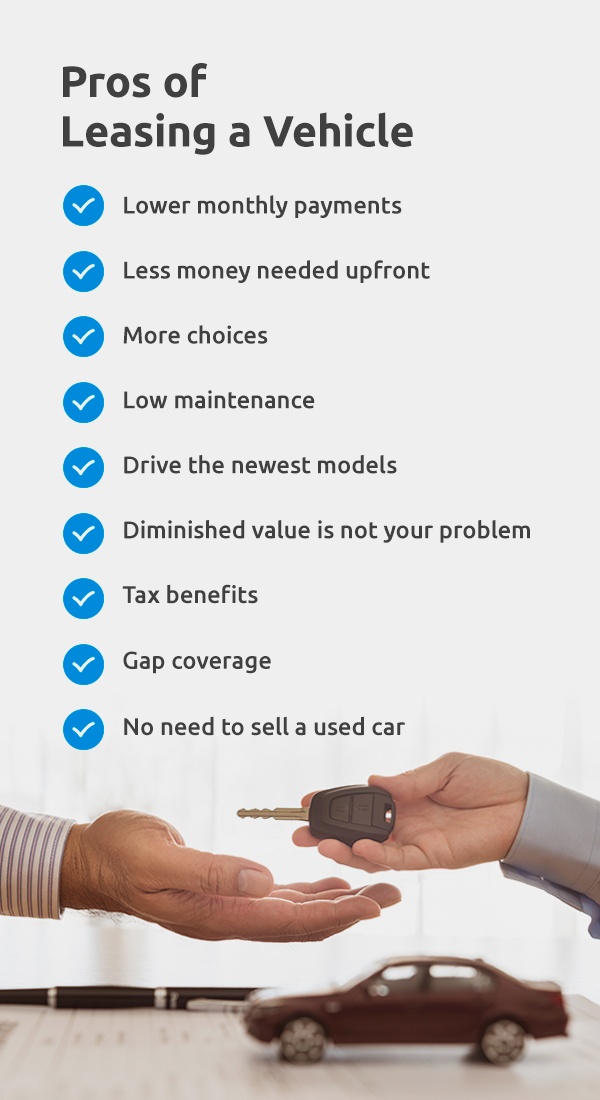
- Lower Monthly Payments: Frees up cash flow for other investments or expenses.
- Access to Newer Vehicles: Allows you to drive a new car with the latest features every few years.
- Reduced Maintenance Costs: Vehicles are typically under warranty for the lease term, minimizing unexpected repair bills.
- Lower Upfront Costs: Often requires less money down compared to purchasing.
- Tax Advantages for Businesses: Lease payments can often be deducted as an operating expense.
- Avoids Depreciation Risk: The lessor absorbs the risk of the vehicle losing more value than anticipated.
Cons of Leasing
- No Ownership/Equity: You don’t build equity in an asset.
- Mileage Restrictions: Penalties for exceeding the agreed-upon mileage limit.
- Wear and Tear Charges: Potential fees for damage beyond normal wear.
- Early Termination Fees: Can be very expensive if you need to end the lease prematurely.
- Continuous Payments: You will always have a car payment if you perpetually lease.
- No Customization: Limited ability to modify the vehicle.
Who Benefits Most from Leasing
Leasing is often financially advantageous for:
- Individuals/Businesses who desire a new vehicle every 2-4 years: Those who prioritize driving the latest models with advanced technology and safety features.
- Low-mileage drivers: Those who consistently drive fewer miles than typical allowances (e.g., 10,000-12,000 miles per year).
- Individuals/Businesses seeking lower monthly payments: Those looking to optimize cash flow and minimize upfront capital expenditure.
- Business owners: Businesses that can leverage the tax deductibility of lease payments and prefer to keep vehicles updated for a professional image.

Key Financial Questions to Ask
Before signing a lease agreement, consider these financial questions:
- What is the total cost of the lease, including all fees, over the entire term?
- How does the effective APR (money factor) compare to current loan rates?
- What is the exact mileage allowance, and what are the per-mile overage charges?
- What are the terms for excess wear and tear?
- What are the early termination penalties?
- Does the lease structure align with my personal or business cash flow projections?
- Have I considered all the alternatives (buying new, buying used) and their long-term financial implications?
In conclusion, vehicle leasing is a sophisticated financial tool that, when understood and utilized correctly, can offer significant benefits. However, it requires a thorough understanding of its financial mechanics and a realistic assessment of one’s driving habits and financial objectives. By carefully comparing it to traditional purchasing and scrutinizing the lease agreement’s terms, individuals and businesses can make an informed decision that best serves their financial interests.
aViewFromTheCave is a participant in the Amazon Services LLC Associates Program, an affiliate advertising program designed to provide a means for sites to earn advertising fees by advertising and linking to Amazon.com. Amazon, the Amazon logo, AmazonSupply, and the AmazonSupply logo are trademarks of Amazon.com, Inc. or its affiliates. As an Amazon Associate we earn affiliate commissions from qualifying purchases.