
The landscape of professional sports finance was fundamentally altered in early 2023 when Lamar Jackson signed his long-awaited extension with the Baltimore Ravens. For months, the negotiation was a centerpiece of financial speculation, not just because of the dollar amounts involved, but because of the unconventional methods used to reach the agreement. The final result—a five-year, $260 million contract—solidified Jackson’s place at the top of the NFL’s economic hierarchy and provided a masterclass in high-stakes business negotiation, risk management, and the mechanics of salary cap manipulation.

To understand Lamar Jackson’s contract is to understand the complex intersection of liquid cash flow, long-term debt structuring, and the burgeoning valuation of elite human capital in the entertainment industry.
The Financial Anatomy of the $260 Million Agreement
At its core, Lamar Jackson’s contract is a five-year extension that runs through the 2027 season. With a total value of $260 million, the deal carries an Average Annual Value (AAV) of $52 million. At the time of signing, this figure set a new benchmark for the highest-paid player in NFL history on an annual basis, narrowly surpassing the deal signed by Jalen Hurts just weeks prior.
The Power of the Signing Bonus
The most immediate financial impact of the contract was the $72.5 million signing bonus. In the world of high-finance sports contracts, the signing bonus is the ultimate tool for both the player and the organization. For Jackson, it represented immediate liquidity—a massive influx of cash that can be deployed into diversified investment portfolios or private equity ventures. From the Ravens’ perspective, the signing bonus is a strategic accounting maneuver. Under NFL salary cap rules, a signing bonus is paid upfront but its “cap hit” is prorated over the life of the contract (up to five years). This allowed the Ravens to keep Jackson’s immediate salary cap number manageable while still putting record-breaking cash into his pocket.
Cash Flow Distribution
While the $260 million headline figure is impressive, the “cash flow” or the timing of the payments is often more important to a professional athlete’s wealth management strategy. Jackson’s deal was structured to provide $80 million in the first year alone. When evaluating the time value of money, receiving nearly 31% of the total contract value within the first twelve months provides a significant advantage for compounding returns compared to a backloaded deal.
Guaranteed Money: Risk Mitigation and Financial Security
In any major business contract, the “total value” is often a “funny money” number—a maximum ceiling that is rarely reached if the contract is terminated early. The true metric of a contract’s strength is the guaranteed portion. Lamar Jackson’s contract includes $185 million in total guarantees, with $135 million fully guaranteed at the time of signing.
Fully Guaranteed vs. Contingent Guarantees
There is a critical distinction in sports finance between “fully guaranteed” and “guaranteed for injury.” Jackson’s $135 million was fully guaranteed, meaning that regardless of his performance, health, or even his presence on the roster, the Ravens are legally obligated to pay that sum. The remaining portion of the $185 million consists of “vesting guarantees.” These are amounts that become fully guaranteed if the player remains on the roster by a specific date in the future (usually the third or fourth day of the league year). This structure provides the team with a “trap door” in the later years of the contract while providing the player with a clear roadmap to total financial security.
The Escrow Factor
A little-known but vital aspect of these massive guarantees is the NFL’s “Funding Rule.” The league requires teams to place the entirety of a player’s fully guaranteed future salary into an escrow account at the time the contract is signed. For the Ravens, this meant setting aside over $100 million in liquid cash to be held by the league. This is a significant capital expenditure for any business, requiring the ownership group to have immense liquidity on hand, separate from their annual operating budgets.
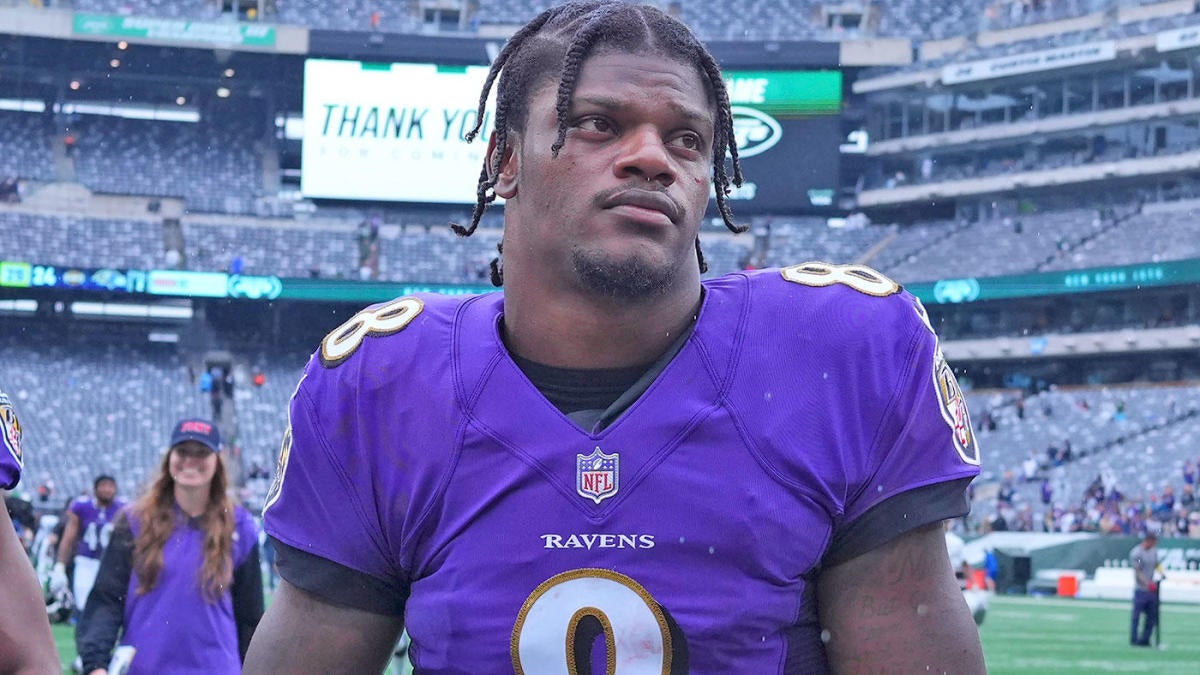
The Strategy of Self-Representation: A Case Study in Personal Branding
Perhaps the most discussed element of Lamar Jackson’s contract was his decision to negotiate the deal without a traditional NFL agent. Typically, sports agents charge between 1% and 3% of a player’s contract value. By representing himself, Jackson bypassed the standard corporate intermediary.
Calculating the Savings
On a $260 million deal, a 3% agent fee would amount to $7.8 million. By managing the negotiation alongside his mother and a team of legal advisors, Jackson retained that $7.8 million within his own personal wealth structure. In the context of personal finance, this is a massive win; $7.8 million invested at a conservative 7% annual return would grow to over $10.9 million by the time the contract expires.
The “Non-Exclusive” Franchise Tag Gambit
The path to this contract involved Jackson being placed on the “non-exclusive franchise tag.” This was a calculated financial risk. It allowed Jackson to negotiate with other teams, while the Ravens maintained the right to match any offer. While many analysts viewed this as a slight to Jackson’s value, it actually served as a price-discovery mechanism. By seeing that no other team was willing to offer a fully guaranteed five-year deal (similar to the outlier contract Deshaun Watson signed with Cleveland), Jackson and the Ravens were able to find a middle ground that respected the market reality while still setting a new record for AAV.
Comparative Market Analysis and Macroeconomic Trends
To understand if Jackson’s contract was a “good deal” from a business perspective, one must look at the broader NFL economy. The league’s salary cap is tied to “Football Related Income” (FRI), which includes massive television contracts and sports betting partnerships. As league revenue grows, the salary cap rises, meaning that yesterday’s record-breaking deal quickly becomes tomorrow’s bargain.
The Inflation of the Quarterback Market
When Jackson signed for $52 million per year, he was the highest-paid player. However, in the months that followed, players like Justin Herbert and Joe Burrow signed deals that exceeded his AAV, pushing the market closer to the $55 million and $60 million marks. This is a classic example of “market inflation.” By signing when he did, Jackson secured his financial future before a potential cooling of the market, while the Ravens secured their franchise cornerstone before prices climbed even higher.
Opportunity Cost and Performance Metrics
From an investment standpoint, the Ravens are paying for Jackson’s unique “dual-threat” capability. His ability to generate revenue—through ticket sales, jersey moves, and prime-time television appearances—justifies the $260 million expenditure. In corporate terms, Jackson is the “Product” and the “Marketing Department” rolled into one. The Return on Investment (ROI) for the Ravens is not just measured in wins and losses, but in the appreciation of the franchise’s total valuation, which has skyrocketed alongside the league’s media deals.

The Legacy of the Deal in Business Finance
The Lamar Jackson contract will be studied for years as a pivotal moment in the evolution of athlete-led business ventures. It challenged the necessity of the agency model and highlighted the importance of guaranteed cash in high-risk industries.
For the Ravens, the contract is a sophisticated exercise in debt management. By using “void years” and restructuring options, they can manipulate Jackson’s cap hit to remain competitive in the short term while pushing the financial obligations into future years when the salary cap is expected to be significantly higher due to new streaming rights deals.
Ultimately, Jackson’s $260 million contract is more than just a sports story; it is a complex financial instrument. It balances immediate liquidity with long-term guarantees, utilizes tax-advantaged structures like signing bonuses, and demonstrates the power of a “personal brand” to command market-leading compensation without traditional corporate representation. As the NFL continues to grow into a multi-billion dollar global entertainment juggernaut, the Jackson deal stands as a blueprint for how elite talent can maximize their earnings potential in an era of unprecedented revenue growth.
aViewFromTheCave is a participant in the Amazon Services LLC Associates Program, an affiliate advertising program designed to provide a means for sites to earn advertising fees by advertising and linking to Amazon.com. Amazon, the Amazon logo, AmazonSupply, and the AmazonSupply logo are trademarks of Amazon.com, Inc. or its affiliates. As an Amazon Associate we earn affiliate commissions from qualifying purchases.