
The kilopascal (kPa) stands as a fundamental unit of pressure, a critical metric across countless technological domains. In an increasingly data-driven world, understanding such units is not merely academic; it’s essential for professionals designing, deploying, and maintaining the sophisticated systems that power modern society. From the precise calibration of medical devices to the robust monitoring of industrial machinery and the intricate atmospheric models used in meteorology, the kilopascal serves as a common language for quantifying force distributed over an area. This article delves into the technical definition of the kilopascal, its derivation from the broader concept of pressure, and its indispensable role in contemporary technology.

The Foundation of Pressure Measurement in Technology
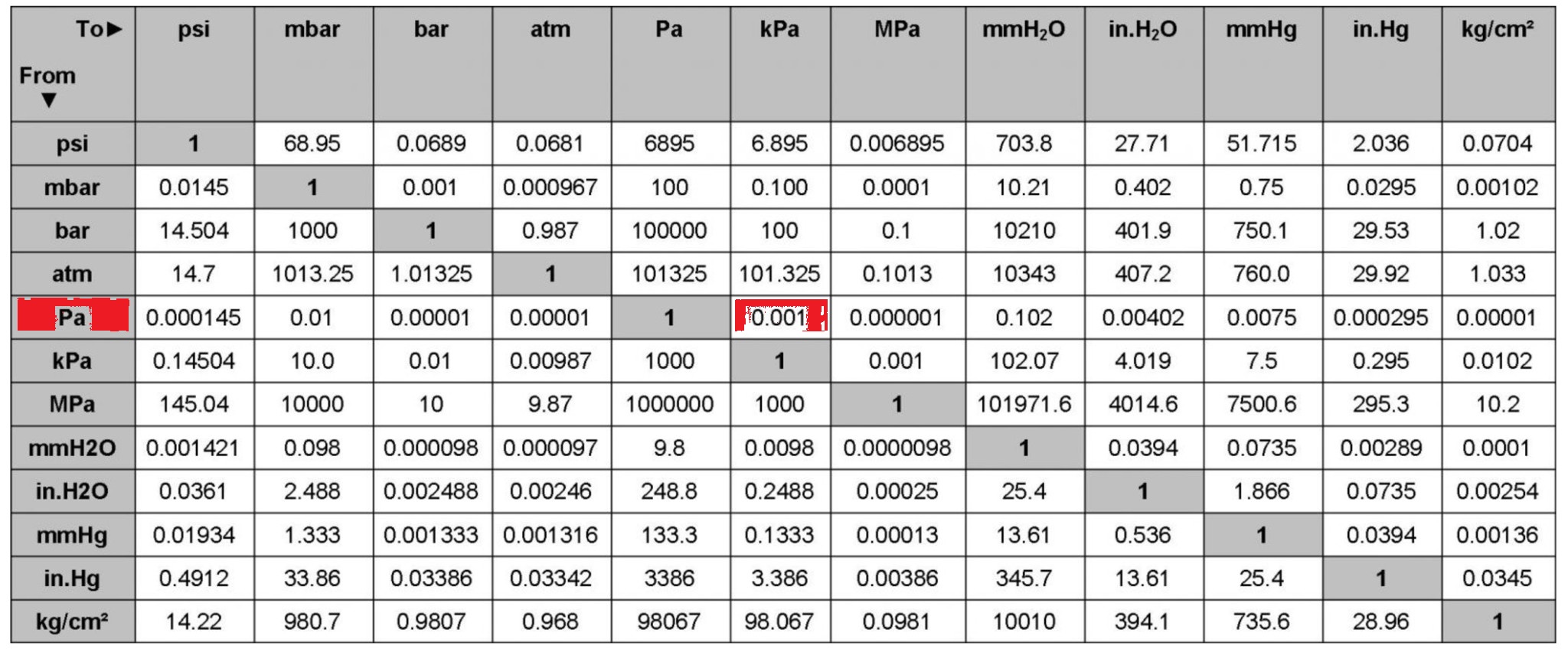
Pressure, at its core, is the force applied perpendicular to a surface divided by the area over which that force is distributed (P = F/A). Its measurement is vital across physics, engineering, and daily life, ensuring everything from the integrity of structures to the efficiency of fluid systems. The International System of Units (SI) designates the Pascal (Pa) as the standard unit for pressure. One Pascal is defined as one Newton of force per square meter (1 Pa = 1 N/m²). This unit, while scientifically precise, is quite small relative to many real-world pressures encountered in technology. For instance, the atmospheric pressure at sea level is approximately 101,325 Pascals.
This is where the kilopascal enters the scene. The prefix “kilo-” denotes a factor of one thousand. Therefore, one kilopascal is equal to 1,000 Pascals (1 kPa = 1,000 Pa). This scaling makes the kilopascal a much more practical and commonly used unit in engineering and technological applications, allowing for more manageable numerical values when discussing pressures ranging from the subtle changes in pneumatic systems to the significant forces within hydraulic machinery. Its ubiquity stems from its convenience, bridging the gap between theoretical physics and practical application in a myriad of devices and systems that characterize the technological landscape.
Kilopascals in Action: Key Technological Applications
The utility of the kilopascal extends across a vast spectrum of technological fields, serving as a cornerstone for measurement, control, and safety. Its application ensures precision and reliability in critical systems, influencing design, operation, and maintenance across industries.
Automotive and Aerospace Engineering
In the realm of transportation, kilopascals are indispensable. In automotive engineering, tire pressure is often measured and displayed in kPa, critical for vehicle safety, fuel efficiency, and tire longevity. Engine manifold absolute pressure (MAP) sensors, fundamental components of modern engine management systems, report their readings in kPa, which the engine control unit (ECU) uses to calculate engine load and adjust fuel injection and ignition timing for optimal performance and emissions control. Similarly, in aerospace engineering, altitude is determined by atmospheric pressure, with sensors precisely measuring static and dynamic pressures in kilopascals to provide crucial data for flight control, navigation, and aircraft stability. Altimeters and airspeed indicators rely on these precise pressure readings to inform pilots and automated systems.
Environmental Monitoring and HVAC Systems
The measurement of pressure in kilopascals is central to understanding and managing our environment and indoor climates. Meteorological stations utilize barometric pressure sensors to track atmospheric pressure in kPa, providing critical data for weather forecasting, identifying storm systems, and monitoring climatic trends. In HVAC (Heating, Ventilation, and Air Conditioning) systems, differential pressure sensors measure pressure drops across filters, coils, and ducts, often expressed in kPa. These measurements are vital for monitoring airflow, identifying clogged filters, optimizing fan speeds, and ensuring energy efficiency and indoor air quality in smart buildings. Air quality monitoring devices may also use kPa to measure suction or pressure differentials related to particulate collection.
Medical and Biomedical Devices
Accuracy in pressure measurement is paramount in healthcare technology. Blood pressure monitors, for instance, frequently provide readings in kilopascals (though often converted to millimeters of mercury for clinical use), reflecting the pressure exerted by circulating blood on the walls of blood vessels. This is crucial for diagnosing and managing cardiovascular conditions. Ventilators and respiratory support systems meticulously control and monitor air pressure in kPa delivered to patients’ lungs, ensuring proper ventilation while preventing lung injury. Furthermore, diagnostic equipment, infusion pumps, and surgical tools often incorporate pressure sensors providing kPa feedback to ensure precise operation and patient safety during complex medical procedures.
Industrial Automation and Process Control
In industrial settings, kilopascals are the language of control and efficiency. Hydraulic and pneumatic systems rely on precise pressure regulation and monitoring in kPa to power machinery, actuate valves, and control robotic movements. Pressure sensors integrated into these systems provide real-time data for automated control, ensuring processes operate within safe and optimal parameters. In manufacturing and processing plants, kPa measurements are used to monitor fluid levels in tanks, regulate flow rates in pipelines, and detect blockages or leaks. This constant feedback loop, often managed by Programmable Logic Controllers (PLCs) and Distributed Control Systems (DCS), is critical for maintaining product quality, operational safety, and maximizing throughput in industries ranging from chemical processing to food and beverage production.
Understanding Pressure Sensors and Data Interpretation

The ability to accurately measure kilopascals in technological applications hinges on sophisticated sensor technology and intelligent data interpretation. These elements are the backbone of reliable pressure monitoring.
Types of Pressure Sensors
Modern technology employs a diverse array of pressure sensors, each suited for different applications based on accuracy, range, environment, and cost. Piezoresistive sensors utilize materials whose electrical resistance changes under mechanical strain, providing a direct correlation to applied pressure. These are common in many industrial and automotive applications. Capacitive sensors measure changes in capacitance between two plates as one deflects under pressure, offering high sensitivity and stability, often found in HVAC and low-pressure applications. Strain gauge sensors bond thin wire or foil elements to a diaphragm; as the diaphragm deforms under pressure, the resistance of the strain gauge changes, providing a precise measurement. These are robust and widely used in heavy industrial and hydraulic systems. More recently, MEMS (Micro-Electro-Mechanical Systems) pressure sensors have revolutionized the field, enabling highly miniaturized, low-power, and cost-effective sensors suitable for smart devices, medical implants, and IoT applications. These micro-fabricated devices can integrate sensing elements with signal conditioning circuitry on a single chip.
Data Analysis and System Integration
Once a pressure sensor generates an electrical signal corresponding to a kilopascal reading, this data must be accurately interpreted and integrated into the broader technological system. This often involves analog-to-digital conversion, signal conditioning to filter out noise, and calibration to ensure accuracy. The processed kPa data then feeds into control algorithms implemented in microcontrollers, PLCs, or industrial computers. These systems use the pressure data to make real-time decisions: adjusting motor speeds, opening or closing valves, triggering alarms, or logging historical trends. In complex systems, pressure data is often combined with other sensor inputs (temperature, flow, level) to create a comprehensive picture of a process or system’s state. Advanced analytical software can then perform trend analysis, predictive maintenance, and anomaly detection based on these integrated kPa readings, enhancing efficiency and preventing catastrophic failures.
The Importance of Calibration and Accuracy in kPa Readings
In technology, where decisions are often made based on precise measurements, the accuracy and reliability of kilopascal readings are paramount. Poor calibration or inaccurate sensors can lead to significant operational inefficiencies, safety hazards, and financial losses.
Ensuring Reliable Performance
Precise kPa readings directly translate to reliable system performance. In a manufacturing plant, accurate pressure control in a hydraulic press ensures consistent product quality and prevents damage to tooling. In a medical ventilator, correctly calibrated kPa sensors are literally life-saving, ensuring the patient receives the exact prescribed pressure. Errors in pressure measurement in automotive tire pressure monitoring systems could lead to increased tire wear, reduced fuel efficiency, or even blowouts, posing significant safety risks. The implications of unreliable kPa readings ripple through the entire system, affecting not only the immediate output but also the long-term integrity and safety of the technology in question.
Standards and Best Practices
To combat inaccuracies and ensure consistency, industries adhere to rigorous standards and best practices for pressure sensor calibration and maintenance. Regulatory bodies and industry organizations establish guidelines for calibration intervals, acceptable error margins, and traceability to national and international standards. Regular calibration, often performed by comparing the sensor’s output against a known, highly accurate reference standard, is a non-negotiable aspect of maintaining system integrity. Furthermore, understanding environmental factors like temperature, humidity, and vibration – which can affect sensor performance – is crucial for engineers designing and deploying systems. Implementing robust diagnostic capabilities and redundancy in critical applications helps to detect and mitigate potential sensor failures or drift, ensuring that the kilopascal data feeding into control systems remains trustworthy.
Future Trends: The Evolution of Pressure Sensing Technology
The future of kilopascal measurement in technology is characterized by continuous innovation, driven by demands for greater efficiency, connectivity, and intelligence. These advancements promise to further integrate pressure sensing into the fabric of daily life and industrial operations.
Miniaturization and IoT Integration
One of the most significant trends is the relentless push towards miniaturization. Smaller, more compact pressure sensors, often based on MEMS technology, enable their integration into an ever-growing array of smart devices and wearable technology. This allows for unobtrusive monitoring of everything from personal health metrics (e.g., smartwatches with blood pressure monitoring capabilities) to environmental conditions in smart homes and cities. Hand-in-hand with miniaturization is the proliferation of IoT (Internet of Things) integration. Pressure sensors with built-in wireless communication capabilities (Wi-Fi, Bluetooth, LoRaWAN) can now transmit kilopascal data directly to cloud platforms for remote monitoring, historical logging, and advanced analytics. This distributed network of smart pressure sensors is transforming industries by enabling real-time insights into processes, predictive maintenance, and entirely new service models.
Advanced Materials and AI-Driven Analysis
Research into advanced materials is opening new frontiers for pressure sensing. Flexible and stretchable pressure sensors, often incorporating nanomaterials like graphene or carbon nanotubes, are enabling the development of electronic skin for robotics, highly conformable medical sensors, and smart textiles that can withstand extreme deformations while maintaining accurate kPa readings. These materials can also lead to sensors that are more durable, energy-efficient, or capable of operating in harsh environments where traditional sensors fail. Furthermore, the massive amounts of kilopascal data generated by connected sensors are increasingly being processed and analyzed using AI and machine learning algorithms. These algorithms can identify subtle patterns, predict equipment failures before they occur, optimize process parameters, and even detect anomalies that human operators might miss. AI-driven analysis of kPa data is moving beyond simple monitoring to provide actionable intelligence, ushering in an era of truly intelligent and autonomous systems that continuously learn and adapt, pushing the boundaries of what is possible with pressure measurement.
aViewFromTheCave is a participant in the Amazon Services LLC Associates Program, an affiliate advertising program designed to provide a means for sites to earn advertising fees by advertising and linking to Amazon.com. Amazon, the Amazon logo, AmazonSupply, and the AmazonSupply logo are trademarks of Amazon.com, Inc. or its affiliates. As an Amazon Associate we earn affiliate commissions from qualifying purchases.