
The term “keratinized” refers to a fundamental biological process vital to the integrity and function of various tissues in the body, particularly the skin, hair, and nails. At its core, keratinization is the process by which cells, primarily keratinocytes, produce and accumulate keratin proteins, ultimately leading to their hardening and forming a protective barrier. In the realm of technology, understanding and manipulating this process has opened doors to revolutionary advancements in bioengineering, materials science, diagnostic tools, and personalized health solutions. Far from being a mere biological curiosity, the mechanics of keratinization now serve as a cornerstone for innovative tech applications, from advanced wound care to bespoke cosmetic formulations.
Decoding Keratinization: A Biological Foundation for Tech Innovation
To appreciate the technological advancements built upon it, one must first grasp the intricate biological process of keratinization. It is a highly regulated cellular differentiation pathway that transforms living cells into robust, non-living structures.
The Core Process: Protein Structure and Cell Differentiation
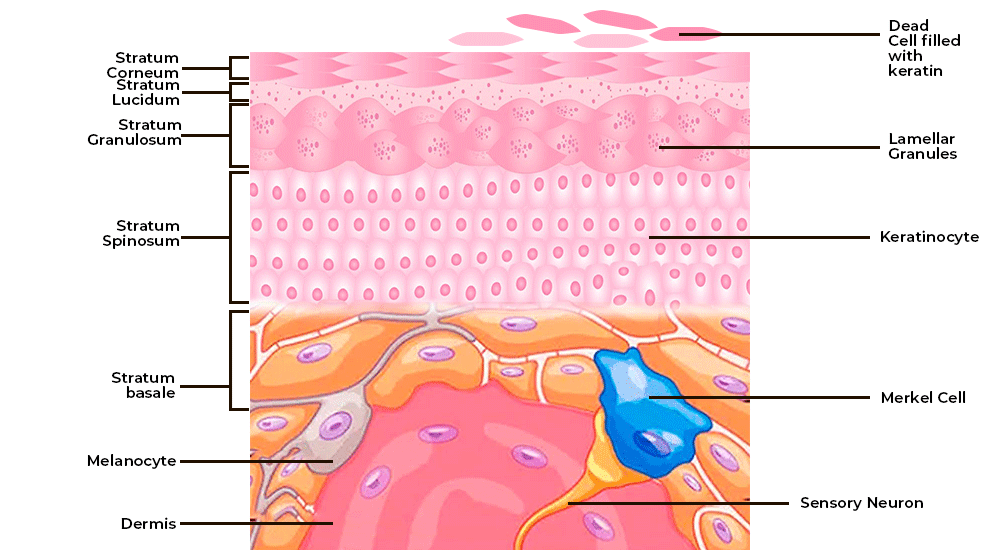
Keratin is a family of fibrous structural proteins, characterized by their high sulfur content and ability to form strong, insoluble filaments. These intermediate filaments are a key component of the cytoskeleton in epithelial cells. The keratinization process begins deep within the epidermis, where basal keratinocytes undergo a programmed series of changes. As these cells migrate upwards through the epidermal layers (stratum basale, stratum spinosum, stratum granulosum), they gradually flatten, lose their nuclei and organelles, and become filled with keratin proteins. This culminates in the outermost layer, the stratum corneum, which consists of dead, flattened cells called corneocytes, essentially bags of keratin. This transformation is driven by a complex interplay of genetic expression, enzymatic activity, and cellular signaling pathways.
The Role of Keratin in Biological Barriers
The primary function of keratinized tissues is protection. The stratum corneum, rich in keratin, forms a formidable physical barrier against mechanical stress, pathogens, UV radiation, and chemical insults. It also plays a crucial role in maintaining hydration by preventing excessive water loss from the body. Hair and nails, also composed predominantly of keratin, provide similar protective functions, insulating the scalp, guarding fingertips, and serving as environmental sensors. The strength, elasticity, and impermeability of these keratinized structures are directly attributable to the intricate organization and cross-linking of keratin proteins. Understanding these fundamental biological roles is paramount for technologies aiming to repair, enhance, or mimic these natural defenses.
Technological Frontiers in Understanding Keratinization
Modern technology provides unprecedented insights into the microscopic and molecular complexities of keratinization, far beyond what traditional histology could offer. These analytical tools are essential for diagnostics, research, and product development.
Advanced Imaging and Microscopy
High-resolution imaging techniques have revolutionized our ability to visualize keratin structures and the keratinization process in real-time. Electron microscopy (TEM, SEM) offers ultra-structural detail of keratin filament networks within cells and the architecture of the stratum corneum. Confocal laser scanning microscopy (CLSM) allows for non-invasive, three-dimensional imaging of skin layers, enabling the study of keratinocyte differentiation and keratin distribution in vivo and in vitro. Atomic Force Microscopy (AFM) provides nanoscale topographical and mechanical property mapping of keratinized surfaces, revealing their stiffness and elasticity at a granular level. These technologies are critical for assessing skin barrier function, hair shaft integrity, and the efficacy of dermatological interventions.
Genomic and Proteomic Analysis
The advent of genomics and proteomics has provided a deeper understanding of the genetic regulation and protein expression profiles associated with keratinization. Next-generation sequencing (NGS) allows for comprehensive analysis of genes encoding keratin proteins and associated enzymes, identifying genetic predispositions to conditions like ichthyosis or fragile hair. Proteomics, utilizing mass spectrometry, can quantify and characterize the entire complement of keratin proteins and their post-translational modifications, which significantly impact their function and stability. This level of molecular insight enables targeted drug development, personalized diagnostics, and the identification of biomarkers for various skin and hair disorders related to aberrant keratinization.
AI and Machine Learning for Predictive Models
Artificial intelligence (AI) and machine learning (ML) are increasingly being deployed to process the vast datasets generated by imaging, genomics, and proteomics. AI algorithms can identify subtle patterns in keratinization abnormalities, aiding in early disease detection and classification. For instance, ML models can analyze histological images to detect early signs of skin conditions linked to impaired keratinization or predict responses to treatments based on gene expression profiles. Furthermore, AI can predict the physical properties of new keratin-based biomaterials or optimize formulations for cosmetic products by simulating the interaction between active ingredients and keratin structures. This predictive power significantly accelerates research and development cycles.

Engineering and Manipulating Keratinization through Technology
The insights gained from advanced diagnostics are translated into tangible applications through various engineering and biotechnological approaches, aiming to repair, augment, or replicate the functions of keratinized tissues.
Synthetic Keratin and Bio-materials
Biotechnology enables the production of synthetic or recombinant keratin proteins that mimic natural keratin. These engineered keratins can be formulated into various biomaterials, such as hydrogels, films, or nanofibers. In medical applications, synthetic keratin is invaluable for wound dressings, accelerating skin regeneration and reducing scarring by providing a scaffold that encourages natural keratinization. In cosmetics, these bio-derived keratins are incorporated into hair and skin products to strengthen, repair, and protect, offering a scientifically backed alternative to traditional protein treatments. The ability to precisely control the molecular structure and cross-linking of these synthetic materials opens possibilities for tailoring their mechanical and biological properties for specific uses.
Bio-printing and Tissue Engineering
Tissue engineering leverages advanced techniques, including 3D bio-printing, to create functional skin models and even full-thickness skin grafts. Bio-printing technologies can deposit living keratinocytes and other skin cells layer by layer, along with biomaterial scaffolds, to construct tissues that accurately mimic the stratified structure and keratinization process of native skin. These engineered skin tissues are crucial for pharmaceutical testing, reducing the need for animal trials, and for developing personalized regenerative therapies for burn victims or individuals with extensive skin damage. Research is also exploring the bio-printing of hair follicles, representing a significant leap towards treating various forms of alopecia.
Targeted Delivery Systems for Hair and Skin Health
Nanotechnology plays a pivotal role in developing sophisticated delivery systems for active ingredients that modulate keratinization or enhance keratinized structures. Nanoparticles, liposomes, and microencapsulation techniques can encapsulate growth factors, vitamins, or therapeutic agents, protecting them from degradation and ensuring their targeted delivery to specific layers of the skin or directly to hair follicles. This precision targeting maximizes efficacy while minimizing systemic side effects. For example, specific peptides designed to stimulate keratin production or inhibit keratin degradation can be delivered precisely to hair roots or compromised skin areas, fostering healthier tissue development and repair.
The Future of Keratinized Solutions: Personalized and Precision Tech
The trajectory of technological innovation points towards highly personalized and predictive solutions, where an individual’s unique biological profile dictates their keratin-focused health and beauty regimen.
AI-Driven Personalization in Cosmeceuticals and Dermatology
The future of skincare and haircare is increasingly personalized, powered by AI. Imagine diagnostic devices that analyze your skin’s unique keratinization profile, assess genetic predispositions, and then use AI to formulate a custom product on demand. This could involve recommending specific keratin types, growth factors, or delivery mechanisms tailored to an individual’s skin barrier function, hair porosity, or susceptibility to environmental stressors. AI models can also continuously learn from user feedback and real-world efficacy data, refining formulations and treatment protocols to achieve optimal results, moving beyond a one-size-fits-all approach.
Wearable Tech for Real-time Keratin Health Monitoring
Wearable sensors are emerging as a game-changer for monitoring skin and hair health in real-time. These devices, often integrated into patches, smart fabrics, or specialized handheld tools, can measure parameters indicative of keratinization status, such as skin hydration, pH levels, elasticity, and even subtle biochemical markers. Data collected continuously can alert users to environmental stressors impacting their skin barrier, provide insights into the progression of skin conditions, or track the effectiveness of personal care products. This real-time feedback loop empowers individuals and healthcare providers to make proactive, data-driven decisions regarding keratin health management.

Next-Gen Therapies and Regenerative Medicine
The ultimate frontier lies in regenerative medicine and advanced therapies that can precisely manipulate the keratinization process for therapeutic benefit. Gene editing technologies like CRISPR are being explored to correct genetic mutations responsible for severe keratinization disorders, offering potential cures rather than just symptomatic management. Beyond gene therapy, future advancements include sophisticated cell therapies where engineered keratinocytes are introduced to repair damaged skin or stimulate hair regrowth. These innovations hold the promise of not just restoring but fundamentally regenerating healthy, functional keratinized tissues, addressing conditions that were once considered untreatable. The journey from understanding “what is keratinized” to harnessing its biological power through advanced technology is continually unfolding, promising a healthier, more resilient future.
aViewFromTheCave is a participant in the Amazon Services LLC Associates Program, an affiliate advertising program designed to provide a means for sites to earn advertising fees by advertising and linking to Amazon.com. Amazon, the Amazon logo, AmazonSupply, and the AmazonSupply logo are trademarks of Amazon.com, Inc. or its affiliates. As an Amazon Associate we earn affiliate commissions from qualifying purchases.